长推:数据解析 MakerDAO 的 RWA 资产

MarsBitPublicado em 2023-07-19Última atualização em 2023-07-19

Resumo

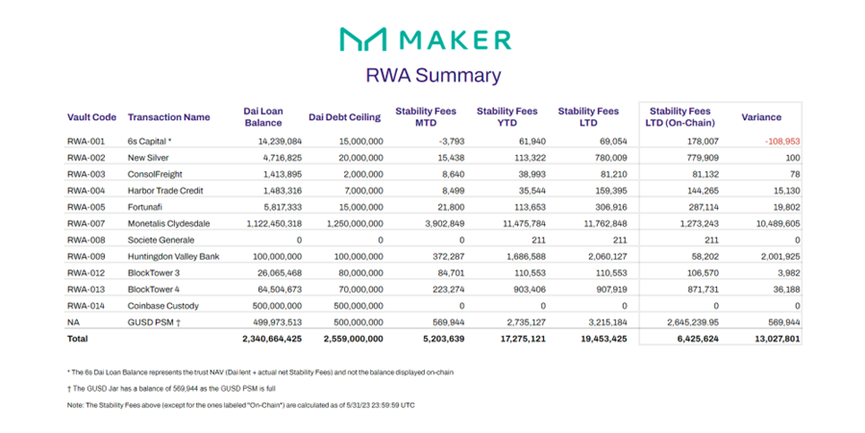
根据数据,截至五月份,MakerDAO的RWA组合总值已达23.4亿DAI,这一组合产生的稳定费用占了所有稳定费用的79.7%,比四月份的72.6%有所上升。

截至五月,MakerDAO的实际世界资产(RWA)组合总值达到了23.4亿DAI。这一组合是如何配置的,又产生了什么结果呢?让我们来了解一下↓
makerdao


在五月份,RWAs占Maker协议产生的所有稳定费用的79.7%,比四月份的72.6%有所上升。今年至今,该组合产生了全部稳定费用的78.5%。
MakerDAO的RWA稳定费用已经积累到年初至今(YTD) 1727.5121万DAI,自成立以来,总的RWA稳定费用为1945.3425万DAI。
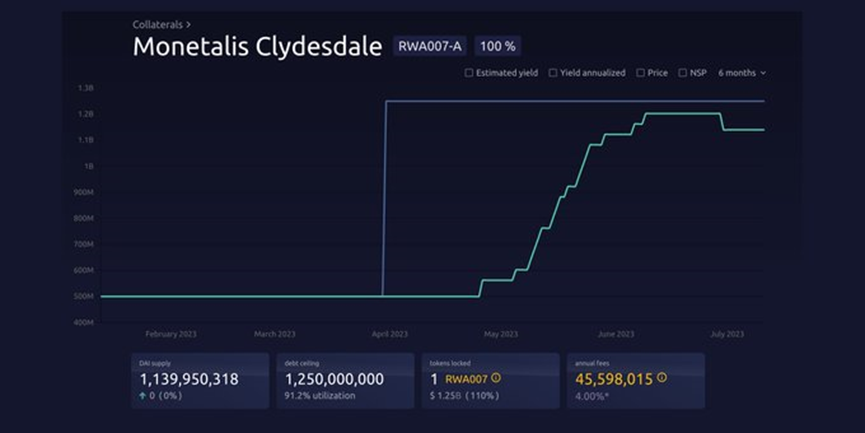
五月份,Maker的RWA余额因Monetalis Clydesdale金库的额外DAI投入而大幅增加。该金库的债务从5亿DAI增加到了大约1140万DAI。
makerdao


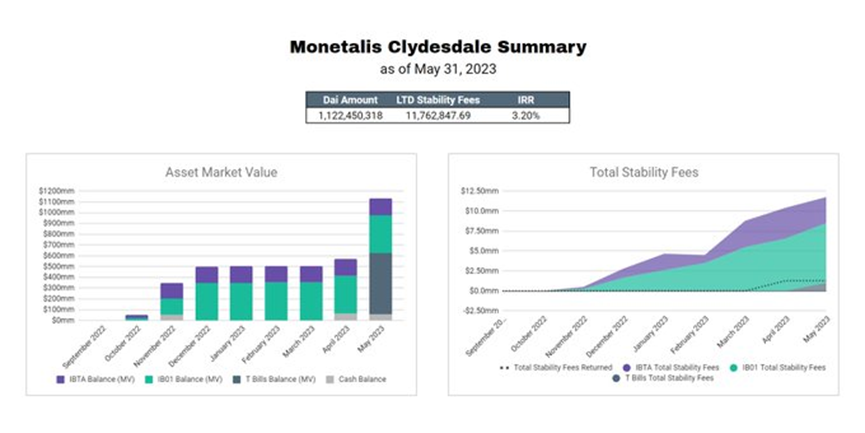
五月份,Monetalis Clydesdale金库又增加了5.6亿DAI。
金库资产的33%是0-1年期的国库ETF(IB01),14%是1-3年期的国库ETF(IBTA),剩下的53%是0-6个月的国债阶梯。
makerdao


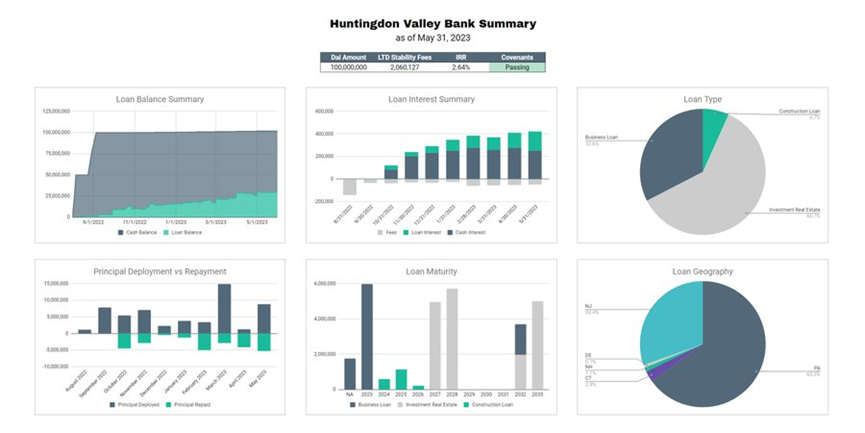
Maker在Huntingdon Valley银行的贷款余额大致维持在3000万美元。
makerdao


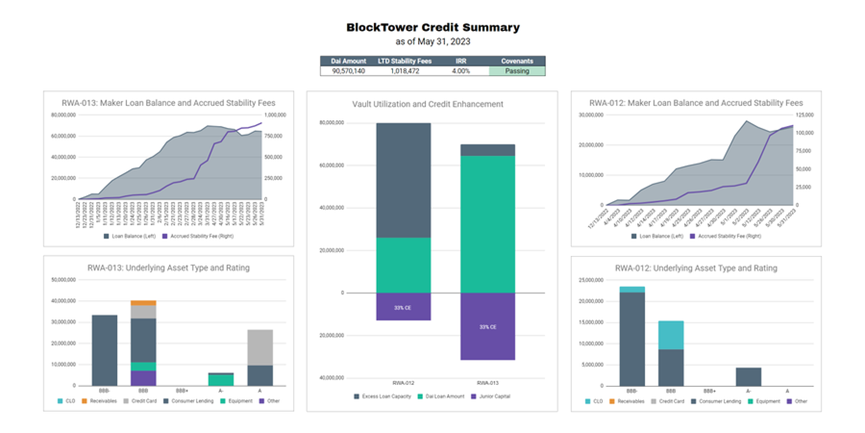
对于BlockTower Credit(RWA012 - RWA013),BlockTower在五月份又借了600万DAI,并继续增加了他们第二个金库的使用。BlockTower的RWA012金库现在的债务上限是8000万DAI。
makerdao


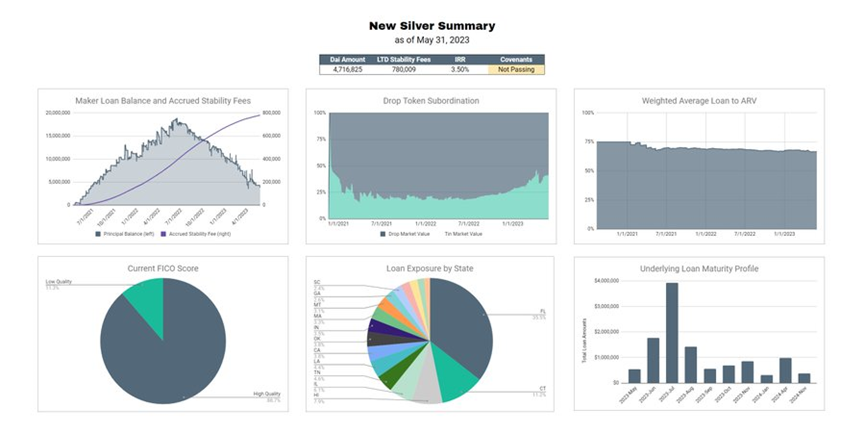
New Silver的交易继续稳定进行,其中一个约定(单一州份暴露)失败了约6%。
金库的余额正在稳步下降。
makerdao


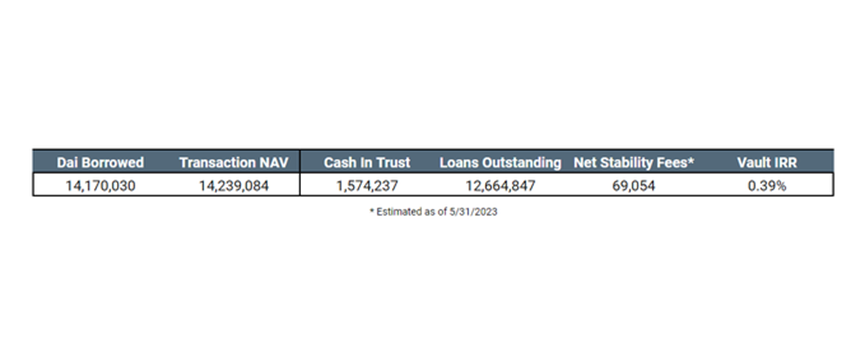
6s Capital Partners为520万美元发出了新的贷款,以前的135万美元贷款已经偿还。目前的贷款余额是1270万美元。
makerdao


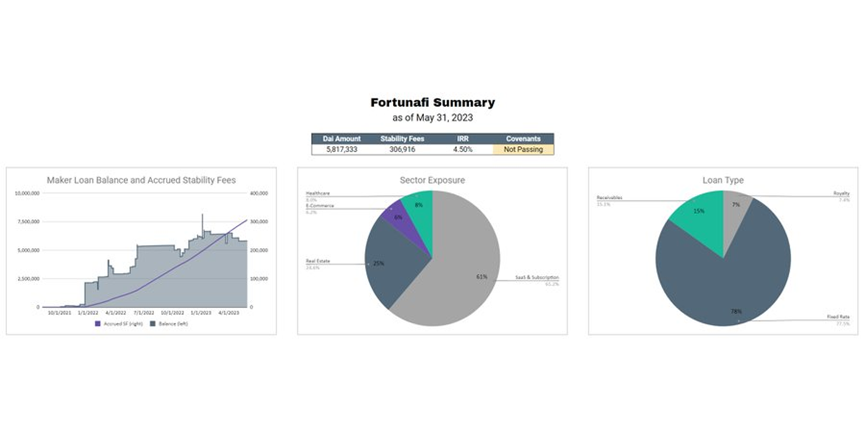
Fortunafi的债务头寸减少了大约26万,目前约为580万Dai。

makerdao


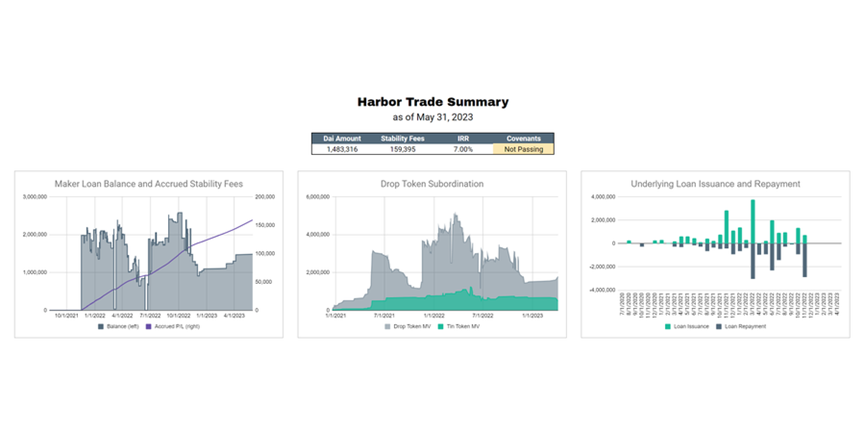
Harbor Trade的交易有150万DAI的未清贷款。

makerdao


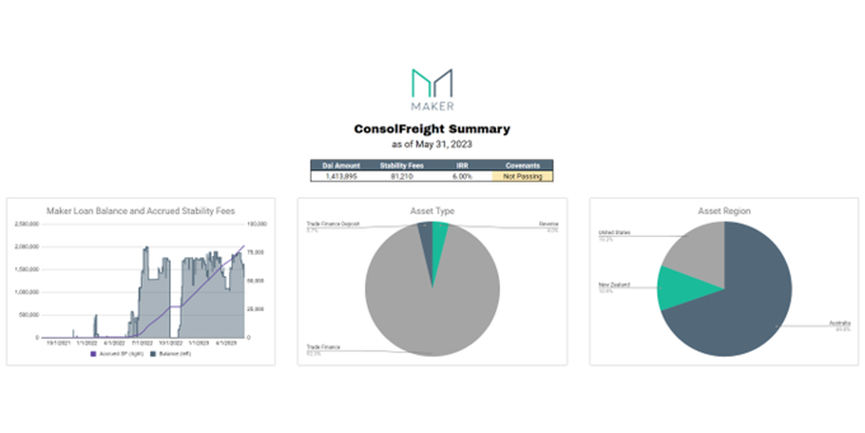
ConsolFreight的未偿还贷款余额为140万Dai,比上个月下降了40万。
makerdao


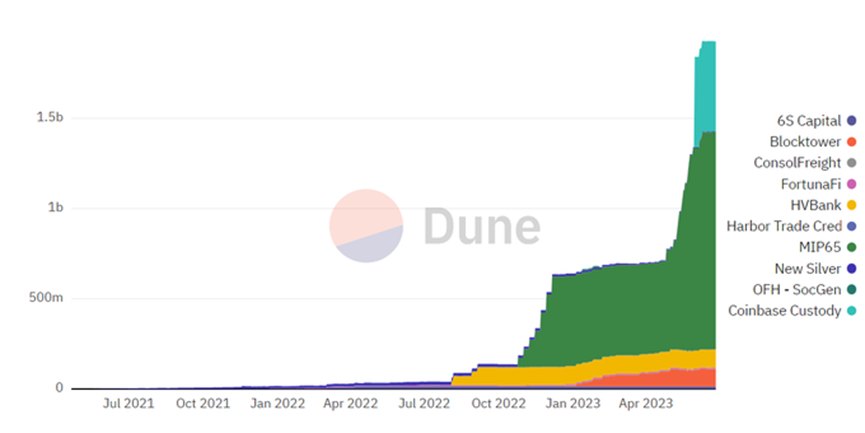
这是MakerDAO实际世界资产(RWA)风险暴露随时间变化的总结:

makerdao


本文来自@SteakFi在Maker论坛发布的实际世界资产报告的摘要。
为了更全面的理解,我们鼓励你阅读原始帖子。
https://forum.makerdao.com/t/real-world-asset-report-2023-05/21225

Leituras Relacionadas

Both Suffer Massive Losses Exceeding $90 Billion, Which Is in Greater Peril: Strategy or Bitmine?

Facing massive paper losses exceeding $90 billion each amidst a sharp market downturn, "Digital Asset Treasury" (DAT) giants Strategy and Bitmine find themselves in a precarious position, but with different underlying risks. Strategy, heavily invested in Bitcoin (BTC), faces significant financial strain. Its strategy relies heavily on debt, including convertible notes and preferred stock (STRC) requiring substantial dividend payments. With its cash reserves dwindling and BTC offering no staking yield for cash flow, Strategy's high leverage makes it vulnerable. A continued price decline could force asset sales to meet obligations, potentially creating a negative feedback loop. Its market value has already fallen sharply. In contrast, Bitmine, an Ethereum (ETH) holder, appears on firmer financial ground. It primarily funds its purchases through equity offerings (like ATM programs), avoiding debt pressure. It also generates income by staking a large portion of its ETH holdings. While not immune to market drops and shareholder dilution concerns, Bitmine maintains more flexibility, recently announcing a new preferred share offering to raise further capital. The core divergence lies in their financing: Bitmine uses equity (investor money), while Strategy uses debt (borrowed money). Consequently, Bitmine currently faces less immediate liquidity pressure than Strategy, which must navigate the dual challenge of servicing debt/dividends and a declining core asset (BTC) price.

marsbitHá 7m

Both Suffer Massive Losses Exceeding $90 Billion, Which Is in Greater Peril: Strategy or Bitmine?

marsbitHá 7m

Where the AI Bubble Really Is: Which Layer of Players Are Naked

AI Bubble: Where It Really Is and Who's Swimming Naked This analysis dissects the AI industry not as a single entity but as a five-layer pyramid, arguing that bubbles are concentrated in specific tiers, not uniformly distributed. **Key Distinction from the 2000 Dot-com Bubble:** Unlike 2000, where companies had stock prices before revenue, today's leading AI players have massive, contract-backed revenue driving their valuations. Core infrastructure demand is real, with every GPU running at full capacity for paying customers. **The Five-Layer Pyramid & Bubble Assessment:** * **L0 (Fab/Manufacturing) & Top L4 (Leading AI Apps): NO BUBBLE.** Companies like TSMC, NVIDIA, major cloud providers (Microsoft, Google, Meta, Amazon), and top AI labs have real revenues and orders. Supply is tightly constrained by TSMC's disciplined capacity control and physical limits like power/land for data centers, preventing a supply glut. * **L1 (Memory): BATTLEGROUND.** Sky-high HBM margins could signal a new structural cycle or a classic "boom before bust." The oligopoly of three major players may enforce supply discipline, making this a high-stakes bet. * **L2 (Interconnect/Optical Modules): BUBBLE TERRITORY.** Companies like Lumentum and AAOI have seen stock surges (4-10x) far outpacing revenue growth. This hardware segment has lower physical barriers to expansion than fabs, allowing speculation. It mirrors the 2000 bubble's epicenter—optics. * **L3 (Infrastructure/"GPU Landlords"): VULNERABLE.** GPU leasing companies profit from the current compute shortage but own no long-term moat. Their business model relies on a temporary bottleneck that will ease as big tech expands and new tech (e.g., potential space-based data centers) emerges. * **L4 Long Tail (VC-backed Startups): STRONG BUBBLE SIGNALS.** VC funding concentration in AI is twice that of the 1999 peak. Many startups with little revenue use the valuation logic of successful giants to justify their own, creating high risk of a "valuation crunch" when funding dries up. **Critical Risks to Monitor:** 1. **GPU Depreciation & Accounting:** Companies extending the assumed useful life of GPUs artificially boost profits. The true economic life depends on future generational leaps from NVIDIA. 2. **"GPU Credit" & Off-Balance-Sheet Leverage:** Emerging structures where shell companies borrow to buy GPUs and lease them out (with chipmakers sometimes investing) move debt off major balance sheets. This echoes the "vendor financing" of 2000 and the securitization risks of 2008, though currently small-scale. 3. **TSMC Abandoning Caution:** If the primary supply bottleneck (TSMC's conservative capacity planning) breaks, runaway supply could trigger a bust. 4. **Algorithmic Efficiency Breakthrough:** A major leap in software efficiency could drastically reduce the need for raw compute hardware, undermining the investment thesis. **Conclusion:** The AI boom is expensive and has frothy areas, but its core is underpinned by real demand and physical supply constraints. The bubble risk is layered: most present in optical components, GPU leasing, and the long-tail startup ecosystem, while the foundational chip manufacturing and leading application layers remain relatively solid—for now.

marsbitHá 19m

Where the AI Bubble Really Is: Which Layer of Players Are Naked

marsbitHá 19m

Trading

Spot
Futuros
活动图片