Why Did Citadel-Backed EDX List Bitcoin, Ethereum, Litecoin, and Bitcoin Cash?

Tap Chi BitcoinPublicado em 2023-06-29Última atualização em 2023-06-29

Resumo

Regulators appear to have said enough about these four digital assets to assuage Wall Street.

Bitcoin Cash, a spin-off from the oldest digital asset, has struggled to find a market since launching in 2017. But it’s been on a roll this month: since the start of June, Bitcoin Cash (BCH) is up 98%, jumping from $113 to $224.

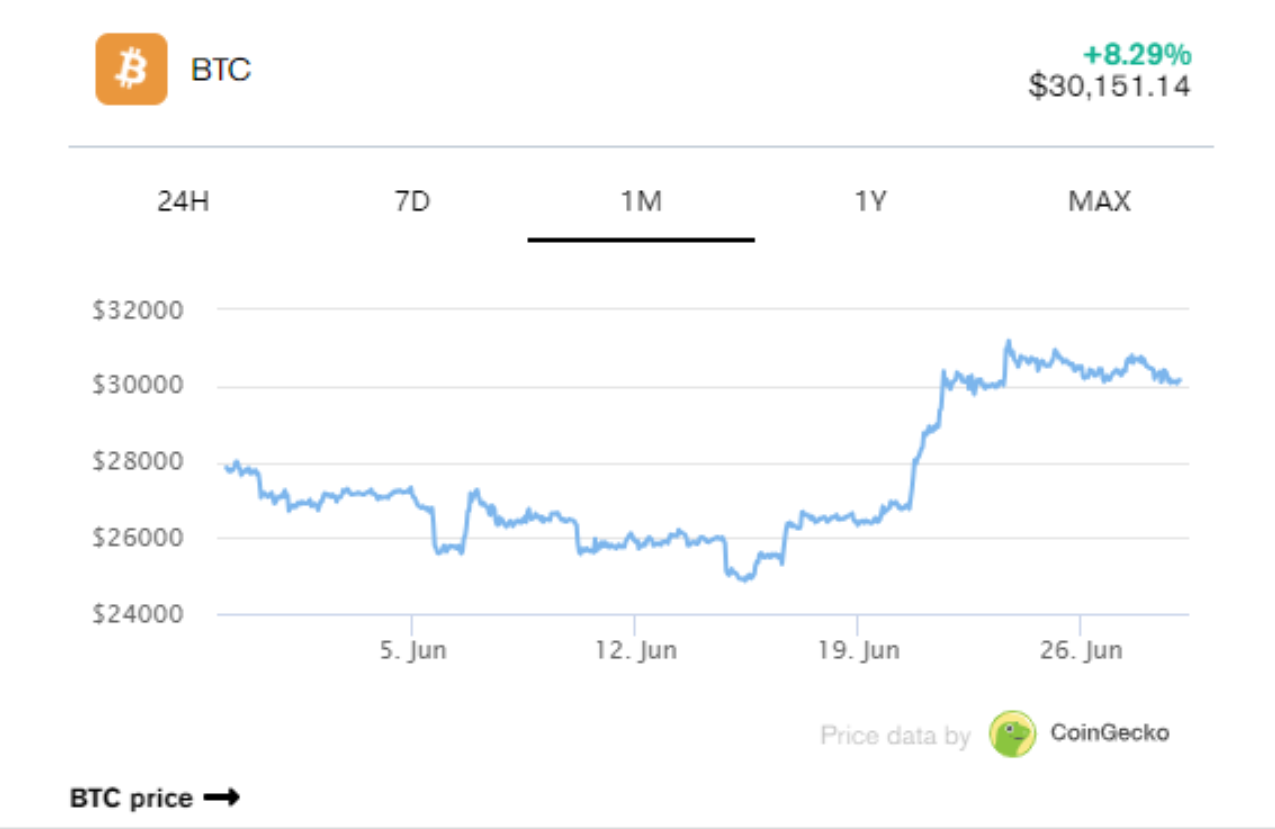
The slightly obscure digital asset—one of many cryptocurrency “forks”—is following Bitcoin, like many other coins and tokens which have surged in price since the biggest digital asset experienced a run. But BCH is doing by far the best.
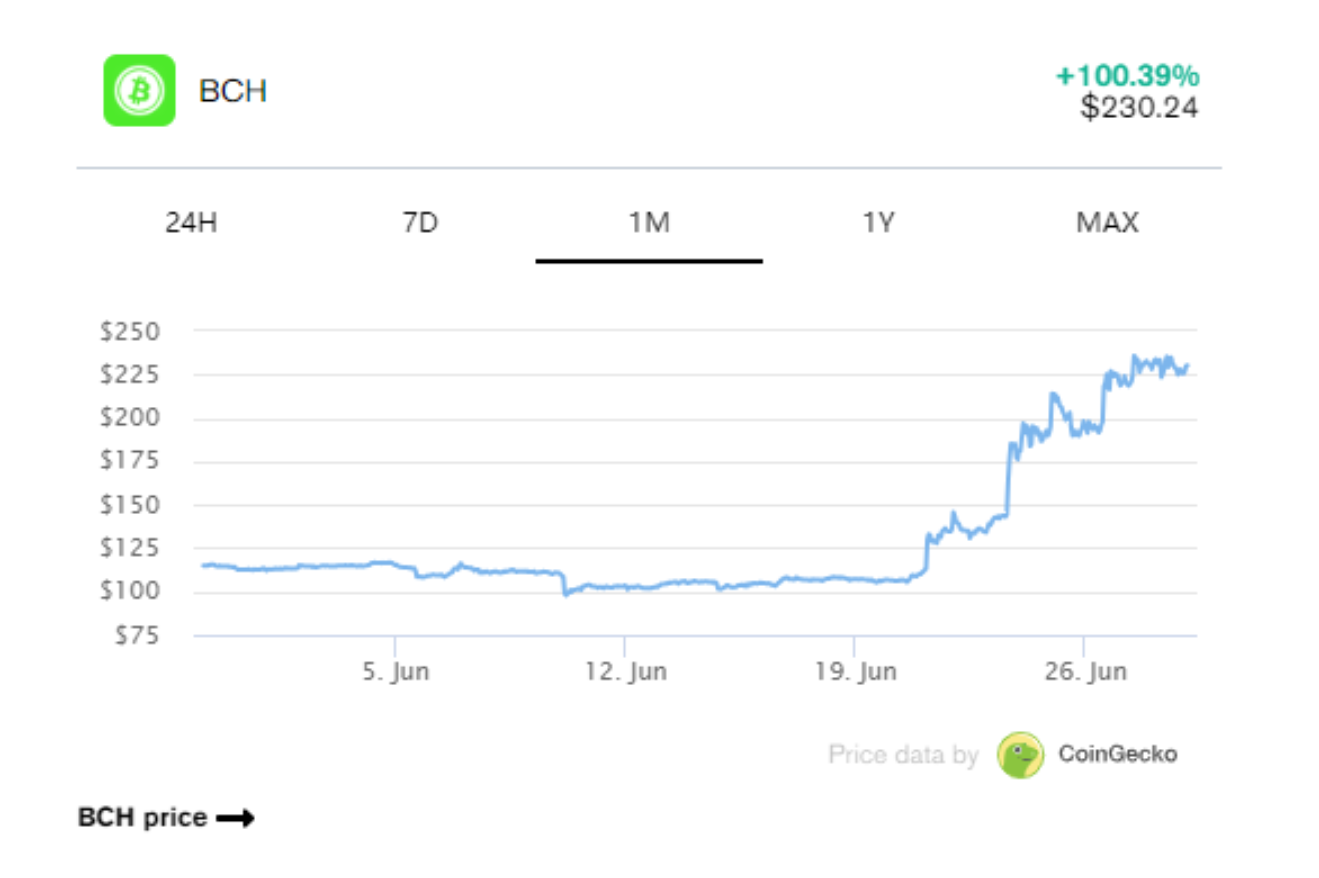
What’s the reason? The coin is one of the lucky four chosen for EDX Markets, a new crypto exchange backed by major Wall Street players Charles Schwab, Citadel Securities, and Fidelity Digital Assets.

EDX, which launched last week, decided to let its traders—institutional investors only—start off with Bitcoin, Ethereum, Litecoin, and Bitcoin Cash.

The reason is simple: regulatory clarity.

“These specific cryptocurrencies are generally perceived as commodities by regulatory bodies, which significantly mitigates potential legal challenges,” Sei Labs co-founder Jeff Feng told Decrypt.

Youwei Yang, Chief Economist at BTCM, added that the four assets are “widely regarded as digital commodities, making them relatively safe” from the U.S. Securities and Exchange Commission because they are made with electricity—a commodity.
In perhaps its toughest regulatory crackdown yet, the SEC has gone after a number of major crypto brands for allegedly flogging unregistered securities. Earlier this month, it went after Coinbase for allegedly offering and selling unregistered securities via its staking service. It also targeted Binance, the world’s biggest exchange, with a massive lawsuit for allegedly “operating as a fking [sic] unlicensed securities exchange in the U.S.A. bro,” according to the SEC.

In February, it hit Kraken with a $30 million fine for allegedly failing to register the offer and sale of its crypto asset staking-as-a-service program.

These regulatory enforcements are all because SEC Chairman Gary Gensler thinks—and has said for years—that most cryptocurrencies are unregistered securities.

But he has made it clear that Bitcoin is a commodity. He has been less clear on Ethereum, but the Commodities and Futures Trading Commission (CTFC) has said the asset is a commodity.

And Bitcoin Cash and Litecoin are both Bitcoin forks—new cryptocurrencies that emerged from the asset’s original code—meaning they are likely to have the same status in the eyes of regulators.

Greg Moritz, Co-Founder at the crypto hedge fund AltTab Capital, said that “none have been listed by the SEC as unregistered securities,” adding that all four assets are established and have history, “key factors in the decision-making process of EDX’s backers.”

EDX Markets CEO Jamil Nazarali also said that he felt “very comfortable” that the four assets weren’t securities.

For now, these four “old school” cryptocurrencies will give “old school” investors a taste of the crypto world. But things could change, Feng noted. “As regulations evolve and the understanding of different cryptocurrencies becomes more nuanced, we could anticipate exchanges like EDX broadening their offerings,” he added.

Leituras Relacionadas

Podcast Notes: Hyperliquid Has Become the Top Interest Point for Traditional Hedge Funds

Empire Podcast hosts Jason Yanowitz and Santiago Santos discuss the surging institutional interest in Hyperliquid, a decentralized perpetual exchange, marking the highest level of engagement from traditional hedge fund managers since Paul Tudor Jones endorsed Bitcoin in 2020. The primary driver is the demand for weekend trading of commodities like oil, especially during geopolitical tensions such as the Iran conflict, as Hyperliquid provides the only active price discovery venue when traditional markets are closed. Trade XYZ, a front-end on Hyperliquid, has seen significant growth, with weekend oil price predictions having a median error of only 50 basis points. Santos predicts commodity trading volume on Hyperliquid will surpass Bitcoin within the year and that its market cap could rise from $25 billion to $100 billion. Other key points include Kraken raising $200 million at a reduced valuation of $13.3 billion, and the SEC clarifying that self-custodied DeFi frontends like MetaMask are not subject to broker-dealer rules, resolving a major regulatory uncertainty. The hosts also note the strong correlation between crypto and macro markets, with the S&P 500 posting one of its best 10-day rallies since 1950. They highlight MicroStrategy's continued Bitcoin acquisitions and the potential of real-world asset (RWA) tokenization as a key trend. The discussion concludes with skepticism towards many L2 projects, predicting a wave of protocols truly going to zero as capital concentrates in proven assets like Bitcoin and Hyperliquid.

marsbitHá 4h

Podcast Notes: Hyperliquid Has Become the Top Interest Point for Traditional Hedge Funds

marsbitHá 4h

a16z: The Next Frontier of AI, The Triple Flywheel of Robotics, Autonomous Science, and Brain-Computer Interfaces

a16z presents a comprehensive investment thesis for the next frontier of AI: Physical AI, centered on a synergistic flywheel of robotics, autonomous science, and novel human-computer interfaces (HCIs) like brain-computers. While the current AI paradigm scales on language and code, the most disruptive future capabilities will emerge from three adjacent fields leveraging five core technical primitives: 1) learned representations of physical dynamics (via models like VLA, WAM, and native embodied models), 2) embodied action architectures (e.g., dual-system designs, diffusion-based motion generation, and RL fine-tuning like RECAP), 3) simulation and synthetic data as scaling infrastructure, 4) expanded sensory channels (touch, neural signals, silent speech, olfaction), and 5) closed-loop agent systems for long-horizon tasks. These primitives converge to power three key domains: * **Robotics:** The literal embodiment of AI, requiring all primitives for real-world physical interaction and manipulation. * **Autonomous Science:** Self-driving labs that conduct hypothesis-experiment-analysis loops, generating structured, causally-grounded data to improve physical AI models. * **Novel HCIs:** Devices (AR glasses, EMG wearables, BCIs) that expand human-AI bandwidth and act as massive data-collection networks for real-world human experience. These domains form a mutually reinforcing flywheel: Robotics enable autonomous labs, which in turn generate valuable data for robotics and materials science. New interfaces provide rich human-physical interaction data to train better robots and scientists. Together, they represent a new scaling axis for AI, moving beyond the digital realm to interact with and learn from physical reality, promising significant emergent capabilities and value.

marsbitHá 4h

a16z: The Next Frontier of AI, The Triple Flywheel of Robotics, Autonomous Science, and Brain-Computer Interfaces

marsbitHá 4h

Trading

Spot
Futuros
活动图片