分析:即将过去的第二季度,哪些加密叙事表现最出色?

PanewsPublicado em 2023-06-28Última atualização em 2023-06-29

Resumo

在 2023 年第二季度中,哪些叙事表现最出色?

加密货币是一种“叙事”游戏。但叙事不断变化,叙事趋势也在不断演变。
2023 年第二季度即将结束,加密市场大部分时间都相当悲观。哪些叙事表现最出色?
链上分析师 Crypto Kroyo 将 20 个叙事绘制成仪表盘,并对数据进行了分析。

  • 市值 Top5 ---> BTC、ETH、BNB、XRP、ADA
  • DeFi 蓝筹 ---> AAVE、COMP、CRV、MKR、UNI
  • 以太坊 L2s ---> ARB、BOBA、MATIC、METIS、OP
  • LSD ---> FIS、FXS、LIDO、RPL、SWISE
  • LSD L2 ---> Asymetrix、Lybra、Parallax、Pendle、TENET
  • DEX ---> CRV、GRAIL、JOE、SUSHI、UNI
  • 永续 DEX ---> DYDX、GMX、GNS、VELA、MCB
  • RWA ---> CFG、CPOOL、GFI、MPL、TRU
  • AI ---> AGIX、ALI、FET、OCEAN、ORAI
  • GameFi ---> APE、AXS、GALA、MANA、SAND
  • GambleFi ---> ARC、BCB、BETU、FUN、WINR
  • Meme 1.0 ---> BONE、DOGE、ELON、FLOKI、SHIB
  • Meme 2.0 ---> BOB、LADYS、PEPE、TURBO、WOJAK
  • NFT ---> Azuki、Bayc、CryptoPunks、Doodles、Mayc
  • 钱包 ---> TWT、SFP、C98、TGT、XDEFI
  • 隐私 ---> NYM、SCRT、ZEC
  • 实际收益 ---> CRV、GMX、GNS、RDNT、SNX
  • 稳定币发行商 ---> FLX、FXS、LQTY、MKR、TRIBE
  • 账户抽象 ---> BICO、EDEN、INST、KROM、WALLET
  • 应用链 ---> ATOM、AVAX、OP

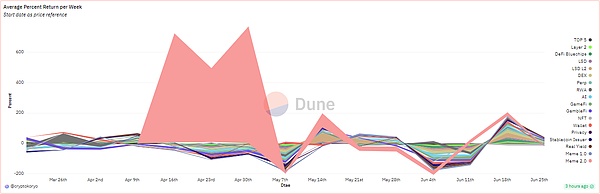
每周平均回报

分析:即将过去的第二季度,哪些加密叙事表现最出色?


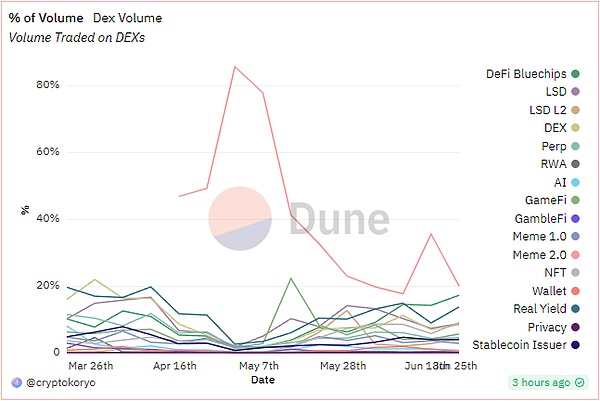
在 DEX 上的交易量

分析:即将过去的第二季度,哪些加密叙事表现最出色?


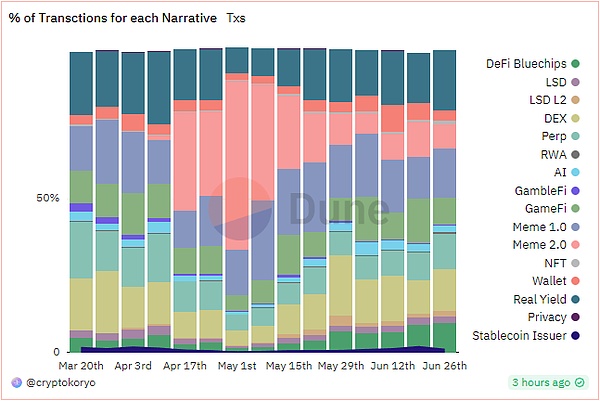
每个叙事的交易占比

分析:即将过去的第二季度,哪些加密叙事表现最出色?


分析
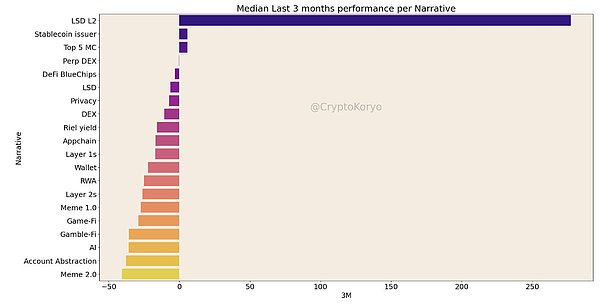
在过去 3 个月中,LSD L2 叙事是胜利者,由 Pendle 以及 Lybra、Tenet 等新项目领导。
Meme 2.0 经历了一次典型的大起大落(拉高抛售),大多数代币较 4 月份高点下跌了 80% 以上。
正如预期的那样,较大市值的代币波动性较低,反之亦然。
分析:即将过去的第二季度,哪些加密叙事表现最出色?


然而,市场在上周出现反弹。随着比特币 ETF 和贝莱德推动市场反弹,DeFi 蓝筹的表现超过了其他所有叙事,这是一个非常罕见的现象。
由 Centrifuge(CGF)和 Maple(MPI)引领的 RWA 叙事同样表现优异。
值得注意的是,Meme 2.0 也出现反弹。
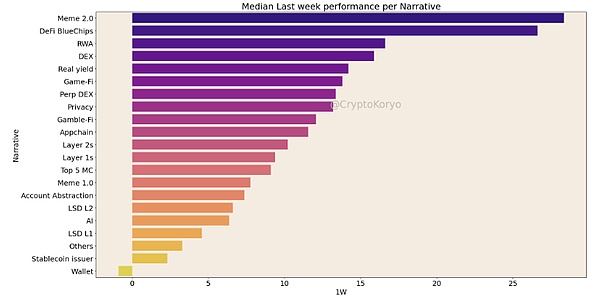
分析:即将过去的第二季度,哪些加密叙事表现最出色?


从日交易量来看,市值较大的代币在很大程度上占据主导地位。没有什么特别值得观察的。(请注意,数据来自 CMC,并不清楚是否包含在 DEX 上的交易)。
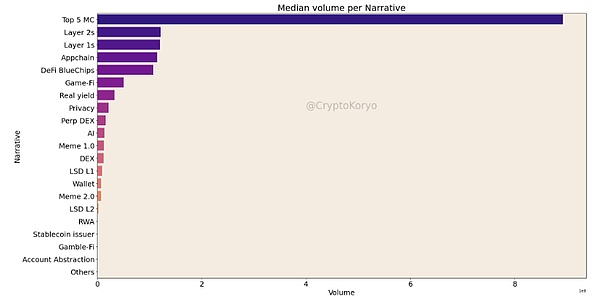
分析:即将过去的第二季度,哪些加密叙事表现最出色?


结论
现在还不是牛市,因此我们没有看到某个叙事明显跑赢大趋势。
LSD L2 的优异表现存在偏差,因为许多项目是在第二季度启动的,但这仍是值得关注的叙事。
DeFi 蓝筹在看跌(过去 3 个月小幅回撤)和看涨(过去几天小幅上涨)时期的表现都相对较好。鉴于市场状况的不确定性,明智的做法是对 DeFi 蓝筹这个叙事进行更高的配置。(CRV、AAVE、COMP ...)
风险提示:
根据央行等部门发布的《关于进一步防范和处置虚拟货币交易炒作风险的通知》,本文内容仅用于信息分享,不对任何经营与投资行为进行推广与背书,请读者严格遵守所在地区法律法规,不参与任何非法金融行为。


Leituras Relacionadas

Breaking: GPT-5.6 Prices Slashed Effective Today

OpenAI has announced significant price cuts for its GPT-5.6 model API, effective immediately. The entry-level **GPT-5.6 Luna** sees the most drastic reduction, with input prices dropping 80% to $0.20 per million tokens and output prices falling to $1.20 per million tokens. The mid-tier **GPT-5.6 Terra** is reduced by 20%, now costing $2.00 (input) and $12.00 (output) per million tokens. The flagship **GPT-5.6 Sol** maintains its original price but introduces a new **Fast mode**, offering speeds up to 2.5 times faster for double the cost. The company attributes these price reductions to efficiency gains achieved through **GPT-5.6 Sol's own involvement in optimizing its production systems**. The model assisted in rewriting GPU kernels and improving speculative decoding, leading to a 20% reduction in end-to-end service costs and over 15% improvement in token generation efficiency. OpenAI emphasizes this process remained human-led. A key focus of the降价 is to lower the barrier for running **AI agent workflows**. By making the capable, tool-calling Luna model significantly cheaper, OpenAI aims to enable more frequent use in cost-sensitive, high-volume tasks like code review and monitoring. This creates a potential feedback loop: model-assisted efficiency gains lead to lower costs, which enables broader agent deployment, which in turn drives further optimization. The new pricing and features will also apply to Codex and ChatGPT Work subscriptions. The changes intensify competition in the large language model market, with OpenAI directly challenging rivals like Anthropic to respond.

marsbitHá 9m

Breaking: GPT-5.6 Prices Slashed Effective Today

marsbitHá 9m

South Koreans' 'Gambling Nature' is Actually Forced by Life

This article explores how systemic pressures in South Korea, rather than inherent "gambling" tendencies, drive widespread speculative financial behavior. It begins by noting the high frequency of flights from South Korea to Macau, symbolizing the search for outlets beyond domestic restrictions. The core argument is that ordinary life goals—stable employment, home ownership, and financial security—have become increasingly tied to asset markets due to structural economic factors. South Korea's development model, historically reliant on corporate leverage (chaebols), has evolved into a society where household debt and personal leverage are normalized as pathways to social mobility. Key mechanisms discussed include: * **Housing Policy:** Government measures to improve affordability, like extending mortgage terms to 50 years and the unique *jeonse* (key money) rental system, embed high leverage into the housing market. * **Financial Products:** The recent approval and explosive popularity of single-stock 2x leveraged ETFs (e.g., on Samsung and SK Hynix), easily accessed via mobile apps, lowered barriers to high-risk trading. * **Social Pressure:** Media narratives around soaring corporate profits (e.g., SK Hynix) and employee bonuses create a fear of missing out, pushing individuals to use leverage to "catch up." The article concludes that this "leveraged life" is a product of institutional history and policy choices. When traditional paths to success feel constrained, and policy facilitates debt-based solutions for housing and investment, speculative behavior becomes a rational, if risky, strategy for many. The rapid cycle of regulatory approval for leveraged ETFs followed by a market crash and official apology in mid-2026 exemplifies the system's inherent contradictions. Ultimately, the "bet" is not just on assets, but on using future earnings to secure a place in the present society.

marsbitHá 9m

South Koreans' 'Gambling Nature' is Actually Forced by Life

marsbitHá 9m

Trading

Spot
活动图片