【5.2-5.15 两周观察】美元危机下的 BTC, Meme 和 Worldcoin

DeFi之道Publicado em 2023-05-16Última atualização em 2023-05-16

Resumo

但从事实来看,无论是加息还是银行危机,都无法支持市场萎缩的论点。从今年数据来看,美股和加密市场都出于上升趋势。今年的稳定币供应也并未出现萎缩。而所谓的加息和银行倒闭带来的也仅仅在于短期的回调,和资金在不同银行间的转移(从 Circle 到 Tether)。 真正改变的是加密市场对于 BTC 价值的重新凝练。在放弃了诸多“噪声”之后,加密行业再一次证明了自己的真正价值底层还是这个 BTC。就连一次 BTC 网络的拥堵都造成了远比加息至新高更大的市场影响,可见一斑。

最近两周加密市场下行,BTC 由 $30k 降至 $27k 上下。
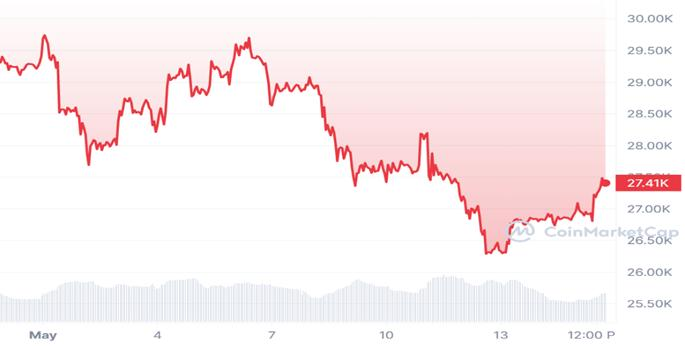
前两周 BTC 行情,来源:CMC

在宏观方面,5 月 4 日美联储加息 25 个基点至 5%-5.25% 已经属于“强弩之末”。当天加密市场反应甚至还有所上扬。同时,此时的联邦利率已经为 2007 年以来新高,市场预期 6 月美联储将停止加息。

伪风险:银行危机

稍早一些的 5 月 1 日,摩根大通宣布收购已倒闭的第一共和国银行。为这一轮银行危机暂时划下休止符。但是目前来看,本年度的几次银行危机虽然导致市场的部分恐慌,但是今年总体而言,Nasdaq 上涨 20% 以上,BTC 涨幅更是将近 100%。

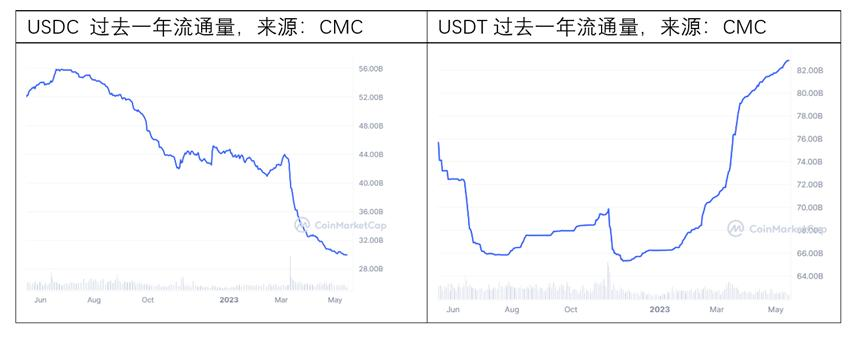
从稳定币的供给来看,同样不支持加密市场因银行危机“雪上加霜”的论点。以 USDC + USDT 来看(两者占据稳定币市场的绝大部分),稳定币在相当长的时间内都维持在 $110B 的水平上,唯一的变化只是资金从 Circle 向 Tether 的转移。
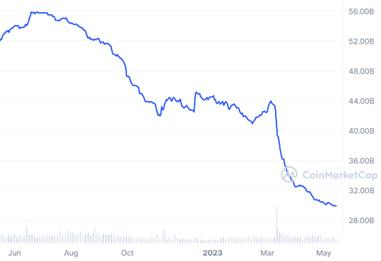
USDC 过去一年流通量,来源:CMC
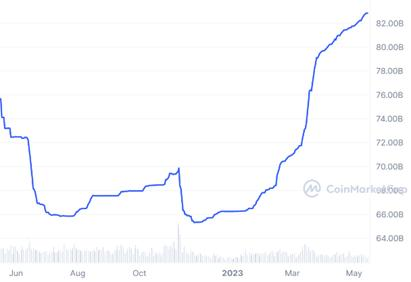
USDT过去一年流通量,来源:CMC
真转变:加密行业的收缩

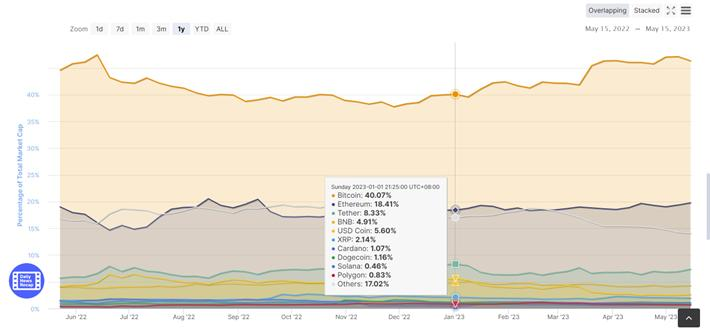
就今年来看,整个加密行业的市值向 BTC 集中确实正在发生。以 CMC 的 BTC Dominance 指数来看,今年初 BTC 市值占比整个加密市场约为 40%,目前升至47%。
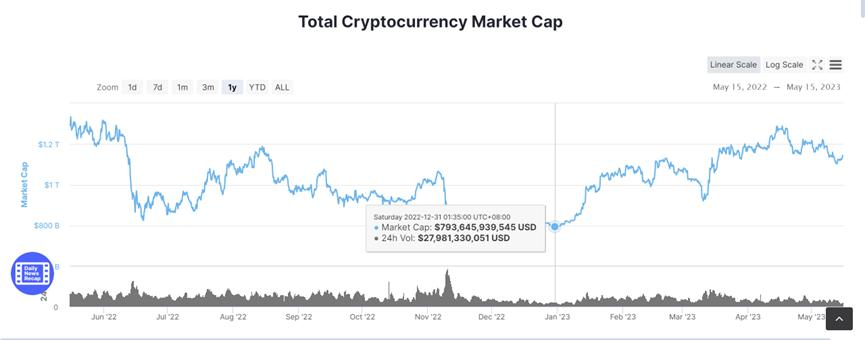
再对比 BTC 的涨幅和整个加密市场今年的涨幅,结局可见:整个市场虽然正在上升,但是市场情绪却更偏向于加密行业中偏保守的避险资产 BTC。
收缩视角下的 BTC:

收缩视角其实也是一种聚光灯视角。对于 BTC 的关注也发掘出了在 BTC 网络上加载 NFT 和 Defi 的那一套愿景。但是以加密行业仅存的历史而言,BTC 代表的是整个加密行业的托底价值和最后抵押物,每一次向非支付应用层的 BTC 拓展(BTC的那些分叉)都失败了。

真正影响市场的却是 5 月 8 日,BTC 的两个矿池同时诞生两个分叉,而后在争夺最长链的过程中,失败链的交易需要重新上链,从而造成了网络拥堵。

并没有什么外部力量可以真正摧毁一个去中心化的网络,如果有,可能就是这个网络自身。

Meme币和 Altman的 WorldCoin

最近的市场中,Meme 币又很神奇地成为了趋势。虽然所有人都知道Meme 币并不能代表市场的基本面,但是 Meme 币却能从侧面反应市场情绪。

事实证明,大多数的 Meme 币都会昙花一现。但是也有例外,去年马斯克推广过的狗狗币就成为了主流。

而 OpenAI 创始人的 WorldCoin 看起来就像是新的狗狗币。支付,转账,为一个虚拟网络提供金融服务,首先提供钱包服务,并且寻求融资。

如果推行下去,WorldCoin 也很有可能成为新的主流代币。只是,马斯克没成功的事,希望Altman 能成。

总结

虽然在美联储加息和新一轮银行危机之下,加密市场前景似乎令人担忧。

但从事实来看,无论是加息还是银行危机,都无法支持市场萎缩的论点。从今年数据来看,美股和加密市场都出于上升趋势。今年的稳定币供应也并未出现萎缩。而所谓的加息和银行倒闭带来的也仅仅在于短期的回调,和资金在不同银行间的转移(从 Circle 到 Tether)。

真正改变的是加密市场对于 BTC 价值的重新凝练。在放弃了诸多“噪声”之后,加密行业再一次证明了自己的真正价值底层还是这个 BTC。就连一次 BTC 网络的拥堵都造成了远比加息至新高更大的市场影响,可见一斑。

从目前看,重视 BTC 的偏保守的市场情绪还将持续一段时间。但是市场也总不乏新的趋势,比如最近的 Meme 币,其中,最有希望的似乎是目前还处于 Meme 币阶段的 WorldCoin,希望Altman 可以带给这个行业惊喜。

毕竟加密跟 AI 一样,也是个超出当下现实的行业,希望现实可以快点赶上。
Leituras Relacionadas

Why Is the World Nervous About Japan Raising Interest Rates?

In June 2026, the Bank of Japan raised its policy rate to 1%, marking its first hike to this level since 1995. While this rate remains low compared to global peers like the US and Europe, the move signals a profound shift for a nation that has been a global source of ultra-cheap funding for decades. Japan's long-standing near-zero or negative interest rates had facilitated massive "yen carry trades," where international investors borrowed low-cost yen to invest in higher-yielding assets worldwide, such as US tech stocks and emerging market bonds. This made Japan a critical, often overlooked, source of global liquidity. Japan's ultra-loose policy stemmed from structural challenges post-1990s asset bubble: aging demographics, chronic low inflation/deflation, and high public debt. Recent shifts, including sustained wage growth (exceeding 5% in recent years) and inflation consistently above the 2% target, have created a "wage-price spiral" possibility, prompting the policy normalization. The global market's concern lies not in the absolute rate but in the potential unwinding of the yen carry trade. As Japanese borrowing costs rise, the economics of these leveraged global investments change, potentially triggering deleveraging and capital outflows from risk assets. Market anxiety focuses on the end of a thirty-year consensus that Japan would perpetually provide cheap funding. Ultimately, the global impact will depend on the interplay with US monetary policy. While Japan is tightening, the significant interest rate differential with the US remains. The key future dynamic is whether simultaneous Japanese hikes and eventual US rate cuts will narrow this gap, forcing a major recalibration of global capital flows and asset pricing built on an era of abundant, cheap yen liquidity.

marsbitHá 1h

Why Is the World Nervous About Japan Raising Interest Rates?

marsbitHá 1h

Research Report Analysis: MRVL's Optical AI Booming, Why High Valuation Keeps Morgan Stanley's Star Analyst Sidelined?

Report Recap: MRVL Optical AI Boom - Why High Valuation Led Morgan Stanley's Star Analyst to Stay Neutral? Morgan Stanley analyst Joseph Moore maintained an "Equal-weight" (Neutral) rating on Marvell Technology (MRVL) on May 28, raising the price target from $172 to $195, below the trading price. This stance comes despite Marvell reporting a record quarter and significantly raising its full-year outlook (FY27 revenue ~$11.5B, up ~40%). Moore's neutral view is based on valuation. The $195 target implies ~40x CY2027 P/E. He contrasts MRVL with NVDA: both trade near ~$200, but Nvidia's forward EPS is more than double Marvell's. For MRVL's valuation to hold, it needs consistent earnings upgrades, proof of networking market share gains, or certainty on large-scale custom AI chip shipments—none of which are confirmed yet. Growth is driven by two pillars: **1) Optical Interconnect** (the faster runner): Moore raised FY27 growth expectations to >70%, with the optical module product line nearing a $1B annualized run rate. **2) Custom AI Chips** (the climber): Confidence in FY28 is growing, but a major new customer project only ramps in FY28, with no current revenue visibility. Key risks are the underperforming Storage, Enterprise, and legacy Networking segments. Moore acknowledges the real AI opportunity but believes the current price already reflects it. For the stock to work from here, investors need to see the optical business hit its targets, custom chips ramp as planned, and a recovery in the weaker business units.

marsbitHá 2h

Research Report Analysis: MRVL's Optical AI Booming, Why High Valuation Keeps Morgan Stanley's Star Analyst Sidelined?

marsbitHá 2h

qinbaFrank: Review and Outlook of the AI Computing Power Wave — From the Three Debates on NVIDIA to Optical Interconnect and SpaceX IPO, How is Capital Rotating?

**Summary: Retrospective and Outlook on the AI Computing Wave - A Framework for Capital Rotation** Based on a presentation by investor qinbaFrank, this analysis reviews the AI computing market trajectory since 2023 and outlines a forward-looking framework. **Key Phases and Market Debates:** The AI bull market progressed through three major debates: 1) The necessity of massive capital expenditure (late 2023). 2) The sustainability of tech giants' spending (early 2024-early 2025). 3) Potential overestimation of compute needs (early 2025). Consensus solidified in late 2025 as model capabilities and utility demonstrably improved. **Core Thesis: Penetration Rate Drives Commercialization.** Unlike the 2000 dot-com bubble, the current AI wave benefits from mature digital infrastructure, enabling faster adoption. The critical threshold is 10% penetration; surpassing it (with recent enterprise intent surveys showing ~18%) indicates entry into a rapid growth "golden period" where user scale and willingness to pay increase simultaneously. **AI vs. Internet: A Fundamental Difference.** While the internet enhanced connection efficiency, AI directly substitutes human cognition and labor. Once AI performance exceeds the "societal average" human level, its commercial value scales exponentially as payment shifts from human labor costs to AI service fees. **Investment Logic Evolution in the Compute Chain.** The focus has expanded from GPUs to a systemic re-rating of the entire hardware stack: storage/HBM, CPUs, interconnects, power, and advanced packaging. The framework is: **short-term "scarcity pricing," mid-term "upgrade pricing" (e.g., optical interconnects, power networks), and long-term "Physical AI" pricing** (edge computing, robotics). **Market Focus Shift and Adjustment Framework.** The market is transitioning from "hardware scarcity" to "commercialization validation." The ultimate anchor for the narrative is sustained high growth in model providers' Annual Recurring Revenue (ARR) and cloud business revenue, which justifies continued capital expenditure. Adjustments are categorized into three levels: * **L1 (Minor):** Driven by valuation compression or macro noise (e.g., single CPI print). Fundamentals intact. * **L2 (Moderate):** Triggered by significant macro events requiring risk repricing. Requires new data for confidence restoration. * **L3 (Major):** Involves a reset of the core industrial narrative or macro regime (e.g., AI commercialization growth stalling). The **crucial dividing line** is whether AI commercialization growth slows. Without a slowdown, pullbacks are likely L1/L2 "repricing" events. A genuine growth deceleration would signal an L2/L3 narrative reset. **Conclusion: A Foundational Civilizational Leap.** AI represents a foundational upgrade to "intelligence" itself—akin to humanity mastering fire—rather than a single-point industrial revolution. This底层能力跃迁 (underlying capability leap) will spawn successive waves of innovation (Agent, robotics, industry workflow重构). The journey will be波浪式的 (wavelike), driven by cycles of scarcity, technological upgrades, and远期兑现 (long-term realization).

marsbitHá 2h

qinbaFrank: Review and Outlook of the AI Computing Power Wave — From the Three Debates on NVIDIA to Optical Interconnect and SpaceX IPO, How is Capital Rotating?

marsbitHá 2h

Trading

Spot
Futuros
活动图片