美国4月非农新增就业25.3万人 远超市场预期18.5万 失业率降至3.4%

华尔街见闻Publicado em 2023-05-05Última atualização em 2023-05-05

Resumo

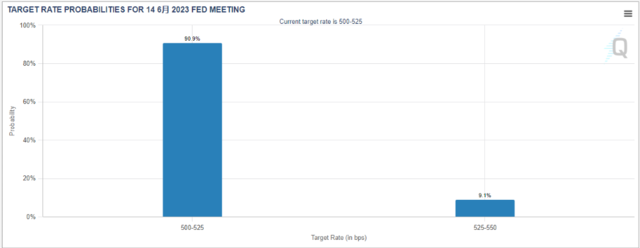
市场对于美联储6月不加息的概率下降到了90.9%,而对于6月加息的预期上升到了9.1%,降息25个基点的概率为0%。

美国4月非农超预期上行,表明就业市场尚未降温,市场降息预期减退。

异常火热的就业报告打消了市场对于美联储即将很快降息的预期,对于6月再次加息的预期开始上升。

4月非农就业再次超预期上行,失业率再创新低,前两月数据被下修

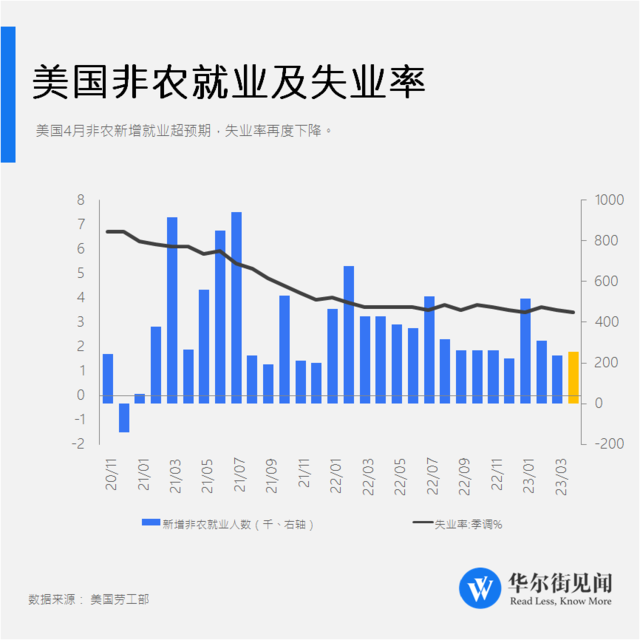
5月5日,美国劳工部数据显示,美国4月非农新增就业25.3万人,高于预期18.5万人,创下连续第12个月超出预期的纪录。

2、3月非农就业数据被下修,2月数据从32.6万人下修至24.8万人,3月数据从23.6万人下修至16.5万人,修订后2、3月份总和较修订前低14.9万人。

4月失业率为3.4%,低于前值3.5%和预期3.6%,再次触及今年1月创下的53年新低。
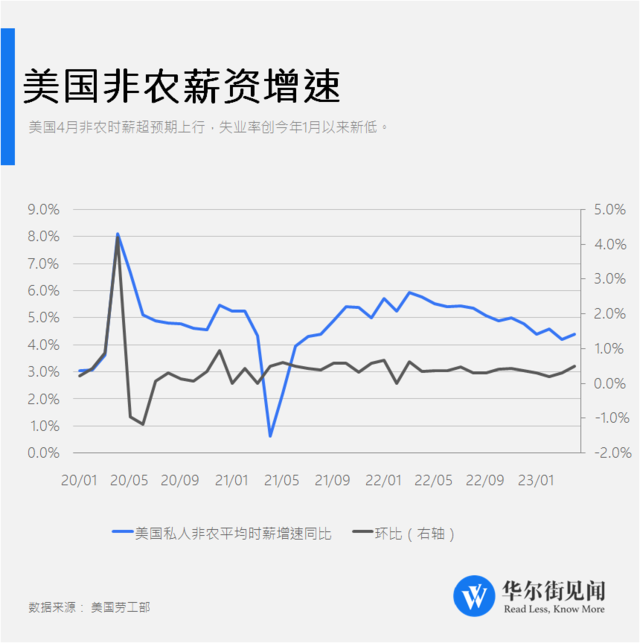
4月份工资增长继续加速。美国非农雇员平均时薪上升16美分,环比增长0.5%至33.36美元,同比增长4.4%,高于预期值4.2%。
降息预期消退 加息预期再起

此前经济学家普遍预期劳动市场将放缓,美国经济将降温,并为今年下半年美联储暂停加息乃至降息定价。

在非农数据之前,美国几份就业报告“喜忧参半”:上周首次申请人数增加了1.3万人,达到了24.2万人;“小非农”ADP新增就业29.6万,较3月份的14.2万翻倍;3月JOLTS职位空缺继续下降,为连续第三个月下跌,创下2021年5月以来最低。

然而,数据公布后,美国短期利率期货下跌,交易员降低美联储降息预期。

芝商所美联储观察工具显示,市场对于美联储6月不加息的概率小幅下降到了90.9%,而对于6月加息的预期上升到了9.1%,降息25个基点的概率为0%;到7月维持利率在当前水平的概率为59.5%,累计降息25个基点的概率为38.1%。
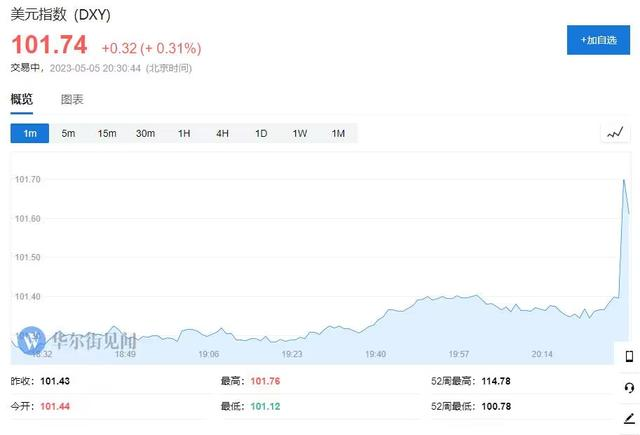
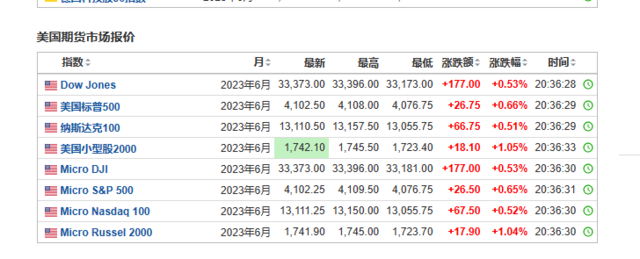
美股期货短线走低,纳斯达克100指数期货涨幅收窄至0.3%;美元指数短线拉升逾30点,现报101.74。
10年期美国国债收益率上升9.60个基点,报3.448%;两年期美国国债收益率上升18.9个基点,报3.916%;30年期美国国债收益率上升6.4个基点,报3.786%。

美股股指期货短线走低,涨幅收窄,道指期货涨0.5%,纳指期货、标普500指数0.4%。
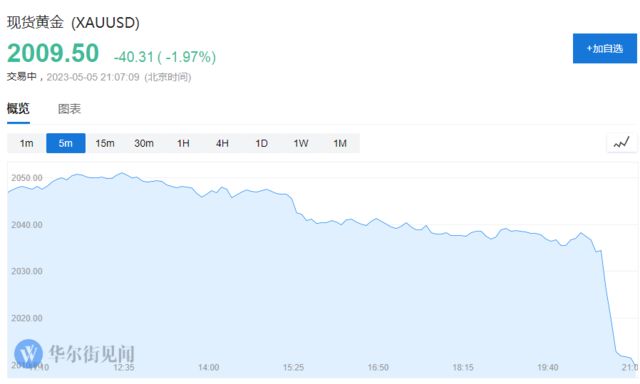
现货黄金短线急挫近30美元,跌破2010美元/盎司。
市场分析认为,这无疑是一份鹰派的非农报告,“让美联储陷入了真正的困境”:

美联储希望暂停加息,甚至可能很快就需要降息,但就业市场并不配合。现在,就业无疑是一个滞后指标,但3.4%的失业率异常紧张,这是非农就业人数连续第12个月超过市场预期。

现在股市的形势似乎发生了变化。几个月前,由于担心美联储进一步收紧政策,强于预期的就业报告可能会导致股市下跌。

但现在,强于预期的就业报告反而会让人们放心,因为这表明,在银行业动荡的压力下,经济实际上表现良好。不过,信贷形势所反映出来的情况还处于早期阶段。

服务业复苏

4月份,美国服务业就业人数持续上升,医疗、金融、政府和采矿业的就业人数也有增长,建筑业、制造业、批发贸易等变化不明显。

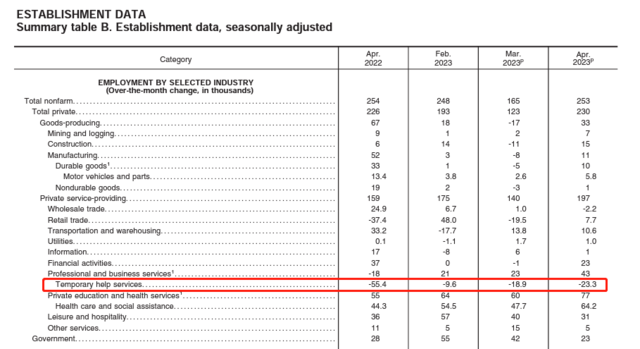
不过值得注意的是,临时工减少了23000个工作岗位。这一类别有时被当作劳动力市场走向的领先指标,因为雇主往往会先裁掉临时员工,然后再进行更大规模的裁员。

专业和商业领域的新增就业4.3万人,高于6个月平均值2.5万人。

科学和技术服务业新增就业4.5万人。

临时就业人数在本月继续减少2.3万人,自2022年3月的峰值以来减少了17.4万人。

医疗保健行业新增就业4万人,低于六个月平均值4.7万人,其中流动医疗服务新增2.4万人,护理和住宿护理机构新增9000人,医院新增7000人。

休闲和酒店业新增3.1万人,低于6个月平均值7.3万人;其中食品服务和饮酒场所新增就业2.5万人。该行业的就业人数仍比2020年2月大流行前的水平低40.2万人,即2.4%。

金融行业新增就业2.3万人,保险公司和及相关行业的就业人数增加了1.5万人,房地产行业的就业人数增加了9000人。

政府部门新增就业2.3万人,低于6个月平均值5.2万人。总体而言,政府部门的就业人数比2020年2月的水平低30.1万人,即1.3%。

采矿、采石、石油和天然气开采行业的就业增加了6000人,自2021年2月的近期低点以来,已经增加了10.2万人。

其他主要行业,包括建筑业、制造业、批发贸易、零售业、运输和仓储、信息和其他服务业的就业情况在本月几乎没有变化。
Leituras Relacionadas

13 Business Lines Surpass $100 Million in Annualized Revenue, Robinhood Moves Toward a 'Super Financial App'

Robinhood Q2 2026 Earnings: Record Revenue and a Push Towards a "Super Financial App" Robinhood (HOOD) reported strong Q2 2026 results, with net revenue reaching $1.308 billion, up 32% year-over-year, and net income hitting $561 million, a 45% increase. The company now has 13 distinct business lines each generating over $100 million in annualized revenue. Key drivers included a 44% surge in transaction-based revenue to $776 million, led by a more than 10x growth in "event contracts" (prediction markets) and strong performance in stocks and options. User metrics also grew, with funded accounts rising to 28.4 million and total assets under custody reaching $369 billion. The Robinhood Gold subscription service hit a record 4.8 million users. The report highlights a strategic shift for Robinhood. Moving beyond its core as a zero-commission trading platform for retail investors, it is actively building a broader financial ecosystem. This includes expanding into wealth management (Robinhood Strategies), payments (Robinhood Credit Card), and next-generation infrastructure like AI-powered "Agentic Trading" and its own Ethereum Layer 2 blockchain, Robinhood Chain. The company's goal is to evolve from a trading app into a comprehensive "super financial app," offering a one-stop shop for investing, cash management, and future on-chain finance.

Odaily星球日报Há 31m

13 Business Lines Surpass $100 Million in Annualized Revenue, Robinhood Moves Toward a 'Super Financial App'

Odaily星球日报Há 31m

13 Business Lines Surpass $100 Million in Annualized Revenue, Robinhood Advances Toward a 'Super Financial App'

On July 30th, Robinhood (HOOD) reported its Q2 2026 financial results, showcasing significant growth with record revenue and profits. The company achieved a net revenue of $1.308 billion, a 32% year-over-year (YoY) increase, and a net income of $561 million, up 45% YoY. This strong performance was driven by robust trading activity and expansion into new financial services. A key highlight was the surge in transaction-based revenue, which rose 44% YoY to $776 million. Notably, income from event contracts (prediction markets) skyrocketed over 10x to $156 million, emerging as a major new growth driver alongside strong gains in stock and options trading. However, crypto trading revenue declined by 38%. Beyond trading, Robinhood is successfully diversifying its revenue streams. User assets grew 32% to $369 billion, and the subscription service Robinhood Gold reached a record 4.8 million users. The company revealed that 13 of its business lines now generate over $100 million in annualized revenue, including its new credit card, prediction markets, and Gold subscriptions. Looking forward, Robinhood is strategically investing in AI and blockchain to build a comprehensive financial ecosystem. It has launched AI-powered "Agentic Trading" and the "Robinhood Chain," a layer-2 blockchain network. The company's vision is evolving from a retail trading platform into a "super financial app" that integrates trading, wealth management, payments, and next-generation digital asset services, though regulatory hurdles remain for some new ventures.

marsbitHá 32m

13 Business Lines Surpass $100 Million in Annualized Revenue, Robinhood Advances Toward a 'Super Financial App'

marsbitHá 32m

After R&D Investment Catches Up with the U.S., Is the Sino-U.S. Chip Competition Still Just About Money?

The article examines the significance of recent data showing China's total R&D expenditure, measured by purchasing power parity (PPP), catching up to or slightly surpassing that of the United States in 2024. It argues that while this milestone reflects China's immense capacity to mobilize research resources, the competition in semiconductors now extends far beyond sheer financial input. The analysis highlights key differences: China's R&D is heavily skewed towards experimental development (over 80%), focusing on product engineering and industrialization, whereas the U.S. allocates a proportionally larger share (about 15%) to basic research. Furthermore, leading U.S. semiconductor firms reinvest a significant portion of their substantial global sales revenue into R&D, creating a sustainable commercial innovation cycle that is difficult to replicate. The article emphasizes that semiconductor progress depends on converting R&D into commercially viable products that pass rigorous customer validation and achieve repeat orders, not just on spending levels. It concludes that as China enters the top tier of R&D spenders, the critical challenges shift to improving resource allocation efficiency, fostering long-term basic research, and building effective mechanisms to bridge the gap between laboratory discoveries and reliable, market-ready industrial capabilities.

marsbitHá 1h

After R&D Investment Catches Up with the U.S., Is the Sino-U.S. Chip Competition Still Just About Money?

marsbitHá 1h

Trading

Spot
活动图片