【研报精选】CoinGecko Q1报告:比特币跑赢市场,以太币首次单季通缩

投研第一线Publicado em 2023-04-21Última atualização em 2023-04-25

Resumo

在2023年Q1中,比特币跑赢市场,以太币迎来首次单季通缩。CoinGecKo认为:市场在去年洗礼后好像变得更加乐观。而虽然已度过最糟时期,但监管挑战、宏观经济仍会持续对加密领域施加压力。

CoinGecKo 执行长、营运长Bobby Ong 在Founder's Note 中提到,加密市场在第一季已弥平FTX 崩盘带来的伤害,虽然发生BUSD 等一系列监管事件,但市场在去年洗礼后好像变得更加乐观,似乎没有大型平台、专案破产就已经达成某种成就。而虽然已度过最糟时期,但他们预测监管挑战、宏观经济仍会持续对加密领域施加压力。
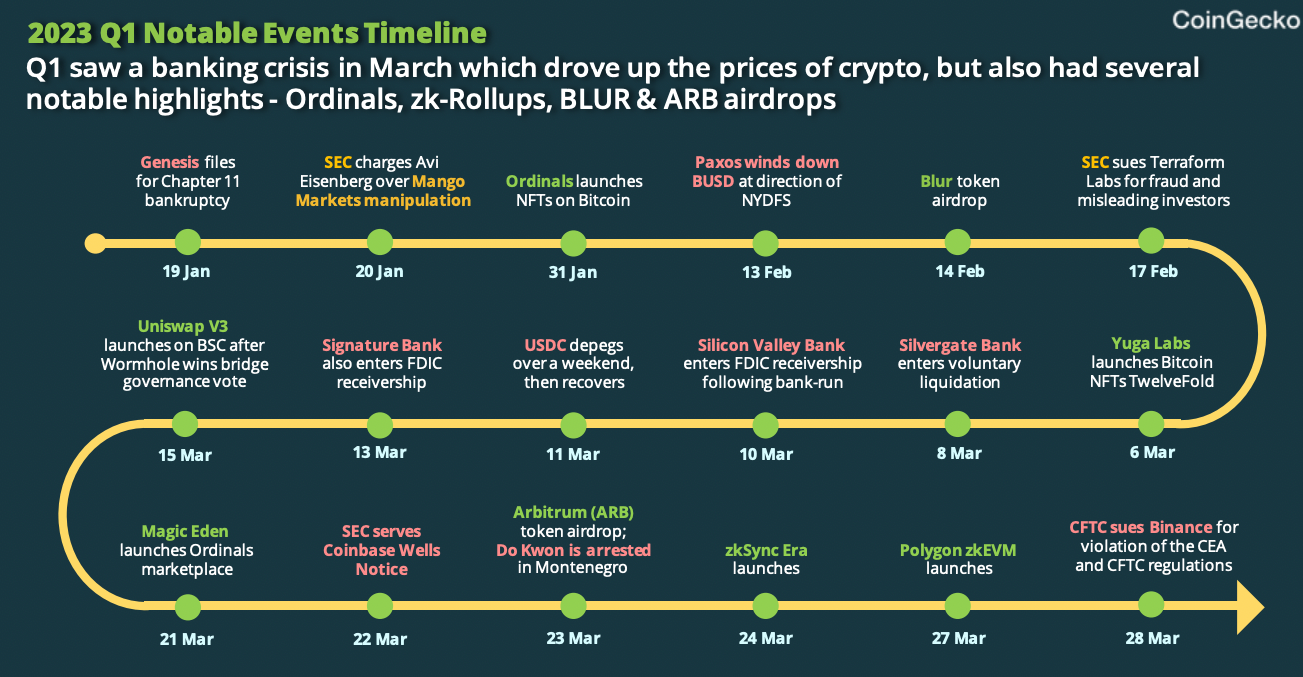
2023 Q1 事件时间轴

CoinGecko 统计FTX 破产前后整体市值

加密货币总市值在1 月时达到低点8,290 亿美元,相较于第一季结束前的1.2 兆美元,涨幅接近50%。

其它要点:

下图交易量删除币安的零手续费激励

QNT、 CRO及Ape跌出市值30 大

SOL市值从FTX 崩盘后的第18 重回前十大
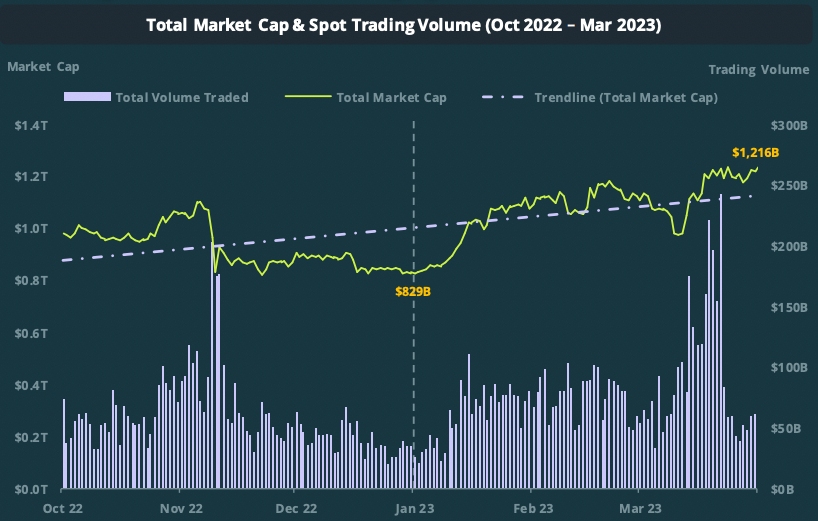
加密市场市值变化

CoinGecko:比特币跑赢市值前五大代币

BTC第一季涨幅72%,高于市值前五大代币。

平台币:除OKX 之外涨幅相近,仅LEO 出现跌幅。

HT排名第六,疑似是因为HT在3 月初出现90%跌幅插针所导致。
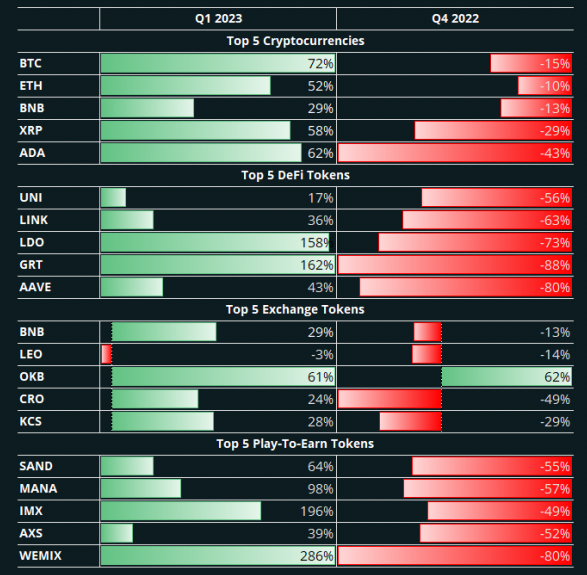
Q1 代币表现

CoinGecko:比特币vs. 传统资产

比特币在Q1 涨幅远高于传统资产,除比特币外,涨幅最高的是那斯达克综合指数(16%),最低的是原油(-6%)。
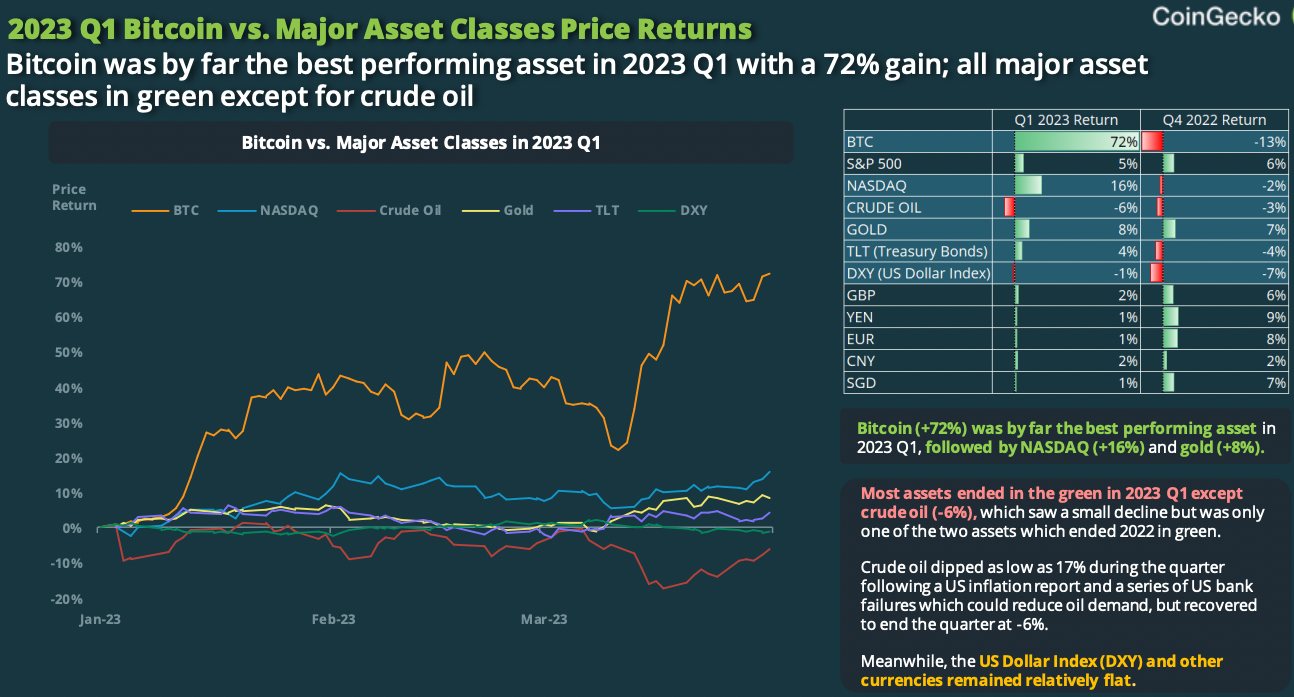
比特币(橘线)

CoinGecko:以太币首次单季代币通缩

ETH第一季数据:

销毁量24.2 万ETH

发行量16.7 万

单季流通量-7.5 万ETH
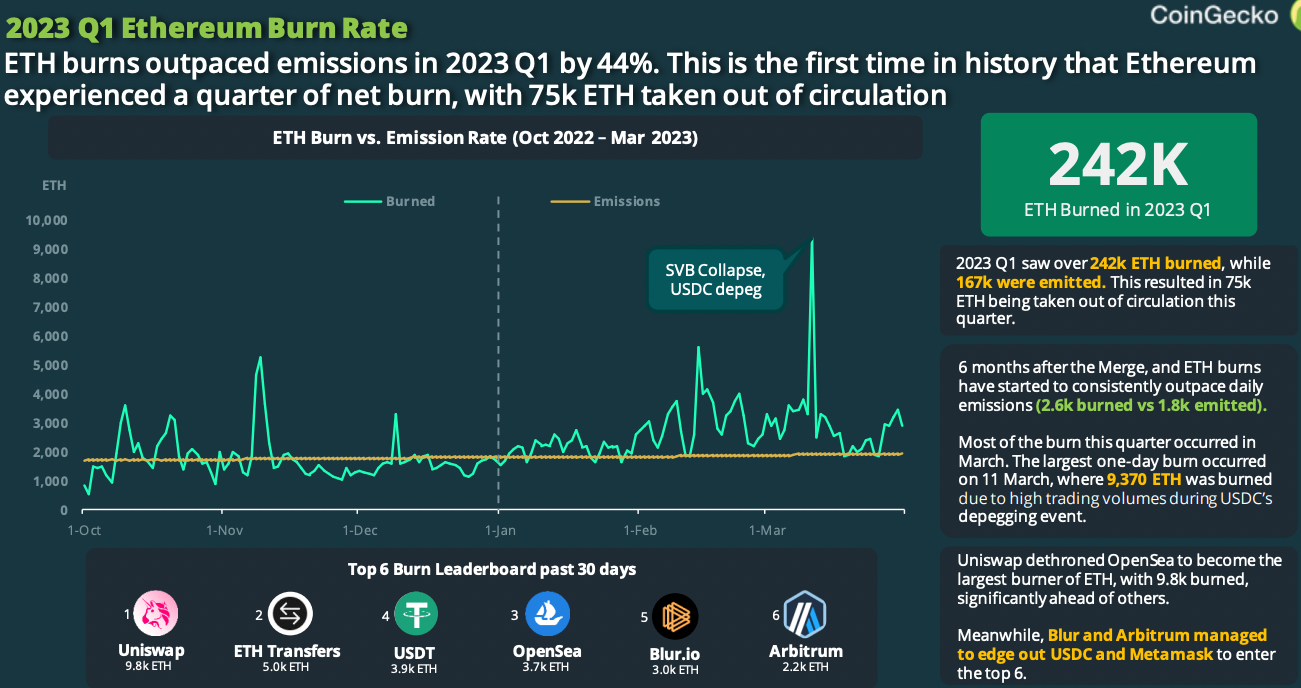
ETH销毁(绿)| ETH发行量(橘)

CoinGecko:以太坊DeFi 主导地位超六成

即便排除二层扩容解决方案,以太坊在DeFi 的市占率仍一路从去年10 月的61% 上升至第一季的66%。

而虽然Solana 经历FTX 打击后,TVL 小幅回升18.4%,包含Vitalik 等多位名人也看好其未来发展,Solana 市占率仍从0.78% 降至0.72%。
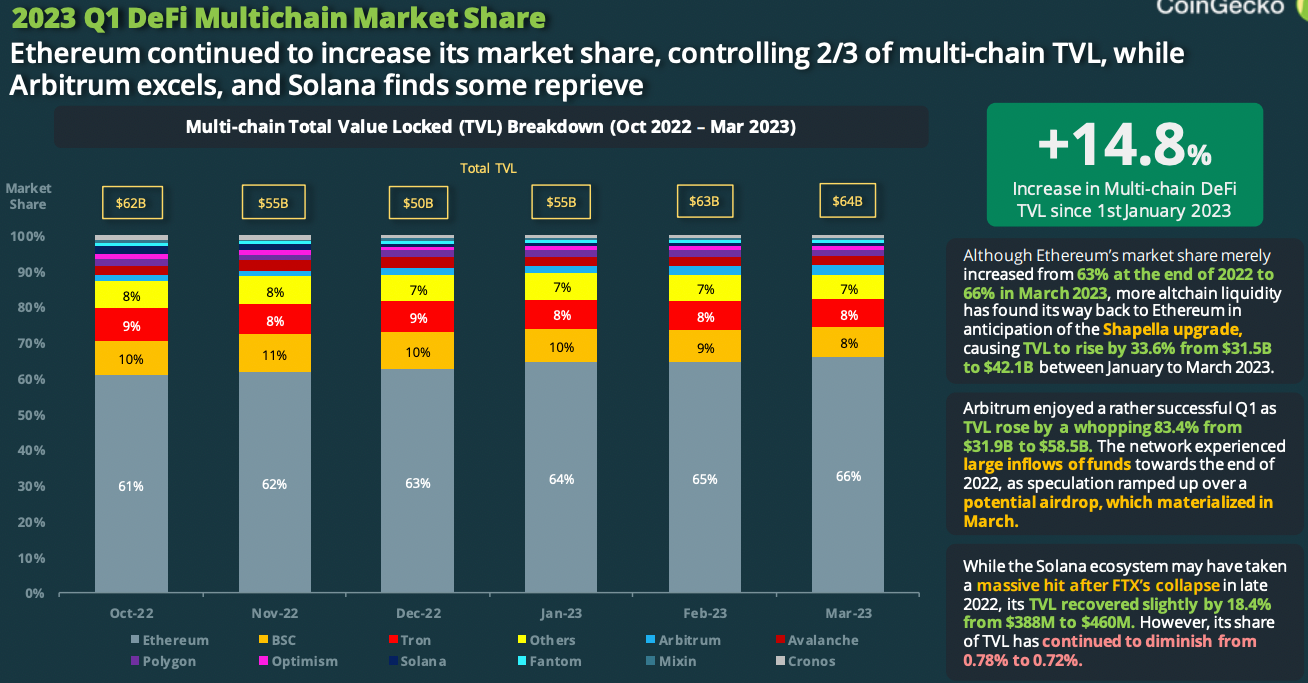
DeFi 公链占比

CoinGecko:Uniswap 主导地位超过七成

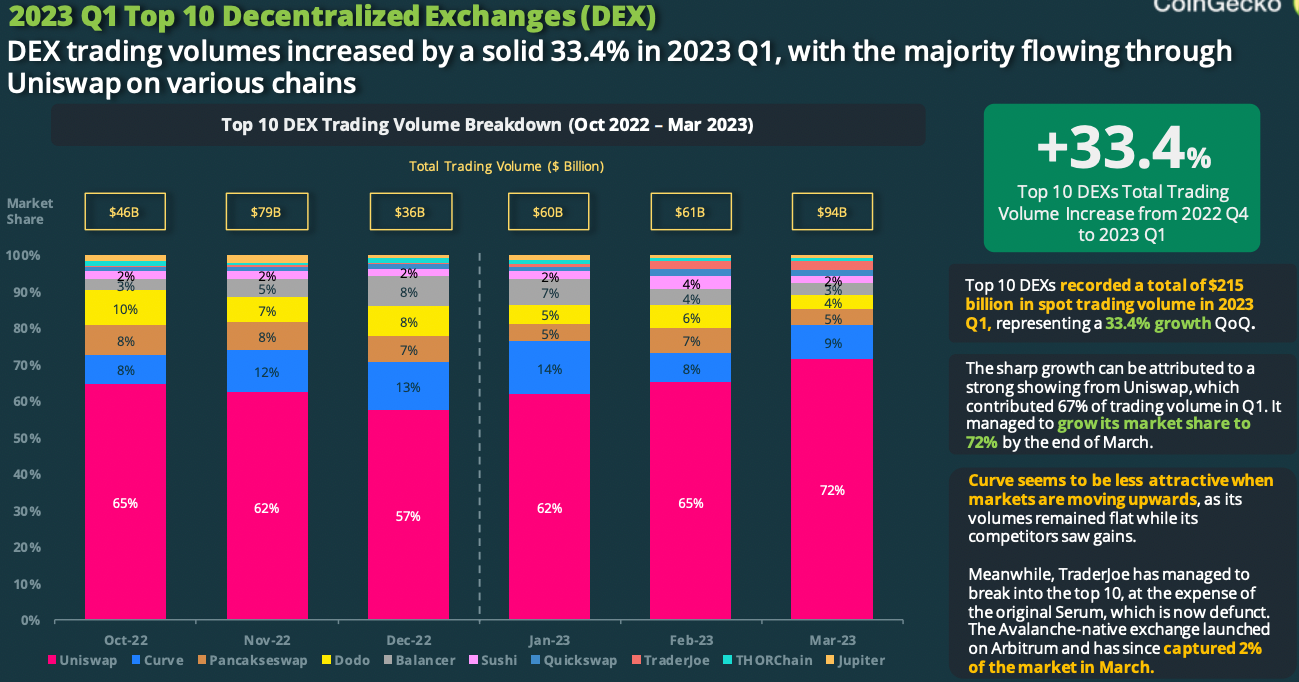
无论是LP 可以自定义价格区间的Uniswap v3,或是具备ve 代币模型的CURVE,在加密社群中皆各有坚定支持者,但就数据而言,Uniswap 以72% 的交易量几乎主宰了整个DEX 领域。

目前DEX 单月交易量大约只占CEX 的一成:9,000 亿美元vs. 900 亿美元。

第二季数据或许更值得关注,因为Uniswap 牌照已到期,其它开发商已能分岔其代码并作为商业用途,四月初上线的PancakeSwap V3 就是如此。
DEX 市占

CoinGecko:LSD 价值超越借贷市场

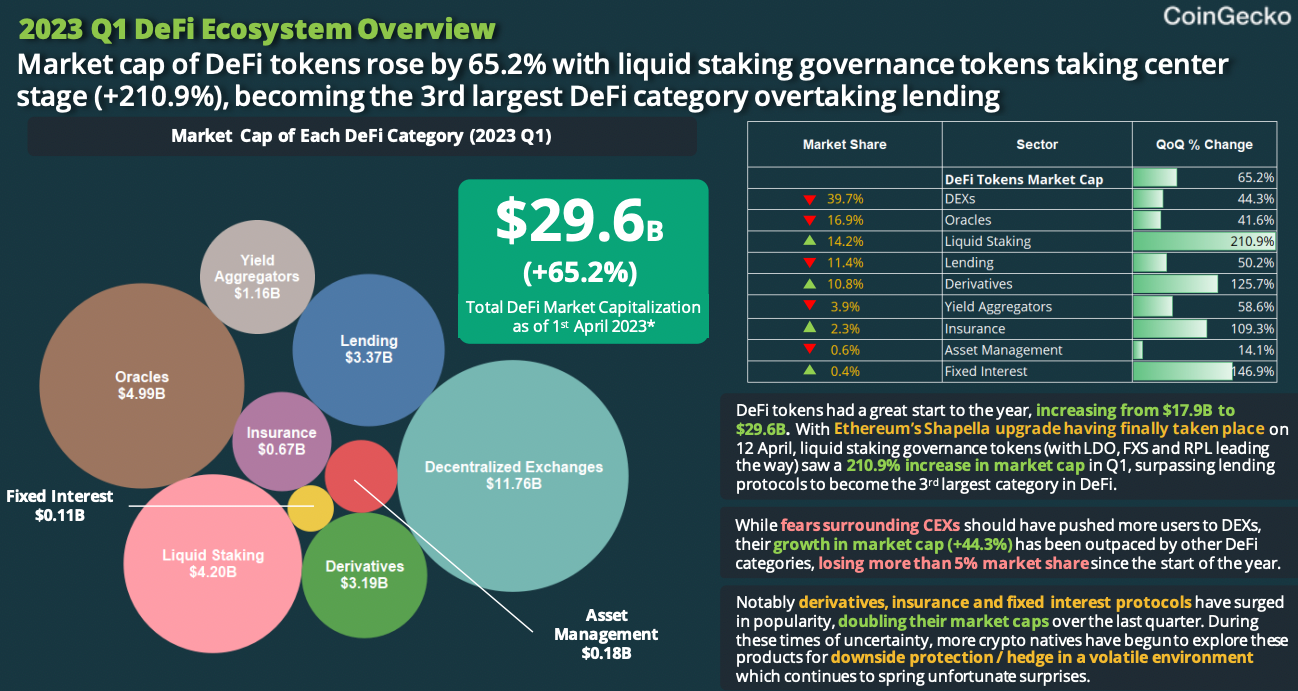
流动性质押市场(Liquid Staking Derivatives, LSD) TVL 在第一季上升了210%,锁仓价值以420 亿美元超越借贷市场的33.7 亿美元。

整体仍是以去中心化交易所的117.6 亿美元为大宗,固定利率协议、衍生品市场也分别上涨146%、125%。
DeFi 板块占比

CoinGecko: NFT 市场Blur 三月交易量占比超过七成

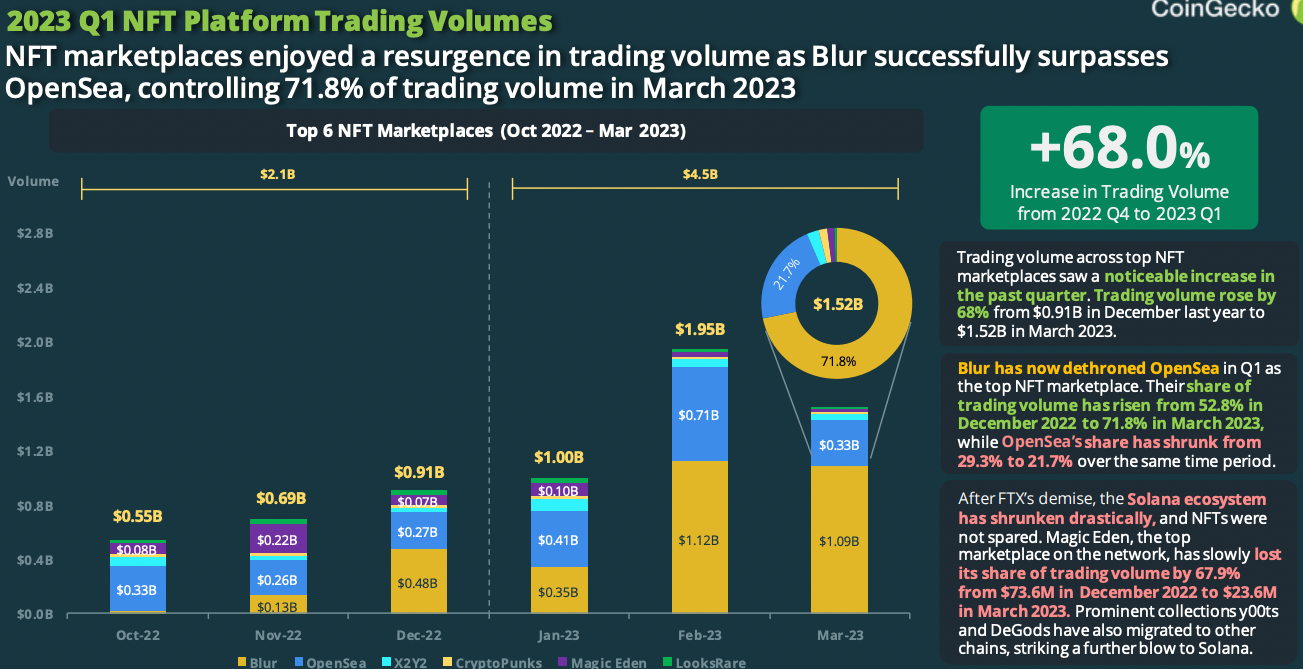
Blur 在正式空投前就已经成为NFT 的第二大交易市场,二月空投后直接崛起,超越OpenSea,而三月更囊括了71.8% 的交易量。
NFT 交易所市占

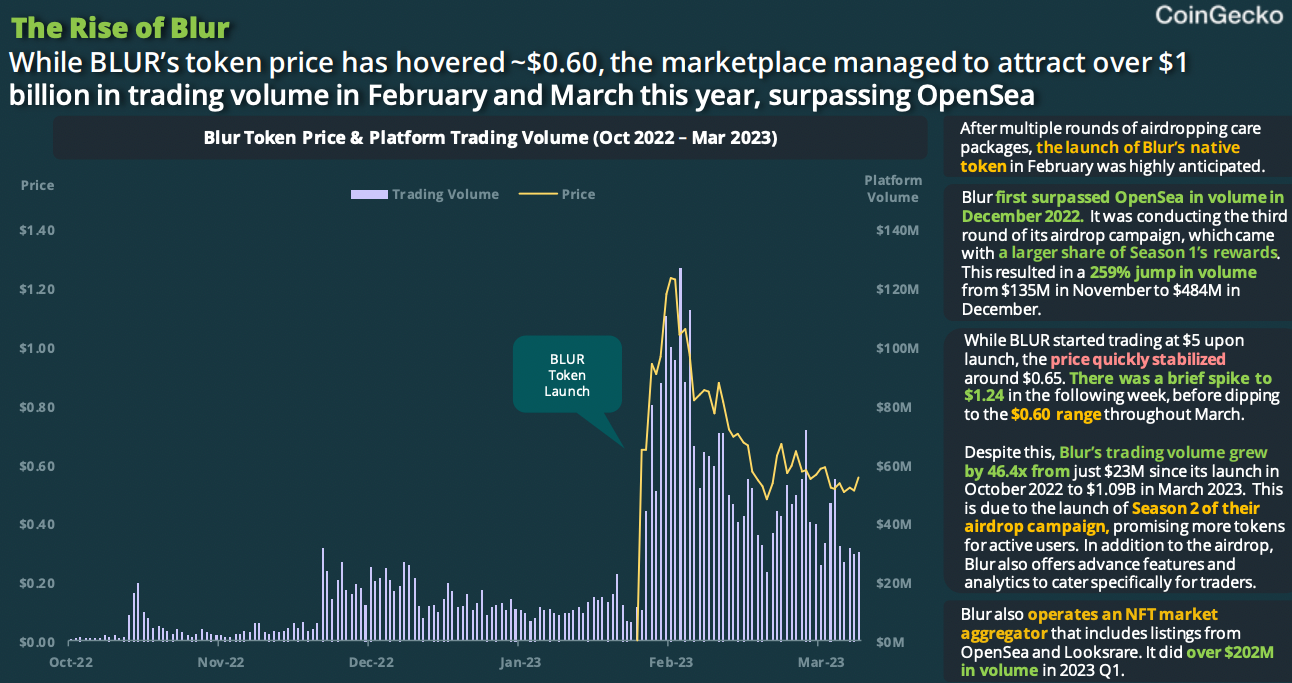
Blur空投的造富效应为自家平台带来巨大交易量,也为NFT 市场带来更深度的流动性,但用户积极刷量获取空投积分的背后同样付出了巨大的交易成本。

可以看出Blur空投后用户更积极地频繁交易而导致交易量暴涨,但此后交易量也逐日走跌。
Blur 交易量变化

CoinGecko:不受监管影响,头部机构市占率平稳

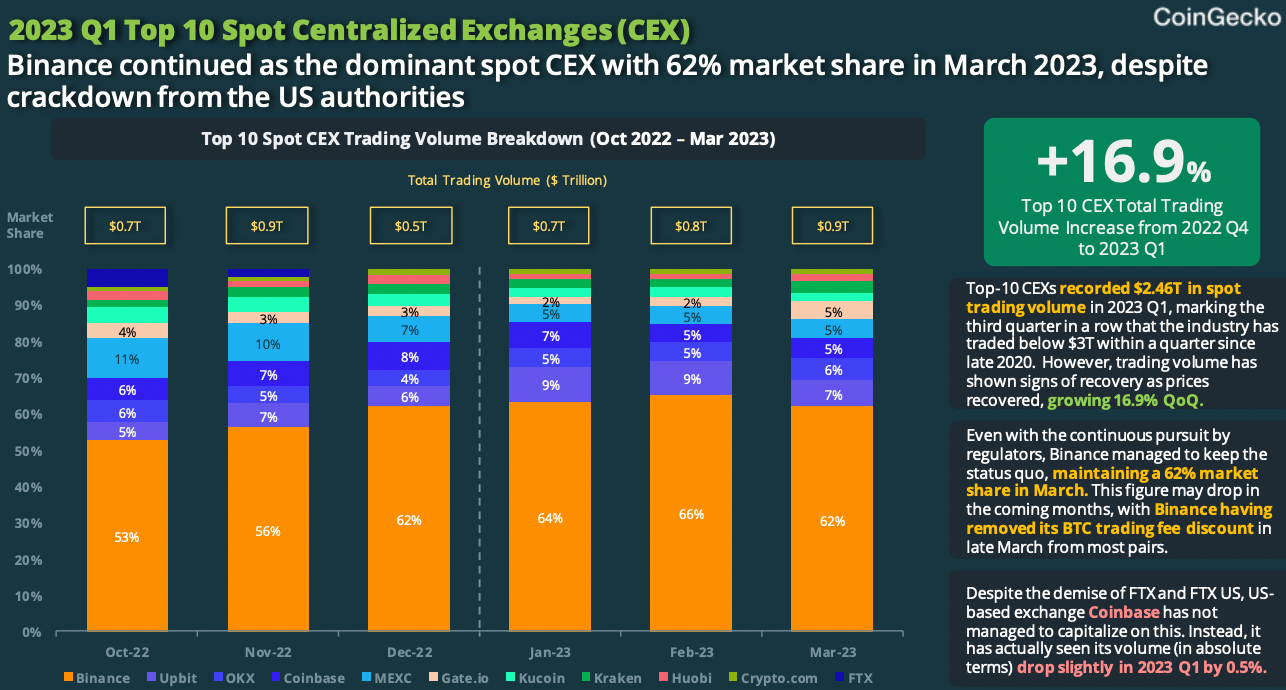
币安在第一季遇上BUSD 、 CFTC提告等两起重大监管事件,但现货市占反而来到64% (2022 Q4 为57%),衍生品市占也有61%。
现货交易所市占

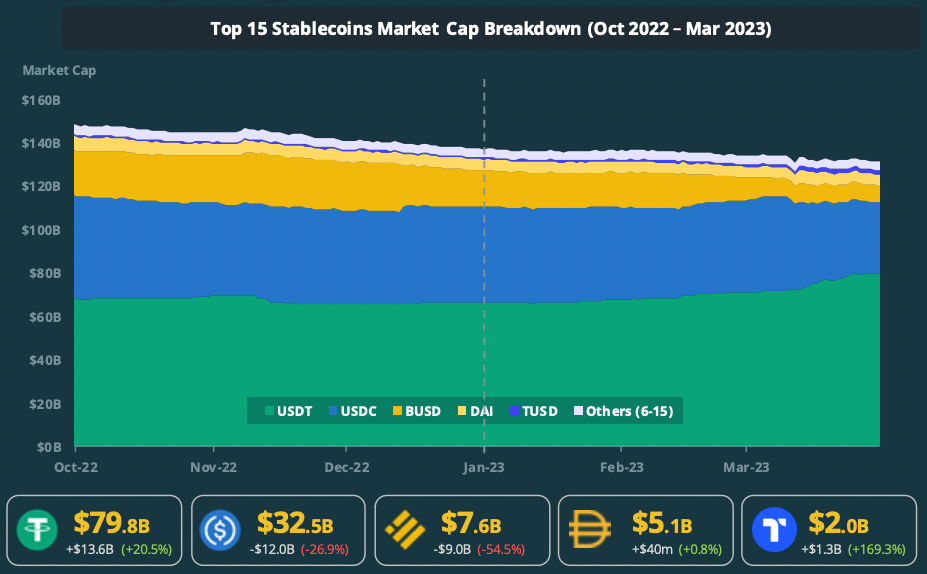
CoinGecko:稳定币市值掉62 亿美元

原因包括SEC 调查BUSD、USDC 脱钩事件等。

重要数据(市值):

USDT 成长20.5%

TUSD 成长169.3%

BUSD 下滑-47.3%

USDC 下滑-26.9%

GUSD 下滑-32%
稳定币市值占比
Leituras Relacionadas

"Money Is Useless"? Why Musk's 2036 Prediction Could Completely Reshape Bitcoin's Fate

Elon Musk Predicts "Money Will Be Irrelevant" by 2036, Potentially Reshaping Bitcoin's Future In a recent interview with The Economist, billionaire Elon Musk, CEO of SpaceX and Tesla, made a startling prediction: money will become "irrelevant" within a decade as the world transitions to a state of "unbelievable abundance." He argues that if robots and AI can provide goods and services exceeding all human consumption, the purpose of money would vanish. This prediction coincides with a critical juncture for Bitcoin. While the cryptocurrency has been trading sideways and below its all-time highs, it is approaching what some see as a major turning point. Musk's views are closely watched due to his past statements equating "energy" with true currency—a concept that resonates with Bitcoin proponents, as Bitcoin's security model is deeply tied to energy-intensive mining. His companies, SpaceX and Tesla, collectively hold nearly $2 billion worth of Bitcoin. Although Musk's public enthusiasm for crypto has moderated since its peak, he maintains support for Bitcoin and his favored Dogecoin. He has criticized government-issued fiat currencies as "hopeless" and suggested a preference for Bitcoin. His latest prophecy, envisioning a post-scarcity future driven by AI and robotics, refocuses attention on Bitcoin's potential role as a value anchor in a world where traditional money may lose its meaning.

Foresight NewsHá 9m

"Money Is Useless"? Why Musk's 2036 Prediction Could Completely Reshape Bitcoin's Fate

Foresight NewsHá 9m

Storj Labs Files for Bankruptcy Protection: Can Token Holders Exchange for Company Equity?

Storj Labs, parent company of decentralized cloud storage platform Storj, filed for Chapter 11 bankruptcy protection on July 26 in the U.S. District Court for the Northern District of West Virginia. The company stated its network will operate normally and token functions will be unaffected. Notably, Storj plans to propose a mechanism in its reorganization plan allowing STORJ token holders a path to equity in the restructured company—an unprecedented offer in the crypto industry. However, its feasibility depends on whether any residual value remains after creditor repayments, as token holders are low in the legal priority hierarchy. Founded in 2014, Storj is an early decentralized infrastructure project. It reported a 7x increase in Annual Recurring Revenue (ARR) to approximately $30 million in 2024. In October 2025, it was acquired by Inveniam Capital Partners. Less than a year later, the merged entity entered bankruptcy proceedings. Storj attributed the filing to historical debts from past operations and acquisitions, stating they were too large to be absorbed by business growth. The company also plans to refocus on its core decentralized storage business, likely divesting Valdi, a GPU computing company acquired in 2024. The proposed token-to-equity conversion faces significant legal hurdles. Under U.S. bankruptcy law, creditors are paid before equity holders, and utility token holders are not automatically recognized as equity members. The details—such as eligibility, allocation ratio, and mechanics—are yet to be determined and require court approval. Another factor is token concentration, with Storj Labs itself holding roughly 30% of the total 425 million STORJ supply. In the broader decentralized storage landscape, Storj is a smaller player compared to giants like Filecoin and Arweave. Its key advantage is faster retrieval speeds for "hot" data. The bankruptcy process introduces risks, including potential client and node operator migration to competitors. STORJ price fell roughly 11.2% following the news. Key points for token holders to watch are the specific terms of the equity conversion plan, court approval progress, the treatment of the company's own token stash, and whether the refocused core business can sustain value post-reorganization.

Foresight NewsHá 13m

Storj Labs Files for Bankruptcy Protection: Can Token Holders Exchange for Company Equity?

Foresight NewsHá 13m

Perpetual Futures 'Landing in the US' Hits Roadblock: Why is CME Suing the CFTC in Court?

Perpetual crypto futures, which dominate global crypto derivatives trading, are entering the U.S. market. The CFTC approved KalshiEX to launch a true Bitcoin perpetual contract (BTCPERP) and issued rules allowing licensed exchanges to convert expiring crypto futures into perpetual ones. This move was challenged when CME Group sued the CFTC, arguing that perpetuals should be regulated as "swaps" under stricter rules, not as futures. The lawsuit's outcome will significantly impact the legal foundation of the nascent U.S. perpetuals market. Currently, two legal structures exist in the U.S.: true perpetuals (like Kalshi's) and long-dated futures (like Coinbase's) that mimic perpetuals via frequent funding rate settlements. These funding rates, paid between longs and shorts, keep contract prices anchored to spot. The proliferation of U.S. perpetuals creates fragmented liquidity across platforms (Kalshi, Coinbase, CME), with different rules on leverage, margining, and clearing. This fragmentation reduces capital efficiency, as collateral cannot be shared across products. Key competitive battlegrounds will be cross-product margin efficiency and the response of these new markets to extreme volatility. A pending Coinbase proposal to allow USDC stablecoin as futures margin could improve capital efficiency. Ultimately, the market's evolution hinges on two factors: how U.S. perpetuals behave during sharp Bitcoin price moves, and the court's ruling on whether they are futures or swaps.

Foresight NewsHá 13m

Perpetual Futures 'Landing in the US' Hits Roadblock: Why is CME Suing the CFTC in Court?

Foresight NewsHá 13m

Trading

Spot
活动图片