Ether's Security Status Remains Unclear as SEC Chair Gensler Fails to Answer Lawmaker's Question
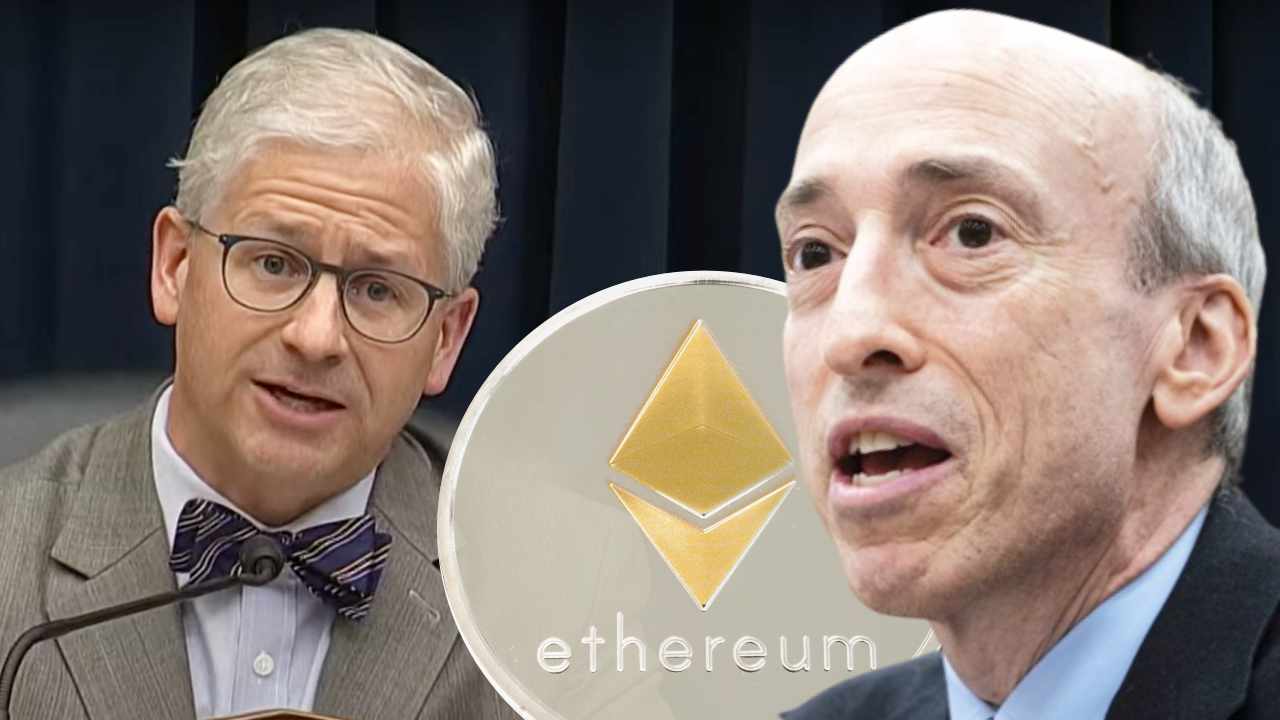
The chairman of the U.S. Securities and Exchange Commission (SEC), Gary Gensler, would not answer a direct question in a congressional hearing about whether ether is a security. While the SEC chair insisted that the law is clear on crypto, Congressman Patrick McHenry argued that the SEC’s regulatory actions say “there’s a great deal of uncertainty.”
Lawmaker Probes SEC Chair Gary Gensler on Whether Ether Is a Security
The chairman of the U.S. Securities and Exchange Commission (SEC), Gary Gensler, testified on Tuesday before the House Financial Services Committee on the oversight of the SEC. During the hearing, the committee’s chairman, Congressman Patrick McHenry (R-NC), asked the SEC chief whether ether (ETH) is a commodity or a security.
McHenry explained that back in 2018, Bill Hinman, who was the director of the SEC’s Division of Corporation Finance at the time, stated that ether was not a security. Last month, the chairman of the Commodity Futures Trading Commission (CFTC), Rostin Behnam, expressed his view that ether is a commodity, he continued, adding that the New York State Attorney General asserted in a court filing last month that ether is a security. “Clearly, an asset cannot be both a commodity and a security, do you agree?” the lawmaker asked Gensler.
The SEC chief replied:
Actually, all securities are commodities under the Commodity and Exchange Act. It’s that we are excluded commodities but I would agree that a security cannot be also an excluded commodity and an included commodity.
“How do you categorize ether then?” McHenry questioned Gensler. When the SEC chair attempted to provide a generic answer about securities laws, the congressman pressed: “I’m asking you, sitting in your chair now, to make an assessment, under the laws as exist, is ether a commodity or a security?”
While Gensler insisted that he will not discuss any specific tokens, the congressman pointed out that the SEC chief has already spoken about one token, bitcoin, and he is now being asked to speak about ethereum. Gensler previously said that all crypto tokens, other than BTC, are securities but would not name any other tokens in particular.
Disregarding the lawmaker’s question about ETH specifically, Gensler stressed that there are 10,000 to 12,000 crypto tokens and proceeded to give the same generic explanation he has said many times:
If there is a group of entrepreneurs raising money from the public in anticipation of profits based on…
McHenry cut Gensler off mid-sentence and repeated this question: “I’m asking about one. I’m asking a specific question, Chair Gensler. I said this in private. It should be no shock to you I’m asking this question. Is ether a commodity or security?”
Gensler responded:
And again, it depends on the facts and the law and if there’s a group…
“I’m asking about the facts and a law sitting in your seat and the judgment you’re making,” the congressman reiterated his question after cutting Gensler off mid-sentence again.
“Mr. Chair, I think you would not want me to pre-judge,” Gensler insisted.
“But you have prejudged on this. You have taken 50 enforcement actions. We are finding out as we go, as you file suits, as people get Wells notices on what is a security in your view and your agency’s view. I’m asking you a very simple question about the second-largest digital asset. What is your view?” Gensler replied:
My view is if there is a group of individuals in the middle that the public is in…
McHenry cut Gensler off mid-sentence again and proceeded to ask his next question.
“Let me just ask a second question. Do you think it serves the market for an object to be viewed by the commodities regulator as a commodity and the securities regulator as a security? Do you think that provides safety and soundness for the product? Do you think it provides consumer protection? Do you think it serves the value of innovation? I think ‘no’ should be a very simple answer for you here,” McHenry told Gensler. “Uncertainty is bad, is it not?”
When the committee chair confronted Gensler about not answering his ETH-specific question, the SEC chief replied: “I’m answering it in the generic because you would not want me to speak about any one set of facts and circumstance.”
The lawmaker continued: “Let me just step back. There’s a lack of clarity here in the marketplace. Can you at least agree to that?” Gensler responded:
I think the clarity is there. The law is clear.
“All right, let me be explicit about this. The market doesn’t see it. Your regulatory actions and the CFTC’s regulatory reactions say that there’s a great deal of uncertainty here. It is the intention of this committee to fix that uncertainty and actually provide a sound legal basis for this,” McHenry stressed.
Many people have complained about the SEC, under Gensler, taking an enforcement-centric approach to regulating the crypto sector. Congressman Warren Davidson recently revealed that he is introducing legislation to remove the chairman of the SEC due to “a long series of abuses.”