$114514 Soars to 40 Million Market Cap, Which Projects Are Worth Accumulating?

marsbitPublicado em 2026-01-06Última atualização em 2026-01-06

Resumo

The meme coin market has experienced a significant rebound after a prolonged period of weakness, with its total market capitalization rising from around $35 billion to nearly $50 billion in early 2026. This recovery, reminiscent of a "classic meme coin" trend, saw established tokens like Pepe surge over 70% in a week, with trading volumes reaching approximately $1.1 billion in 24 hours. The resurgence is seen as a potential indicator of a broader market upturn, similar to past cycles where meme coins led bullish sentiment. The revival has sparked interest in three key areas: 1. **Attention Tokens**: Rapidly trending tokens like "114514," which gained 250x in two days, highlight the role of viral narratives and social media-driven speculation. 2. **Classical Meme Coins**: Established projects like Doge, Shiba, Pepe, and BONK have shown strong growth, with potential for long-term value if they sustain community engagement and cultural impact. 3. **Token Utility and Revenue Sharing**: Projects like Uniswap and Aave are advancing tokenholder rights through revenue-sharing models, blurring lines between meme coins and utility-driven altcoins. The meme coin rally is viewed as a possible precursor to a broader bull market, emphasizing the importance of community, narrative, and evolving tokenomics in capturing new opportunities.

After a prolonged period of weakness, meme coins have finally shown an exciting rebound.

Since mid-September last year, the total market capitalization of meme coins gradually declined from about $80 billion to a low of only $35 billion, with almost no significant rebounds along the way. But entering 2026, in the first week of the new year, the total market cap of meme coins finally rebounded, returning to nearly $50 billion.
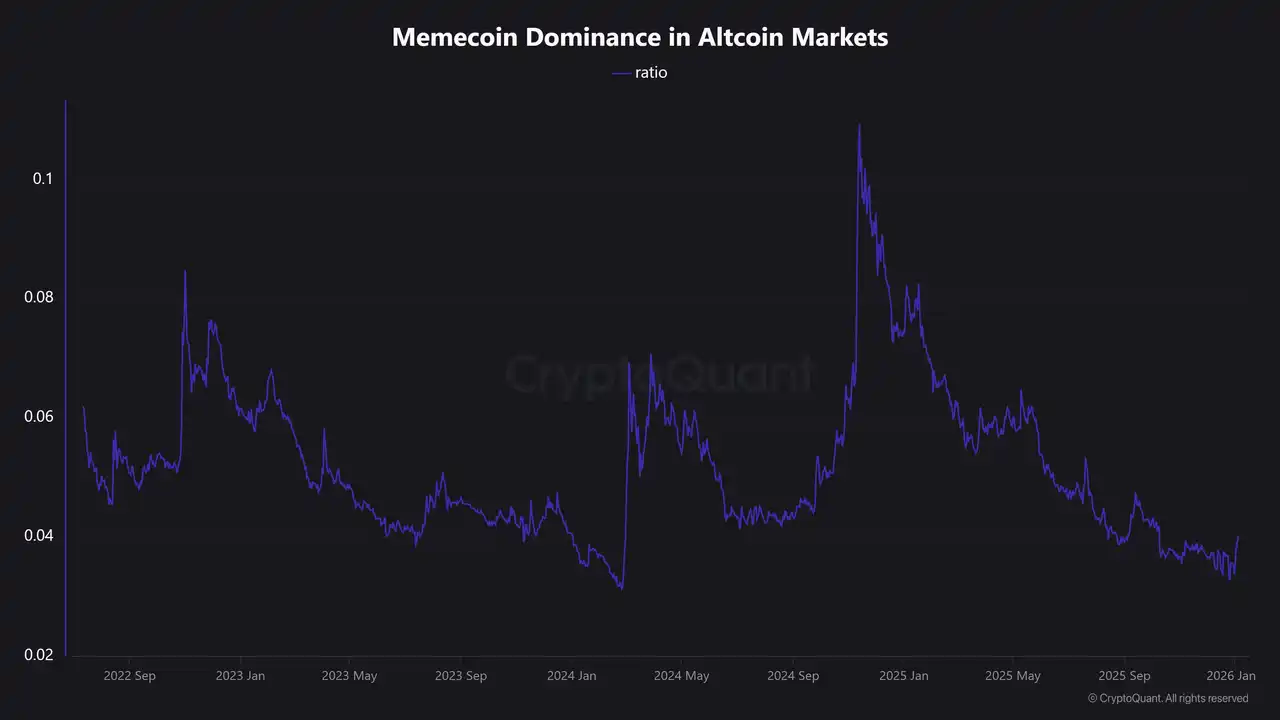
During the same period, the proportion of meme coin market capitalization in the overall altcoin market almost reached its lowest point since July 2022, remaining at only about 3%. Entering 2026, this indicator has also finally rebounded, returning to about 4%.
This rebound in meme coins gives a feeling of a "nostalgia server." It seems that the meme coin market version has switched from "new shitcoins" back to "classic old coins." Pepe has risen over 70% in the past week, with a staggering 24-hour trading volume of about $1.1 billion, reaching 50+% of Doge's 24-hour trading volume.

Doge, Shiba, Pepe, BONK, Pengu, SPX, Fartcoin—these familiar large-cap, long-lifecycle meme coins have all risen across the board in the past week, with none increasing less than 20%. If such a trend can continue, based on past experience, we can hope to see a recurrence of the situation in previous bull markets where large-cap meme coins charge forward and then new meme stars emerge.

This meme coin rebound is also optimistically regarded by crypto players as the starting point of a new comprehensive market trend. Looking back at history, meme coin trends have repeatedly served as leading indicators of changes in market risk appetite, such as Doge in 2021, Bome and the pump.fun trend in 2024, etc. Because the logic of meme coins relies more on emotional support, and they easily spark discussions on social media, once prices rise and positive discussions increase, it is easy to form a comprehensive bull market atmosphere among retail investors.

If this bull market really arrives, from what angles can we position ourselves to capture new opportunities in the new bull market at the current point in time?

"Currently Hottest": Attention Tokens

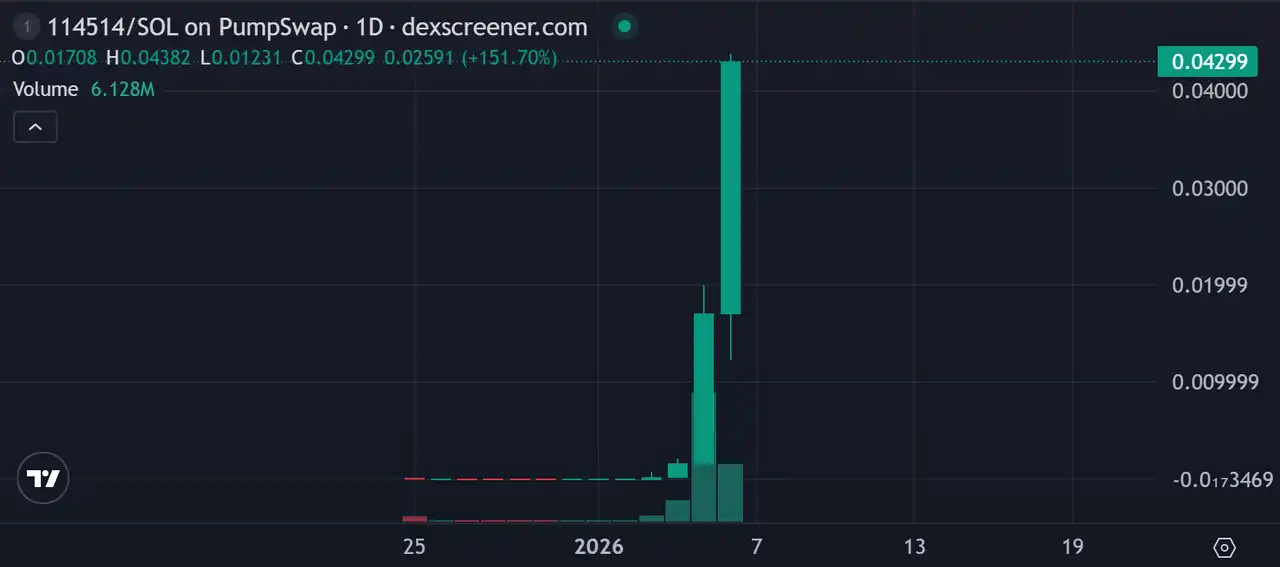
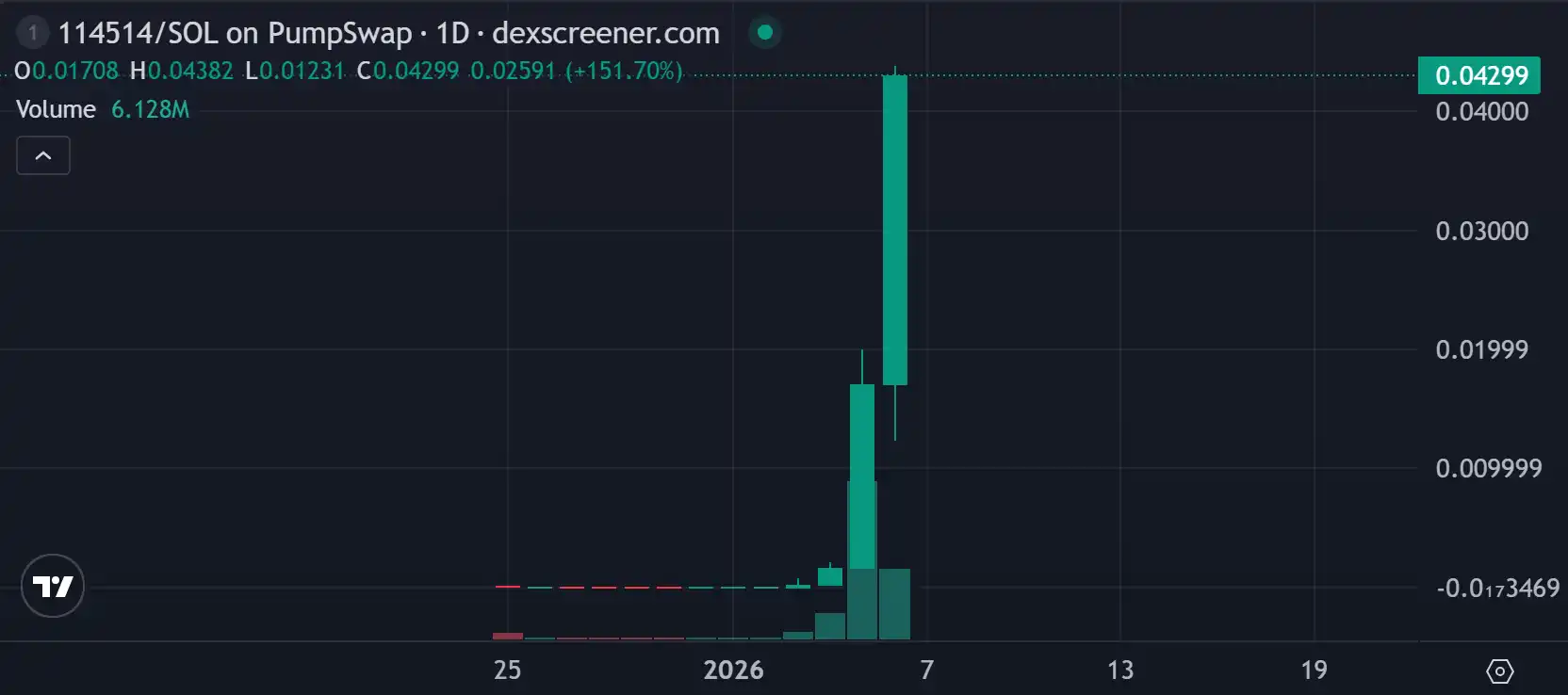
The meme rebound has made the rotation of attention fast again. White Whale's success was only a little over a week ago, and its price is still near its all-time high, but in the past two days, a new "golden dog" called "114514" has emerged, just breaking through a $40 million market cap today to set a new all-time high, rising about 250 times in 2 days.
The梗 "114514" comes from the Japanese film studio COAT CORPORATION's 2001 gay adult film "BABYLON STAGE 34 Midsummer Night's Erotic Dream the IMP." An actor playing the role of "senpai" in the film had extremely outstanding acting and lines, especially shouting the line "Good! Come on! (いいよ!こいよ)" in the film. This line was referred to by Japanese netizens using Japanese number homophones and stuffed into various meme images and videos.

Although, according to the studio's confidentiality agreement, the true identity of this "senpai" is unknown, in 2011, a molester named "Tadokoro Koji" was arrested in Japan. Because he looked highly similar to "senpai," netizens默认 "senpai" is Tadokoro Koji. This梗 is also very popular in the Chinese-speaking community. Accompanying "114514" in comments are generally words related to stench, such as "stinky, smells terrible, foul," the source of which is the foul nature of the molestation crime committed by Tadokoro Koji, who is默认为 "senpai." Also frequently seen is "Good times, have come," which is an intentional translation of "114514."

It's hard to say there is any objectively analyzable reason for the sudden暴涨 of this old梗 "114514" in the crypto circle, but the overflow of emotion can still be given some expectation. Since there is no objective reason, the direction of "114514"'s emotional overflow depends on how the market interprets it and how capital gives direction. It can be understood from the angle of a Japanese meme梗, or from the angle of a pure number梗 like "42069."

In the game of attention tokens, there's no need to ask why, but to judge how other players will think, what reasons can be accepted by most people as buying pressure, and luck.

"Long-termism": Classic Meme Coins

In this meme rebound, the return of "classic meme coins" like Pepe, BONK, Pengu, etc., is surprising, because these large-cap, long-time-tested old meme coins haven't been in the market spotlight for a long time. Due to the popularity of attention玩法, everyone is more accustomed to fast-paced games, and "diamond hands" even carries a somewhat嘲讽 meaning.

However, every truly comprehensive market trend actually has some excellent meme coins that stand out, are accepted and recognized by the market as "good coins," maintain a high market cap long-term, and have a group of坚定的 holders.

This is actually a sign of the long-needed maturity of the meme coin track. In Murad's proposed "meme coin super cycle" theory, it includes a set of criteria for judging the quality of meme coins—being able to maintain a medium or even large market cap (above $5 million), having undergone at least 6 months of time考验, whether there is a clear enough target concept to achieve certain things, whether it can trigger inner resonance to truly complete the沉淀 and unity of holders, etc.

According to this standard, besides the meme giants that the market has默认 "too big to fail" like Doge, Shiba, Pepe, BONK, Pengu, etc., there are actually many potential stocks worth paying attention to. Larger ones include SPX, Fartcoin, Mog, BITCOIN (HarryPotterObamaSonic10Inu), smaller ones include neet, Chillhouse, Joe, etc.

In the game of classic meme coins, it is necessary to摆脱 personal emotions as much as possible and objectively and deeply observe their social media and communities. Meme coins that can grow to this stage must be rare and easy to distinguish, because first of all, it is not easy for a meme coin to be operated stably for a long time. Either the community has凝聚起来 to collectively produce content, or a team with sufficient resources has greater ambitions for sustainable development. The goal of these coins is no longer to stabilize the internal community and token supply, but on the basis of having completed internal integration, to consider how to attract external increments through multiple channels, and even to influence and change real-world problems from a certain angle through meme culture.

"Revenue is King": The Implementation of Token Rights

For a long time, it has been difficult to say that those projects in the crypto circle with beautiful and stable revenue report cards can be analyzed using the stock market's P/E logic, because token holders do not enjoy rights like dividends like shareholders. Therefore, the profit indicator, in the crypto circle,更多的是作为一种 "hope," playing a "narrative" role. And this fragile "narrative" role is also considered by meme coin maximalists to be essentially no different between altcoins and meme coins; altcoins are meme coins.

Nevertheless, the revenue narrative still holds in the crypto circle. Farther away, Uniswap and Aave still firmly occupy the forefront of crypto market cap; closer, Hyperliquid's rapid growth has single-handedly raised the ceiling of the Perp DEX track.

Even better, since last year, we have seen some progress in the implementation of token rights. For example, the反复反复就是打不开的 Uniswap fee switch finally successfully opened.又比如, the "brand asset control权移交给持币者" proposal for Aave, although it ended without passing, Aave Labs承诺 will share revenue generated outside the protocol with token holders, acknowledging that interest alignment is crucial for both Aave Labs and AAVE holders.

Although there are still many legal, practical execution, and other issues on the road to aligning token rights with equity rights, the improvement of governance models within the circle and the awakening of token holder consciousness are already significant progress. If there is a market trend next, those projects that do better in terms of revenue interest alignment should be able to gain more market recognition, which is equivalent to an upgrade before revenue distribution truly摆脱 narrative and becomes reality.

Conclusion

We hope that this meme rebound is really the prelude to a comprehensive market trend. We hope that if there is a comprehensive market trend, the market will have new stars脱颖而出, completing the "新旧交替" of the crypto circle.

Original article link

Perguntas relacionadas

QWhat is the '114514' meme token and why did it surge in value?

AThe '114514' meme token is based on a Japanese internet meme originating from a 2001 adult film. It surged over 250x in 2 days, reaching a $40 million market cap, primarily driven by community sentiment and speculative attention rather than fundamental value.

QWhich 'classic meme coins' are mentioned as having significant gains in the recent rally?

AThe article mentions Pepe (up over 70%), Doge, Shiba, BONK, Pengu, SPX, and Fartcoin as classic meme coins that saw gains of at least 20% in the past week.

QAccording to the article, what role do meme coins often play in the crypto market cycle?

AMeme coins often act as a leading indicator of shifting market risk appetite. Their rallies, fueled by social media hype and retail sentiment, can create a broader bullish atmosphere, as seen with Doge in 2021 and Bome in 2024.

QWhat is the 'meme coin super cycle' theory proposed by Murad, and what criteria does it use?

AMurad's 'meme coin super cycle' theory proposes criteria for evaluating meme coin quality: sustaining a medium-to-large market cap ($500M+), surviving for at least 6 months, having a clear mission or goal, and fostering a strong, united community of holders.

QWhat recent progress does the article highlight regarding tokenholder rights and revenue sharing?

AThe article notes progress such as Uniswap successfully enabling its fee switch and Aave Labs committing to share off-protocol revenue with token holders, acknowledging the importance of aligning incentives between projects and their communities.

Leituras Relacionadas

In-Depth Report on the On-Chain Lending Market: When Off-Chain Credit Meets On-Chain Liquidation

The on-chain lending market has evolved from a peripheral DeFi niche into core financial infrastructure. As of early 2026, total value locked (TVL) in on-chain lending protocols has reached $64.3 billion, accounting for 53.54% of total DeFi TVL, making it the largest and most mature vertical within decentralized finance. Aave dominates the sector with approximately $32.9 billion in TVL, commanding nearly half of the market—a leadership position that is unlikely to be challenged in the foreseeable future. However, the path of on-chain lending forward is not without risk. Liquidation cascades, credit defaults, and cross-chain vulnerabilities remain systemic threats hanging over the industry. At the same time, a deeper structural transformation is underway: on-chain lending is shifting from a “leverage tool for crypto-native users” to a “compliant gateway for institutional capital”. The scale of RWA (Real World Asset) lending has surpassed $18.5 billion, with U.S. Treasuries and government securities increasingly serving as core collateral. Institutional capital inflows are reshaping both the user base and risk appetite of the sector. This report systematically analyzes the evolution of on-chain lending definitions, competitive dynamics, core risks, and future trends, providing a comprehensive industry outlook for investors and trade practitioners. Key findings suggest that the “one dominant player with several strong challengers” structure will persist in the short term, while fixed-rate lending, compliant collateral, and institutional credit underwriting will define the next phase of competition. For investors focused on DeFi infrastructure, three key opportunity tracks stand out, namely, the Aave ecosystem (Morpho, Spark), RWA lending protocols (Ondo, Maple) and fixed-rate innovation (Notional, Pendle).

HTX LearnHá 6m

In-Depth Report on the On-Chain Lending Market: When Off-Chain Credit Meets On-Chain Liquidation

HTX LearnHá 6m

Fu Peng's First Public Speech in 2026: What Exactly Are Crypto Assets? Why Did I Join the Crypto Asset Industry?

Fu Peng, a renowned macroeconomist and now Chief Economist at New火 Group, delivered his first public speech of 2026 at the Hong Kong Web3 Festival. He explained his perspective on crypto assets and why he joined the industry, framing it within the context of macroeconomic trends and financial evolution. Fu emphasized that crypto assets are transitioning from an early, belief-driven phase to a mature, institutionally integrated asset class. He drew parallels to the 1970s-80s, when technological advances (like computing) revolutionized traditional finance, leading to the rise of FICC (Fixed Income, Currencies, and Commodities). Similarly, current advancements in AI, data, and blockchain are reshaping finance, with crypto assets becoming part of a new "FICC + C" (C for Crypto) framework. He noted that institutional capital, including traditional hedge funds, avoided early crypto due to its speculative nature but are now engaging as regulatory clarity emerges (e.g., stablecoin laws, CFTC classifying crypto as a commodity). Fu predicted that 2025-2026 marks a turning point where crypto becomes a standardized, financially viable asset for diversified portfolios, akin to commodities or derivatives in traditional finance. Fu defined Bitcoin not as "digital gold" in a simplistic sense but as a value-preserving, financially tradable asset. He highlighted that crypto's future lies in regulated, institutional adoption, moving away from retail-dominated trading. His entry into crypto signals this maturation, where traditional finance integrates crypto into mainstream asset management.

marsbitHá 1h

Fu Peng's First Public Speech in 2026: What Exactly Are Crypto Assets? Why Did I Join the Crypto Asset Industry?

marsbitHá 1h

Justin Sun Sues Trump Family: What $75 Million Bought Was Only a Blacklist

Justin Sun, founder of Tron, has filed a lawsuit in federal court against World Liberty Financial (WLF), alleging he was made the "primary target of a fraudulent scheme" after investing $75 million. Sun claims the investment secured him an advisor title and WLFI tokens, which were later frozen by WLF, causing "hundreds of millions in losses." The dispute began in late 2024 when Sun's investment helped revive WLF's struggling token sale, which ultimately raised $550 million. Shortly after, the SEC dropped its lawsuit against Sun following Donald Trump's inauguration. However, relations soured when Sun refused WLF's demands for additional funding. In August 2025, WLF added a "blacklist" function to its smart contract, allowing it to unilaterally freeze tokens. Sun's holdings, worth approximately $107 million, were frozen, and he was threatened with token destruction. The lawsuit highlights WLF's structure, which directs 75% of token sale profits to the Trump family, who had earned $1 billion by December 2025. WLF's CEO is Zach Witkoff, son of U.S. Middle East envoy Steve Witkoff. The project faces scrutiny for opaque operations, including a controversial loan arrangement on the Dolomite platform, co-founded by a WLF advisor. Despite Sun's history with the SEC, the case underscores centralization risks within DeFi, as WLF controls governance and holds powers to freeze assets arbitrarily. Sun's tokens remain frozen as legal proceedings begin.

marsbitHá 1h

Justin Sun Sues Trump Family: What $75 Million Bought Was Only a Blacklist

marsbitHá 1h

Trading

Spot
Futuros

Artigos em Destaque

O que é MEME 2.0

Memecoin 2.0: A Ascensão do $MEME 2.0 no Mundo das Criptomoedas Introdução No panorama em constante evolução das criptomoedas, um novo concorrente surgiu. Memecoin 2.0, simbolizado como $MEME 2.0, eleva o conceito de moedas meme a um novo nível emocionante. Como um subproduto do Memecoin original, este projeto capturou a atenção da comunidade crypto ao mudar o foco de incentivos financeiros típicos para uma experiência envolvente e divertida. Operando na blockchain Ethereum, Memecoin 2.0 redefine audaciosamente o envolvimento da comunidade na esfera crypto. O que é Memecoin 2.0, $MEME 2.0? No seu cerne, Memecoin 2.0 é um projeto de criptomoeda que prioriza o espírito comunitário e a diversão associada à cultura meme. Ao contrário das criptomoedas convencionais, que se concentram em casos de uso práticos e benefícios tangíveis, Memecoin 2.0 distingue-se ao abraçar o lado mais leve da moeda digital. O projeto existe sem promessas de utilidade, um roteiro estruturado ou retornos financeiros, focando em vez disso em fomentar uma comunidade vibrante centrada em memes e no prazer partilhado. Ao fazer isso, aproveita a crescente tendência da cultura meme no espaço online, tornando-se num jogador único no mundo dos ativos digitais. Criador do Memecoin 2.0, $MEME 2.0 Apesar de extensa pesquisa sobre as origens do Memecoin 2.0, a identidade explícita do seu criador continua desconhecida. Esta anonimidade não é incomum na comunidade crypto, onde muitos projetos são liderados por indivíduos ou grupos que preferem ficar nos bastidores. A falta de informações publicamente disponíveis sobre o criador pode ser vista como um movimento estratégico, colocando os holofotes no envolvimento da comunidade em vez de na notoriedade individual dentro do espaço. Investidores do Memecoin 2.0, $MEME 2.0 As informações sobre os investidores ou o financiamento do Memecoin 2.0 são escassas. Esta ausência de detalhes pode sugerir que o projeto é autofinanciado ou que o seu foco na comunidade, em vez de estruturas de investimento tradicionais, atraiu um tipo diferente de apoiador. Como o mundo das moedas memes geralmente envolve mais envolvimento de base do que investimento institucional, esta abordagem alinha-se ao ethos de projetos orientados pela comunidade. Como Funciona o Memecoin 2.0, $MEME 2.0? O Memecoin 2.0 opera inteiramente na blockchain Ethereum, aproveitando as suas robustas características de segurança e escalabilidade. Ao aproveitar os pontos fortes da Ethereum, o Memecoin 2.0 pode oferecer um ambiente seguro para interações dos utilizadores enquanto assegura que as transações são eficientes e custo-efetivas. Uma das características únicas do Memecoin 2.0 reside na sua estrutura orientada pela comunidade. O valor e a popularidade do token $MEME 2.0 derivam da participação ativa dos seus utilizadores, em vez de uma utilidade inerente. Este design reforça o foco do projeto no aspecto de entretenimento das criptomoedas, implicando que o riso e o envolvimento da comunidade são as verdadeiras moedas que impulsionam o seu sucesso. Além disso, o projeto insere-se no ecossistema mais amplo das moedas meme, onde o valor de cada moeda meme oscila com base na cultura, nas tendências e no envolvimento da comunidade, em vez de nos princípios económicos tradicionais. Linhas do Tempo do Memecoin 2.0, $MEME 2.0 Para melhor entender a evolução e os marcos do Memecoin 2.0, aqui está uma linha do tempo que destaca eventos significativos na sua história: 2024: O início do Memecoin 2.0 é reconhecido como um desdobramento do Memecoin original, estabelecendo-se dentro do contexto próspero das moedas meme enquanto opera na blockchain Ethereum. 13 de Julho de 2024: O Memecoin 2.0 posiciona-se oficialmente como uma moeda meme centrada na comunidade na rede Ethereum, enfatizando a sua abordagem centrada no entretenimento que convida os utilizadores a participar e envolver-se no seu crescimento. Pontos Chave Sobre o Memecoin 2.0, $MEME 2.0 Várias características críticas definem o Memecoin 2.0: Abordagem Centrada na Comunidade: A missão primária do Memecoin 2.0 é criar uma experiência comunitária divertida e envolvente, capitalizando o prazer coletivo derivado da cultura meme. Construído na Ethereum: Operar na blockchain Ethereum fornece ao projeto uma infraestrutura essencial que garante segurança e escalabilidade. Falta de Utilidade ou Roteiro: Numa notável divergência das criptomoedas tradicionais, o Memecoin 2.0 não promete quaisquer características utilitárias ou retornos financeiros, reafirmando o seu compromisso com o envolvimento da comunidade e a participação social. Foco na Cultura Meme: Ao abraçar os aspectos humorísticos e culturais do fenómeno meme, o Memecoin 2.0 fornece uma plataforma para que os utilizadores se envolvam com a crypto offline e online. Contexto Adicional: A Importância das Moedas Meme As moedas meme emergiram como uma classe distinta de criptomoeda, frequentemente impulsionadas pelo humor e por uma abordagem leve ao comércio. Estas moedas geralmente carecem de utilidade significativa ou roteiros de desenvolvimento, atraindo os utilizadores com a promessa de diversão, interação comunitária e relevância cultural. No panorama do ecossistema crypto mais amplo, as moedas meme revive a importância do envolvimento da comunidade, resistindo contra abordagens exclusivamente orientadas para o lucro. Projetos como o Memecoin 2.0 inauguram uma era em que o entretenimento pode harmonizar-se com aspirações financeiras, transformando a blockchain numa plataforma para criatividade e interação social. Conclusão O Memecoin 2.0, ou $MEME 2.0, representa uma nova onda de criptomoeda que prioriza o envolvimento da comunidade em detrimento de estruturas financeiras rígidas. Com um foco no humor e na interação social, capitaliza a fascinação em torno da cultura meme. Ao operar na blockchain Ethereum, o Memecoin 2.0 aproveita as capacidades da tecnologia, enquanto mantém um compromisso firme com o valor de entretenimento da moeda digital. À medida que o espaço em torno das criptomoedas continua a evoluir, o Memecoin 2.0 serve como um testemunho da ideia de que o futuro dos ativos digitais pode muito bem depender de experiências partilhadas, risadas e conexões comunitárias sólidas. No mundo imprevisível da crypto, talvez a alegria possa ser tão valiosa quanto o ganho financeiro tradicional.

32 Visualizações TotaisPublicado em {updateTime}Atualizado em 2024.12.03

O que é MEME 2.0

Como comprar MEME

Bem-vindo à HTX.com!Tornámos a compra de Memeland (MEME) simples e conveniente.Segue o nosso guia passo a passo para iniciar a tua jornada no mundo das criptos.Passo 1: cria a tua conta HTXUtiliza o teu e-mail ou número de telefone para te inscreveres numa conta gratuita na HTX.Desfruta de um processo de inscrição sem complicações e desbloqueia todas as funcionalidades.Obter a minha contaPasso 2: vai para Comprar Cripto e escolhe o teu método de pagamentoCartão de crédito/débito: usa o teu visa ou mastercard para comprar Memeland (MEME) instantaneamente.Saldo: usa os fundos da tua conta HTX para transacionar sem problemas.Terceiros: adicionamos métodos de pagamento populares, como Google Pay e Apple Pay, para aumentar a conveniência.P2P: transaciona diretamente com outros utilizadores na HTX.Mercado de balcão (OTC): oferecemos serviços personalizados e taxas de câmbio competitivas para os traders.Passo 3: armazena teu Memeland (MEME)Depois de comprar o teu Memeland (MEME), armazena-o na tua conta HTX.Alternativamente, podes enviá-lo para outro lugar através de transferência blockchain ou usá-lo para transacionar outras criptomoedas.Passo 4: transaciona Memeland (MEME)Transaciona facilmente Memeland (MEME) no mercado à vista da HTX.Acede simplesmente à tua conta, seleciona o teu par de trading, executa as tuas transações e monitoriza em tempo real.Oferecemos uma experiência de fácil utilização tanto para principiantes como para traders experientes.

214 Visualizações TotaisPublicado em {updateTime}Atualizado em 2025.03.21

Como comprar MEME

Discussões

Bem-vindo à Comunidade HTX. Aqui, pode manter-se informado sobre os mais recentes desenvolvimentos da plataforma e obter acesso a análises profissionais de mercado. As opiniões dos utilizadores sobre o preço de MEME (MEME) são apresentadas abaixo.

活动图片