涉及超13.7万枚比特币,Mt.Gox清偿窗口即将打开,债权人会如何获得赔偿?

PanewsPublicado em 2023-03-07Última atualização em 2023-03-07

Resumo

耗时九年的Mt.Gox“门头沟”被盗事件总算要“剧终”了,究竟会怎么赔付?市场是否会面临被砸风险?

历经多次推迟清算及数场官司,Mt. Gox被盗事件总算进入赔付阶段,其债权人有望在今年3月获得首批还款。而在过去九年时间里,比特币价格的飙涨也让Mt. Gox债权人在多年“被动锁仓”后,强制获得一笔不小的“意外收入”。

“”

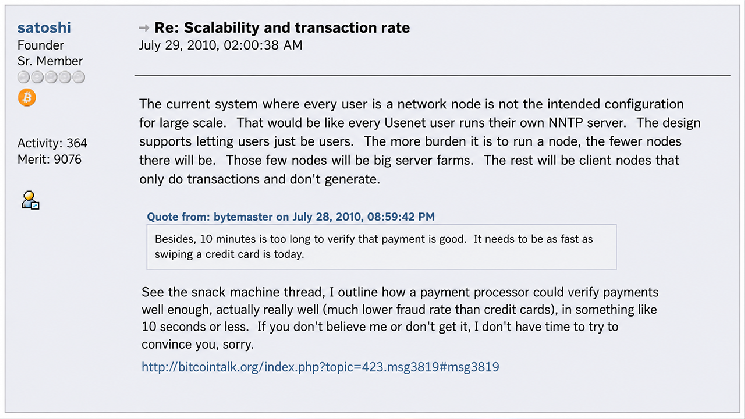
但当前债权人更为关心的是,Mt.Gox的真实财务状况如何?究竟会怎么赔付?何时会收到偿还款?另外,一旦用于偿还债权人的近14万枚比特币被释放,市场是否会面临被砸风险?

“”

Mt.Gox的清偿方式:基础偿付和比例偿付

“”

从申请破产清算到确定赔付方案,再到最终准备还款,这场耗时九年的Mt.Gox“门头沟”被盗事件总算要“剧终”了。

“”

根据2019年Mt.Gox的资产负债表显示,其债务人持有约14.2万枚比特币(BTC)、14.3万枚比特币现金(BCH)及690亿日元(约5.1亿美元)。有债权人透露,此后的Mt.Gox资产负债表并没有出现太大变化。而Token Unlocks截至3月6日最新数据显示,Mt.Gox持有超13.7万枚比特币,价值共30.8亿美元。

“”

根据Mt.Gox官网公告,债权人要想获得赔偿,需在2023年3月10日前登记并选择还款方式,首批赔付的最后期限为2023年9月30日。如果未能在截止时间内完成登记和注册,这部分债权人将无法获得提前一次性还款,且失去部分加密货币恢复索赔、银行汇款支付或通过资金转账服务提供商汇款的权利。此外,他们还需要携带所需的文件前往MTGOX Co., Ltd. 总部,仅能以日元的现金形式接受还款。

“”

而Mt.Gox面向债权人提供的最新偿付方案包括基础偿付和比例偿付。基础偿付部分允许每个债权人索赔的前20万日元将以日元支付,比例偿付则为债权人提供了两种灵活选择,即“早期一次性还款”或“中期还款和终期还款”。其中,一次性还款的赔付方式仅能让债权人获得部分赔付(黑客攻击时他们锁定在平台上的资金约为21%),超过20万日元的部分可允许债权人选择BTC、BCH和日元的混合方式或者以法定货币支付全部金额。据一位债权人透露,比例大概为71%的加密货币和29%的现金。

“”

例如,Mt.Gox最大债权人Bitcoinica和MGIF就选择了一次性支付方案,且选择主要以比特币而非法定货币的形式来获得其破产追偿,这也大大降低了市场对Mt.Gox大量抛售比特币来支付法币赔付款的担忧,要知道这两大债权人所需的索赔金额约占全部的五分之一。

“”

“中期还款和终期还款”则较前一种方式的偿还额更多,但仅在9月30日获得中期付款,终期付款将在未来几年内支付。而部分债权人要想获得更高比例的偿付,还可继续等待诉讼结果,这意味着他们需要等到更长的时间才能收到付款,MGIF曾在2022年的一份备忘录中表示,这个过程可能需要五至九年的时间

“”

值得一提的是,由于债权人须注册并指定一家交易所代表他们接收资金,而每家交易所针对处理付款的速度给出了不同的时间表,因此他们获得赔偿的时间也不相同,比如BitGo将在20天内进行付款、Kraken的付款程序可能需要90天等。

“”

加密市场不会面临集中砸盘

“”

2014年,作为曾占比特币交易量70%的全球第一大交易所,Mt.Gox被曝遭遇黑客攻击,共有10万枚比特币及用户75万枚比特币被盗(后找回20万枚比特币并陆续抛售月6万枚)用户资产一夜之间“灰飞烟灭”,3天后Mt.Gox申请破产。回忆这起“门头沟事件”,至今仍让很多投资者心有余悸。

“”

而彼时,比特币的价格大概为800美元,而多年后其价格已直线飞涨,最高曾涨至超5万美元,即便是当前1.7万美元的价格,也较2014年翻了超21.8倍。如此高的回报率之下,难保有不少债权人选择抛售提现,而目前Mt. Gox可用的比特币数量占当前比特币日交易量(63.2万枚)的21.6% ,那么如此体量的比特币是否对市场产生冲击?

“”

对此,瑞银策略师Ivan Kachkovski表示,即将到来的Mt. Gox破产还款可能不会引起人们对比特币价格的担忧。Mt. Gox为债权人提供了多种还款方式和时间选择,且大多数债权人仍是加密货币信徒,因此不太可能抛售比特币。但Mt. Gox采用法定还款的早期一次性付款选项将导致交易所出售比特币以筹集必要的现金,并可能让“长期以来担心Mt.Gox赎回会损害比特币价格”成为现实。

“”

虽然首次赔偿的债权人及比特币数量尚未可知,但Mt. Gox完成所有的数据统计预计还需要一定时间,且债权人的偿还方式有着多种形式及是多阶段的,甚至部分为获得更多赔偿还需耗费几年时间,这意味着这部分比特币的释放量或将不会非常集中,并不会造成非常集中的市场冲击。

Leituras Relacionadas

The Semiconductor Industry's Most Obscure Chokepoint Material: It Has Multiplied in Price Unnoticed, and China Just Banned Its Export

"Helium: The Silent Choke Point in Semiconductors" Helium, despite being the universe's second most abundant element, is critically scarce on Earth. It cannot be synthesized artificially and escapes Earth's gravity once released, making it a non-renewable resource. Yet, it is indispensable for advanced semiconductor manufacturing, requiring ultra-high purity (99.9999%) for processes like wafer etching, leak detection, and thermal management in lithography tools, with no viable substitutes. This low-profile resource, whose price has doubled unnoticed, suddenly gained attention when China imposed an export ban on July 10th. The ban is a response to a severe global shortage triggered months earlier. In March, missile attacks damaged the world's largest helium production hub in Qatar's Ras Laffan, halting a third of global supply with repairs expected to take 3-5 years. Concurrently, Russia tightened export controls, and the US sold off its federal helium reserve. Approximately 200 specialized transport containers, each worth ~$1 million, were stranded with perishable cargo. Global spot prices skyrocketed, and chipmakers like TSMC warned of potential impacts. China, which imports over 84% of its helium (primarily from Qatar and Russia), faces a severe squeeze. Despite being helium-poor, China has developed domestic extraction technology over five years, processing byproduct gases from LNG plants to produce ultra-pure helium. Domestic output, while still only covering less than 20% of demand, enabled the recent export ban aimed at securing domestic supply for its own expanding chip industry. The industry now faces "Helium Shortage 5.0." With key global sources constrained for years, this invisible gas—once wasted on party balloons—has become a critical, geopolitically charged bottleneck for chips, healthcare (MRI machines), and beyond, forcing the world to finally treat it as the finite strategic resource it is.

marsbitHá 33m

The Semiconductor Industry's Most Obscure Chokepoint Material: It Has Multiplied in Price Unnoticed, and China Just Banned Its Export

marsbitHá 33m

Early Investor of Unitree Bets on a Brain-Computer Interface Company

"Wabo Technologies, a brain-computer interface (BCI) startup, has secured new funding from Vertex Ventures (under Temasek), Hongtai Fund, Chengdu Future Industry Fund, and Huifengda Capital. Vertex Ventures is known for its early bet on Unitree Robotics. Inspired by the sci-fi film "Avatar," founder Zhang Xingzhi has pursued human-machine interaction for over a decade. He established Wabo in late 2025, coinciding with China's push for BCI as a future industry. Unlike companies focused solely on medical hardware, Wabo positions itself as a model company. Its core mission is to develop a "Human Neural Intent Model" that decodes EEG, EMG, and behavioral signals to understand a user's goals, confirmations, corrections, and stop intentions before physical action, translating them into standardized control signals for machines, robots, or smart devices. The young, full-stack team, backed by academic collaborators from Tianjin University and Fudan University, quickly attracted investors. The company had previously raised a seed round from Ceyuan Capital. Investors were impressed by Wabo's systematic capabilities in data collection, signal processing, and engineering, seeing potential beyond a single hardware product toward a reusable layer of human intent interpretation. Applications span medical rehabilitation, smart homes, embodied AI, and even space exploration, with Wabo partnering with Tianjin University on pioneering "space BCI" research. Wabo plans a dual-headquarters strategy, with Shanghai focusing on high-end R&D and model development, and Chengdu handling hardware, product development, and supply chain. The BCI sector in China is heating up, with over 30 financing deals in early 2026. Zhang believes future competition will center on who can build a sustainable data-model-scenario loop. He predicts industry consolidation within three years, with only companies that master this闭环 surviving. The vision from "Avatar" is inching closer to reality."

marsbitHá 47m

Early Investor of Unitree Bets on a Brain-Computer Interface Company

marsbitHá 47m

ChangXin Technology: A Cyclical Stock Standing Atop the Cycle Peak

Changxin Technology: A Cyclical Stock at the Peak On July 27, 2026, Changxin Technology topped the A-share market with a market capitalization of 3.28 trillion yuan, surging 465% on its first trading day. The company, which lost 16.3 billion yuan in 2023, reported an estimated net profit of 50-57 billion yuan for the first half of 2026. Its dramatic reversal mirrors the volatile DRAM (Dynamic Random Access Memory) cycle. The DRAM industry is inherently cyclical, with booms and busts every 3-4 years. This is due to product standardization and a significant time lag in supply adjustment. When prices rise, manufacturers expand capacity, but new production takes 2-3 years to come online, often leading to oversupply and price crashes when demand cools. Changxin's performance perfectly tracks this cycle. It recorded deep losses in 2023-2024 during the industry downturn, turned its first annual profit in 2025, and saw profits skyrocket in Q1 2026. This surge is primarily price-driven. The AI boom has led major players like Samsung and SK Hynix to shift 70-80% of new capacity to high-margin HBM (High Bandwidth Memory), creating a severe shortage and price explosion in general-purpose DRAM markets where Changxin competes. However, a massive global capacity expansion is underway. The top three manufacturers have announced nearly $70 billion in capital expenditure for 2026. Changxin itself plans to expand from three to seven 12-inch wafer fabs. This investment will translate into significant new supply in 2-3 years. While DRAM prices are expected to remain high through 2026-2027, price growth is already slowing, and a potential downturn is forecast for around 2028 as new capacity ramps up. A key challenge for Changxin is catching up in the critical HBM segment. While it has delivered HBM3 samples, leaders are already mass-producing more advanced HBM3E. Success in HBM is crucial for gaining true cyclical resilience. In conclusion, Changxin is a commendable company that has broken foreign monopolies in DRAM. Its long-term growth narrative—driven by import substitution and AI—is valid. Yet, its current valuation of 5-6x forward P/E, typical for a cyclical stock at its peak, suggests much future growth is already priced in. AI may extend the current cycle but cannot eliminate the industry's inherent volatility. For investors, the critical question is preparedness for the inevitable downturn when the cycle turns.

marsbitHá 52m

ChangXin Technology: A Cyclical Stock Standing Atop the Cycle Peak

marsbitHá 52m

Trading

Spot
活动图片