【研报精选】华尔街最准分析师:美国先衰退,美股才会有牛市

华尔街见闻Publicado em 2023-02-27Última atualização em 2023-02-27

Resumo

美银认为,在下一次衰退中,为保持美元的储备地位和西方金融体系不被分解,美联储将会效仿日本央行,被迫启动收益率曲线控制政策。

美银分析师警告,美国财政赤字正在恶化,大衰退在所难免,唯有美联储才能拯救美国政府。

上周,美国银行首席投资官,过去几年最准的华尔街策略师Michael Hartnett在他最近的报告中重申了财政赤字的风险,并指出只有美联储推出类似日本央行收益率曲线控制(YCC)政策类似的举措,牛市才会到来。

他仍然预计标普500指数在今年3月8日之前将跌至3800点,并重申这个预测“主要是由全球金融条件的收紧所推动的”。在1月“不着陆”数据发布之后,2月新的“不着陆”数据将继续推动债券收益率上升,继而使标普500指数下跌。

他表示,上半年有弹性的增长将与利率上升相吻合,但下半年的经济将更急剧放缓。

对于2020年初美国政府为了应对新冠病毒大流行所推行的财政刺激,Harnett指出,虽然这些举措成功避免了2020年代初的经济衰退,结果是赤字再次上升,导致长期痛苦:

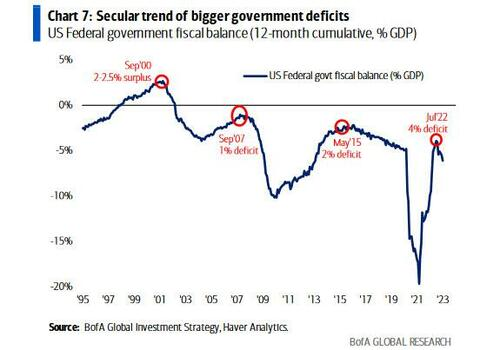
由于财政基础设施支出,美国联邦赤字高达GDP的6.1%;在2000年扩张的高峰期,美国有财政盈余,2007年扩张的高峰期赤字占GDP的1%,最近一次扩张的高峰期赤字占GDP的2.5%,但最近一次赤字占GDP的4%。

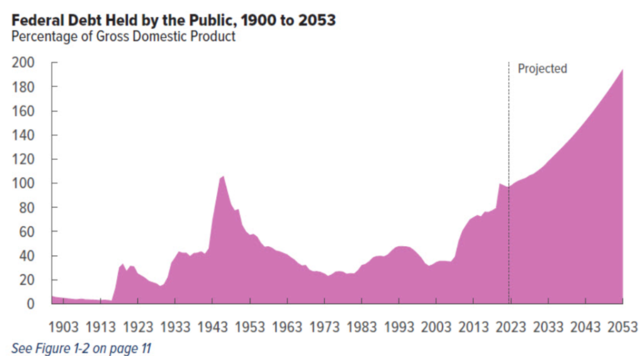
美国国会预算办公室最近的一份债务预测显示,美国公众持有的联邦债务预计将从2023年的占GDP的98%上升到2033年的118%,平均每年增加2%。

在此期间,利息成本和强制性支出的增长速度超过了收入和经济的增长速度,推高了债务。这些因素在2033年之后依然存在,使得联邦债务将在2053年达到GDP的195%。

Hartnett说,这表明美国联邦债务正在出现长期的恶化。

随着美联储加息,美国政府不断增加的债务和不断增加的财政赤字将导致越来越高的利息支出。素来以“毒舌”为名的金融博客ZH也对此评价道:

这只能被描述为 “游戏结束”。

美国政府目前有31万亿美元的债务。Hartnett表示,在下一次大的经济衰退时,美联储将会像日本那样,被迫启动收益率曲线控制政策,以保持美元的储备地位和西方金融体系不被分解:

美国政府债务在未来10年将增加21万亿美元,这相当于每天52亿美元,每小时2.18亿美元......2020年通货膨胀的最大讽刺是在下一次经济衰退中,美联储被迫采用YCC来拯救美国政府......

而这正是下一个风险大牛市的开始。

Leituras Relacionadas

AI is Killing 'Poor People's Entertainment'

AI Is Eliminating 'Entertainment for the Poor' This article discusses the rising cost of video gaming, arguing that AI is making digital entertainment increasingly expensive. It follows the example of a frugal gamer who, accustomed to waiting for discounts and buying second-hand games, now faces a new reality. Video game consoles like the PS5 Pro and Switch 2 are increasing in price post-launch, breaking the traditional pattern of降价 over time. Game prices are also rising, with major titles like GTA 6 launching at $80. Furthermore, the industry is moving towards eliminating physical media, exemplified by Sony's plan to stop PS disc production by 2028. This shift blocks the二手 market, a key cost-saving avenue for players. Even Valve's anticipated affordable Steam Machine launched with a high price and disappointing specs. Manufacturers cite inflation, supply chain issues, and rising development costs, but a core driver is the AI boom. AI data centers now consume semiconductor and memory resources once prioritized for consumer electronics like game consoles. This competition from a more profitable sector drives up hardware costs. Additionally, developing modern AAA games with massive teams over many years is astronomically expensive, pushing publishers towards digital-only distribution and subscription models to secure recurring revenue. The article suggests this trend extends beyond gaming. Video streaming, music platforms, cloud storage, and AI tools are increasingly locked behind complex subscription tiers. While AI promises future benefits, it is currently making digital entertainment and services more costly. The era of progressively cheaper, accessible online entertainment is ending, forcing consumers to pay more upfront for future technological promises.

marsbitHá 34m

AI is Killing 'Poor People's Entertainment'

marsbitHá 34m

The Demise of the Trillion-HKD ETF Myth: SK Hynix Plummets, Hong Kong Switches from 'Double Leverage' to 'Flexible Leverage', South Korea Restricts Leveraged ETF Investments

South Korea's AI-driven bull market has taken a sharp downturn, severely impacting SK Hynix's stock and prompting regulatory tightening in both Hong Kong and South Korea on single-stock leveraged products. The CSOP SK Hynix Daily Leveraged (2x) ETF, once the world's largest single-stock leveraged ETF with over HKD 130 billion in assets, saw its value plummet by over 80% as SK Hynix shares fell nearly 46% from their June peak, erasing more than HKD 100 billion. In response, Hong Kong's Securities and Futures Commission (SFC) revised its regulatory framework. Starting August 3rd, fixed 2x leverage for single-stock leveraged and inverse products will shift to a dynamic "flexible leverage" mechanism, where daily leverage can vary up to a maximum of 2x. This aims to balance market development with investor protection but has sparked debate about changes to the products' core features and potential reduced appeal for risk-seeking investors. Simultaneously, South Korean authorities announced plans to further restrict single-stock leveraged ETFs following two consecutive days of market circuit breakers. Proposed measures include capping individual investors' allocations to such products at 20% of their total financial investment assets, increasing trading costs, and enhancing suitability requirements. The Finance Minister publicly apologized, acknowledging insufficient initial risk assessment. Analysts note that while the long-term fundamentals for South Korean semiconductor firms like SK Hynix remain solid, short-term market volatility is heightened due to concentrated leveraged bets and shifting global risk sentiment. The regulatory moves in both markets signal a clear shift from encouraging innovation towards prioritizing risk control, reminding investors of the amplified risks inherent in leveraged products.

marsbitHá 39m

The Demise of the Trillion-HKD ETF Myth: SK Hynix Plummets, Hong Kong Switches from 'Double Leverage' to 'Flexible Leverage', South Korea Restricts Leveraged ETF Investments

marsbitHá 39m

After the Privatization of the Internet, Silicon Valley Begins Privatizing Human Civilization

"The Privatization of Human Civilization" The article critiques how AI companies like Anthropic are systematically acquiring and digitizing millions of books—sometimes by destroying physical copies—to build proprietary training datasets for models like Claude. While a lawsuit resulted in a settlement, the author argues the deeper issue transcends copyright: it is about the privatization and centralized control of human knowledge and civilization. This process coincides with a powerful Silicon Valley ideology, exemplified by Marc Andreessen's "Techno-Optimist Manifesto" and movements like e/acc (Effective Accelerationism). This worldview frames technological growth and speed as inherently moral, portraying caution, regulation, and public dissent as obstacles to progress. It often envisions intelligence itself, rather than human well-being, as the ultimate goal, potentially sidelining present human concerns. Figures like Peter Thiel and Curtis Yarvin express skepticism towards democratic processes as too slow, suggesting more centralized, founder-led governance is efficient. This logic extends to AI, where a small team within a company defines the model's "constitution"—its rules, values, and definitions of truth and safety—effectively governing how millions understand the world. Thus, the scanned books symbolize a new form of control. Knowledge isn't erased but is ingested into private, opaque systems. The original, decentralized, and contestable nature of books and public knowledge is replaced by a curated, company-controlled output. The public's access to their own cultural heritage becomes mediated by corporate AI, which remembers civilization only in the form its creators dictate. This is not book-burning but a subtler, potentially more complete privatization of human memory and understanding.

marsbitHá 49m
After the Privatization of the Internet, Silicon Valley Begins Privatizing Human Civilization

marsbitHá 49m

Trading

Spot
活动图片