$100M Underground Remittance Network Using Crypto, WeChat Dismantled In South Korea

bitcoinistPublicado em 2026-01-20Última atualização em 2026-01-20

Resumo

South Korean authorities have dismantled an underground remittance network that moved approximately $102 million (150 billion won) across borders using mobile payment apps like WeChat Pay and Alipay and cryptocurrencies. The scheme, which operated from September 2021 to June 2023, involved collecting funds from customers via the apps, converting the money into crypto abroad, and then cashing it out into South Korean bank accounts after transferring the digital assets to local wallets. To evade detection, the group disguised the transactions as payments for common services such as cosmetic surgery, study abroad fees, and trade-related costs. Three Chinese nationals have been arrested and face charges under foreign exchange laws. The case highlights the growing use of combined traditional and digital payment channels for illicit fund movements, prompting South Korea to strengthen regulations on crypto exchanges and mobile wallets.

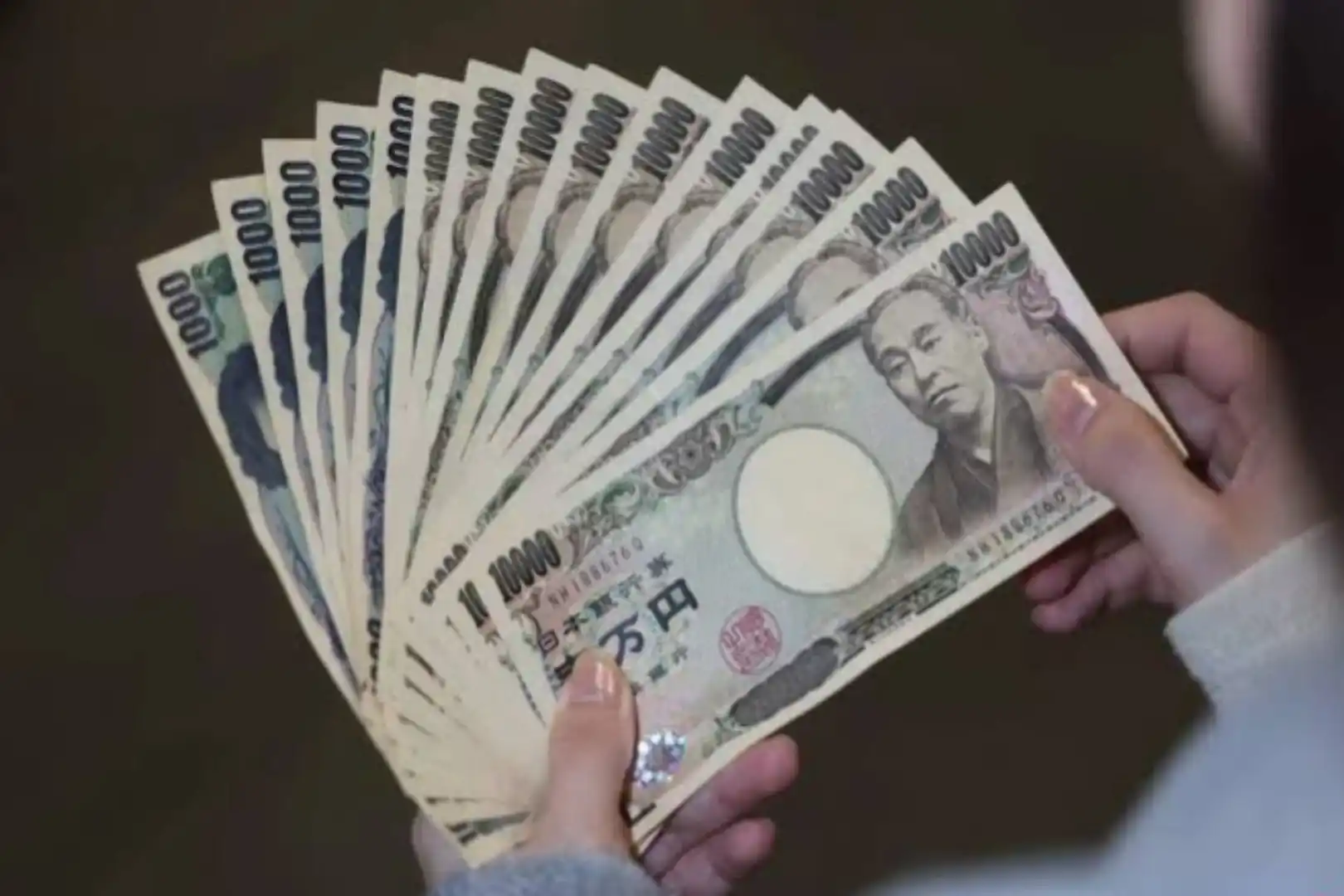
Seoul investigators say they have disrupted a secret money-transfer network that moved roughly 150 billion won—about $102 million—into and out of South Korea using a mix of mobile payment apps and cryptocurrencies.

Reports say three people have been formally accused under the country’s foreign exchange laws after a probe that traced the scheme over several years.

How Money Moved Through Apps

According to the Korea Customs Service, the group collected money from customers using platforms like WeChat Pay and Alipay, then used those funds to buy virtual coins abroad.

Those coins were shifted into digital wallets in Korea and converted to Korean won through many bank accounts.

The pattern was basic and careful. Cash or mobile transfers arrived from overseas. Crypto purchases followed in multiple countries to avoid any one regulator seeing the full trail.

Finally, the funds were funneled into local accounts under different names. This took place over a long window, from September of 2021 until June of last year, investigators say.

Bitcoin is currently trading at $92,895. Chart: TradingView

Covering Tracks With Everyday Costs

According to reports, the ring hid the origin of money by dressing transfers up as ordinary expenses — payments for cosmetic surgery, fees for overseas study, and trade-related charges. Those labels made the flows look normal on paper and helped the group slip past routine checks.

Bank transfers were layered with small, seemingly legitimate payments. That made suspicious activity harder to spot until customs officers pieced together patterns across accounts and platforms.

At that point, the scope became clear: these were not isolated transfers but a linked series of transactions designed to wash large sums.
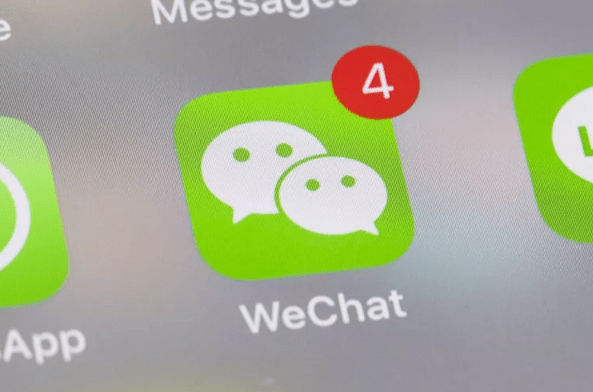
Image: Getty Images

What Authorities Recovered

Investigators arrested and referred three Chinese nationals for prosecution, saying the suspects handled the bulk of the scheme’s operations.

Records show almost 150 billion won was moved in the period under review. Authorities have opened cases under the foreign exchange transactions law and are seeking to trace the remaining funds.

The case underlines how easy it can be for cross-border payment tools and crypto markets to be used together.

Regulators in Korea have been tightening rules for both mobile wallets and exchanges in recent months, and courts have allowed seizures of crypto assets in criminal probes. That legal backdrop helped the customs office act when the patterns surfaced.

Featured image from Dao Insights, chart from TradingView

Perguntas relacionadas

QWhat was the total amount of money moved by the underground remittance network in South Korea, and what was the equivalent in US dollars?

AThe network moved approximately 150 billion won, which is equivalent to about $102 million.

QWhich mobile payment apps and methods were used by the group to collect money from customers?

AThe group used platforms like WeChat Pay and Alipay to collect money from customers.

QHow did the group disguise the illegal money transfers to avoid detection by authorities?

AThey disguised transfers as ordinary expenses such as payments for cosmetic surgery, fees for overseas study, and trade-related charges to make them appear normal and avoid routine checks.

QWhat was the role of cryptocurrencies in this underground remittance network?

AThe group used the collected funds to buy virtual coins abroad, which were then transferred to digital wallets in South Korea and converted to Korean won through multiple bank accounts.

QHow many people were formally accused in connection with this scheme, and what nationality were the main suspects?

AThree Chinese nationals were arrested and referred for prosecution, as they handled the bulk of the scheme's operations.

Leituras Relacionadas

pump.fun's New Feature Brings 'Black Mirror' Into Reality

The article begins by recounting a dark fictional story from *Black Mirror* (Season 7, Episode 1 "Common People"), where a man is forced to perform humiliating tasks online to pay for his wife's life-sustaining medical subscription. It then draws a parallel to a new real-world feature on the crypto platform pump.fun called "Pump.fun Go," which allows users to post and complete paid bounty tasks. This feature gained mainstream attention, often negatively, through extreme examples. A prominent case involved a bounty of 40 SOL (~$2,600) offered to permanently tattoo "$bountywork" on one's forehead. An Indian man completed the task, stating the money "changed his life," and later earned significantly more from a related meme coin. Another bounty paid 200 SOL (~$14,000) for a "bounty.fun" forehead tattoo, with the participant simply stating, "We need the money." The article highlights how this system can amplify darkness, citing the dev behind $Bountywork who spent thousands on bounties for attention-grabbing stunts like eating bugs or drinking hot sauce for small sums. It compares this to past tragic live-streaming incidents where people harmed themselves for money, noting regulation cannot stop those in desperate need. However, it also points to positive, altruistic bounties that have emerged, such as organizing anti-work rallies in New York, performing random acts of kindness for strangers, organizing community food drives, or even helping an elderly person cross the street. The piece concludes by acknowledging the platform reflects both the dark and light sides of human nature when actions are given a price, hoping for more of the latter.

marsbitHá 7m

pump.fun's New Feature Brings 'Black Mirror' Into Reality

marsbitHá 7m

As the US and Japan Hike Interest Rates, Which Asset Class is Most at Risk?

This week, global markets face two major events: the Bank of Japan's likely interest rate hike and the US Federal Reserve's FOMC meeting. For risk assets, it is a pivotal and volatile week. In the US, expectations for rate cuts have faded dramatically. May's higher-than-expected CPI and resilient jobs data have shifted the Fed's focus from potential cuts to the possibility of future hikes. New Fed Chair Wash is unlikely to raise rates at this meeting, but any hawkish shift in communication, the dot plot, or the policy statement could lead markets to price in tighter policy, pushing up short-term Treasury yields and strengthening the dollar. High-valuation growth stocks, AI-related assets, and small-cap stocks reliant on cheap funding are most vulnerable to rising rates. In Japan, a 25 basis point hike is almost fully priced in (98.3% probability), which would bring the policy rate to 1%, its highest since 1995. The concern is not the hike itself, but its potential to unwind the massive "carry trade," where investors borrowed low-yielding yen to invest globally. Historically, Japan's rate hikes have coincided with global market stress (2000, 2007, 2024). While this well-telegraphed hike may be digested smoothly, two key factors increase uncertainty: 1) Governor Ueda's absence due to illness, putting communication in the hands of less-familiar deputies, and 2) the Fed meeting occurring just days later, creating potential for a compounded market reaction if both central banks sound hawkish. Asset implications: * **Bonds:** US short-term yields sensitive to Fed signals. Japan's rate hike could pressure its massive US Treasury holdings. * **Currencies:** Dollar likely supported by Fed; Yen's reaction hinges on BoJ's forward guidance. * **Equities:** US growth stocks, small-caps most at risk. Japanese stocks face pressure from a stronger yen. * **Crypto:** Assets like Bitcoin face headwinds from higher rates and tighter liquidity; high-beta altcoins are even more vulnerable. The convergence of these two central bank meetings amplifies market volatility risks, with potential spillovers across asset classes globally.

marsbitHá 13m

As the US and Japan Hike Interest Rates, Which Asset Class is Most at Risk?

marsbitHá 13m

Data Decrypts the BTC Cycle: Three Major Bottom Signals Illuminate Simultaneously, Q4 Could Be a Crucial Turning Point Window?

"Decoding the Bitcoin Cycle: Three Bottom Signals Flash Simultaneously, Is Q4 the Key Turning Point?" The article analyzes Bitcoin's current market position, comparing it to historical cycles. BTC has corrected over 52% from its October 2025 peak of $126,198 to around $59,100 in June 2026. While significant, this drawdown is milder than the 77-86% declines seen in past bear markets. The analysis is framed within Bitcoin's four-year halving cycle. Past cycles show a pattern: prices peak 12-18 months post-halving, bottom 12-14 months after the peak, with lows typically occurring roughly 17 months before the next halving. Following the April 2024 halving and the October 2025 peak, this pattern suggests a potential bottoming window around Q4 2026, ahead of the expected 2028 halving. Three key on-chain metrics are signaling undervaluation: The MVRV Z-Score has dropped near 0.27, approaching historic bottom zones. The market price is only about 9% above the network's average realized price of ~$53,600, a rare low premium. Bitcoin's price recently touched its 200-week moving average (~$62,200), a level that aligned with bottoms in 2015, 2018, and 2020. While US spot Bitcoin ETFs saw record outflows in May/June 2026, indicating retail panic, whale addresses (holding 100+ BTC) reached a yearly high. Entities like MicroStrategy resumed buying, and long-term holders control a near-record 78% of the supply, suggesting accumulation. A major macro overhang was partially removed with a US-Iran ceasefire agreement in mid-June 2026, which eased oil prices and triggered a sharp BTC rally. However, persistent inflation means high-interest rates remain a constraint. The conclusion notes that genuine investment opportunities often arise when confidence is lowest, amidst narratives that "this time is different." While not guaranteeing an immediate bottom, the confluence of cycle timing, undervaluation signals, and shifting macro risks suggests late 2026 may be a critical period for reassessing risk/reward and patient accumulation for long-term believers.

marsbitHá 13m

Data Decrypts the BTC Cycle: Three Major Bottom Signals Illuminate Simultaneously, Q4 Could Be a Crucial Turning Point Window?

marsbitHá 13m

Trading

Spot
Futuros
活动图片