但斌出手,建仓 Circle

marsbitPublicado em 2026-04-29Última atualização em 2026-04-29

作者:刘红林律师

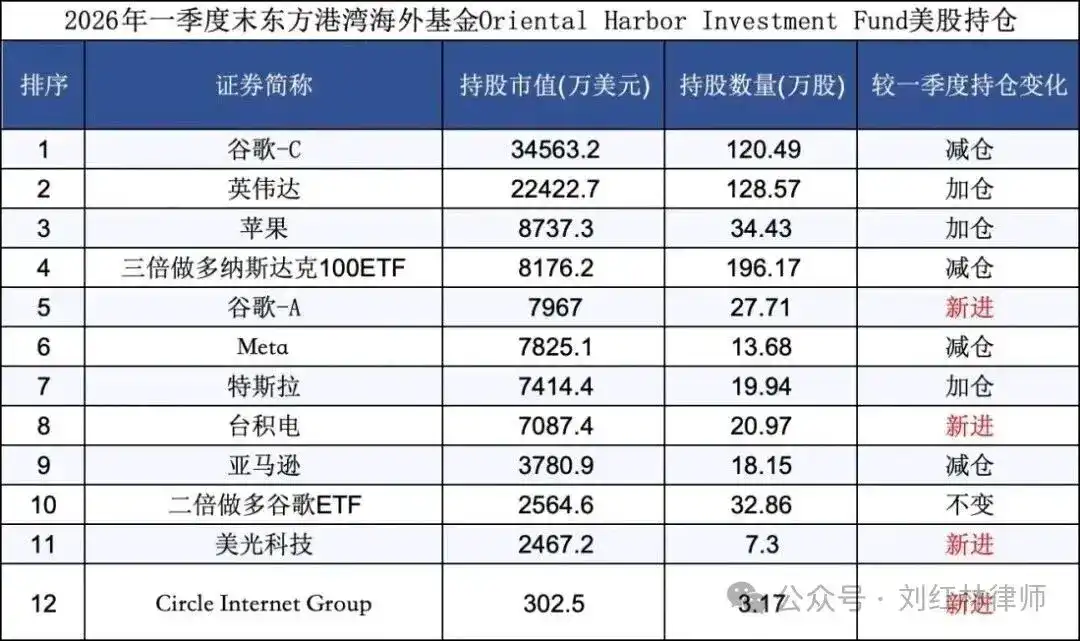
晚上刷到一条不太起眼的消息:根据最新披露的13F文件,东方港湾旗下的海外基金,在最新一个报告期里,新买入了3万多股Circle,市值三百多万美元,占整个组合不到0.3%。

如果只是看这个数字,本身其实没什么特别的,这种级别的仓位,在很多机构里面都很常见。
但这个标的本身,让这件事变得有点意思。

Circle是什么:稳定币发行方的生意逻辑

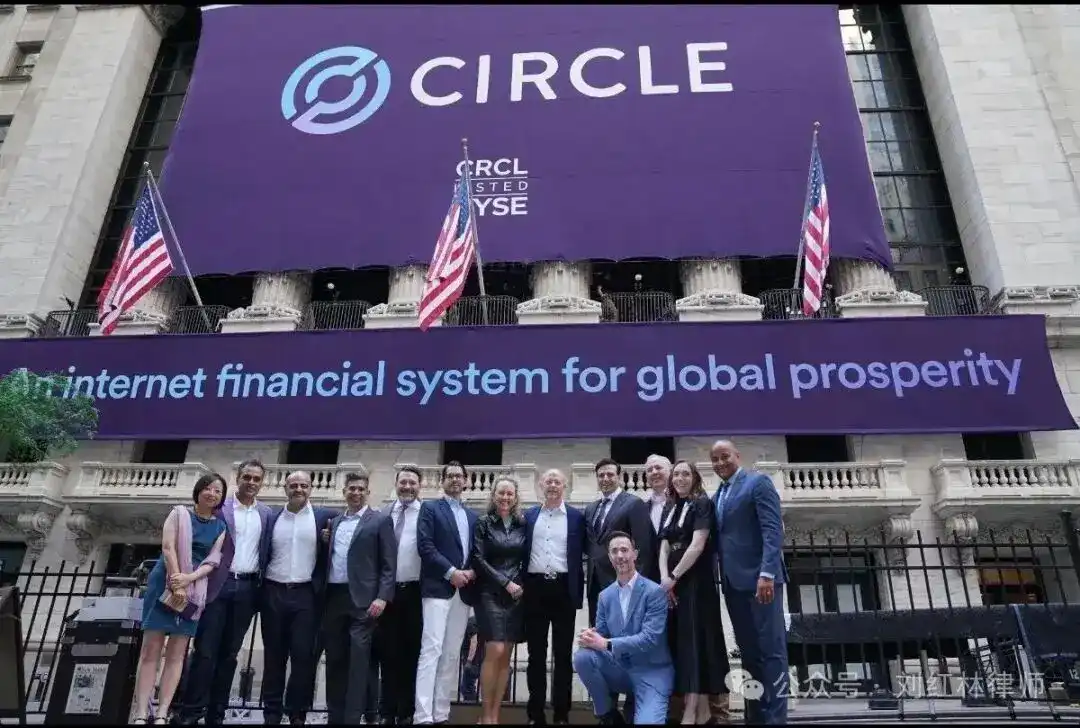
Circle是稳定币发行方之一,2025年刚在纽交所上市。把它的业务拆开看,其实很简单:用户把美元换成USDC,公司把这些钱拿去配置短期美债或者放在银行里,赚一个利差。

从这个角度看,它更像是一门可以算账的金融生意,而不是一个纯粹讲叙事的项目。

Circle这家公司本身,也经历了一段挺典型的"被市场反复定价"的过程。它上市时发行价是31美元,上市之后市场情绪一度很高,股价很快被拉到200美元以上,市值也一度冲到几百亿美元的区间,但后面又出现了比较明显的回撤,波动幅度不小。
表面看是价格在波动,背后其实是市场在反复判断:这家公司到底该按什么逻辑来估值——是按加密行业去看,还是按金融公司去看,还是两者都占一点。

东方港湾为什么买Circle?

所以,与其说这是一条"币圈新闻",不如说这是一条关于东方港湾的新闻。

如果对但斌的投资风格有一些了解,其实会知道,他这些年的路径是比较一致的,从消费、互联网到科技龙头,本质上还是在找确定性比较强、可以长期持有的公司。风格上也一直比较克制,尤其是在那些波动大、难定价的资产上,很少会直接重仓参与。

这也是为什么,过去几年加密行业这么热,你很少看到这类资金直接去买比特币或者各种token。

那这次为什么会买Circle?我的理解是:相比直接买币,Circle这种公司,至少有几个地方是传统资金能接受的:

它是上市公司,有财报、有披露,可以用熟悉的方式去分析。

它有收入,而且收入逻辑比较清晰,主要来自利差。

它做的事情也比较集中,就是围绕稳定币这件事在转。

换句话说,作为传统投资机构,是可以用原来的那一套方法,大致去判断它是不是一门值得参与的生意。

因为工作的原因,红林律师在日常也会经常跟很多做投资的朋友们交流,很多主流资金这几年都在看Web3,也在研究,但真正大规模下场的不多。

原因也不复杂:直接买加密货币,波动太大;买token,很难做基本面分析;参与早期项目,信息不对称太强。

很多时候,是方向上大致认同,但找不到一个顺手的参与方式。

而像Circle这样的公司,某种程度上提供了一种更容易接受的路径。你不需要直接承担币价的剧烈波动,也不需要去判断某个项目能不能跑出来,而是通过一家公司,去参与整个行业慢慢增长的那一部分。

稳定币的叙事正在发生变化

再往下看,稳定币这件事本身,也在慢慢发生变化。

以前大家用它,更多是为了交易方便,或者做一些链上的操作。但现在有些场景开始不太一样了——越来越多的跨境支付场景、越来越多的在线电商,稳定币的使用场景愈发广泛。随着AI这一波的大火,大家又开始关注AI参与交易之后,稳定币的使用逻辑——因为它本身就是一套可以自动执行、随时结算的工具。

所以对于稳定币这门生意,不一定非要给它一个很大的定义,简单一点看,就是用的人多了、用的地方多了,这门生意就更像一门可以长期做下去的生意。

300万美元背后,是传统资金的进场路径

回到文章的主题,这笔300万美元的仓位,本身当然不重要。

但它其实给了一个挺清楚的答案:当传统资金真的开始认真看Web3,它们的第一反应,并不是去买币,而是先去找那些可以被当成"公司"来理解的标的。

换句话说,它们并不是在参与一个全新的世界,而是先用自己熟悉的方式,去接近这个世界。

从这个角度看,Circle这种公司,本质上扮演的是一个"翻译"的角色——一边连着链上的应用,一边连着传统的资金体系。你可以不理解整个行业,但至少可以先理解它在做什么、钱怎么来的、风险在哪。

这其实也是很多人低估的一点。Web3如果只是停留在价格和叙事上,传统资金很难真正进来;但一旦开始出现一批可以被解释清楚、可以被放进资产负债表里的公司,这个行业的参与方式就会发生变化。

所以,东方港湾买的未必只是Circle,本质上是在试一种路径:不直接下场做玩家,而是先站在旁边,找一个能看得懂、也能长期持有的位置。

至于这条路径最后是不是最优解,其实还不确定。但可以确定的是,当越来越多的钱开始用这种方式进入Web3,这个行业本身,也会慢慢变得不一样。

Criptomoedas em alta

Leituras Relacionadas

CPU Makes a Comeback to the Table, A $170 Billion "Power Seizure" Drama Begins

A new era is dawning for the server CPU (Central Processing Unit), driven by the shift from AI model training to large-scale reasoning and the rise of Agentic AI. This article explores how the CPU is reclaiming a central role in the AI data center. For years, the focus has been on the GPU (Graphics Processing Unit) for AI training. However, as AI moves to the inference and Agent phase—where tasks involve complex, multi-step reasoning, tool calls, and data management—the workload balance is flipping. Studies show CPUs now handle over 70% of the workload in Agentic AI, up from 10-30% in training. This is because Agent tasks generate massive intermediate data (KV Cache) that exceeds GPU memory, forcing it to be offloaded to the CPU's larger, more scalable memory pools. This increased importance is translating into market changes. Major players are taking note: NVIDIA launched its first standalone CPU line, Vera, based on ARM architecture and optimized for Agent performance. AMD doubled its server CPU market forecast to over $1200 billion by 2030. Analyst reports project the total server CPU market could reach $1700 billion by 2030, with AI-driven demand being a primary driver. Furthermore, the classic ratio of CPUs to GPUs in AI servers is rapidly changing, converging from 1:8 toward 1:1 for Agent deployments. This surge in demand has led to a rare industry-wide price increase of 10-15% for server CPUs from Intel and AMD, breaking a decade-long trend of "more performance for the same price." Demand is bifurcating into high-core-count CPUs for in-rack GPU support and moderate-core CPUs for standalone Agent task orchestration. In China, this global trend presents an opportunity for domestic CPU manufacturers like Hygon (海光信息) and Huawei Kunpeng, who are bolstered by both growing AI infrastructure needs and national policies promoting technological self-reliance ("xin chuang"). The maturity of their software ecosystems is also accelerating, evidenced by faster adaptation to new AI models. In conclusion, the narrative is shifting from a GPU-centric view to one where CPU-GPU synergy is critical. The CPU is no longer a peripheral component but a performance-defining bottleneck and a key growth driver in the AI hardware stack, opening a massive new market estimated in the hundreds of billions of dollars.

marsbitHá 8h

CPU Makes a Comeback to the Table, A $170 Billion "Power Seizure" Drama Begins

marsbitHá 8h

TechFlow Intelligence: AMD AI Director Publicly Criticizes Claude Code for "Becoming Dumber and Lazier", Trump Claims Full Ceasefire in Hormuz But Strait Still Has 80 Unexploded Mines

TechFlow Intelligence Report: This daily digest covers key developments in AI, crypto, hardware, and geopolitics. In AI, SK Telecom faces US export control scrutiny over its partnership with Anthropic, while a Gemini user reports being misled in a scam scenario, sparking safety debates. China's Z.AI launches the GLM-5.2 model, rivaling Claude Opus without NVIDIA chips. In crypto, Bithumb lists ReProtocol, and Upbit delists KernelDAO. On the hardware front, MIT researchers build a custom OS to study chips, ASML denies US claims its advanced lithography machines are in China, and Amazon considers selling its in-house AI chips. Apple's future A21 Pro chip may use TSMC's latest N2P process. Major tech issues include 10,000 GitHub repositories distributing malware and Apple patching a critical eavesdropping flaw in Beats earbuds. US stocks rise, led by semiconductors, with Intel surging 10.6%, while SpaceX falls 3.5%. Geopolitically, despite a US-Iran deal, the Strait of Hormuz remains risky with ~80 uncleared mines, stalling 80M barrels of oil on standby tankers. Iran postpones Switzerland talks, and Trump calls the agreement an "unconditional surrender." The report highlights a contrast: temporary geopolitical calm versus the ongoing, fundamental restructuring of tech supply chains and chip independence.

marsbitHá 8h

TechFlow Intelligence: AMD AI Director Publicly Criticizes Claude Code for "Becoming Dumber and Lazier", Trump Claims Full Ceasefire in Hormuz But Strait Still Has 80 Unexploded Mines

marsbitHá 8h

Trading

Spot
Futuros

Artigos em Destaque

Como comprar F

Bem-vindo à HTX.com!Tornámos a compra de Synfutures (F) simples e conveniente.Segue o nosso guia passo a passo para iniciar a tua jornada no mundo das criptos.Passo 1: cria a tua conta HTXUtiliza o teu e-mail ou número de telefone para te inscreveres numa conta gratuita na HTX.Desfruta de um processo de inscrição sem complicações e desbloqueia todas as funcionalidades.Obter a minha contaPasso 2: vai para Comprar Cripto e escolhe o teu método de pagamentoCartão de crédito/débito: usa o teu visa ou mastercard para comprar Synfutures (F) instantaneamente.Saldo: usa os fundos da tua conta HTX para transacionar sem problemas.Terceiros: adicionamos métodos de pagamento populares, como Google Pay e Apple Pay, para aumentar a conveniência.P2P: transaciona diretamente com outros utilizadores na HTX.Mercado de balcão (OTC): oferecemos serviços personalizados e taxas de câmbio competitivas para os traders.Passo 3: armazena teu Synfutures (F)Depois de comprar o teu Synfutures (F), armazena-o na tua conta HTX.Alternativamente, podes enviá-lo para outro lugar através de transferência blockchain ou usá-lo para transacionar outras criptomoedas.Passo 4: transaciona Synfutures (F)Transaciona facilmente Synfutures (F) no mercado à vista da HTX.Acede simplesmente à tua conta, seleciona o teu par de trading, executa as tuas transações e monitoriza em tempo real.Oferecemos uma experiência de fácil utilização tanto para principiantes como para traders experientes.

267 Visualizações TotaisPublicado em {updateTime}Atualizado em 2026.06.02

Como comprar F

Discussões

Bem-vindo à Comunidade HTX. Aqui, pode manter-se informado sobre os mais recentes desenvolvimentos da plataforma e obter acesso a análises profissionais de mercado. As opiniões dos utilizadores sobre o preço de F (F) são apresentadas abaixo.

活动图片