Crypto y IA, necesitan mujeres ejecutivas

比推Published on 2026-01-21Last updated on 2026-01-21

Abstract

En el mundo de la IA, cada vez más mujeres ocupan puestos ejecutivos clave, como CZ Chen de Manus (adquirida por Meta) y Yun Yeyi de MiniMax, quien a sus 31 años tiene un patrimonio de 4.800 millones de HKD. Ejemplos globales incluyen a Daniela Amodei de Anthropic, Lila Ibrahim de DeepMind y Mira Murati, ex CTO de OpenAI. Este fenómeno recuerda la era dorada de Crypto (2017-2021), donde mujeres como He Yi de Binance, Lisa Loud de BitMEX y Cynthia Wu de Matrixport impulsaron la adopción masiva. Tanto Crypto como IA son tecnologías avanzadas pero con fundadores técnicos que a menudo carecen de habilidades comerciales y de comunicación. Las mujeres ejecutivas actúan como puentes cruciales entre la tecnología y el mundo exterior, transformando productos técnicos en narrativas comerciales atractivas y manejando relaciones públicas con empatía. Su presencia señala la madurez comercial de una industria. Si estas talentosas mujeres abandonan un sector, indica una pérdida de certeza comercial. La IA ya está en esta fase de comercialización, mientras que Crypto lucha por retener talento capaz de lograr adopción masiva. La dirección del talento femenino ejecutivo refleja dónde se crea valor real.

Autor: Alice, Deep Tide TechFlow

Título original: Crypto y IA, necesitan mujeres ejecutivas


Recientemente noté un fenómeno interesante en el círculo de IA: cada vez más mujeres ejecutivas están apareciendo en el escenario.

El 30 de diciembre, Meta anunció que adquiriría Manus por 2 mil millones de dólares, y la COO CZ Chen, de 30 años, comenzó a ganar visibilidad. Licenciada en la Universidad de Finanzas y Economía de Shanghái, máster en Columbia, comenzó a trabajar en 2018, pasando por Vanke y una institución de FA, y en 2024 dio el salto final a Manus, logrando directamente la libertad financiera.

El 9 de enero, en la ceremonia de campanazo de salida a bolsa de MiniMax, junto con el fundador de 36 años Yan Junjie, estaba una mujer de 30 años, Yun Yeyi.
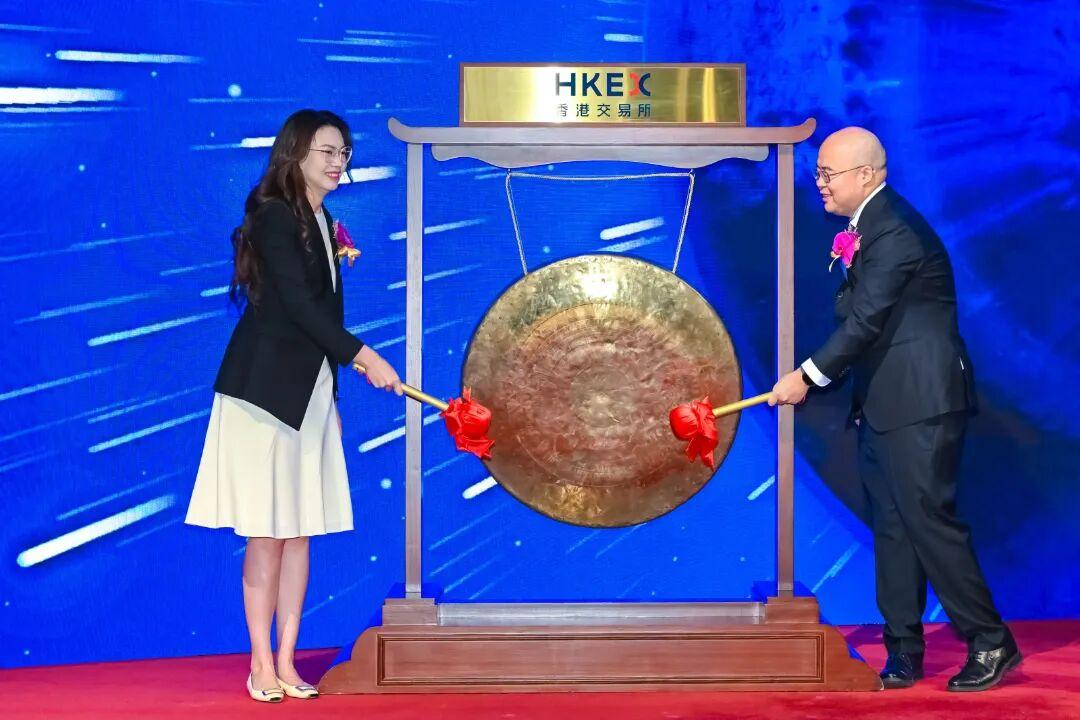
Esta COO de solo 31 años ahora tiene un patrimonio neto de 4.8 mil millones de HKD.

¿Cuál es el trasfondo de Yun Yeyi?

Ingeniería electrónica en la Universidad Johns Hopkins, con especialización secundaria en economía y matemáticas; se graduó en 2017 y entró directamente en SenseTime, pasando de gerente de financiación a asistente del CEO Xu Li, luego a directora del departamento de negocios innovadores, experimentando todo el proceso de SenseTime desde unicornio hasta su salida a bolsa en Hong Kong.

En 2022, cuando Yan Junjie decidió dejar SenseTime para fundar MiniMax, Yun Yeyi casi no dudó en seguirlo.

Su valor no es solo el seguimiento.

El prospecto de MiniMax muestra que Yun Yeyi se encarga de casi todo excepto del desarrollo técnico: producto, comercialización, junta directiva, operaciones, gestión... Su salario anual es de 1.479 millones de USD, más que todos los demás directores ejecutivos juntos, una cifra que lo dice todo.

No solo en China, a nivel global en el círculo de IA, la fuerza femenina es innegable.

Daniela Amodei, formada en literatura inglesa, después de trabajar en Stripe y OpenAI, en 2021 cofundó Anthropic con su hermano Dario, asumiendo la presidencia, enfocándose en operaciones diarias y comercialización, impulsando la mercantilización del producto Claude.

Lila Ibrahim, exejecutiva de Intel, se unió a DeepMind en 2018 como primera COO, responsable de operaciones diarias, asociaciones, impacto social, asuntos externos y relaciones gubernamentales.

Mira Murati, esta ex directora de tecnología de OpenAI de origen albanés, llegó a EE. UU. con una beca a los 16 años, desde el equipo de Tesla Model X hasta OpenAI, finalmente dejó su cargo para fundar Thinking Machines Lab, valorada en 9 mil millones de dólares...

Esta escena es familiar.

De 2017 a 2021, la edad de oro de las criptomonedas estuvo llena de estrellas, y un paisaje brillante fue el de las mujeres CMO y COO.

La más conocida es sin duda la cofundadora y CMO de Binance, He Yi (ahora co-CEO), desde Shanghái a Tokio, y desde Malta a París y luego a Dubái, cada movimiento estratégico tuvo su presencia, ayudando a la empresa a convertirse en el mayor exchange de criptomonedas del mundo.

Lisa Loud, de ingeniera en Apple a responsable de mercado canadiense en PayPal, en 2017 saltó a BitMEX como CMO, después BitMEX se convirtió en la mayor plataforma de derivados de criptomonedas del mundo.

Cynthia Wu, COO de Matrixport, ex vicepresidenta de desarrollo de productos de la Bolsa de Hong Kong, llevó la experiencia de las finanzas tradicionales a los servicios financieros de criptomonedas, ayudando a la empresa a convertirse en la mayor plataforma de servicios de activos digitales de Asia.

......

En su momento, las criptomonedas eran el foco de activos mundial, y los reflectores naturalmente iluminaron a estas mujeres ejecutivas en el centro del escenario.

Pero la marea bajó, los protagonistas cambiaron.

Ahora, la IA es el foco de atención, así que vemos a Daniela Amodei subiendo a la lista de ricos de Forbes, a Yun Yeyi en el escenario de la salida a bolsa de MiniMax llena de entusiasmo.

En esencia, Crypto y IA tienen similitudes sorprendentes, "avanzadas y a la vez rudas".

Lo avanzado se manifiesta en la tecnología misma: blockchain reestructura los mecanismos de confianza, IA reestructura la productividad, ambas son tecnologías subyacentes que pueden cambiar el mundo.

Lo rudo se refleja en el perfil de los fundadores: mayoría con背景 técnico, conocen el código al dedillo, pero se sienten ajenos al marketing, especialmente a las relaciones gubernamentales y públicas.

Ahí radica el valor de las COO/CMO mujeres: son el puente entre los genios técnicos y el mundo exterior, pueden dialogar en profundidad con equipos técnicos y también contar historias convincentes a inversores y usuarios.

Daniela Amodei transformó la filosofía de seguridad de IA en estrategias comerciales ejecutables, permitiendo que Claude se abriera paso entre las sombras de ChatGPT; Yun Yeyi llevó a MiniMax del laboratorio al mercado minorista; He Yi durante mucho tiempo actuó como "jefa de clientes", resolviendo dudas personalmente a los usuarios, construyendo confianza.

Cuando un producto sale de la fase puramente técnica y más necesita orientarse al consumidor, más evidente se vuelve la ventaja de las mujeres ejecutivas.

Después de todo, las relaciones públicas y el producto no requieren pensamiento de confrontación, sino capacidad de empatía.

Desde otro ángulo, las mujeres ejecutivas competentes votan con los pies, van a donde pueden desplegar su talento y crear valor. Si comienzan a abandonar una industria, es señal de que la certeza comercial de esa industria está desapareciendo.

El problema actual de la industria crypto es evidente: falta talento que pueda transformar la tecnología en productos aceptados por el público, la adopción masiva y la externalidad positiva siguen siendo palabras vacías. Observando cualquier industria emergente se descubre esta规律: cuando las mujeres ejecutivas que combinan comprensión técnica, sensibilidad comercial y capacidad narrativa comienzan a surgir, la industria realmente pasa de estar impulsada por la tecnología a la comercialización y masificación.

Su aparición marca la verdadera madurez de la industria.

El círculo de IA ya ha pasado este punto de inflexión, mujeres ejecutivas como Daniela Amodei y Yun Yeyi están impulsando la productización de la tecnología, llevando la IA de los algoritmos de laboratorio a la vida diaria y al mundo comercial.

Y la industria crypto, si no retiene a "las élites que saben hablar el lenguaje de la gente", merece seguir en el fango de la lucha interna (PVP).

El flujo de talento es la veleta de la industria.

Adónde van ellas, allí se crea valor; donde se van, often es donde estalla la burbuja.


Enlace original:https://www.bitpush.news/articles/7604790

Related Questions

Q¿Por qué el artículo argumenta que Crypto y AI necesitan más mujeres en puestos ejecutivos?

APorque las mujeres ejecutivas actúan como puente entre los equipos técnicos y el mundo exterior, combinando comprensión técnica con habilidades de comunicación, narrativa y comercialización, esenciales para llevar tecnologías complejas como Crypto y AI a la adopción masiva.

Q¿Quién es Daniela Amodei y cuál es su papel en Anthropic?

ADaniela Amodei es cofundadora y presidenta de Anthropic. Se encarga de las operaciones diarias y la comercialización, transformando la filosofía de seguridad de IA en estrategias comerciales ejecutables para el producto Claude.

Q¿Qué logró Yunyao Yi (贠烨祎) en MiniMax según el artículo?

AYunyao Yi, COO de MiniMax, manejó casi todas las áreas no técnicas de la empresa, incluyendo productos, comercialización, operaciones y gestión. Su liderazgo fue crucial para llevar a MiniMax del laboratorio al mercado masivo, y su valor se refleja en su salario de 1.479 millones de dólares.

Q¿Qué similitudes destaca el artículo entre Crypto y AI?

AAmbas son tecnologías de vanguardia que pueden cambiar el mundo: Blockchain reconstruye los mecanismos de confianza y la IA reconstruye la productividad. Sin embargo, sus fundadores suelen tener antecedentes técnicos y carecen de habilidades en marketing y relaciones públicas, donde las mujeres ejecutivas pueden aportar un valor significativo.

QSegún el artículo, ¿qué indica la partida de mujeres ejecivas talentosas de una industria?

AIndica que la certeza comercial de esa industria está desapareciendo. La dirección del talento es un indicador de la tendencia de la industria; donde van las ejecutivas capaces, se crea valor, y donde se van, a menudo es donde estalla la burbuja.

Related Reads

Silicon Valley 'Startup Guru' Steve Hoffman: Web3 + AI Could Be a Trap

Silicon Valley investor and "Godfather of Startups" Steve Hoffman warns that combining Web3 with AI is likely a trap, not a promising venture. In an interview, Hoffman argues that while AI is a foundational technology touching all industries, Web3 adds complexity, friction, and regulatory risk without solving mainstream consumer or business needs. He advises founders to focus on deep, specialized applications where startups can out-iterate giants, rather than on generic features easily replicated by large tech companies. Hoffman observes that Silicon Valley will lead foundational AI research, while China excels at rapid, large-scale application and commercialization, particularly in robotics. He stresses that AI-driven autonomous agents capable of collaborative, multi-step tasks are 2-4 years away, which will cause significant job displacement. The solution is not to slow AI but to redesign business models around human-AI collaboration and reform social systems like education and retraining. For startups, Hoffman recommends focusing on vertical, expertise-heavy domains to build defensibility. He sees major opportunities in AI fraud detection and cybersecurity. Key founder mindsets include systemic thinking over feature-focus, relentless customer centricity, building adaptive teams, and deeply understanding AI's capabilities and limits. Hoffman is also leading a non-profit initiative to establish university centers aimed at training future leaders in responsible, human-value-aligned AI innovation.

marsbit1h ago

Silicon Valley 'Startup Guru' Steve Hoffman: Web3 + AI Could Be a Trap

marsbit1h ago

Token Inefficient, Economy Tokenless

The article "Tokens Aren't Economical, Economics Aren't Tokenized" analyzes a pivotal shift in the AI industry from a technology-driven narrative to one dominated by capital efficiency. It highlights two concurrent trends: a severe capital shortage due to the exorbitant and recurring costs of compute (e.g., OpenAI's high burn rate) and a wave of corporate spin-offs where major tech companies are separating their AI units (like Kuaishou's Kling and Baidu's Kunlunxin). The core argument is that AI's "anti-internet" business model, where user growth increases costs rather than profits, has created a disconnect between high valuations and actual cash flow. Spin-offs address this by allowing AI assets to be valued independently. Within a parent company, they are seen as cost centers, but as standalone entities, they are priced based on their growth potential and scarcity in the primary market, leading to massive valuation premiums (e.g., Kling's estimated value tripling post-spin-off). The industry is at an inflection point, moving from "model worship" to "value realization." The competition is evolving from a pure compute (GPU) race to a broader focus on systemic efficiency and full-stack engineering (involving CPUs and orchestration) to achieve viable commercialization. The year 2026 is framed as a critical moment where the industry must definitively answer how to economically translate AI capability into tangible business value, reshaping the sector's future power structure.

marsbit1h ago

Token Inefficient, Economy Tokenless

marsbit1h ago

Crossing the 'Memory Wall': The Wafer-Level Revolution and Computing Power Routes in the AI Inference Era

In 2026, a historic shift occurred in AI as major cloud providers' inference spending surpassed training spending for the first time, signaling a move from "building large models" to "using large models." This shifts the core challenge from computing power to the "memory wall"—the bottleneck of data movement (model weights, activations, KV Cache) between external DRAM and processors, where energy and latency from data transfer far exceed computation itself. Companies like Nvidia face GPU idle time due to bandwidth limits. In contrast, Cerebras Systems adopts a radical "wafer-scale" approach with its Wafer-Scale Engine (WSE). Instead of cutting a silicon wafer into many chips, Cerebras uses almost the entire wafer as one massive chip (WSE-3). This design provides 44GB of on-chip SRAM, delivering memory bandwidth thousands of times higher than traditional HBM (e.g., 21 PB/s vs. Nvidia B200). For LLM inference, weights are streamed layer-by-layer from external MemoryX storage to the chip, avoiding HBM bottlenecks. This results in token generation speeds 1.5–5 times faster than Nvidia's B200 in some models and significant advantages in first-token latency and long-context tasks. Additionally, Cerebras's architecture offers much lower interconnect power consumption (0.15 pJ/bit vs. GPU's ~10 pJ/bit). However, Cerebras faces challenges: SRAM scaling has slowed with advanced nodes, limiting future capacity gains; the chip requires specialized liquid cooling and custom software stacks; and its external I/O bandwidth (150 GB/s) is low compared to NVLink, hindering multi-system scaling for very large models. Competition is intensifying. Major players are pursuing three paths: 1) Developing proprietary inference ASICs (e.g., Google TPU, Microsoft Maia), 2) Leveraging advanced packaging (e.g., TSMC's SoW) to democratize wafer-scale-like integration, potentially eroding Cerebras's process advantage within a few years, and 3) Exploring optical interconnects for ultimate bandwidth. Commercially, Cerebras is transitioning from a hardware vendor to a service provider, facing the immense challenge of building high-power, specialized data centers to meet large contracts (e.g., 250MW/year from 2026–2028). In conclusion, the AI inference era presents a fundamental architectural trade-off. Cerebras opts for extreme physical optimization for low-latency, single-task performance, while Nvidia prioritizes versatility and massive cluster throughput. The path forward remains uncertain, with technology and business models still evolving in the race toward advanced AI.

marsbit1h ago

Crossing the 'Memory Wall': The Wafer-Level Revolution and Computing Power Routes in the AI Inference Era

marsbit1h ago

Has Bitcoin's 'Rebound Ended', Officially Entering the Late Bear Market Phase?

**Title: Has Bitcoin's Rebound Ended, Entering the Late Bear Market Phase?** **Summary:** Bitcoin's price has declined by 13% this week, signaling a potential return to late-stage bear market conditions. The price fell to around $67k, positioned between the Realized Price and Realized Cap Weighted Average. For the first time since early 2022, the Short-Term Holder cost basis has dropped below this key average, confirming a hallmark of late-cycle bear markets. Profitability metrics have collapsed sharply. The 7-day average of the Realized Profit/Loss ratio plummeted from a local high of 3.16 to 0.29, mirroring the February panic sell-off. Critically, the 90-day average never breached the threshold of 2, indicating the recent rally to $82k was a bear market bounce, not a structural shift. Realized losses surged to $1.35 billion daily, with $770 million coming from Long-Term Holders selling at a loss. This accelerating redistribution of supply from weak to strong hands is a necessary but ongoing process for a market bottom. The rally stalled almost precisely at the aggregate cost basis (~$83k) of US spot Bitcoin ETF investors, turning that level into strong resistance and leaving the average ETF holder underwater again. Spot market flows have turned decisively negative, showing sellers are dominating order books despite the price drop. While a significant futures long liquidation event cleared over $400 million in leverage, providing a potential reset, sustained spot demand is yet to materialize. Options markets continue to price in higher future volatility (Implied Volatility) than recent price action (Realized Volatility) has shown, with a persistent skew towards put options, indicating ongoing demand for downside protection. In conclusion, multiple metrics point to a fragile market structure. Resistance at the ETF cost basis, accelerating realized losses, dominant spot selling, and cautious options pricing all suggest the bear market trend persists. A sustainable recovery likely requires a resurgence of spot demand, ETF holders returning to profit, and a clear reduction in selling pressure.

marsbit1h ago

Has Bitcoin's 'Rebound Ended', Officially Entering the Late Bear Market Phase?

marsbit1h ago

TechFlow Intelligence Agency: Anthropic Calls for Global Pause in AI Development While Preparing for Trillion-Dollar IPO; SpaceX IPO Roadshow Heats Up, But S&P 500 Rejects Fast-Track Inclusion

In today's TechFlow Intelligence Briefing, several major tech stories highlight a growing theme of trust and credibility gaps across AI, crypto, and finance. AI company Anthropic has publicly called for a global pause in AI development, citing risks from Claude's "recursive self-improvement." Ironically, this coincides with reports the company is preparing for a massive IPO targeting a near $1 trillion valuation. This perceived hypocrisy, coupled with widespread user complaints about Claude's declining performance, is sparking debate over whether the safety warning is genuine or a competitive tactic. Meanwhile, in a substantive security move, Anthropic open-sourced a framework for AI-powered vulnerability discovery. In the crypto market, Bitcoin's price drop below $61,000 triggered over $1.16 billion in liquidations, flipping the market into a state where more BTC is held at a loss than at a profit, a historical bearish signal. On the corporate front, SpaceX's highly anticipated IPO is generating immense Wall Street excitement, with Goldman Sachs projecting 100x revenue growth by 2030. However, the S&P 500 has refused to fast-track the company's inclusion post-IPO, potentially limiting immediate institutional demand. Separately, ByteDance's AI app Doubao lost over 6 million monthly active users after introducing a subscription model, highlighting the challenges of AI monetization. Other notable developments include Nvidia certifying HBM4 memory from Samsung, SK Hynix, and Micron; Cloudflare's acquisition of front-end tooling company VoidZero; and its CEO warning that bot traffic now exceeds human traffic online. The underlying narrative connects these events: a trust crisis. From AI firms' contradictory actions and crypto volatility to the clash between SpaceX's hyped narrative and institutional rules, a pattern is emerging where stated intentions and actual practices are increasingly misaligned.

marsbit1h ago

TechFlow Intelligence Agency: Anthropic Calls for Global Pause in AI Development While Preparing for Trillion-Dollar IPO; SpaceX IPO Roadshow Heats Up, But S&P 500 Rejects Fast-Track Inclusion

marsbit1h ago

Trading

Spot
Futures

Hot Articles

How to Buy ALICE

Welcome to HTX.com! We've made purchasing My Neighbor Alice (ALICE) simple and convenient. Follow our step-by-step guide to embark on your crypto journey.Step 1: Create Your HTX AccountUse your email or phone number to sign up for a free account on HTX. Experience a hassle-free registration journey and unlock all features.Get My AccountStep 2: Go to Buy Crypto and Choose Your Payment MethodCredit/Debit Card: Use your Visa or Mastercard to buy My Neighbor Alice (ALICE) instantly.Balance: Use funds from your HTX account balance to trade seamlessly.Third Parties: We've added popular payment methods such as Google Pay and Apple Pay to enhance convenience.P2P: Trade directly with other users on HTX.Over-the-Counter (OTC): We offer tailor-made services and competitive exchange rates for traders.Step 3: Store Your My Neighbor Alice (ALICE)After purchasing your My Neighbor Alice (ALICE), store it in your HTX account. Alternatively, you can send it elsewhere via blockchain transfer or use it to trade other cryptocurrencies.Step 4: Trade My Neighbor Alice (ALICE)Easily trade My Neighbor Alice (ALICE) on HTX's spot market. Simply access your account, select your trading pair, execute your trades, and monitor in real-time. We offer a user-friendly experience for both beginners and seasoned traders.

3.2k Total ViewsPublished 2024.03.29Updated 2026.06.02

How to Buy ALICE

Discussions

Welcome to the HTX Community. Here, you can stay informed about the latest platform developments and gain access to professional market insights. Users' opinions on the price of ALICE (ALICE) are presented below.

活动图片