BTC Trading Bots

HTX Holo Analysis

Tailored for BTC, these trading bots provide optimized spot and futures trading plans by precisely analyzing the asset’s market trends, liquidity, and volatility patterns. The bots master the market’s pulse, map out entry points and TP/SL levels, and enforce strict position management.

btc

BTCBitcoin Price

$0.0054--

Live BTC Chart (BTC/USD)

Last Updated:

  • 1H
  • 24H
  • 1W
  • 1M
  • 1Y
  • All
No data

BTC Trading Bots

Sign up and trade to win rewards worth up to 1,500 USDT.Join Now

Top Markets for Grid Trading

Curated hot cryptocurrency markets for grid trading to help you seize arbitrage opportunities in market fluctuations.

BTC Articles

Legendary Bloomberg Analyst Mike McGlone Makes New Comments on Bitcoin! 'We Are in a Bear Market'

Legendary Bloomberg analyst Mike McGlone has made new comments on Bitcoin, stating "We are in a bear market." This comes as the Bitcoin market enters a new phase following a sharp rise in institutional interest in spot ETFs. Recent data shows a massive $853 million inflow into spot Bitcoin ETFs in a short period. In a recent broadcast, industry experts Dave Weisberger, David Duong, and Mike McGlone discussed this market dynamic. David Duong, Director of Research at CoinShares, argued that the ETF inflows confirm institutional confidence and long-term interest in crypto. He noted that with lowered rate hike expectations, investors are turning to risk assets like Bitcoin, creating significant upward price pressure. Dave Weisberger, CEO of CoinRoute, highlighted the impact of ETF inflows on exchange activity and liquidity. He stated that declining OTC supply forces ETF issuers to buy directly on the market, technically supporting a strong breakout. However, Mike McGlone, Bloomberg Intelligence Senior Commodity Strategist, focused on broader macroeconomic risks. While acknowledging the short-term bullish momentum from ETFs, McGlone warned not to ignore global liquidity conditions and volatility in traditional markets. He assessed that although Bitcoin has signaled a technical breakout, a sustained rally depends on the overall macroeconomic balance and Fed actions, maintaining that BTC is currently in a bear market.

Legendary Bloomberg Analyst Mike McGlone Makes New Comments on Bitcoin! 'We Are in a Bear Market' - cryptonews.ru

Trump-Linked American Bitcoin Stock Soars After $1.9 Million Insider Buy

American Bitcoin (NASDAQ: ABTC) shares surged after insider buying. Board member Justin Mateen, co-founder of Tinder, purchased approximately $1.93 million worth of shares over two days in early August. Following the purchases, ABTC stock rose about 10% in 24 hours to $7.11. Mateen's buy is reportedly the largest insider purchase at the company in the past year. Insider ownership stands at about 7.1%. Analysts' ratings are mixed, with consensus being "Hold" and an average price target of $45. Despite the recent uptick, ABTC shares remain down over 95% from their post-IPO high. The company recently executed a 1-for-15 reverse stock split to maintain its Nasdaq listing. It reported a Q2 2025 net loss of $57.2 million, an improvement from Q1, driven partly by an $71.1 million loss on its Bitcoin holdings despite mining a record 932 BTC. American Bitcoin now holds over 8,300 BTC, ranking 16th among public corporate holders.

Trump-Linked American Bitcoin Stock Soars After $1.9 Million Insider Buy - cryptonews.ru

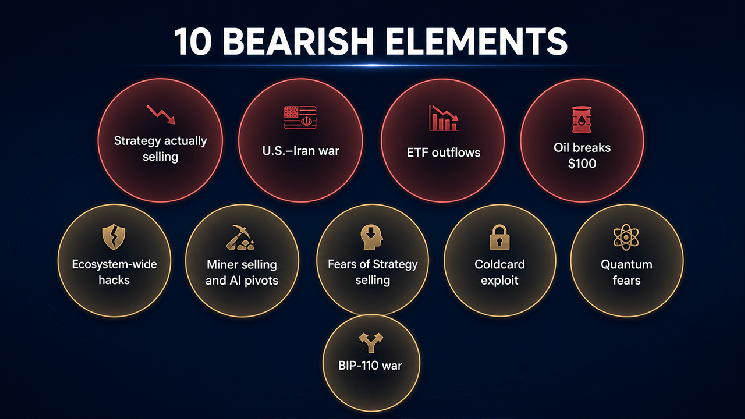
Bitcoin Withstood 10 Bearish Blows in 2026, Yet Experienced Its Mildest Bear Market

Bitcoin, the leading cryptocurrency by market cap, peaked above $126,000 in early October before entering a prolonged decline. By August, it was mainly trading between $63,000 and $65,400, inflicting losses on late buyers but resulting in what is, historically for Bitcoin, an unusually shallow bear market—down about 49% from its peak, compared to typical 75-80% plunges. Throughout 2026, Bitcoin faced multiple headwinds yet demonstrated notable resilience. Geopolitical tensions in the Middle East and volatile oil prices revived inflation concerns but failed to trigger the panic-driven sell-offs seen in prior cycles. A significant psychological blow came from corporate seller MicroStrategy, a longtime accumulator, which began strategic sales to bolster its cash position, reducing its holdings. U.S. spot Bitcoin ETFs also faced sustained outflows, though a late-week inflow hinted at potential relief. Pressure also came from within the ecosystem. A contentious blockchain proposal, BIP-110, failed after a minority chain stalled. Miners, facing tighter economics, sold reserves and pivoted infrastructure toward AI. A major security breach involving Coldcard hardware wallets saw an estimated 2,000 BTC stolen, shaking confidence in self-custody. Long-term threats like quantum computing resurfaced in discussions. Despite this confluence of corporate selling, ETF outflows, miner capitulation, geopolitical shocks, internal conflict, and security issues—any one of which could historically cause sharp declines—Bitcoin stubbornly held above a key $60,000 support level. Deeper market liquidity, regulated products, and long-term holders appear to be absorbing selling pressure that once would have caused deeper crashes. This resilience suggests a maturing market structure, though risks remain. Another shock could still push Bitcoin toward $50,000. For now, its 49% decline, severe for most assets, is relatively moderate by Bitcoin's own volatile standards. The remaining months of 2026 will test whether $60,000 is a durable floor or merely the next major line of defense.

Bitcoin Withstood 10 Bearish Blows in 2026, Yet Experienced Its Mildest Bear Market - cryptonews.ru

Anthropic Strikes Another $9.1 Billion Computing Deal with Bitcoin Miner Riot, Committing $60 Billion in 3 Months

AI startup Anthropic is aggressively expanding its computing power capacity. According to Bloomberg, Anthropic has signed a long-term cloud computing contract with Bitcoin mining company Riot Platforms worth $9.1 billion over 20 years. This is part of a recent series of massive compute procurement deals by Anthropic, totaling over $60 billion in recent months, including agreements with infrastructure startup Volta Infra Holdings ($10 billion) and Elon Musk's xAI (nearly $45 billion). The deals aim to address the severe compute shortage bottlenecking the growth of its Claude AI tools. The agreement with Riot grants Anthropic access to 191 megawatts of computing power from Riot's data center campus in Texas. The contract includes options for two five-year extensions, potentially increasing its total value to $16.1 billion and extending it to 2048. Following the news, Riot's stock surged 25% in after-hours trading. This deal marks a significant strategic shift for Riot Platforms, transitioning from Bitcoin mining to the AI data center market, leveraging its existing power infrastructure and large-scale data center operations. The long-term, high-value contract is seen as reshaping Riot's revenue model from volatile cryptocurrency mining towards more stable, contracted service income.

Anthropic Strikes Another $9.1 Billion Computing Deal with Bitcoin Miner Riot, Committing $60 Billion in 3 Months - 华尔街日报

Strategy Sells BTC at Loss, Trump Media Cuts Crypto Business, Grayscale Withdraws Altcoin ETFs: Crypto Market Experiences Sharp Retreat Within a Week

In a single week, three key players in the crypto world pulled back simultaneously, signaling a market-wide retreat. MicroStrategy sold 1,690 BTC at a loss to repurchase its discounted preferred shares. Trump Media reported a quarterly net loss of $238.1 million, largely due to a $190.4 million crypto asset impairment, and announced a scaling back of its crypto ambitions. Grayscale withdrew its filings for spot ETFs tied to Cardano (ADA), Polkadot (DOT), and Hedera (HBAR) within minutes. Individually, these are company updates; together, they point to a sharp ebb tide in crypto. However, in this industry, such contractions are not an end but a prelude. Unlike traditional markets, crypto lacks institutional buffers. Its cleansing happens violently through price crashes and leverage implosions, which are painful but necessary to purge weak hands—speculators, over-leveraged entities, and undisciplined corporate buyers—and transfer their holdings to stronger ones. Previous cycles washed out retail and projects, laying groundwork for DeFi and institutional products like spot Bitcoin ETFs. The current phase targets corporate and institutional excess. MicroStrategy's sale shows even "forever holders" face balance sheet realities. Trump Media's retreat highlights the perils of undisciplined corporate treasury management. Grayscale's product pruning reflects a cooling institutional appetite for altcoins beyond BTC and ETH. This painful process creates a cleaner market structure. It shifts the focus from speculative narratives to fundamentals like cash flow and asset quality. As weak hands exit, selling pressure subsides, paving the way for sustainable growth. The last cycle built ETFs on FTX's ashes. This one may forge a more mature, resilient foundation from the lessons of the corporate "buy-the-dip" era. The path forward, while uncertain, holds promise for a healthier market.

Strategy Sells BTC at Loss, Trump Media Cuts Crypto Business, Grayscale Withdraws Altcoin ETFs: Crypto Market Experiences Sharp Retreat Within a Week - marsbit

Join Grid Trading Community

Join the grid trading community to exchange strategies with millions of traders and receive real-time alerts.

Grid Trading Tutorials for Beginners

3 steps to get started with grid trading: select a trading pair, set parameters, and launch bots with one click.

01

Select Pair

USDe employs a delta-neutral hedging strategy to earn yield, offering stronger value pegging and a low-volatility experience.

02

Set Parameters

USDe supports transparent, professional third-party custody, and undergoes audits to provide robust asset protection.

03

One-Click Creation

No lockups or staking are required. Holding USDe in any account will earn you rewards, accrued daily and distributed weekly.

FAQs

QWhy is Bitcoin a good asset for grid trading?

ABitcoin is one of the most popular assets for grid trading for three reasons. First, it has consistently high volatility — even during relative calm Bitcoin regularly oscillates 3–8% within weekly ranges, providing frequent grid triggers. Second, Bitcoin has the deepest liquidity among all cryptocurrencies, ensuring buy and sell orders fill quickly without slippage. Third, BTC's price history shows recurring oscillation patterns around well-defined support and resistance zones, making it easier to set a meaningful grid range. On HTX, BTC/USDT is consistently among the most-copied and highest-volume grid strategies on the platform.

QWhat price range and grid count works best for BTC/USDT grid trading?

AFor BTC/USDT grid trading, a practical starting framework uses the 30 to 60-day recent high and low as your price boundaries. This covers a realistic oscillation band without being so wide that each individual grid level rarely triggers. For grid count, 20–50 levels works well for most capital sizes; each grid step should represent at least 0.5–1% of the price to cover trading fees and generate meaningful net profit per trade. HTX's AI parameter tool analyses current BTC volatility and automatically suggests an optimised range and grid count based on your investment amount — recommended for first-time BTC grid deployment.

QHow does Bitcoin's halving cycle affect grid trading strategies?

ABitcoin's approximately four-year halving cycle creates distinct market phases that affect optimal grid configuration. In the 12–18 months following a halving, Bitcoin historically enters a bull phase with strong upward trends — standard neutral grids may sell Bitcoin too early and miss the full upside. A Long Grid biased toward accumulating on dips is more appropriate during these phases. During the accumulation phase before a halving or in bear conditions, neutral or slightly short-biased grids perform better. The 2024 halving occurred in April 2024, placing us in a mid-to-late bull phase as of mid-2026 — grid configurations should be biased accordingly toward long-oriented parameters with wider upside range.

QWhat is the difference between BTC spot grid and BTC futures grid trading?

ABTC spot grid and BTC futures grid share the same buy-low-sell-high logic but differ in four key dimensions. Asset ownership: spot grid buys give you actual BTC; futures grid holds perpetual contract positions. Liquidation risk: spot has none — even a 50% drop just means holding BTC at a higher cost; futures with leverage can be liquidated if margin falls below the maintenance level. Funding rates: futures incur or earn funding rate payments every eight hours based on premium or discount to spot. Leverage: futures can amplify returns 2–10× but losses proportionally. For BTC grid trading beginners, spot is recommended as the lower-risk starting point; futures suits traders comfortable with leverage and margin management.

QWhat technical indicators help identify good entry timing for a BTC grid?

ASeveral technical indicators signal favourable conditions for deploying a BTC grid. Bollinger Bands: when BTC is trading inside a tightening Bollinger Band squeeze, compressed volatility often precedes a range-bound phase ideal for grid entry. ATR (Average True Range): low ATR values suggest price moves are small and contained, suitable for grids; high ATR with directional momentum suggests waiting. RSI between 40 and 60 indicates BTC is in a neutral zone without strong directional bias — the ideal deployment window. High-volume price zones from Volume Profile analysis provide natural grid boundaries where the market is likely to oscillate. HTX's AI market summary integrates these signals to provide daily grid suitability assessments for BTC.

QCan I run a BTC grid on pairs other than BTC/USDT?

AYes. On HTX you can run grid strategies on multiple BTC trading pairs. BTC/USDC behaves similarly to BTC/USDT but uses Circle's USDC as the quote currency. BTC perpetual futures are available in both USDT-margined and BTC-margined variants. In coin-margined (BTC-margined) contracts, profits and losses are denominated in BTC rather than USDT — this benefits you in bull markets as your BTC balance grows, but amplifies losses in bear markets since the collateral itself is declining in value. For most grid traders, BTC/USDT remains the most straightforward and liquid choice.

QWhat realistic annual returns can I expect from a BTC grid strategy?

ARealistic annual returns from BTC grid trading depend heavily on market conditions during the period. In high-volatility, range-bound markets, well-configured spot grids have historically demonstrated 25–70% after-fee annual returns on major exchanges. In low-volatility or strongly trending markets, returns may fall to 5–20% or turn negative if price moves strongly outside the grid. Futures grids with 3–5× leverage can amplify these returns proportionally but with higher risk. These ranges reflect historical outcomes under specific conditions and are not guaranteed. Use HTX's backtest tool to see what a specific parameter set would have earned over any chosen historical period before deploying real capital.

QCan BTC grid trading work during a bear market?

AGrid trading can still work during a BTC bear market but requires a different strategic approach. The key shift is strategy direction: instead of a neutral grid centred on current price, a Long Grid configured toward the lower end of a falling price range is more appropriate. This approach accumulates BTC at progressively lower prices — similar to DCA — while sell orders placed at higher grid levels recapture some profit on any rebounds. The critical risk is that the accumulation continues if the decline goes deeper than your grid's lower boundary, and with no stop-loss, exposure grows. Best practices for bear market BTC grids: use only spot (no leverage), set wider grid ranges with fewer levels, maintain an explicit stop-loss, and keep 20–30% of intended capital as reserve rather than deploying it all upfront.

QCan on-chain Bitcoin metrics help me set better grid parameters?

AYes. Several on-chain metrics provide useful context for BTC grid parameter setting. MVRV Ratio (Market Value to Realised Value): values above 3.5 historically indicate overvaluation — the grid's upper boundary should be set more conservatively; values below 1 suggest undervaluation — wider downside room is appropriate. NVT Ratio (Network Value to Transactions): acts like a P/E ratio for BTC; high NVT with declining on-chain activity signals overvaluation risk relevant to your upper grid limit. Puell Multiple: measures daily issuance value relative to the 365-day average; high values indicate elevated miner selling pressure, relevant to your lower grid boundary. Free data for these metrics is available on Glassnode's basic tier, CryptoQuant, and LookIntoBitcoin.com. While no metric precisely predicts price, they provide a probabilistic context for setting boundaries aligned with broader market valuation.

QHow do I choose a good BTC grid strategy to copy on HTX?

AWhen browsing BTC grid strategies on HTX's leaderboard to copy, evaluate five key metrics. Runtime: prioritise strategies running for at least 7–14 days to ensure the track record reflects real market conditions rather than an initial lucky run. Drawdown: the 7-day max drawdown should be below 15% for conservative investors and below 25% for moderate risk tolerance. ROI consistency: look for strategies with steady realised PnL growth rather than a single large spike — consistent daily growth indicates a working grid while a spike may reflect one unusual price move. Grid parameters: check that the current BTC price still sits within the strategy's active range. If current price is at or near the range boundary, the strategy may be about to stop trading. Minimum investment: ensure the copy minimum matches your available capital.