The reference exchange rate is for reference only and is not locked in. The final rate will be determined by the actual execution price.
Real-Time W Stats
The live price of Wormhole (W) is $0.01 USD and its current market capitalization is $72.09M USD.
Get real-time W/USD updates on HTX. Stay informed with the latest data and market trends to make smart trading decisions. HTX, your trusted source for accurate cryptocurrency price information.
Wormhole Key Stats
24h Volume (USD)--
Price Change Today-0.92%
Circulating Supply (W)6.73B
W Price Performance
Track Wormhole price movements with chart views spanning 1 day, 30 days, 60 days, 90 days, 1 year, and the period since it was listed on HTX.View more data for the Wormhole prices
Time
Change
Change%
Highest Price
Lowest Price
W Market Information
Get the latest Wormhole price details on HTX: 24-hour high and low, all-time high (ATH), and daily price change percentage.
24h Low$0
24h High$0
All-Time High$2.34
Market Cap$72.09M
24h Volume (USD)--
Circulating Supply6.73B
What is W?
Wormhole is the leading interoperability platform that powers multichain applications and bridges at scale. Wormhole provides developers access to liquidity and users on over 30 of the leading blockchain networks, enabling use cases that span DeFi, NFTs, governance, and more.
It's super easy to buy W on HTX. Simply click here to view a complete guide to buying Wormhole with ease.
Real-Time W Markets
View real-time Wormhole prices on HTX's spot markets. Switch between spot and futures markets to instantly compare live prices and 24-hour price changes.
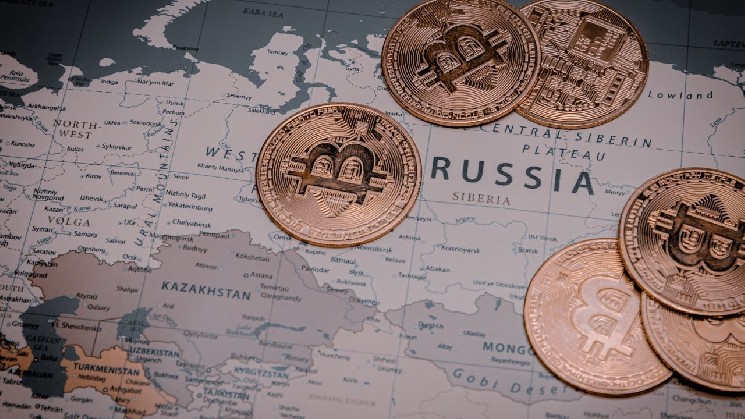
Russia ranks 16th globally in cryptocurrency adoption, with over 20 million Russians having invested in crypto assets, valued at more than $44 billion. Deputy Finance Minister Ivan Chebeskov expects this number to grow following new regulations for licensing domestic exchanges. These crypto resources are reportedly divided into three pools, with a significant portion being used for foreign trade settlements. This move aims to mitigate risks from potential disconnection from the SWIFT system and secondary sanctions faced by banks in friendly nations when processing transactions for dual-use goods.
Analytical company Bitquery estimates that $93.2 million was stolen from the wallets of Ledger hardware wallet users. This follows initial reports of an $86+ million theft. The funds were withdrawn from 315 wallets across six blockchains: TRON, Bitcoin, Ethereum, BNB Chain, Polygon, and Solana. The affected users are believed to have purchased their devices from a reseller named CryptoBilis in Southeast Asia. Bitquery's investigation uncovered additional transactions not included in the earlier assessment, leading to the revised, higher total loss figure.
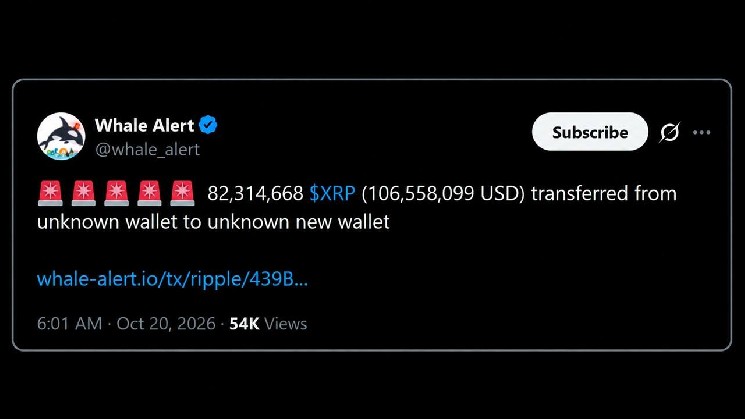
A large XRP whale that accumulated tokens at prices above $2 has just moved 82 million XRP. Whale Alert initially flagged the transfer as being between two unknown wallets, but the public XRP Ledger history reveals more detail. The sender wallet was activated on November 14, 2025 by a funding address that also supplied all of its major inflows. It received 73,179,840 XRP on November 24, 2025 at about $2.05; 59.6 million XRP on December 4, 2025 at about $2.20; 73.9 million XRP on December 12, 2025 at about $2.03; and 73 million XRP on January 12, 2026 at about $2.08. Two smaller tranches of 9.27 million and 9.31 million XRP arrived on January 31 and February 5, 2026, when the price had fallen to $1.74 and then $1.52. On May 20, 2026, 73,179,900 XRP returned to the funding address, almost exactly matching the size of the first deposit. Finally, on October 20, 2026, 82,314,668.8 XRP were sent to a new wallet created in the same transaction. That final amount precisely equals the January 12 deposit of 73 million plus the February 5 deposit of 9,314,668.8046, suggesting specific batches were being isolated, similar to the May withdrawal.
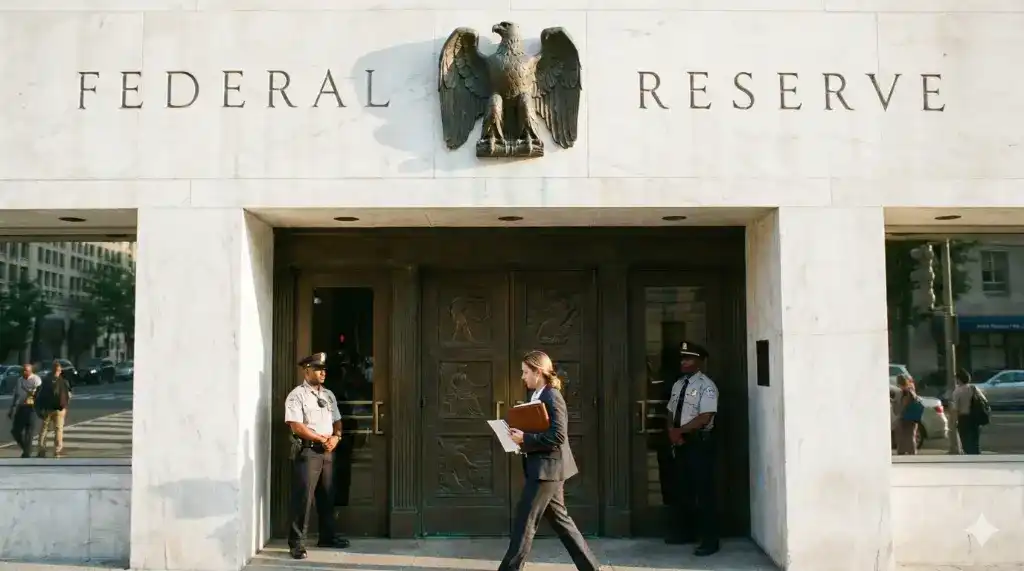
Fed officials are divided over communication strategy, with Chair Warsh's "silence is virtue" approach facing resistance from colleagues. Since Warsh took office in May and deliberately reduced his own public remarks, other officials have filled the gap—16 officials gave at least 59 speeches, interviews and public statements between the last policy meeting and this week's blackout period, roughly matching last year's 54. The core dispute is whether officials should explain how they will respond to economic changes. Warsh argues that continuous guidance locks officials into their own forecasts and blurs market signals, saying the Fed "no longer does this." Richmond Fed's Barkin supports the approach. But Cleveland Fed's Hammack defends explaining frameworks without committing, and St. Louis Fed's Musalem warns that a central bank silent about its framework "only creates noise." The practical fallout was visible: after last month's hike, markets inferred a high chance of another October hike from Warsh's press conference, but subsequent remarks by the vice chairs reversed expectations, with the probability dropping from 70% to 15%. Governor Waller compared the episode to throwing out the baby with the bathwater, and former Vice Chair Kohn warned that markets are moving ahead of where the committee wants to guide them. With officials also split on economic conditions and the policy path, former Fed economist Sahm called the situation "the worst of all possible outcomes." An external working group is drafting communication recommendations due by year-end.
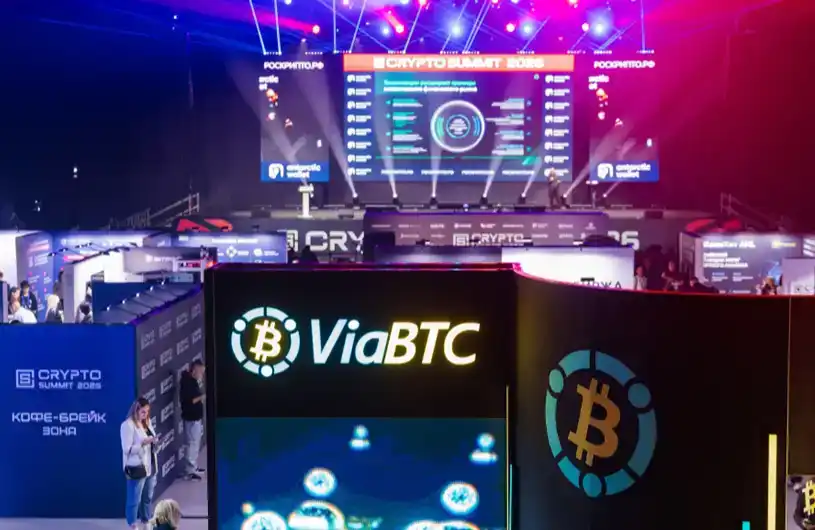
ViaBTC participated as a strategic partner in the 9th Crypto Summit held October 28–29 at MTS Live Hall in Moscow, engaging with miners and industry partners on mining operations, settlement, and asset management. On the first day, ViaBTC hosted a roundtable on mining profitability and growth in 2026, where Business Director Anton Tsarenok shared lessons from operating its pool since 2016, emphasizing that reliability shows up in daily experience—stable hashrate connections, clear earnings records, and timely support—which builds miner trust. On day two, Business Manager Alina Kakicheva discussed how equipment investment translates into results, noting that connection quality, settlement methods, and operational losses all affect returns. She covered monitoring and verified backup connections to reduce downtime, and compared PPS+ and PPLNS settlement models so miners can choose based on their business cycles and tolerance for short-term volatility. She also introduced ViaBTC's auto-conversion feature, which automatically converts supported coin balances into BTC or USDT, reducing manual exchanges and supporting asset management plans. The team also highlighted its global distributed node layout and European access arrangements for connection stability, along with one-stop earnings management covering earnings viewing, asset management, auto-conversion, and withdrawals. ViaBTC is a global crypto mining pool launched in 2016, serving over 2 million users across 150+ countries and regions, supporting BTC, LTC/DOGE, BCH, ZEC, and KAS, with several pools ranking among the world's top.