The reference exchange rate is for reference only and is not locked in. The final rate will be determined by the actual execution price.
Real-Time ORDER Stats
The live price of Orderly (ORDER) is $0.03 USD and its current market capitalization is $-- USD.
Get real-time ORDER/USD updates on HTX. Stay informed with the latest data and market trends to make smart trading decisions. HTX, your trusted source for accurate cryptocurrency price information.
Orderly Key Stats
24h Volume (USD)
$--
Price Change Today
--
Circulating Supply (ORDER)
414.07M
Sign up and trade to win rewards worth up to 1,500 USDT.Join Now
ORDER Price Performance
Track Orderly price movements with chart views spanning 1 day, 30 days, 60 days, 90 days, 1 year, and the period since it was listed on HTX.View more data for the Orderly prices
Time
Change
Change%
Highest Price
Lowest Price
No data
ORDER Market Information
Get the latest Orderly price details on HTX: 24-hour high and low, all-time high (ATH), and daily price change percentage.
24h Low
$0
24h High
$0
All-Time High
$0
Market Cap
$0.00
24h Volume (USD)
$--
Circulating Supply
--
What is ORDER?
Orderly Network is an L2 built on OP stack delivering a permissionless liquidity layer for Web3 trading, with one shared orderbook across different blockchains — powered by Orderly Chain and LayerZero. Our mission is to empower trading on any chain, any asset, any interface. Orderly offers spot and perpetual futures orderbooks trading across Arbitrum, Optimism, Polygon, Base ,Mantle and Near, while expanding to other blockchains.
It's super easy to buy ORDER on HTX. Simply click here to view a complete guide to buying Orderly with ease.
Real-Time ORDER Markets
View real-time Orderly prices on HTX's spot markets. Switch between spot and futures markets to instantly compare live prices and 24-hour price changes.
Based on the historical performance of Orderly, our prediction tool estimates that the price of Orderly (ORDER) could reach -- by --.
Predicted ORDER Price in --
Our most recent forecast indicates the price of Orderly (ORDER) will increase to -- by --, with a price change of --% and a cumulative ROI of approximately --%.
Buy your first ORDER on HTXSign Up
ORDER FAQs
What is the Orderly (ORDER) price today?
The current price of Orderly (ORDER) is $0.03 USD.
What is the Orderly (ORDER) market cap?
The current market capitalization of Orderly (ORDER) is $0.00 USD, calculated by multiplying its circulating supply by its current price.
What is the Orderly (ORDER) circulating supply?
The current circulating supply of Orderly (ORDER) is -- ORDER.
What is the Orderly (ORDER) all-time high?
As of 2026-10-16, the all-time high of Orderly (ORDER) is $0 USD.
What is the Orderly (ORDER) 24h trading volume?
The 24-hour trading volume of Orderly (ORDER) is -- USD on HTX.
Can I buy Orderly (ORDER) on HTX?
Yes, HTX offers industry-leading trading fees and deep liquidity, ensuring a smooth and secure Orderly (ORDER) purchase experience.
Ekiden has launched the first order book-based derivatives exchange in the Canton Network. The platform is designed for institutional participants like trading firms, market makers, and banks, offering execution processes closer to traditional capital markets than typical DeFi platforms. It combines a Central Limit Order Book (CLOB), RFQ-based settlements, and PropAMM integration, along with a trading terminal and API. The launch addresses the growing institutional interest in digital assets, noting that while 73% of institutional decision-makers plan to increase digital asset exposure by 2026, the onchain derivatives infrastructure remains underdeveloped compared to traditional markets. Ekiden's founder emphasized that tokenization alone is insufficient for a mature institutional market, requiring quality execution, privacy, and workflows. The platform saw over 1,500 active users and $8.9M in volume during its testnet phase. Backed by a $2M seed round from investors including GSR and Flowdesk, Ekiden now enables the full lifecycle of an institutional derivatives trade—from execution to settlement—onchain with privacy. Keyrock, Kappa Lab, and Flowdesk are among its initial liquidity providers.
Former FTX CEO Sam Bankman-Fried has reportedly asked the U.S. Supreme Court to overturn his 2023 fraud conviction and an associated $11 billion forfeiture order, according to court filings. His lawyers argue that the trial judge improperly excluded evidence showing his investments were sound and could have covered customer losses, and that the forfeiture violates the Eighth Amendment's ban on excessive fines. In June, a panel of the 2nd U.S. Circuit Court of Appeals upheld his conviction and 25-year prison sentence. Bankman-Fried was convicted in March 2024 on seven counts of fraud and conspiracy for using billions in FTX customer funds to cover debts at Alameda Research, fund investments, make political donations, and pay for personal expenses. He has also reportedly submitted a clemency petition to former President Donald Trump.
Despite outperforming Bitcoin with a 70% price gain in Q3, Ethereum's (ETH) market liquidity has significantly thinned. According to CoinGecko, ETH's median daily market depth within 0.15% of the spot price was only 35-45% of Bitcoin's, a sharp decline from at least 60% a year ago. This means large trades now cause greater price slippage. The trend contradicts the notion that rising prices attract thicker order books.
While ETH remains sufficiently liquid for most trades, other major altcoins like Solana (SOL) also show thinning liquidity, particularly in their ability to absorb larger price swings (2% depth). SOL's depth in that range has fallen from ~$28M to ~$20M per side since last year. XRP maintains a stable total depth but with a buy-side skew, and its depth is lower than SOL's despite a higher market cap, attributed to SOL's higher trading volume.
The data highlights that strong price performance does not guarantee robust market depth, introducing "thin order book" risks that traders should consider for position sizing and stop-loss placement.
In the crypto market, TGE often triggers a liquidity crisis and price collapse despite substantial fundraising and listings. The core issues stem from three interconnected factors: structurally fragile "low float, high FDV" token distributions, conflicting interests in traditional "token loan + call option" market-making models, and weak microscopic order book depth.
The prevalent low initial float (5%-10%) artificially supports high valuations but creates concentrated, cost-insensitive selling from airdrop/ farming recipients, scares away genuine buyers due to valuation disconnect, and encourages off-chain hedging by locked-up investors, overwhelming thin buy-side support.
Standard market-making agreements exacerbate this. When prices fall, making their call options worthless, market makers' rational self-preservation is to sell the borrowed tokens to hedge, directly dumping supply onto the weak market they were meant to stabilize, rather than using capital to support the price.
To escape this trap, projects must redesign the game:
1. **Shift from asset lending to transparent, custodial account structures** (e.g., fee-based models, restricted sub-accounts) to prevent undisclosed hedging and dumping.
2. **Reform KPIs beyond volume**, focusing on metrics like effective spread during volatility, slippage under real sell-pressure, order flow imbalance absorption rate, and real-time exposure transparency.
Technologically, next-gen market-making requires:
1. **Toxic order flow identification** (e.g., VPIN) to differentiate and manage arbitrage bot attacks vs. organic selling.
2. **Dynamic CEX-DEX rebalancing** to minimize cross-market arbitrage and liquidity drain.
3. **Algorithms like TWAP and adaptive iceberg orders** to smoothly absorb predictable TGE sell-pressure peaks.
Ultimately, long-term price depends on fundamentals. However, a scientific, transparent, and technologically robust liquidity management system acts as essential armor during a project's vulnerable early stage. Market-making should evolve from an opaque, extractive game into neutral public infrastructure for on/off-chain liquidity, aligning incentives and allowing value to be driven by product and ecosystem growth.
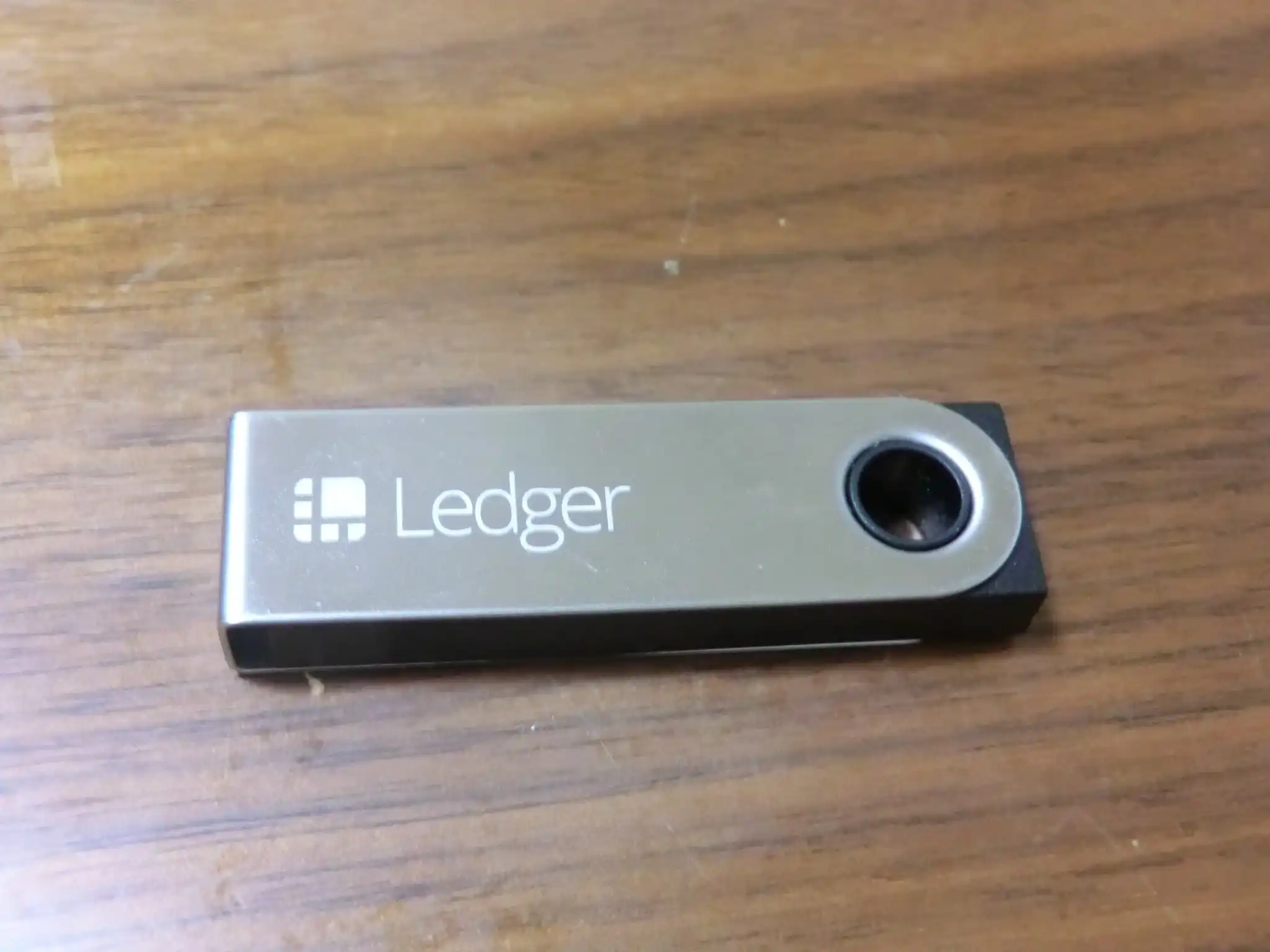
According to a Chainalysis investigation, a major victim in the recent Ledger security breach was not a legitimate investor but an organized telecom fraud ring. This group operated a "fake review" scam, tricking victims into paying for fake e-commerce transactions and then demanding additional payments under false pretenses of account issues. They accumulated over 60 BTC (worth ~$4.8 million at the time).
The fraudsters converted the illicit fiat into Bitcoin to launder the funds. In September 2025, they distributed the 60+ BTC across three Ledger hardware wallet addresses. However, on October 9, an external hacker exploited a supply chain vulnerability in Ledger's software, draining all assets from those addresses in a single transaction.
The case highlights that hardware wallets are not impervious, especially if compromised software or firmware is installed. It also presents a legal dilemma: as the original funds were obtained criminally, the fraudsters have no legitimate claim for recovery. The stolen Bitcoin has been flagged, and international law enforcement coordination for tracking is set to begin.
marsbit9小时前
Threads
Welcome to the HTX Community. Here, you can stay informed about the latest platform developments and gain access to professional market insights. Users' opinions on the price of Orderly (ORDER) are presented below.
Related Questions
Welcome to the Crypto FAQ. Users' questions and answers on Orderly (ORDER) are presented below.