The live price of ConstitutionDAO (PEOPLE) is $0.007 USD and its current market capitalization is $-- USD.
Get real-time PEOPLE/USD updates on HTX. Stay informed with the latest data and market trends to make smart trading decisions. HTX, your trusted source for accurate cryptocurrency price information.
ConstitutionDAO Key Stats
24h Volume (USD)
$--
Price Change Today
-2.25%
Circulating Supply (PEOPLE)
5.06B
Sign up and trade to win rewards worth up to 1,500 USDT.Join Now
PEOPLE Price Performance
Track ConstitutionDAO price movements with chart views spanning 1 day, 30 days, 60 days, 90 days, 1 year, and the period since it was listed on HTX.View more data for the ConstitutionDAO prices
Time
Change
Change%
Highest Price
Lowest Price
No data
PEOPLE Market Information
Get the latest ConstitutionDAO price details on HTX: 24-hour high and low, all-time high (ATH), and daily price change percentage.
24h Low
$0
24h High
$0
All-Time High
$0
Market Cap
$0.00
24h Volume (USD)
$--
Circulating Supply
--
What is PEOPLE?
Constitution DAO was an experiment that has now been dissolved. In November 2021, a group web3-enthusiasts gathered as a decentralized autonomous organization with the shared objective of buying a copy of the U.S. Constitution at a Sotheby’s Auction. There are only 13 original physical copies of the U.S Constitution in existence, which meant that this auction sparked a competitive bidding battle. Even though the group managed to raise well over $40 million in ETH, it ultimately fell short and was outbid by Ken Griffin, a billionaire hedge fund manager and CEO of Citadel.
Constitution DAO announced that it would disband after its unsuccessful grassroots attempt to buy one of the most valuable and iconic documents in U.S. history. All donations are being refunded.
It's super easy to buy PEOPLE on HTX. Simply click here to view a complete guide to buying ConstitutionDAO with ease.
Real-Time PEOPLE Markets
View real-time ConstitutionDAO prices on HTX's spot markets. Switch between spot and futures markets to instantly compare live prices and 24-hour price changes.
Based on the historical performance of ConstitutionDAO, our prediction tool estimates that the price of ConstitutionDAO (PEOPLE) could reach -- by --.
Predicted PEOPLE Price in --
Our most recent forecast indicates the price of ConstitutionDAO (PEOPLE) will increase to -- by --, with a price change of --% and a cumulative ROI of approximately --%.
Buy your first PEOPLE on HTXSign Up
PEOPLE FAQs
QWhat is the ConstitutionDAO (PEOPLE) price today?
AThe current price of ConstitutionDAO (PEOPLE) is $0.007 USD.
QWhat is the ConstitutionDAO (PEOPLE) market cap?
AThe current market capitalization of ConstitutionDAO (PEOPLE) is $0.00 USD, calculated by multiplying its circulating supply by its current price.
QWhat is the ConstitutionDAO (PEOPLE) circulating supply?
AThe current circulating supply of ConstitutionDAO (PEOPLE) is -- PEOPLE.
QWhat is the ConstitutionDAO (PEOPLE) all-time high?
AAs of 2026-08-07, the all-time high of ConstitutionDAO (PEOPLE) is $0 USD.
QWhat is the ConstitutionDAO (PEOPLE) 24h trading volume?
AThe 24-hour trading volume of ConstitutionDAO (PEOPLE) is -- USD on HTX.
QCan I buy ConstitutionDAO (PEOPLE) on HTX?
AYes, HTX offers industry-leading trading fees and deep liquidity, ensuring a smooth and secure ConstitutionDAO (PEOPLE) purchase experience.
Prediction markets, which allow trading contracts tied to future events, experienced a surge in activity driven by the FIFA World Cup, with total trading volume reaching $54.09 billion in July, up 8.3% from June. Kalshi dominated, handling 71.5% of the volume ($38.65B) and an estimated 77% of platform fees ($252.92M), while the Polymarket ecosystem accounted for roughly 24%. The event spurred nearly 365.92 million transactions and boosted open interest to about $1.91 billion at its peak. The tournament's sustained uncertainty attracted both traditional traders and new sports fans, expanding the user base. While the World Cup demonstrated how major global sports events can significantly boost market metrics, a key question remains whether this elevated activity can be sustained post-tournament.
Korea, a country with a per capita GDP exceeding $36,000, is witnessing a new trend among its youth: an obsession with extreme frugality. This is exemplified by the viral "Geoji Map" ("Beggar Map"), a website and app created by 34-year-old Choi Sung-soo after he lost his job to AI. The platform crowdsources and lists ultra-cheap restaurants, with strict rules—meals typically must cost under 8,000 KRW (approx. $6) and provide decent protein and vegetables. It gained 1.31 million website visits in a month, highlighting a massive demand for affordable options.
This "jjantech" (frugal finance) movement extends beyond food. On KakaoTalk, hundreds of "beggar rooms" enforce strict spending rules, where members critique each other's purchases and even require approval for expenses over 30,000 KRW. Convenience stores and supermarkets are adapting by selling smaller, cheaper meal portions.
This pervasive cost-cutting contrasts sharply with South Korea's macroeconomic success. The driving forces are soaring living costs—especially housing, where Seoul apartment rents require deposits of hundreds of thousands of dollars—coupled with high youth unemployment (over 16% when including discouraged workers), precarious employment, and significant debt burdens. Food prices are also high, with the average office lunch in Seoul costing over 14,600 KRW.
The shift represents a deeper change in mindset. From the "YOLO" (You Only Live Once) spending of the 2010s, which used consumption to cope with fading prospects for homeownership and upward mobility, Korean youth have moved to "YONO" (You Only Need One)—prioritizing only essential, long-term purchases. Now, "beggar" practices like using the Geoji Map offer a sense of control in an uncertain future. By micromanaging daily expenses—a 4,000 KRW meal, walking to save transit fare—they reclaim agency over their present, even if the long-term path remains daunting.
Tiger Research: 2036 - Four Stories of Blockchain's Integration
This speculative narrative presents four vignettes set in 2036, illustrating the subtle yet profound ways blockchain technology could reshape everyday life and global systems.
Story 1: The Irrelevance of National Currency. In the inflation-plagued fictional nation of Zutopia, Judy, a longtime currency exchange worker, witnesses the endgame. Dollar-pegged stablecoins (USDT, USDC), once a niche tool, have completely supplanted the volatile local Bucks for daily transactions, salaries, taxes, and even government bonds, eroding traditional monetary sovereignty.
Story 2: The 24/7 Global Casino. Lia, a young investor in Singapore, operates in a world where every asset—stocks, real estate, bonds—is tokenized and trades endlessly on borderless platforms. For her generation, constant, leveraged, global trading is the norm, contrasting sharply with the cautious, scheduled investments of her parents.
Story 3: The Great Consolidation. Do-hyun, an infrastructure engineer, recalls the 2020s boom of countless independent blockchains (like the fictional "Allchain") that collapsed after incentive programs ended. By 2036, the landscape has consolidated into a handful of major, efficient networks, as users and liquidity coalesced around durability over fragmentation.
Story 4: The End of the Banner Ad. Media entrepreneur Jae-hoon observes the final shift from human-centric advertising. With most web traffic now from AI agents, the old pageview-and-banner model is dead. A new machine-to-machine economy thrives via protocols like x402, where media companies charge AI agents micropayments for data access, creating a more reliable revenue stream than traditional ads ever did.
Together, these stories depict a 2036 where blockchain is not a standalone revolution but an integrated, almost invisible infrastructure enabling global digital currency, seamless asset markets, consolidated networks, and a new paradigm for digital content commerce.
Updated: 2026-08-05. David Schwartz, the chief architect of the XRP Ledger, thwarted a cryptocurrency scam targeting XRP investors. Scammers had created a near-flawless clone of the official Ripple website, using identical branding to trick users. The site featured a banner promising exclusive rewards "for those who never sold," urging users to click a "Get Early Access" button. This action would trigger a transaction draining the user's XRP wallet.
In response to a screenshot of the fake site, Schwartz publicly attached a GIF labeled "THIS IS A SCAM!" to alert the community. This incident is part of a wave of attacks on the XRP ecosystem in early August, primarily employing social engineering tactics and leaked investor data to bypass spam filters. Scammers pressure users with urgent messages to act quickly. The article emphasizes that Ripple has no hidden loyalty programs or secret reward pools; any such offer is fraudulent.
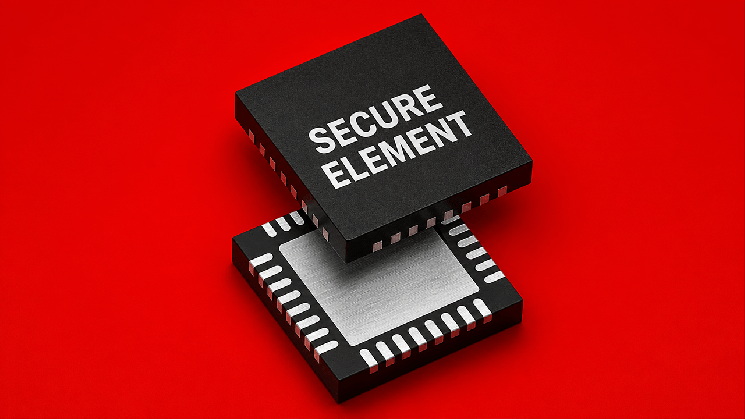
A "secure element" is a specialized, tamper-resistant hardware chip designed to protect sensitive information. In hardware wallets, it acts as a vault for private keys, keeping them isolated from the main processor and the internet. Its core function is to sign cryptocurrency transactions internally; the private key never leaves the chip's protected environment—only the final digital signature is output. This prevents malware on a connected computer from stealing the key.
Secure elements also defend against physical attacks, using hardware-level countermeasures to detect and resist tampering, voltage manipulation, and side-channel attacks. They contain dedicated hardware random number generators (RNGs) to ensure strong, unpredictable private keys are generated during wallet setup.
Importantly, many secure elements undergo rigorous independent security evaluations (like Common Criteria certification) to verify their resistance to sophisticated attacks.
However, a secure element is not an absolute shield. It cannot protect against user errors like approving fraudulent transactions or mishandling seed phrases. Its primary role is to raise the cost and complexity of attacks to impractical levels for most threats. Therefore, it is one critical layer within a broader security strategy that includes secure backup practices and transaction verification. Today, secure elements are a standard and vital component in hardware wallets, forming a crucial barrier for securing digital assets.
cryptonews.ru5小时前
Threads
Welcome to the HTX Community. Here, you can stay informed about the latest platform developments and gain access to professional market insights. Users' opinions on the price of ConstitutionDAO (PEOPLE) are presented below.
Related Questions
Welcome to the Crypto FAQ. Users' questions and answers on ConstitutionDAO (PEOPLE) are presented below.