Will the Fed’s $8B liquidity injection create a turning point for crypto?

ambcryptoPublished on 2026-03-27Last updated on 2026-03-27

Abstract

Given the current macro environment marked by geopolitical tensions and rising oil prices, investors are closely monitoring Federal Reserve signals. The Fed's recent $8 billion liquidity injection is drawing significant attention, as shifts in liquidity often directly impact crypto markets. Technically, crypto showed early resilience but momentum is fading, with the total market cap dropping 3.4% in a day, erasing nearly $100 billion. Rising Treasury yields and a risk-off shift are pulling capital into safe havens, reminiscent of the 2022 cycle that triggered a major crypto bear market. The Fed's intervention may provide short-term support and slow the flight to safety, potentially acting as a key catalyst in the current cycle.

Given the current macro setup, investors are closely tracking every signal coming from the Federal Reserve.

The logic is simple: the ongoing West Asia crisis shows no signs of de-escalation. Instead, geopolitical tensions continue to spill into energy markets, pushing oil prices back above the $100/barrel mark. Consequently, countries are being forced to consider targeted fiscal responses to stabilize their economies.

Within this environment, liquidity has become the central narrative. That’s why the Federal Reserve’s recent decision to inject $8 billion into the financial system is drawing increased attention from investors, particularly for crypto traders, where shifts in liquidity often translate directly into price action.
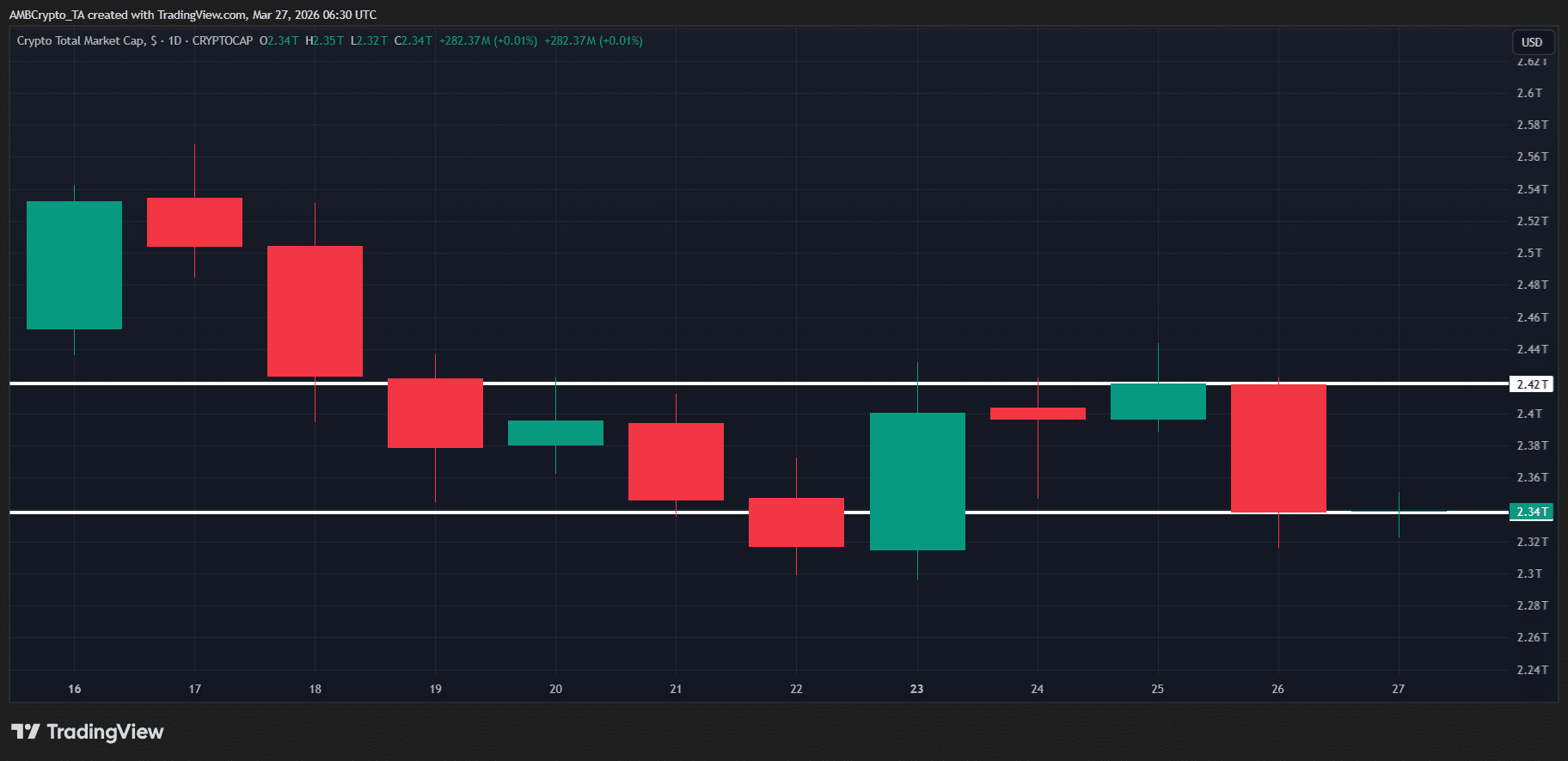
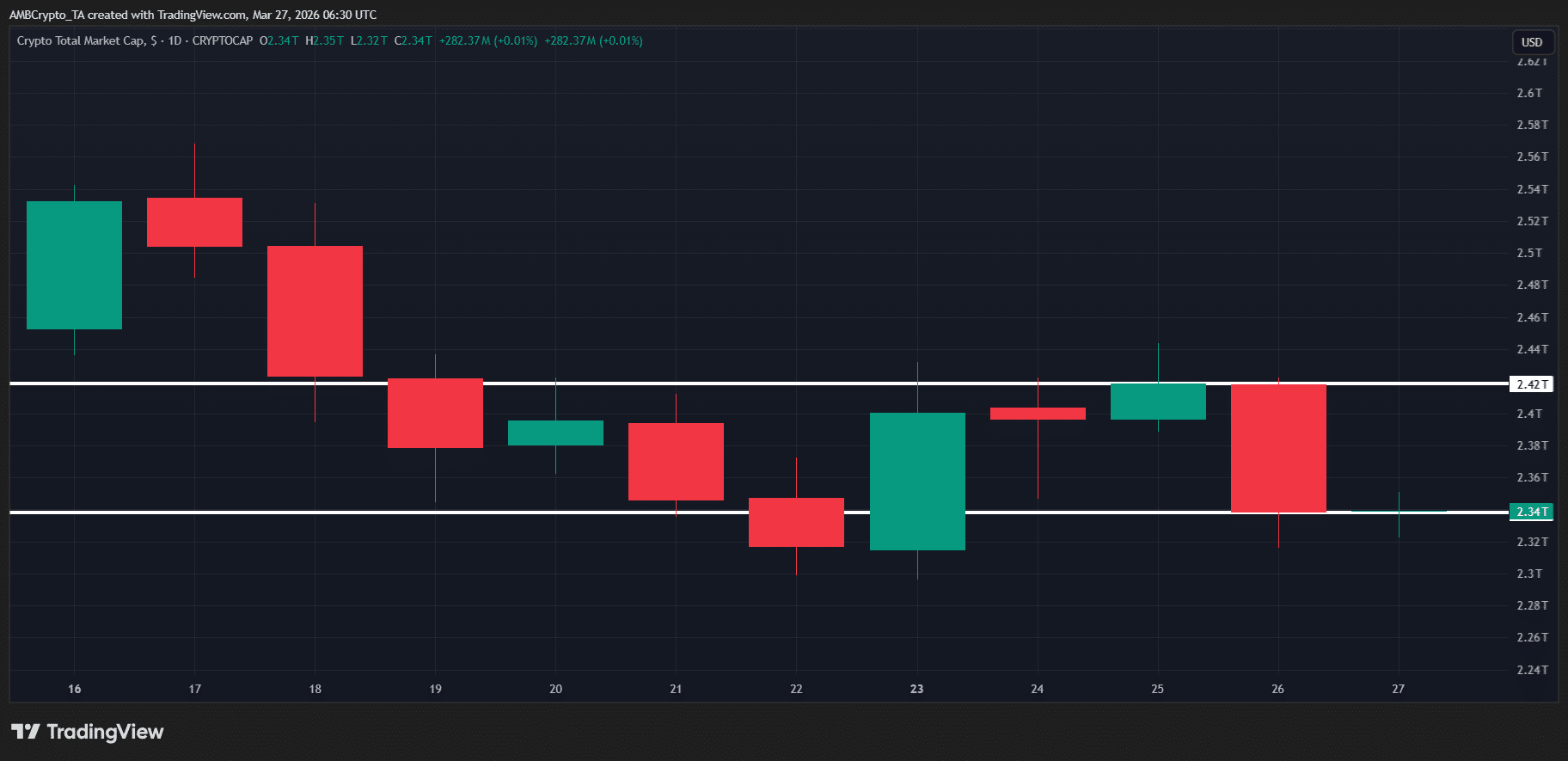
Source: TradingView (TOTAL/USDT)

From a technical perspective, the timing looks increasingly relevant.

While the crypto market initially showed resilience when the conflict first escalated, momentum now appears to be fading. Patience seems to be thinning, with the TOTAL crypto market cap closing 3.4% lower on the 26th of March, marking one of the sharper weekly pullbacks and wiping out nearly $100 billion in value.

Against this backdrop, the Federal Reserve’s liquidity injection could provide short-term support. The bigger question, however, is whether it will be enough to stabilize market sentiment if the conflict continues to drag on, especially as geopolitical uncertainty pushes investors toward safer assets.

If it does, this intervention could evolve into a key catalyst shaping the current crypto cycle.

Crypto markets fear a 2022 repeat as investors rotate into safety

In the current macro setup, risk management has naturally become the dominant trading priority.

From a technical angle, this shift reflects investors rotating back into cash and low-risk positions instead of actively deploying capital into risk assets, as they wait for clearer macro signals before increasing exposure.

Notably, this caution is most visible in the bond market. Real yields on 10-year Treasuries have climbed to their highest levels in nearly a year, signaling tightening financial conditions. At the same time, renewed geopolitical tensions with Iran have pushed the 10-year Treasury yield up to around 4.43%, reinforcing the broader risk-off tone across markets.
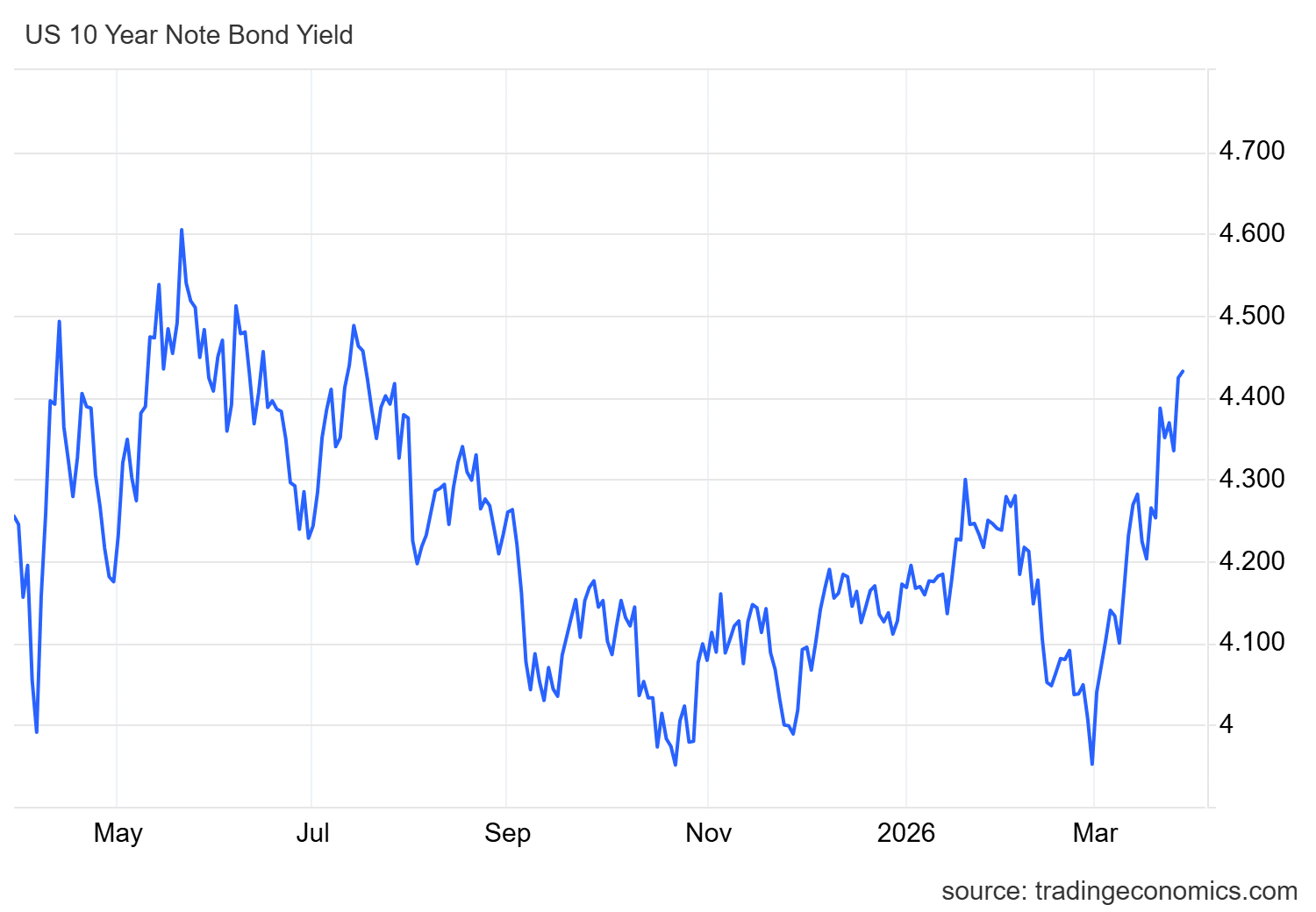
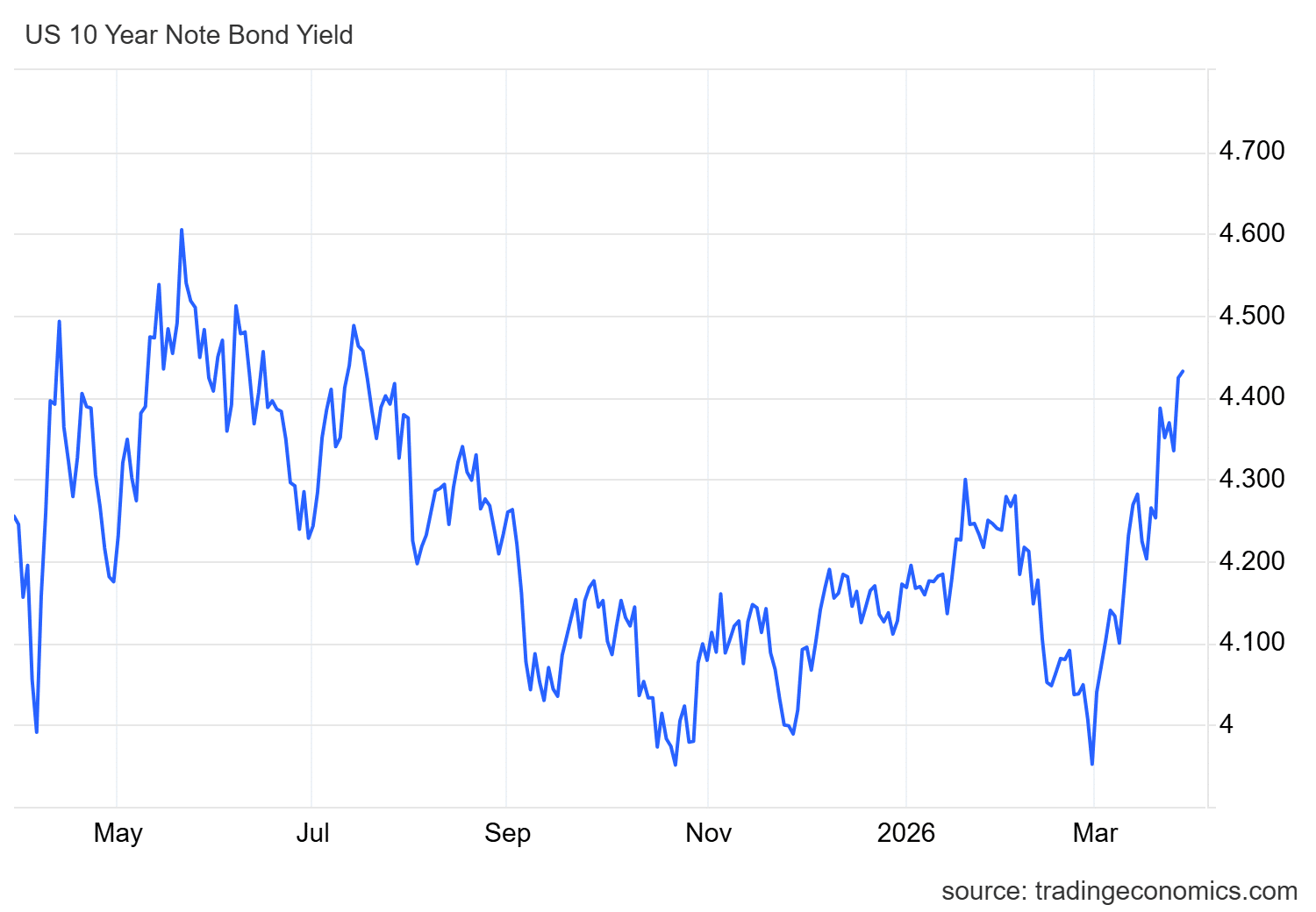
Source: TradingEconomics

In essence, higher yields are pulling liquidity away from risk assets.

And it doesn’t stop there. JPMorgan has pointed out that the ongoing rotation of capital into safe havens like cash is starting to resemble the 2022 setup. Back then, the shift toward safety triggered crypto’s first major bear market, sending the total crypto market cap down 65%+ and wiping out roughly $1.4 trillion in value.

In this context, the Federal Reserve’s $8 billion liquidity injection doesn’t just fit the technical picture. Instead, it also aligns with the broader “fundamental” backdrop too. As investors grow more risk-averse, this liquidity could help relieve pressure on risk assets and slow the flow into safe havens, making it a key signal for the current crypto cycle.


Final Summary

  • Rising yields and geopolitical tensions are driving capital toward safe havens, mirroring the 2022 cycle that triggered crypto’s first major bear market.
  • The Fed’s $8 billion injection provides support, easing pressure on risk assets and acting as a key signal in the current macro cycle.


Related Questions

QWhat is the main reason investors are closely watching the Federal Reserve's actions according to the article?

AInvestors are closely tracking every signal from the Federal Reserve because liquidity has become the central narrative, and shifts in liquidity often translate directly into price action in the crypto markets.

QHow did the crypto market perform on March 26th, as mentioned in the article?

AThe TOTAL crypto market cap closed 3.4% lower on March 26th, marking one of the sharper weekly pullbacks and wiping out nearly $100 billion in value.

QWhat specific action did the Federal Reserve take that is drawing attention from crypto traders?

AThe Federal Reserve decided to inject $8 billion into the financial system, which is drawing increased attention as it could provide short-term support to risk assets.

QWhy are rising yields on 10-year Treasuries significant for the crypto market?

ARising real yields on 10-year Treasuries signal tightening financial conditions and a risk-off tone, which pulls liquidity away from risk assets like crypto, mirroring the setup that triggered the 2022 bear market.

QWhat broader macroeconomic factor is contributing to the current risk-averse sentiment among investors?

ARenewed geopolitical tensions, particularly the ongoing West Asia crisis with no signs of de-escalation, are spilling into energy markets and pushing investors toward safer assets, contributing to the risk-averse sentiment.

Related Reads

Will the Fed Still Cut Interest Rates? Tonight's Data Is Crucial

The core debate surrounding the Federal Reserve's potential interest rate cuts is intensifying amid geopolitical conflict and rebounding inflation. The key question is whether high energy prices will cause persistent inflation or weaken consumer demand enough to force the Fed to cut rates. Citigroup presents a bullish case for cuts, arguing that oil supply disruptions from the Strait of Hormuz are temporary and will not lead to lasting inflationary pressure. They point to receding bond yields and oil prices as evidence the market is pricing in a short-lived shock. Citi's data also shows tightening financial conditions, a stabilizing labor market, and healthy tax returns, supporting their view that the path to lower rates remains open. Conversely, Deutsche Bank offers a starkly contrasting, more hawkish outlook. They argue the Fed's current policy is already neutral and expect rates to remain unchanged indefinitely. Their view is based on stalled disinflation progress and a shift toward more hawkish rhetoric from key Fed officials like Waller, who cited risks from prolonged Middle East conflict and tariffs. Other officials, including Williams and Hammack, signaled rates would likely stay on hold for a "considerable time." The market pricing has shifted dramatically, now forecasting zero cuts in 2026. The imminent release of the March retail sales "control group" data is highlighted as a critical test. This metric, which excludes gas station sales, will reveal if high gasoline prices are eroding consumer spending in other areas. A weak reading could support the case for imminent rate cuts, while a strong one would bolster the argument for the Fed to hold steady. This data is pivotal for determining the near-term policy path.

marsbitJust now

Will the Fed Still Cut Interest Rates? Tonight's Data Is Crucial

marsbitJust now

The Second Half of Macro Influencer Fu Peng's Career

Fu Peng, a prominent Chinese macroeconomist and former chief economist of Northeast Securities, has joined Hong Kong-based digital asset management firm Bitfire Group (formerly New Huo Group) as its chief economist. This move, announced in April 2026, triggered an 11% surge in Bitfire's stock price. Fu, known for his accessible macroeconomic commentary and large social media following, will focus on integrating digital assets into global asset allocation frameworks, particularly combining FICC (fixed income, currencies, and commodities) with cryptocurrencies for institutional clients. His career includes roles at Lehman Brothers and Solomon International, with significant influence gained through public communication. However, in late 2024, Fu faced temporary social media bans after a controversial private speech at HSBC on China's economic challenges, though he denied regulatory sanctions. He later left Northeast Securities citing health reasons. Bitfire, a licensed virtual asset manager serving high-net-worth clients, seeks to build trust and attract traditional capital through Fu’s expertise and credibility. The partnership represents a strategic shift for both: Fu enters the crypto sector after a traditional finance peak, while Bitfire aims to leverage his macro framework for institutional adoption. Outcomes remain uncertain regarding capital inflows and compatibility within corporate structure.

marsbit1h ago

The Second Half of Macro Influencer Fu Peng's Career

marsbit1h ago

Trading

Spot
Futures
活动图片