Who Regulates Sports Prediction Markets? 39 States Take Action, CFTC Seeks to Clearly Define Them as Swaps

marsbitPublished on 2026-10-12Last updated on 2026-10-12

Abstract

In the U.S., a significant legal and regulatory battle is unfolding over the classification and jurisdiction of sports-based prediction markets. Multiple parties, including former Senator Chris Dodd, former CFTC/SEC Chair Gary Gensler, the NFL, and 39 states, have filed amicus briefs with the Supreme Court. They largely argue these markets constitute gambling under state law and should not be regulated as "swaps" by the federal Commodity Futures Trading Commission (CFTC). This follows a split among federal appeals courts on the issue. Simultaneously, the CFTC has advanced its own proposals, including an interim final rule, to explicitly classify contracts based on sports, political, cultural, and weather events as swaps under its jurisdiction. Prediction market platform Kalshi has had its deadline to respond to the Supreme Court extended to November 9, 2026. The core conflict centers on whether federal derivatives regulation under the Dodd-Frank Act preempts traditional state authority over gambling.

Author: Nikhilesh De

Translation: TechFlow Deep Tide

Deep Tide Introduction: Are sports prediction contracts "gambling" or "swaps"? Last week, Dodd, Gensler, the NFL, and 39 states, among others, filed amicus briefs with the Supreme Court, mostly leaning towards state authority; the CFTC on Friday issued a temporary final rule and a new proposal aiming to clearly categorize event contracts related to sports, politics, etc., as swaps—Kalshi's deadline to respond has been extended to November 9.

Last week, multiple parties filed amicus briefs with the U.S. Supreme Court, urging it to hear a case: whether sports-based prediction market contracts qualify as swaps. Then on Friday, the U.S. Commodity Futures Trading Commission (CFTC) issued two proposals (one of which is now effective), stating its view on the matter.
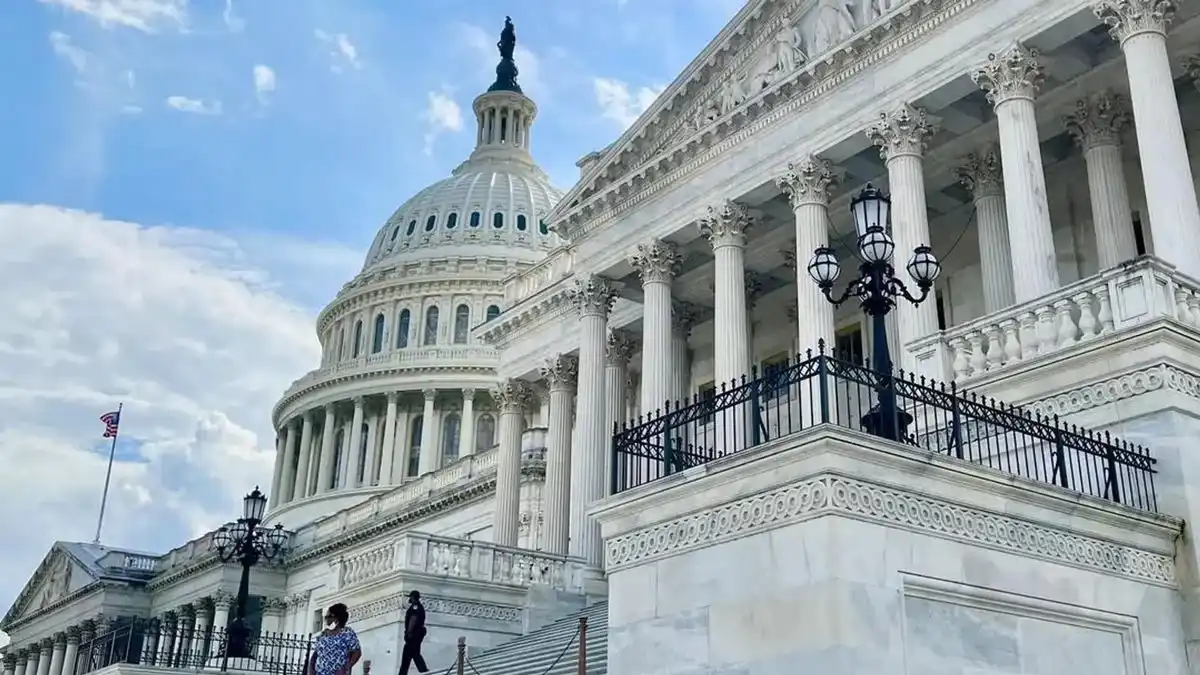
Former Senator Chris Dodd, former Commodity Futures Trading Commission (and Securities and Exchange Commission) Chairman Gary Gensler, the National Football League (NFL), 39 states (and the District of Columbia), 145 tribal nations, and other parties filed amicus briefs with the Supreme Court, urging it to hear the case; many of them argued that sports-based prediction market products are not swaps and should not be regulated by the CFTC.

Why It Matters

This newsletter discussed the possibility of Supreme Court intervention in prediction markets a month ago. That assessment hasn't changed; a significant circuit split has now emerged: two appellate courts have ruled that sports-related prediction markets are actually gambling products to be regulated by states, while another appellate court ruled that they fall under the CFTC's purview.

Breakdown

Most of the amicus briefs filed last week urged the Supreme Court to side with the states, meaning to rule that at least sports-related prediction markets are actually gambling products, to be regulated at the state level rather than federally.

Former Senator Chris Dodd—whose name appears on the 2010 Dodd–Frank Wall Street Reform and Consumer Protection Act at the heart of this debate—stated in his brief that the law was not intended to grant the CFTC power to override state governments and strip them of their ability to regulate gambling.

The brief disagreed with the Third Circuit Court of Appeals panel's 2-1 ruling that the CFTC has jurisdiction over swaps and prediction markets covering sports, arguing there is a distinction between derivatives as financial instruments and sports betting.

"Parlay tickets—which often bundle bets on different games, cities, and sports, on spreads or player performances—do not facilitate hedging or price discovery," the brief stated, citing a popular category of sports-related prediction markets. "Nor are they 'linked to' the type of 'potential financial, economic, or commercial consequences' that the Commodity Exchange Act (CEA) requires for a swap."

Dodd's brief then countered the CFTC's claim that it has "exclusive jurisdiction" over such products.

"The 'exclusive jurisdiction' granted to the CFTC by the Commodity Exchange Act is also not an express preemption clause that exempts every contract listed on a designated contract market (DCM) from otherwise applicable state and tribal law. It simply designates the CFTC as the federal regulator of covered financial instruments," his brief stated.

Former CFTC Chairman Gary Gensler, who played a key role in drafting the regulatory details implementing Dodd–Frank, similarly argued that the law did not grant the CFTC preemptive power over state gambling laws. He made a similar argument in a prior appellate case.

The NFL argued it has a vested interest in the outcome of this case given the importance of sports betting in—well, sports. The league criticized what it called the CFTC's "laissez-faire" approach on this issue and the broader inconsistency between how states regulate gambling companies and how the CFTC regulates designated contract markets (the type of license held by prediction market operators).

On Friday, the CFTC issued a temporary final rule and a separate proposal aimed at clarifying how it includes these products within the "swap" definition. The agency stated that casino-style gambling is not within its swap definition, but event contracts are still within its scope. The regulator also wants to formally include events related to sports, politics, culture, and weather within the event contracts counted as swaps.

Kalshi applied for and was granted an extension to file its response with the Supreme Court. Its deadline is now November 9, 2026.

This Week

- None of the congressional hearings we are tracking are scheduled this week.

Related Questions

QWhat is the main legal debate surrounding sports prediction markets in the United States as described in the article?

AThe main legal debate is whether sports prediction market contracts should be classified as 'swaps' under federal commodity law and regulated by the CFTC, or as gambling products regulated by individual states.

QWho are some of the notable parties that filed amicus briefs urging the Supreme Court to take the case, and what is their general stance?

ANotable parties include former Senator Chris Dodd, former CFTC/SEC Chairman Gary Gensler, the NFL, and 39 states (plus D.C.). Their general stance, as represented in the briefs, is that sports-based prediction markets are gambling products that should be regulated at the state level, not by the federal CFTC.

QWhat action did the CFTC take on the Friday mentioned in the article regarding event contracts?

AThe CFTC issued an interim final rule and a separate proposal to clarify that it considers event contracts, including those based on sports, politics, culture, and weather, to fall under the definition of 'swaps' and thus under its regulatory jurisdiction, while excluding casino-style gambling from this definition.

QWhat is the significance of the split among the U.S. Circuit Courts of Appeals mentioned in the article?

AThe split is significant because two appeals courts have ruled that sports prediction markets are gambling products regulated by states, while another appeals court ruled they fall under CFTC jurisdiction. This 'circuit split' increases the likelihood that the U.S. Supreme Court will agree to hear the case to resolve the inconsistency.

QWhat is the new deadline for Kalshi to respond to the Supreme Court, and why is Kalshi involved?

AThe new deadline for Kalshi to submit its response to the Supreme Court is November 9, 2026. Kalshi is involved as a major prediction market platform whose application to list political event contracts was denied by the CFTC, leading to the legal challenge that is now potentially headed to the Supreme Court.

Related Reads

CPI and AI Earnings Dominate Market Rhythm: This Week's Hot Assets Preview | WEEX VIP Weekly Report (November 2 – November 8, 2026)

The article discusses market developments for the week of November 2–8, 2026, highlighting how CPI data and AI earnings dominate market节奏. Last week, Democratic midterm election gains triggered concerns over tighter AI regulation and data center policies, causing a sharp tech selloff—the Nasdaq fell over 5% in a single day and entered technical correction. Crypto markets moved in tandem with cross-asset risk aversion: Bitcoin briefly dropped below $76,000 before showing resilience, with BTC and ETH posting weekly losses of about 4.5% and 6.5% respectively. Spot ETFs saw significant outflows, and the Fear & Greed Index stayed in "fear" territory for six days. Total crypto market cap fell from about $2.7 trillion to $2.54 trillion. In traditional markets, the 10-year Treasury yield hovered at 4.84%–4.95%, gold rebounded above $4,000, while oil plunged over 11%. Tech and semiconductor stocks were hit hard—the Philadelphia Semiconductor Index fell 12% in one day, with AMD down over 17% and Nvidia down over 9%. Defensive sectors outperformed. This week's focus is Tuesday's October CPI release, with headline CPI expected at 3.3%–3.5% and core CPI at 3.1%–3.2%. PPI, Fed speakers, and earnings from AMAT and CSCO are also key. Crypto token unlocks include RAIN (~$121 million), ALLO, JCT, and AZTEC. Investors are advised to maintain defensive positioning, reduce high-beta tech exposure, and wait for inflation data and AI earnings signals before adjusting risk allocations.

marsbit44m ago

CPI and AI Earnings Dominate Market Rhythm: This Week's Hot Assets Preview | WEEX VIP Weekly Report (November 2 – November 8, 2026)

marsbit44m ago

SEC Greenlights On-Chain US Stocks: Five-Year Regulatory Exemption, Uniswap v4 Targets $79 Trillion Market

The SEC's innovation exemption, effective September 17, 2026, creates a new category called Tokenized Securities Venues (TSVs), granting qualifying venues a five-year exemption from registration as exchanges or ATSs, provided they trade tokenized NMS stocks through permissioned liquidity pools on public blockchains. Liquidity providers meeting the order's conditions would also avoid dealer registration. Over $20 billion in tokenized stocks has already traded on Uniswap, and the US equity market represents $79 trillion. AMMs automate much of the work of professional market makers, letting anyone supply liquidity via smart contracts, broadening participation and competition. Pools run 24/7, support trading pairs beyond USD (e.g., NVIDIA paired with tokenized S&P 500 funds), and reach global distribution through thousands of frontends. On TSVs, trading and settlement occur atomically on-chain without a central counterparty, and listed companies must receive 30-day notice with an opportunity to object. To meet compliance requirements such as fee disclosure, access controls, listing and volume limits, and trading halts, Uniswap v4 hooks—especially Permissioned Pools—provide the infrastructure. Uniswap has processed over $4.5 trillion across 30+ chains without core contract exploits. Uniswap Labs invites TSV operators, asset issuers, and LPs to collaborate, while noting it does not operate any TSV and that the exemption is temporary and conditional.

marsbit55m ago

SEC Greenlights On-Chain US Stocks: Five-Year Regulatory Exemption, Uniswap v4 Targets $79 Trillion Market

marsbit55m ago

Trading

Spot
活动图片