White House Crypto Adviser To Banks: Don’t Panic Over Stablecoin Returns

bitcoinistPublicado a 2026-02-14Actualizado a 2026-02-14

Resumen

White House crypto adviser Patrick Witt advises banks not to panic over stablecoin yield programs, arguing they are not an existential threat. He suggests banks and crypto firms can coexist by offering similar products, and a compromise on rewards is possible. The core dispute over allowing platforms to pay rewards is holding up the CLARITY Act, a key crypto bill defining regulatory roles for the SEC and CFTC. Lawmakers face a narrowing window to reach a deal before the midterm elections potentially fracture the bipartisan coalition. The White House is pushing for a solution to provide legal certainty and unlock institutional capital currently waiting for clearer rules.

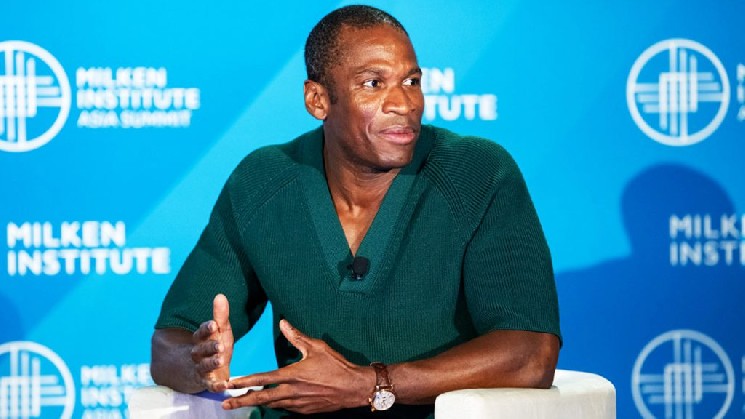
Patrick Witt, a senior White House crypto adviser, told reporters that banks should not see stablecoin yield programs as an existential threat.

He argued that banks and crypto firms can both offer similar products to customers and that the controversy over rewards is fixable through compromise.

Reports note he made the comments in a sit-down with Yahoo Finance as lawmakers and industry groups continue talks.

Banks Can Offer Similar Products

Big lenders have options, and some are already moving to use them. According to meetings and follow-ups, several banks are seeking OCC charters and exploring ways to provide stablecoin-style accounts to customers, which undercuts the idea that yield programs automatically steal deposits from traditional banks.

That dynamic helped bring both sides into a recent White House convening, but the talks did not settle the core dispute over whether platforms should be allowed to pay rewards to holders.

Stablecoin Yields Hold Up Legislation

At the center of the fight is the CLARITY Act, a bill meant to draw lines between the SEC and the CFTC while creating a basic asset taxonomy for cryptocurrencies.

Reports say the debate over rewards and interest has become a major hold-up, with senators and industry groups trading proposals and pushbacks as they try to hash out workable language. SEC and CFTC are both part of the tug-of-war over who gets to police different tokens and services.

BTCUSD now trading at $69,818. Chart: TradingView

A Race Against The Calendar

Pressure to finish a deal is rising because lawmakers face an election calendar that could change the political math. US Treasury Secretary Scott Bessent warned that if Democrats win back the House the bipartisan coalition working on the bill could fracture, making rapid progress less likely.

That warning is echoed around Capitol Hill by lobbyists and some industry leaders, who say the current window to pass a compromise is dwindling.

A Narrow Window To Act

The White House has signaled it wants a solution before the fall slog of midterm politics takes hold. White House advisers have urged both sides to find middle ground, saying a functioning framework would unlock large pools of institutional capital now sitting on the sidelines.

Reports have disclosed that these investors are reluctant to deploy funds until the rules are clearer, which is one reason the administration is pressing for movement.

The debate is not only technical; it is political and strategic. Lawmakers will need to balance banks’ worries about deposits with crypto firms’ demand to preserve business models that rely on customer rewards.

For consumers, the immediate effect will depend on how any compromise treats protections, transparency and how rewards are funded.

For markets, the bigger prize is legal certainty — and that prize is getting harder to win as the calendar tightens.

Featured image from Unsplash, chart from TradingView

Criptos en tendencia

Preguntas relacionadas

QWhat did White House crypto adviser Patrick Witt say about banks' view on stablecoin yield programs?

APatrick Witt told reporters that banks should not see stablecoin yield programs as an existential threat.

QWhat are some banks doing in response to stablecoin competition, according to the article?

ASeveral banks are seeking OCC charters and exploring ways to provide stablecoin-style accounts to customers.

QWhat legislation is at the center of the stablecoin regulatory debate?

AThe CLARITY Act, a bill meant to draw lines between the SEC and the CFTC while creating a basic asset taxonomy for cryptocurrencies.

QWhy is there pressure to finish a regulatory deal quickly, according to the article?

ALawmakers face an election calendar that could change the political math, and the current window to pass a compromise is dwindling.

QWhat is the bigger prize for markets in this regulatory debate, as stated in the article?

AThe bigger prize for markets is legal certainty regarding cryptocurrency regulations.

Lecturas Relacionadas

Goldman Sachs: July Smashes Through Crowded Trades, U.S. Stock Bull Market Not Broken but Harder to Navigate

Goldman Sachs: July Sees Crowded Trades Unwound, U.S. Bull Market Intact but Getting Tougher. The U.S. stock market in July did not see an index-level crash, but rather a significant unwinding of speculative positions. While the S&P 500 remained stable—trading within a narrow 3.5% range and staying within 2% of its high—underlying market dynamics were volatile. Heavily crowded trades, particularly in high-momentum tech, AI-linked stocks, and Asian strategies, faced severe pressure and forced deleveraging. Data indicates this was a meaningful cleanse, not a minor adjustment. Global tech exposure saw its largest sell-off in over five years, leverage in Korean equity ETFs plummeted, and Goldman's prime brokerage recorded the largest gross exposure reduction since late 2022. Leverage on momentum factors among fundamental long/short clients fell to the 28th percentile of its one-year range. The AI trade narrative shifted from pure potential to a focus on tangible returns. While Meta failed to show clear AI monetization, Microsoft and Amazon provided evidence that massive capital expenditure is translating into scalable revenue and product growth, preventing a blanket sell-off of the AI sector. The Federal Reserve's more opaque communication style and volatility in long-end Treasury yields have introduced new friction, particularly for rate-sensitive growth and tech stocks. The broader outlook for U.S. equities remains favorable, supported by a strong economy, robust earnings, and substantial AI capital expenditure. However, risk/reward is no longer cheap, and the market's upward elasticity has weakened. The Nasdaq 100's trajectory—up 12% year-to-date despite significant pullbacks—illustrates that the bull trend persists but the path is becoming more difficult. The key lesson from July is that the market no longer rewards crowded, highly leveraged trades, requiring more disciplined and liquid portfolio approaches.

marsbitHace 1 hora(s)

Goldman Sachs: July Smashes Through Crowded Trades, U.S. Stock Bull Market Not Broken but Harder to Navigate

marsbitHace 1 hora(s)

Interview with Robinhood Executive: Meme + Tokenized US Stocks as "Barbell" Customer Acquisition Strategy, All Business Lines Achieve Hundreds of Millions in Revenue

Interview with Robinhood executive Johann Kerbrat reveals the company's "barbell" customer acquisition strategy for its new Robinhood Chain, combining meme tokens with tokenized stocks. Three weeks after mainnet launch, the chain has seen over $3B in weekly DEX volume and 105M transactions. Kerbrat explains the logic behind the permissionless chain: meme tokens attract DeFi users, while tokenized real-world assets (RWA), currently over 90 US stocks and ETFs accessible in 120+ countries, serve global users. The goal is to bring Robinhood's 27 million funded accounts on-chain by simplifying DeFi with a user-friendly interface, exemplified by features like Robinhood Earn which offers yield without requiring wallet management. Built on Arbitrum's technology stack for its speed, low cost, and Ethereum's security, the chain focuses on financial products like Earn, spot trading, and perpetuals. Kerbrat downplays direct competition with platforms like Base, emphasizing the goal of expanding the overall market for on-chain assets. He details selective partnerships (e.g., Morpho, Lighter) based on compliance, unique UX, and differentiation. While regulatory clarity is pending for US perpetuals, the expansion continues via Bitstamp in Europe. Finally, Kerbrat positions Robinhood as a "super app" integrating stocks, options, crypto, banking, and AI trading, with all major business lines generating hundreds of millions in revenue. For the chain, current priority is driving adoption over maximizing gas fee revenue.

marsbitHace 4 hora(s)

Interview with Robinhood Executive: Meme + Tokenized US Stocks as "Barbell" Customer Acquisition Strategy, All Business Lines Achieve Hundreds of Millions in Revenue

marsbitHace 4 hora(s)

Trading

Spot

Artículos destacados

Cómo comprar HOUSE

¡Bienvenido a HTX.com! Hemos hecho que comprar Housecoin (HOUSE) sea simple y conveniente. Sigue nuestra guía paso a paso para iniciar tu viaje de criptos.Paso 1: crea tu cuenta HTXUtiliza tu correo electrónico o número de teléfono para registrarte y obtener una cuenta gratuita en HTX. Experimenta un proceso de registro sin complicaciones y desbloquea todas las funciones.Obtener mi cuentaPaso 2: ve a Comprar cripto y elige tu método de pagoTarjeta de crédito/débito: usa tu Visa o Mastercard para comprar Housecoin (HOUSE) al instante.Saldo: utiliza fondos del saldo de tu cuenta HTX para tradear sin problemas.Terceros: hemos agregado métodos de pago populares como Google Pay y Apple Pay para mejorar la comodidad.P2P: tradear directamente con otros usuarios en HTX.Over-the-Counter (OTC): ofrecemos servicios personalizados y tipos de cambio competitivos para los traders.Paso 3: guarda tu Housecoin (HOUSE)Después de comprar tu Housecoin (HOUSE), guárdalo en tu cuenta HTX. Alternativamente, puedes enviarlo a otro lugar mediante transferencia blockchain o utilizarlo para tradear otras criptomonedas.Paso 4: tradear Housecoin (HOUSE)Tradear fácilmente con Housecoin (HOUSE) en HTX's mercado spot. Simplemente accede a tu cuenta, selecciona tu par de trading, ejecuta tus trades y monitorea en tiempo real. Ofrecemos una experiencia fácil de usar tanto para principiantes como para traders experimentados.

286 Vistas totalesPublicado en 2025.04.27Actualizado en 2026.06.02

Cómo comprar HOUSE

Discusiones

Bienvenido a la comunidad de HTX. Aquí puedes mantenerte informado sobre los últimos desarrollos de la plataforma y acceder a análisis profesionales del mercado. A continuación se presentan las opiniones de los usuarios sobre el precio de HOUSE (HOUSE).

活动图片