Author: Dong Jing
Multiple bearish factors converged and detonated on the same day, leading to the most severe single-day sell-off in the US Treasury market in nearly 18 months.
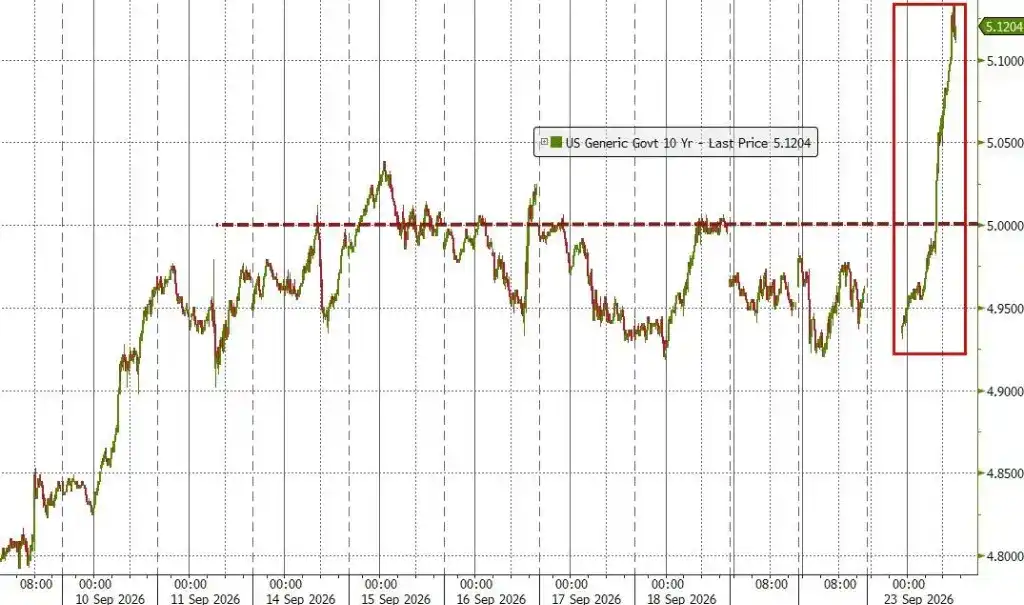
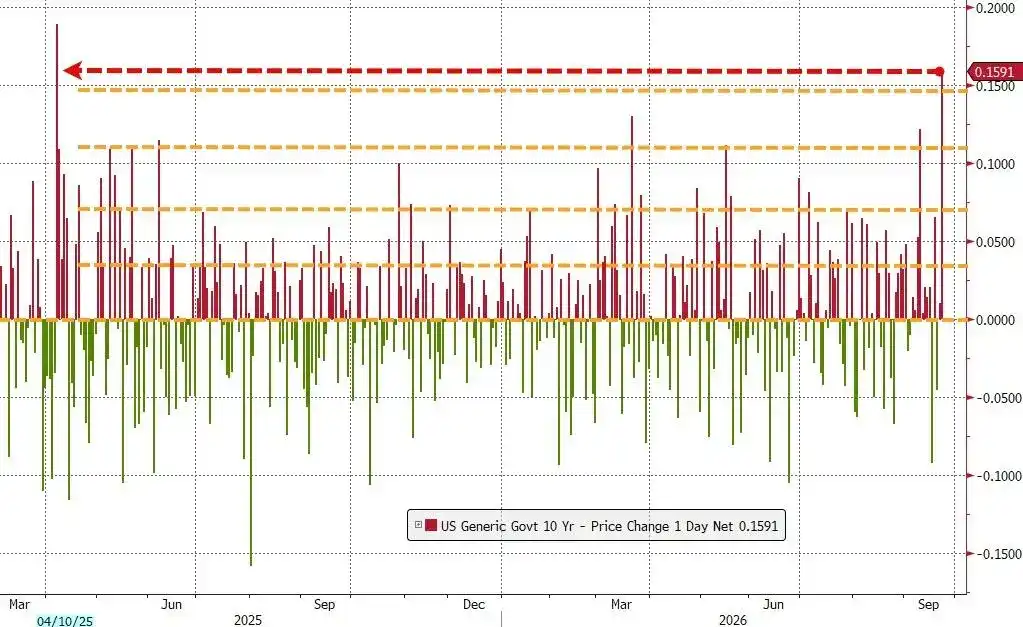
The 10-year Treasury yield surged by approximately 14 basis points on Wednesday, closing at 5.113%, hitting a new high since 2007, with its single-day gain being the largest since the so-called "reciprocal tariff day" impact by former President Trump last April. Market participants described this move as a "perfect storm"—strong PMI data, escalating tensions in the Middle East, hawkish remarks from Federal Reserve officials, and weak Treasury auction results—four consecutive blows landed in the same trading session.
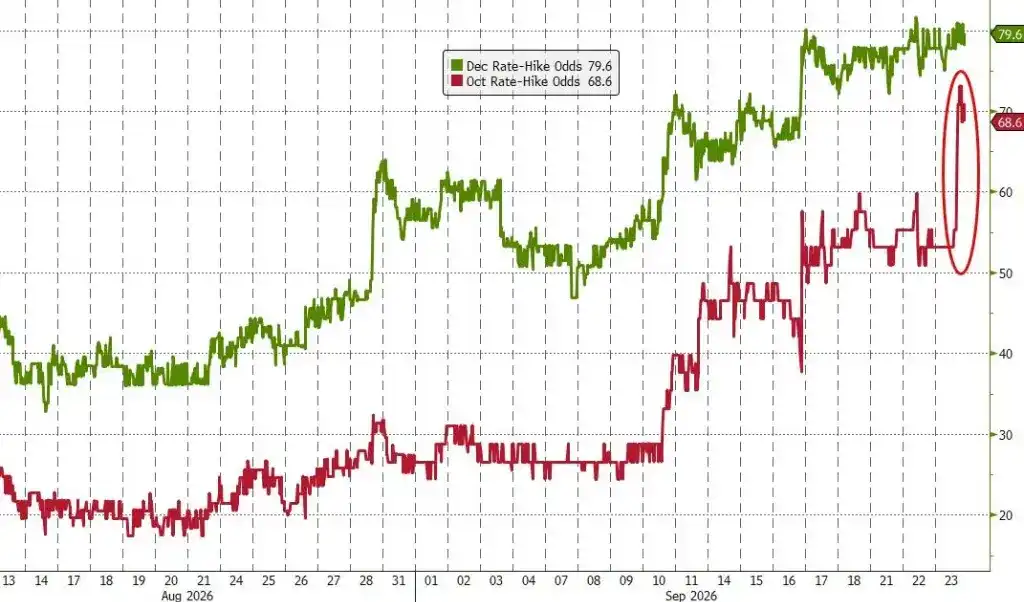
The core signal from this shock is that: market bets on another Fed rate hike in October have surged dramatically. Pricing in futures markets currently shows the probability of a rate hike by the end of October has risen to 68%, just days away from the US midterm elections. Simultaneously, the swap market has fully priced in expectations for three 25-basis-point hikes within the next year, with significant hedging for a fourth hike. If all materialize, the federal funds rate target range would rise to between 4.75% and 5%.
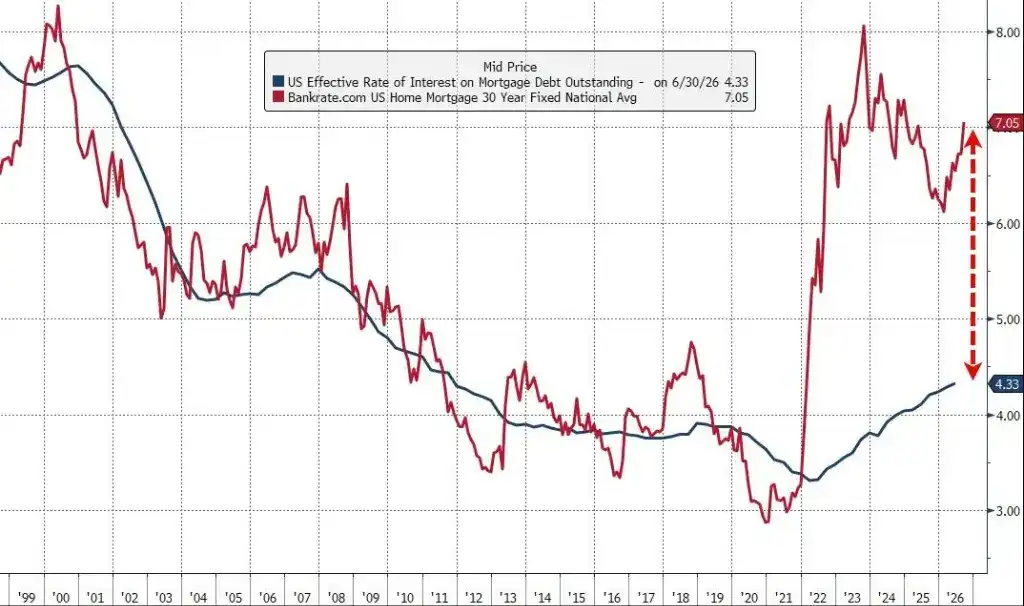
Meanwhile, the continuous climb in yields is transmitting to the real economy. The 30-year mortgage rate has exceeded 7%, putting increased pressure on areas like private equity that rely on debt financing. Treasury Secretary Bassett's announced Treasury buyback plan has failed to effectively curb the selling momentum, indicating a clear lack of market confidence.
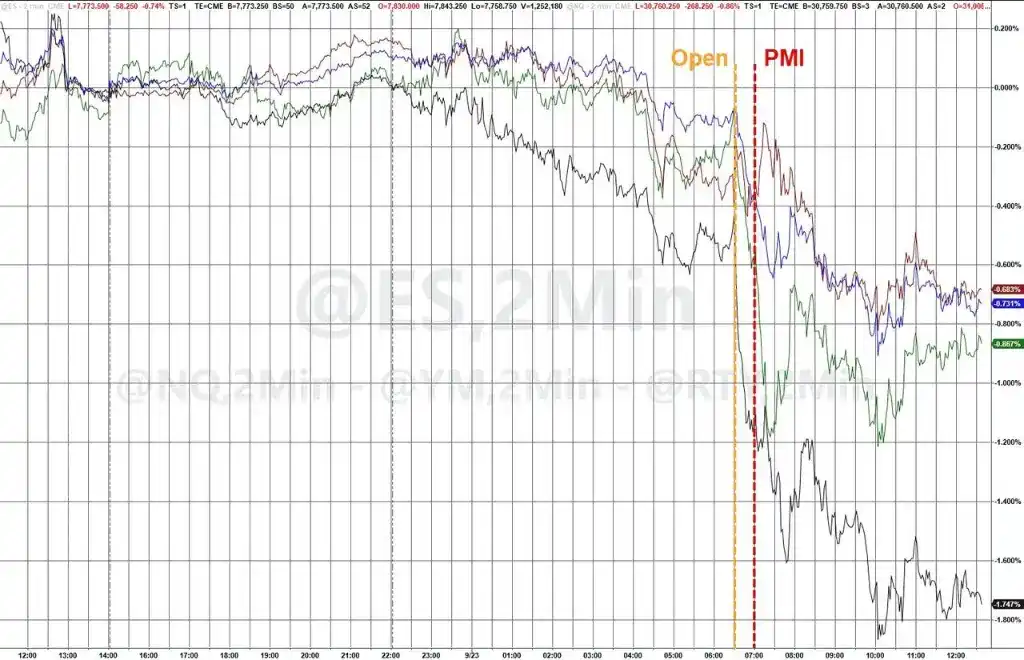
Stocks also fell, but the declines were relatively moderate—the S&P 500 closed down about 0.8%, the Nasdaq Composite fell 1.1%, and the Dow Jones Industrial Average dropped about 352 points.
Four Consecutive Strikes Form the "Perfect Storm"
Wednesday's bond market rout did not stem from a single event, but rather from the resonance of multiple bearish factors layered on the same trading day.
First strike: Soaring oil prices, dashed Middle East diplomatic hopes. Early in the session, international oil prices surged during European trading hours. Previously, markets had hoped the ongoing UN General Assembly in New York could facilitate US-Iran relations, but Iranian President Masoud Pezeshkian's remarks dashed those expectations—he stated Iran was willing to negotiate but would not accept Trump's "bullying," warning that as long as sanctions persist, Iran would not fully open the Strait of Hormuz. The international oil benchmark Brent crude closed up nearly 4% on the day. Since persistent oil price increases could transmit to broader inflation, bond yields have been highly correlated with oil price movements in recent months.
Second strike: Blowout PMI data, intensifying overheating fears. S&P Global released the preliminary September US Composite PMI report, showing US business activity expanding at its fastest pace in over five years, with employment growth hitting a four-year high.
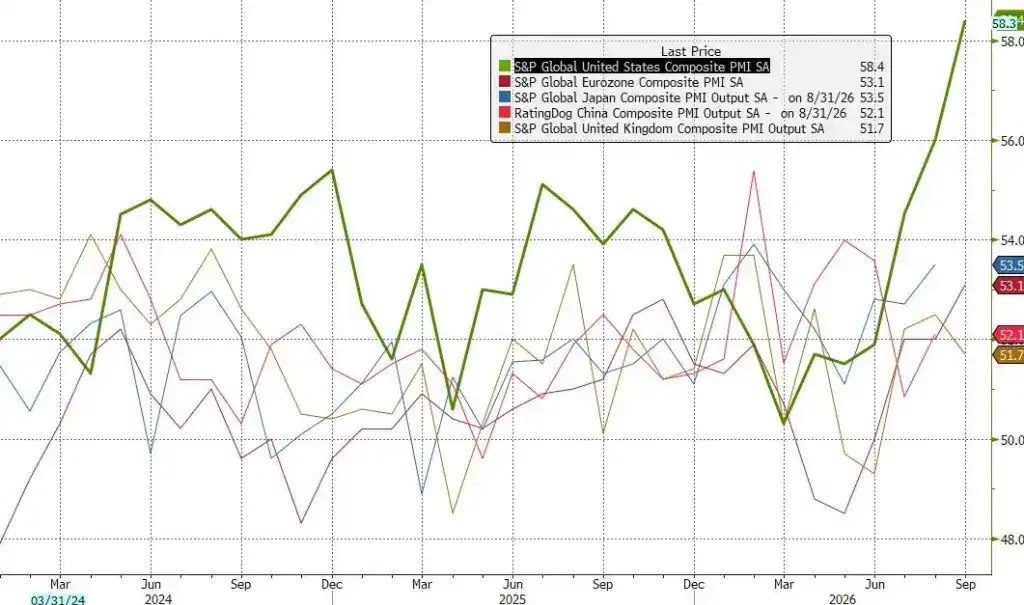
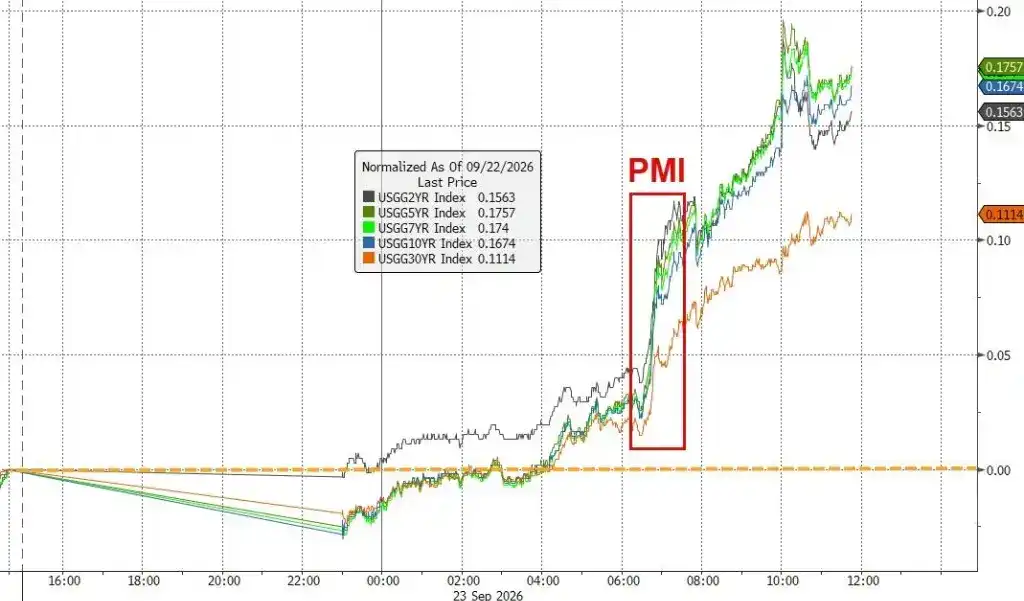
S&P Global Chief Business Economist Chris Williamson stated, "Apart from the demand rebound following the end of pandemic lockdowns, this improvement in business activity is the largest since early 2015." Following the data release, both short-end and long-end Treasury yields jumped.
Third strike: Hawkish comments from Fed officials. Fed Governor Michael Barr, speaking in Chicago, clearly stated, "inflation is above the 2% target and shows no clear sign of converging towards it," adding, "in my baseline scenario, further policy adjustments may be necessary to ensure inflation returns to target in a timely manner." HSBC US rates strategist Dhiraj Narula noted, "The market's concern is 'the Fed's willingness to continue hiking despite pressure from supply shocks, meaning the hawkish stance may not ease at all.'"
Fourth strike: Weak 5-year Treasury auction, panic accelerates. The US Treasury's $70 billion 5-year note auction met with tepid demand. The high yield was 5.033%, about 3 basis points above the pre-auction market trading level—a significant premium in this typically vast and smoothly absorbing market. Dealers (primary dealers) were forced to take an unusually large share of the bonds, the highest since 2024, indicating scant interest from other potential buyers. Following the auction results, yields moved further higher, and panic spread.
Yields Break Key Levels Across the Curve, Hitting Multi-Year Highs
The intensity of this sell-off is evident in the data.
The 10-year Treasury yield closed at 5.113%, the first time it has settled above 5% since 2007, with a single-day gain of about 14 basis points, the largest daily increase since last April's Trump "reciprocal tariff day" shock. It also constituted an extreme move of about 4 standard deviations—and just two weeks ago, the market had experienced a 3-standard-deviation shock, pressuring VaR (Value at Risk) across various risk books.
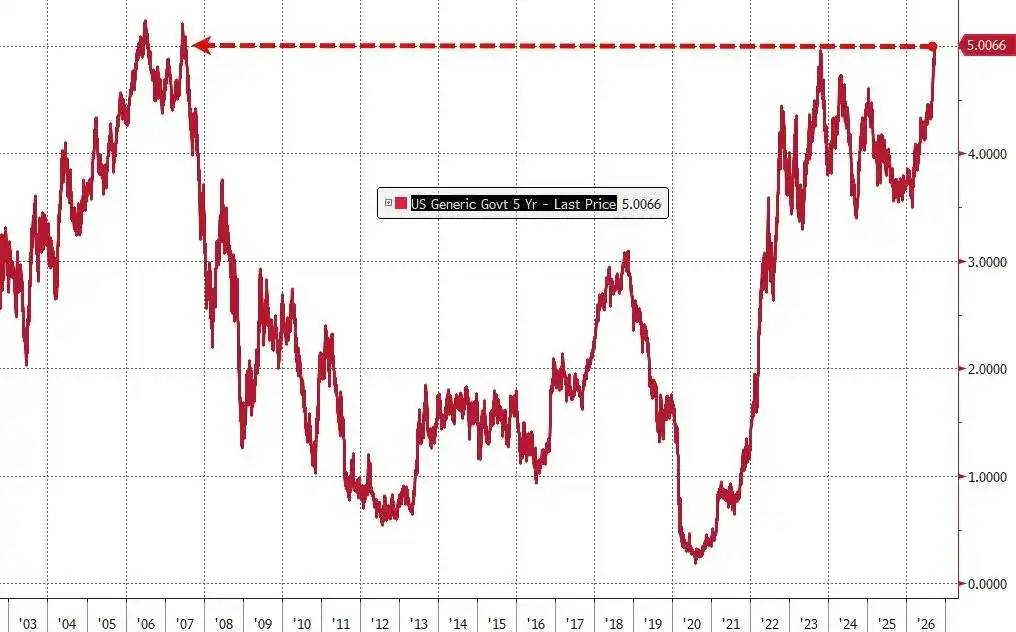
The 5-year yield surged nearly 20 basis points on the day, breaking above 5% for the first time since 2007, with the weak auction further accelerating this move.
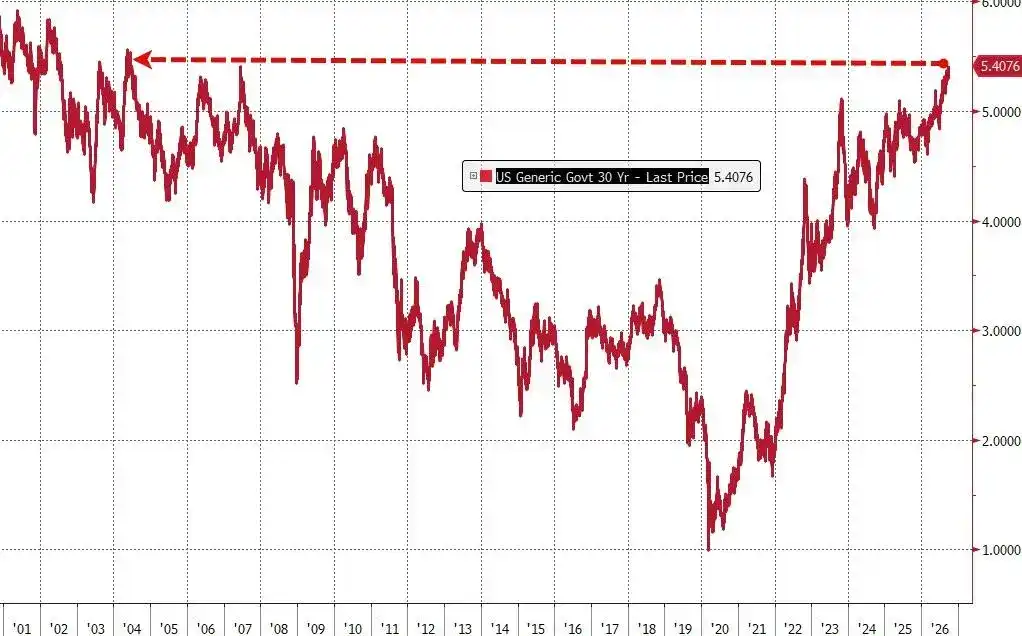
The 30-year yield rose to its highest level since 2004. The 2-year yield briefly touched its highest since 2024 before easing slightly to 4.90%, up 12 basis points from the previous day.
Bond volatility indicators also jumped significantly, reflecting severe uncertainty about future direction. SEI Investments Head of Fixed Income Portfolio Management Sean Simko summarized the day's situation as a "triple whammy":
"Stronger economic data, supply pressures pushing the 5-year to levels not seen in years, and the judgment of persistent global inflation."
Nature of the Sell-off: Real Rate Repricing, Not Just Inflation Fear
It is worth noting that the driving logic behind this bond market sell-off was not simply rising inflation expectations.
According to Bloomberg analysis, approximately 80% to 85% of the magnitude of this sell-off came from rising real rates: the nominal 10-year yield rose about 15 basis points, the 10-year Treasury Inflation-Protected Securities (TIPS) yield rose about 12.5 basis points, while the breakeven inflation rate increased only about 2 basis points.
This means bond investors are repricing some combination of the following factors: a Fed path maintaining high rates for longer, stronger actual growth expectations, a higher neutral rate, higher real term premium or duration compensation, as well as greater supply pressures and tighter global financial conditions.
Goldman Sachs' Rich Privorotsky leans toward interpreting this move from a growth perspective:
"To me, this looks increasingly like a reflection of the strong growth hypothesis (6% fiscal deficit plus $1.5 trillion spending implies a lot of bond supply and a lot of nominal growth). This is a fairly clean macro risk for equities—not runaway inflation, but persistently high real cost of capital."
The Atlanta Fed's GDPNow model forecasts the US economy will grow at a 5.1% annualized rate in the third quarter. If realized, this would be the fastest growth rate since the post-pandemic recovery. JPMorgan Chase economists noted after last week's Fed meeting that Fed officials "may be seeing rising risks of demand-led overheating, and policy may need to respond to that."
BNY Chief Investment Officer and Head of Credit Services Jason Granet raised a key question: "The Fed has started hiking. The question now is ... will it be on this path for quite some time?"
Buyback Plan Efficacy Questioned, Treasury Faces Pressure
Facing persistently rising yields, Treasury Secretary Bassett has attempted to suppress yields by expanding long-term Treasury buybacks, but with limited effect.
On Wednesday, the Treasury announced it would buy back up to $6 billion in 20- to 30-year Treasuries on Thursday, the second operation since the expanded buyback plan was announced in mid-August. However, this size disappointed the market. JPMorgan Asset Management Chief Investment Officer Bob Michele stated bluntly:
"We thought the Treasury would see that last $6 billion buyback was a failure and this time would go closer to $10 billion. But they didn't."
Following the news, 20-year and 30-year yields moved higher, and bond volatility indicators jumped, indicating severe market lack of confidence in the buyback plan.
United Nations Federal Credit Union Chief Investment Officer Christopher Sullivan summarized the current bond market dilemma: "From intractable conflict with Iran, to a seemingly indestructible US economy, holding bonds right now just 'doesn't make sense' to a lot of people."
Stocks Show Relative Resilience, but Rate Risk Cannot Be Ignored
Despite the severe hit to the bond market, US stock declines were relatively limited. Loop Capital Asset Management Chief Investment Officer of Fixed Income Scott Kimball said, "The risk markets are handling it pretty well. This really looks like an interest rate market problem."
However, the continuous rise in yields has already triggered ripple effects at the real economy level—from mortgage rates, credit card rates, to the willingness of private equity firms to conduct leveraged buyouts. The 30-year mortgage rate has exceeded 7%, putting direct pressure on the housing market.
ABN AMRO Investment Solutions Chief Investment Officer Christophe Boucher warned that "pressure is building at the front end of the yield curve," and today's economic data will allow the Fed to "double down" on its hawkish stance.
RBC Capital Markets strategist Brook frankly stated that the market has fallen into a frustrating cycle:
"You can look at these yield levels and say, this is really attractive. But we've been playing this game for the past six months, and every time we try to draw a line somewhere, it just keeps breaking through."