UK Financial Regulator Considering Lifting Ban on Prediction Markets: Media

cryptonews.ruPublished on 2026-09-08Last updated on 2026-09-08

Abstract

The UK's Financial Conduct Authority (FCA) is reportedly considering relaxing a 2019 ban that prevents UK-based retail investors from trading on prediction market platforms like Polymarket and Kalshi. These markets offer binary options contracts on events in sports, politics, and weather, which the FCA had previously categorized as "gambling products masquerading as financial instruments." The review follows reports that UK retail investors have been using VPNs to bypass the restrictions and trade on these US-based platforms. The prediction market industry is projected to grow significantly, with estimates suggesting global trade volumes could reach up to $1 trillion by 2030. However, if the ban is lifted, platforms may face regulatory challenges similar to those in the US, where state gaming authorities are filing lawsuits against companies over sports-related contracts. For instance, New Jersey authorities recently petitioned the Supreme Court to hear a case against Kalshi, which could clarify state versus federal jurisdiction over prediction markets.

According to reports, the UK's Financial Conduct Authority (FCA) has contacted companies operating in prediction markets as part of discussions on potentially easing a ban that has been in place for retail investors since 2019.

According to a report published by The Times on Friday, the FCA is considering lifting the ban for UK-based retail investors on using prediction market platforms such as Polymarket and Kalshi. Since prediction markets offer binary options contracts on events including sports, politics, and weather, they fall under a ban introduced by the FCA in April 2019, which meant companies were "prohibited from selling, marketing or distributing binary options to retail consumers."

"Binary options are gambling products dressed up as financial instruments," said Christopher Woolard, the FCA's executive director of strategy and competition at the time the ban was introduced.

According to The Times report, many UK-based retail investors have used virtual private networks (VPNs) to circumvent the country's restrictions on prediction markets and trade on Kalshi and Polymarket, both of which operate in the US. In April, Bernstein Research suggested the total trading volume in the prediction market could grow to approximately $240 billion by 2026 and $1 trillion by 2030.

If the FCA lifts the 2019 ban, prediction market platforms such as Kalshi and Polymarket could face challenges similar to those they face in the US: state gambling authorities are filing lawsuits against the companies over contracts on sporting events. Last week, officials from New Jersey petitioned the Supreme Court to hear their case against Kalshi, which could potentially lead to a clarification of state and federal authority over prediction markets.

Related: Kalshi Bans Republican Politician for Life Over Insider Trading, a First

end-content

Trending Cryptos

Related Questions

QWhat is the UK Financial Conduct Authority (FCA) reportedly considering regarding prediction markets?

AThe FCA is reportedly considering lifting its 2019 ban that prevents UK-based retail investors from using prediction market platforms like Polymarket and Kalshi.

QWhy did the FCA initially ban the sale of binary options to retail clients in 2019?

AThe FCA banned binary options because it considered them "gambling products masquerading as financial instruments," posing significant risks to retail investors.

QHow have some UK retail investors reportedly accessed prediction market platforms despite the ban?

AAccording to the report, many UK retail investors have used Virtual Private Networks (VPNs) to bypass the country's restrictions and trade on platforms like Kalshi and Polymarket.

QWhat are some potential challenges for prediction market platforms like Kalshi and Polymarket if the UK ban is lifted?

AThey could face legal challenges similar to those in the US, where state-level authorities have sued companies over contracts on events like sports, questioning their legal status.

QWhat significant legal development involving Kalshi was mentioned in the article?

AAuthorities in New Jersey filed a petition with the Supreme Court seeking to review their case against Kalshi, which could clarify the regulatory authority over prediction markets in the US.

Related Reads

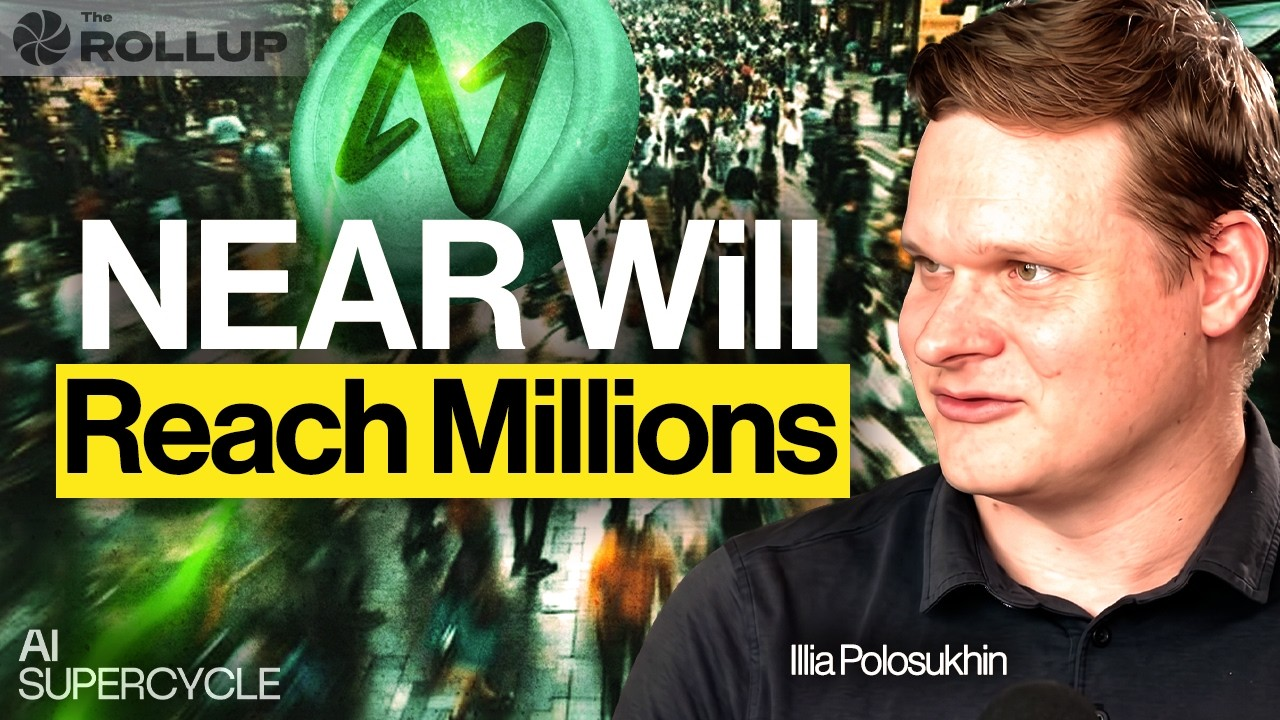
Dialogue with NEAR Co-founder Illia: Connecting to NASDAQ, Launching Anti-Quantum Features, Why NEAR is Considered the Ethereum of This Bull Cycle?

Guest: Illia Polosukhin, NEAR Co-Founder Host: Robbie (The Rollup) NEAR is gaining significant traction, with some comparing it to Ethereum in this cycle, but the focus is on converting hype into product momentum. The core vision is NEAR Intents, a universal transaction aggregation layer. It acts as a "market of markets," finding the best counterparties for any user intent, now extending beyond crypto to include real-world assets like Nasdaq and NYSE stocks. This makes NEAR a primary venue for speculative on-chain assets (e.g., Quantus, Pearl), which often list exclusively on platforms like SafeTrade, offering smooth private trading and good liquidity on near.com. The roadmap includes evolving from chain abstraction to natural language intents, where a complex command (e.g., "build a skyscraper in NY") is broken down and executed by sub-agents. NEAR positions itself as a universal liquidity layer, collaborating with protocols like Aave and other chains rather than competing in a zero-sum game. For example, integrating Aave allows users to borrow against assets (e.g., Hyperliquid positions, stocks) without selling or triggering taxes. A key differentiator is post-quantum security. NEAR's account model, designed from the start for cryptographic agility, allows easy key rotation and addition of new schemes (adding a new curve requires ~200 lines of code). In July, the Dilithium (ML-DSA) post-quantum scheme was deployed on mainnet. Users can upgrade accounts to quantum-resistant with one click in Meteor Wallet, without moving assets or paying taxes. The future ML-KEM standard, already used in Chrome, will be integrated next. Furthermore, NEAR accounts can natively hold assets from other chains (e.g., Bitcoin, Ethereum), and privacy modes hide public keys, shrinking the quantum attack surface. The Shield system provides proactive risk alerts.

marsbit4m ago

Dialogue with NEAR Co-founder Illia: Connecting to NASDAQ, Launching Anti-Quantum Features, Why NEAR is Considered the Ethereum of This Bull Cycle?

marsbit4m ago

Morgan Stanley: Memory Stocks Often Look Cheapest at Cycle Peaks, But Are Also Most Dangerous

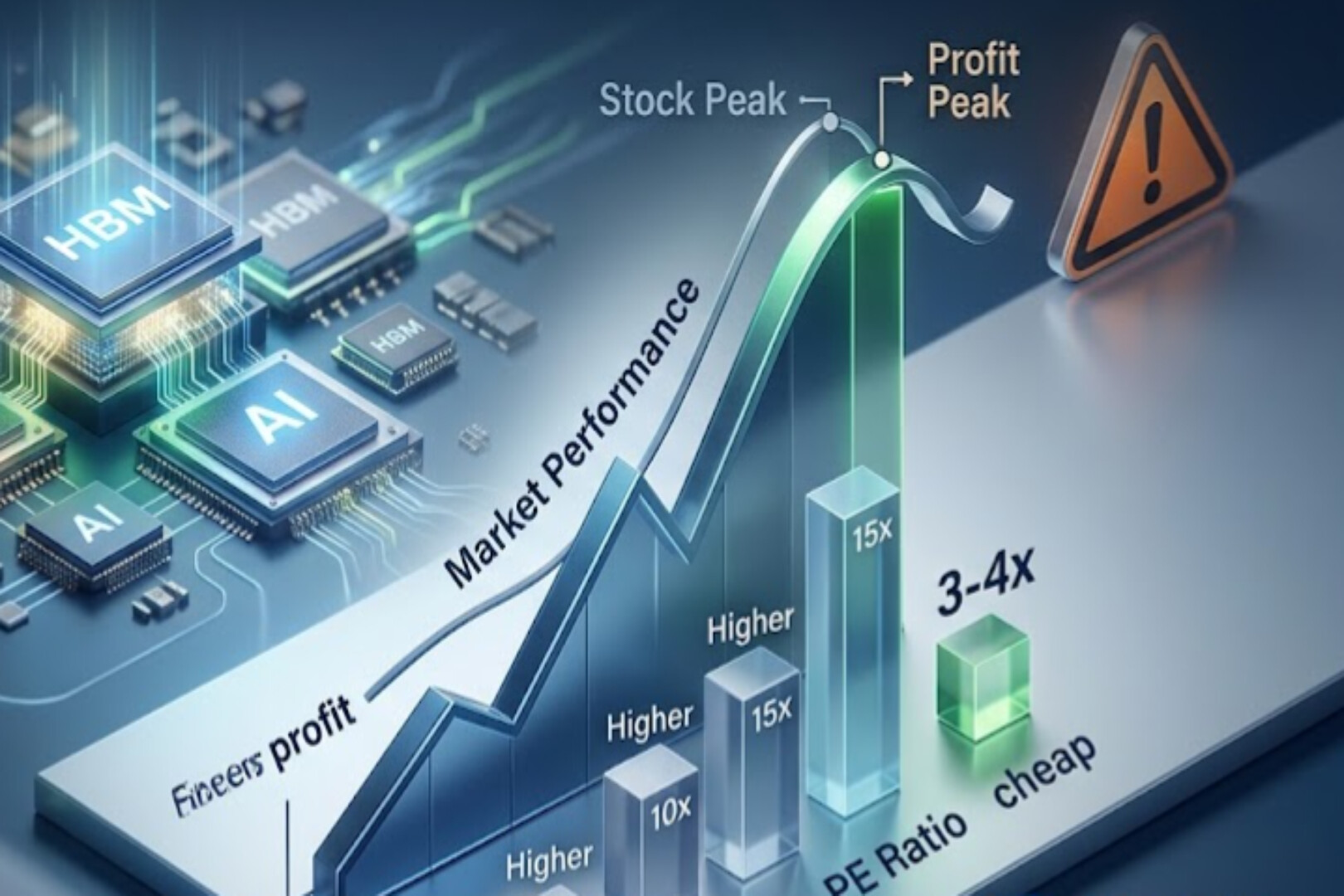
Morgan Stanley warns that while the AI-driven memory chip supercycle continues, the investment thesis for memory stocks is shifting. The report highlights that strong fundamentals—tight supply, rising prices, and robust earnings revisions—are now largely priced in, leaving limited room for further gains. The core contradiction is that memory stocks often peak *before* earnings do, as the market extrapolates peak-cycle profitability into the future, making valuations appear deceptively cheap at the cycle's top. Despite the structural demand boost from AI data centers and HBM, the cyclical nature of the industry remains. High profits are attracting significant capital expenditure, with new capacity expected from late 2027, posing a future supply risk. While HBM and DRAM prices are projected to keep rising in the near term, supporting earnings, the report cautions that current stock prices for major players like Samsung and SK Hynix already imply a need for DRAM contract prices to rise another ~70%, a challenging hurdle. Historically, memory stock peaks have preceded earnings peaks by several months. Furthermore, as AI clusters scale, the value share of networking hardware increases relative to memory within total system cost, suggesting memory suppliers may not proportionally benefit from all infrastructure growth. The report concludes that the relative investment appeal is shifting towards AI computing and networking supply chains over pure-play memory stocks.

marsbit35m ago

Morgan Stanley: Memory Stocks Often Look Cheapest at Cycle Peaks, But Are Also Most Dangerous

marsbit35m ago

Trading

Spot

Hot Articles

How to Buy BAN

Welcome to HTX.com! We've made purchasing Comedian (BAN) simple and convenient. Follow our step-by-step guide to embark on your crypto journey.Step 1: Create Your HTX AccountUse your email or phone number to sign up for a free account on HTX. Experience a hassle-free registration journey and unlock all features.Get My AccountStep 2: Go to Buy Crypto and Choose Your Payment MethodCredit/Debit Card: Use your Visa or Mastercard to buy Comedian (BAN) instantly.Balance: Use funds from your HTX account balance to trade seamlessly.Third Parties: We've added popular payment methods such as Google Pay and Apple Pay to enhance convenience.P2P: Trade directly with other users on HTX.Over-the-Counter (OTC): We offer tailor-made services and competitive exchange rates for traders.Step 3: Store Your Comedian (BAN)After purchasing your Comedian (BAN), store it in your HTX account. Alternatively, you can send it elsewhere via blockchain transfer or use it to trade other cryptocurrencies.Step 4: Trade Comedian (BAN)Easily trade Comedian (BAN) on HTX's spot market. Simply access your account, select your trading pair, execute your trades, and monitor in real-time. We offer a user-friendly experience for both beginners and seasoned traders.

6.9k Total ViewsPublished 2024.10.27Updated 2026.09.11

How to Buy BAN

Discussions

Welcome to the HTX Community. Here, you can stay informed about the latest platform developments and gain access to professional market insights. Users' opinions on the price of BAN (BAN) are presented below.

活动图片