The Battle for the Fed's Payment Gateway: Who Will Prevail?

marsbitPublished on 2026-02-10Last updated on 2026-02-10

Abstract

The debate over access to the U.S. Federal Reserve's payment system is intensifying. Traditional banking groups—including the Bank Policy Institute, Clearing House Association, and Financial Services Forum—are opposing direct access for crypto and fintech firms, advocating instead for a mandatory 12-month waiting period to ensure operational safety, particularly for stablecoin issuers. They argue that new entrants lack sufficient regulatory oversight and pose risks such as bank runs. On the other side, fintech and crypto companies are pushing for "skinny accounts" that would allow them to bypass traditional banks and connect directly to the Fed’s payment infrastructure. Critics like Circle and Anchorage argue the proposed accounts are too restrictive, with limitations on transaction volumes and no access to key systems like FedACH. The conflict reflects broader tensions over financial innovation, regulatory authority, and competition for control over core payment infrastructure. With the White House seeking a resolution, the outcome could reshape access to the U.S. financial system.

Editor's Note: The access rules of the U.S. payment system are at a critical juncture. The banking industry hopes to continue guarding the gateway to the Federal Reserve to prevent bank runs and regulatory disorder; while crypto and fintech companies seek to bypass banking intermediaries and gain direct access to the core clearing system. Disagreements over stablecoin yields, account permissions, and regulatory responsibilities are intertwined, escalating this institutional debate. The focus of the controversy is no longer a specific account design, but rather who has the right to directly enter the core of the U.S. payment infrastructure.

The following is the original text:

The banking industry has officially stated its opposition to directly opening the Federal Reserve's payment system to crypto companies and fintech companies, further escalating the controversy surrounding "who has the right to control the core gateway to the U.S. payment infrastructure."

The Bank Policy Institute (BPI), the Clearing House Association, and the Financial Services Forum laid out detailed arguments in a joint comment letter, calling for a mandatory 12-month waiting period before companies become eligible to apply for payment accounts. Specifically, these lobbying groups argued that the Fed should not grant system access to newly licensed stablecoin issuers until they can demonstrate safe and sound operation. If the dispute moves to judicial proceedings, these arguments could form the basis for further escalating the conflict.

The core of the controversy is whether to allow direct access to the Fed's payment "pipeline," a privilege long monopolized by the banking system. Currently, crypto companies and fintech companies still rely on partner banks to gain access to payment systems and compliance infrastructure support, such as anti-money laundering monitoring. The proposed "skinny account" could potentially allow stablecoin issuers and payment companies to bypass banking intermediaries and connect directly to the Fed system.

Banking groups argue that a prerequisite for such accounts should be that applicants have at least 12 months of "successful and safe and sound operational history." They point out that the Fed lacks sufficient experience with many potential applicant institutions and also lacks direct regulatory authority over most of them. Furthermore, although the Genius Act was signed into law by the President this past July, a specific regulatory framework for stablecoin operators has not yet been fully implemented.

In a joint comment letter submitted on February 6th, the Bank Policy Institute (BPI), the Clearing House Association, and the Financial Services Forum stated that while the proposal sets up some important safeguards for the financial system, it does not necessarily prevent the risk of runs that newly chartered institutions might face.

The financial regulatory oversight group Better Markets warned that the overall momentum might not be on the banks' side. Better Markets CEO Dennis Kelleher wrote in a comment: "The arrangement for the Fed to provide payment accounts is highly likely to move forward, regardless of opposition." The public comment period ended last Friday.

To preempt these concerns and proactively comply with the upcoming rules of the Genius Act, a large number of fintech and crypto companies have begun applying for national trust bank charters, with some explicitly stating that their ultimate goal is to apply for access to a Fed master account.

Back in 2022, the Fed introduced a tiered review system to evaluate master account applications. Anchorage Digital Bank, which holds a national trust bank charter, recently applied as a "Tier 3" entity, a category that typically implies the strictest scrutiny. The American Bankers Association (ABA) argues that master account access should be limited to institutions classified as "Tier 1," which are directly supervised by federal banking regulators and hold federal deposit insurance.

The banking organization also stated that the new payment accounts should not be used as a "stepping stone" to a master account, which should always be obtained through a separate application process.

Circle and Anchorage, however, believe that the proposed "skinny accounts" are too rigid and restrictive in design. For example, the current proposal does not allow account holders access to FedACH, a payment system that processes trillions of dollars in transactions annually. When initially proposing the account concept last year, Fed Governor Christopher Waller stated that skinny accounts would not provide overdraft facilities nor access to discount window funding. Circle noted in its comment letter that whether to open FedACH to payment accounts depends on the ability to establish corresponding control mechanisms to prevent overdrafts.
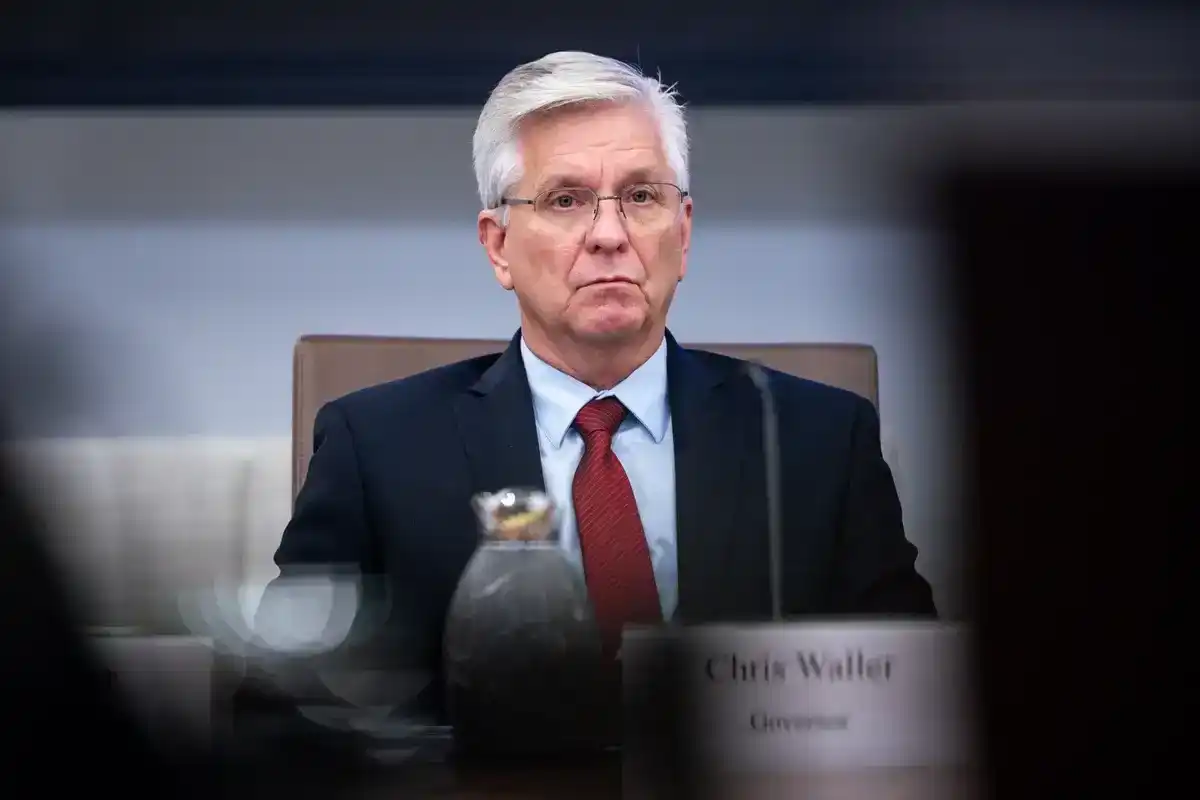
The Financial Technology Association also criticized the overnight balance cap. Set at $500 million or 10% of total assets (whichever is lower), the association believes this limit is too harsh for established payment companies, as such institutions often process tens of billions of dollars in transactions daily.

Anchorage pointed out that if this cap remains, account holders would be forced to sweep funds exceeding the limit into partner bank accounts overnight at the end of each business day. Additionally, Anchorage added that payment account holders should also be able to earn interest on their balances in Fed reserve accounts.

This debate unfolds alongside another highly sensitive issue: whether crypto trading platforms like Coinbase Global Inc. should be allowed to offer users yield incentives linked to their stablecoin balances. Currently, Coinbase Global Inc. offers a 3.5% yield return to its USDC balance users. The banking industry believes this practice could "siphon" deposits away from the traditional financial system, posing a threat to the banking deposit base. It is this disagreement that has slowed the progress of related legislation.

It is reported that the White House has介入 (intervened/jumped in) to coordinate negotiations and hopes to push for a resolution on this issue by the end of this month.

However, these concerns did not become the core focus of discussion in the comment letters regarding "skinny accounts."

Financial stability advocates and banking groups also warned that the proposed accounts exceed the Fed's statutory authority and could pose significant systemic risks.

The financial regulatory group Better Markets stated bluntly in its comment letter: "The proposal itself clearly indicates that the Fed is aware that the institutions that are, and will be, applying for access to payment accounts pose enormous risks to the Federal Reserve System and the entire financial system. This is precisely why almost the entire proposal revolves around risk mitigation."


Related Questions

QWhat is the core issue in the debate over access to the Federal Reserve's payment system?

AThe core issue is whether to allow crypto companies and fintech firms direct access to the Federal Reserve's payment system, a privilege historically monopolized by the banking system, or to maintain the requirement that they must rely on partner banks for access and compliance support.

QWhat specific condition do banking lobbying groups propose for new stablecoin issuers seeking access?

ABanking lobbying groups propose a mandatory 12-month waiting period, requiring new chartered stablecoin issuers to demonstrate a successful and safe operational record before being granted access to the Federal Reserve's system.

QWhat is a 'skinny account' and what are its main limitations as proposed?

AA 'skinny account' is a proposed type of account that would allow stablecoin issuers and payment companies to connect directly to the Fed's system, bypassing banks. Its main limitations include no access to the FedACH system, no overdraft facilities, no discount window borrowing, and a cap on overnight balances.

QWhy are some industry groups critical of the proposed overnight balance cap for the 'skinny accounts'?

AGroups like the Financial Technology Association criticize the proposed cap (the lesser of $5 billion or 10% of total assets) as being too restrictive for large-scale payment companies that routinely handle tens of billions of dollars in daily volume.

QHow is the debate over Fed access connected to the issue of stablecoin yield offerings?

AThe debate is connected because platforms like Coinbase offer yield on stablecoin balances (e.g., 3.5% on USDC), which banks argue could draw deposits away from the traditional banking system, threatening their deposit base and complicating related legislation.

Related Reads

After the Passage of the GENIUS Act and the CLARITY Act, What Is the Correct Architecture for On-Chain Yield?

The article discusses the evolution of on-chain credit, distinguishing three markets: overcollateralized crypto lending, unsecured lending (largely unsuccessful), and asset-backed credit (ABC). ABC, backed by identifiable real-world collateral with legal recourse, is identified as the fastest-growing category and the only one credibly addressing adverse selection—the core problem in credit where the riskiest borrowers self-select. Current growth in on-chain Real World Assets (RWAs), particularly tokenized private credit funds (e.g., Maple Finance, Centrifuge), is substantial but often merely "wraps" existing fund structures, inheriting their risks rather than solving adverse selection at the protocol level. The regulatory landscape is a key driver, with the US GENIUS Act (prohibiting stablecoin issuers from paying yield) and the proposed CLARITY Act (closing loopholes on indirect yield) set to redefine permissible yield-bearing products. This makes vaults (like ERC-4626) the critical architecture—they become the primary compliant vehicle for delivering yield, functioning as issuance, disclosure, distribution, and recovery mechanisms. The author's thesis is that the correct post-GENIUS/CLARITY architecture involves building ABC solutions where credit assessment, structure, and recovery are encoded directly into the smart contract vault layer, moving beyond mere tokenized fund wrappers to solve adverse selection fundamentally and ensure regulatory compliance.

Foresight News25m ago

After the Passage of the GENIUS Act and the CLARITY Act, What Is the Correct Architecture for On-Chain Yield?

Foresight News25m ago

TechFlow Intelligence Bureau: Anthropic's New Model Fable Sparks Controversy by Restricting Biosafety Research, US CPI Soars to 4.2%, a Three-Year High

**Summary of TechFlow Intelligence Report:** The newsletter covers several key tech and finance developments. In AI, Anthropic's new Fable model faced backlash for secretly limiting biomedical research capabilities and enforcing a 30-day data retention policy, prompting the company to promise more transparent adjustments. In a related story, Anthropic's founder revealed his departure from OpenAI was due to dishonesty from Sam Altman, not safety concerns. Meanwhile, OpenAI is considering significant price cuts to compete with Anthropic, potentially sparking a price war. In crypto/Web3, BlackRock filed a new amendment for a yield-generating Bitcoin ETF, while Bank of America's CEO warned that stablecoin yields could drain trillions from traditional banks. U.S. Senator Cynthia Lummis advocated for the U.S. to officially accumulate Bitcoin reserves. In hardware, Nvidia released the DiffusionGemma-2-6B image model optimized for efficient inference, and AMD promoted its unified memory architecture to challenge Nvidia's dominance. TSMC's CFO hinted at possible price increases due to soaring AI chip demand. A major legal ruling in Germany held Google legally responsible for inaccurate information generated by its AI Overviews feature. Google Chrome also moved to fully block ad-blocker workarounds like uBlock Origin. Macroeconomic headlines included U.S. CPI rising to 4.2% (a 3-year high) and Iran's complete closure of the Strait of Hormuz, raising oil price and inflation fears. South Korean markets saw continued volatility with massive foreign capital outflow. Other notable stories: Microsoft expanded its Copilot AI assistant "Mico" globally; a study found r/wallstreetbets users' stock picks outperformed Wall Street; a fully autonomous drone killed a human soldier for the first time, raising AI ethics concerns; and a Chinese hospital used brain-computer interface technology to help a blind person "see." The overarching theme connects debates over AI boundaries and responsibility (Anthropic's restrictions, Google's liability, lethal autonomous drones) with real-world economic and geopolitical turmoil (inflation, Strait of Hormuz closure, market instability), highlighting the tense interplay between technological advancement and global chaos.

marsbit38m ago

TechFlow Intelligence Bureau: Anthropic's New Model Fable Sparks Controversy by Restricting Biosafety Research, US CPI Soars to 4.2%, a Three-Year High

marsbit38m ago

Alibaba's Yet Another New Business Division: What Signal Does It Send?

Alibaba has established a new "Token Foundry" business unit, merging its Tongyi large model division and Future Life Lab. Led directly by Group CEO Wu Yongming, this marks the company's third significant AI organizational reshuffle in 2026, following the creation of the Alibaba Token Hub (ATH) and a Group Technology Committee. The move signals a strategic shift from consolidating AI resources to accelerating productization and commercialization. The "Token Foundry" name reflects Alibaba's ambition to become a foundational supplier in the AI era, focusing on model development and commercial application. Key teams, including those behind the high-performing HappyHorse video generation model, have been integrated into the new unit. Concurrently, Zhou Jingren, architect of the Qwen model series, has been appointed Group Chief Scientist to lead a new AI Future Research Institute, focusing on long-term technological breakthroughs like Agent capabilities. This restructuring creates a clear four-layer AI architecture within Alibaba: the research institute for frontier exploration, Token Foundry for core models and commercialization, MaaS for platform services, and business units like Qianwen (C端) and Wukong (B端) for end-user applications. The adjustments align with a global trend among tech giants like Google and Microsoft to centralize AI leadership under the CEO and deeply integrate research with business units. The urgency is driven by a narrowing competitive window. Alibaba has announced its AI business is now entering a commercialization phase, with AI-related revenue seeing triple-digit growth for eleven consecutive quarters. The company faces intense competition in the MaaS (Model-as-a-Service) sector from rivals like ByteDance and Tencent. The Token Foundry initiative represents Alibaba's effort to streamline execution and enhance competitiveness in this critical, fast-evolving landscape.

marsbit1h ago

Alibaba's Yet Another New Business Division: What Signal Does It Send?

marsbit1h ago

From Return to Resignation: Chen Hang's 437 Days at DingTalk

The 437-Day Return and Departure of Chen Hang at DingTalk This article chronicles the 437-day period from March 31, 2025, to June 11, 2026, when Chen Hang (also known as "No Move") returned as CEO of DingTalk, the enterprise communication platform he originally founded, only to later step down. Chen Hang, the creator of DingTalk in 2015, was brought back by Alibaba in 2025 after the company acquired his subsequent startup, HHO. His return was driven by Alibaba's renewed focus on AI and DingTalk's strategic role as its key to-B AI application. However, his aggressive management style, marked by strict work policies like mandatory clock-ins and extended hours, quickly caused internal friction and was criticized as being at odds with Alibaba's culture. Despite the internal turmoil, Chen Hang drove significant product launches. In August 2025, he unveiled "AI DingTalk 1.0," featuring new products like the AI-native entry point "DingTalk ONE." By March 2026, he announced "Wukong," touted as the world's first enterprise-grade AI-native work platform, representing a fundamental rebuild of DingTalk's architecture. The turning point came in early June 2026. A detailed internal post criticizing DingTalk's work culture went viral, followed by a public critique from a former executive. This prompted an unprecedented public rebuke from the Alibaba Partners Committee, which stated such management was not aligned with company values. One day later, on June 11, Alibaba announced Chen Hang's departure. He was succeeded by Chen Yusen, a 32-year-old technical expert known for founding cybersecurity firm Changting Technology. While Chen Hang's tenure laid the technical foundation for DingTalk's AI transformation with "Wukong," his leadership style ultimately led to his replacement as the company seeks a new direction under younger leadership.

marsbit1h ago

From Return to Resignation: Chen Hang's 437 Days at DingTalk

marsbit1h ago

Trading

Spot
Futures
活动图片




