# Competition Related Articles

HTX News Center provides the latest articles and in-depth analysis on "Competition", covering market trends, project updates, tech developments, and regulatory policies in the crypto industry.

"Shelling" Google Gemini, But Apple Hasn't Given Up on Its Own Model

Apple has reportedly entered into a significant partnership with Google to integrate its Gemini AI model into Apple's ecosystem, as a "foundation" component for its future AI features, including a more personalized Siri expected later this year. The deal, estimated at around $1 billion annually, is not a direct replacement of Apple's own models but rather a strategic collaboration where Gemini will assist in training and enhancing Apple's proprietary on-device AI, with all processing occurring on Apple's private cloud servers to ensure user data privacy and isolation from Google. This move is seen as a tactical, transitional step for Apple to accelerate its AI capabilities and meet product launch timelines, especially after facing delays and setbacks with its in-house Apple Intelligence development and losing key AI talent to competitors like Meta. Despite this partnership, Apple continues its independent research and is reportedly developing its own trillion-parameter model, targeted for around 2027. The collaboration has drawn criticism, notably from Elon Musk, who raised concerns about the concentration of power with Google, which also controls Android and Chrome. For Google, the deal is a major win, boosting its market valuation, while OpenAI's existing partnership with Apple, which positions ChatGPT as a supplementary option for Siri, appears less central by comparison. The arrangement highlights Apple's pragmatic approach to bridging its AI gap while maintaining its long-term ambition for a fully independent AI system.

marsbit01/13 07:21

"Shelling" Google Gemini, But Apple Hasn't Given Up on Its Own Model

marsbit01/13 07:21

To Hyperliquid: Stop Talking About 'Decentralization' and Learn from BNB's 'Strong Operations'

The article critiques Hyperliquid's overemphasis on "decentralization" and urges it to adopt a "strong operations" model akin to Binance's BNB ecosystem. It argues that the perpetual decentralized exchange (Perp DEX) market is saturated, with over 20 projects aiming for Token Generation Events (TGE) by Q1 2026, leading to intense competition. While Hyperliquid excels in liquidity and professional trading体验 for assets like BTC/ETH, its native token HYPE and HyperEVM ecosystem lack synergistic value capture, unlike BNB's integrated model. The author highlights that Binance’s success stems from its "listing effect" and operational synergy between Binance main站 and BNB Chain, which sustains project viability post-listing. In contrast, Hyperliquid’s minimalist, hands-off approach to HyperEVM has hindered ecosystem growth, causing projects to fail quickly after HYPE distribution. The piece suggests Hyperliquid should learn from BNB Chain’s "strong operations" to foster ecosystem collaboration, such as endorsing key DeFi sectors (e.g., lending, swaps), without compromising decentralization entirely. Ultimately, Hyperliquid’s engineering strengths are noted, but it must evolve beyond its current passive strategy to maintain competitiveness against rivals like Lighter and Aster, which are expanding into L2s/chains. The conclusion urges Hyperliquid to embrace complexity and operational rigor to secure long-term growth and token value.

marsbit01/09 07:12

To Hyperliquid: Stop Talking About 'Decentralization' and Learn from BNB's 'Strong Operations'

marsbit01/09 07:12

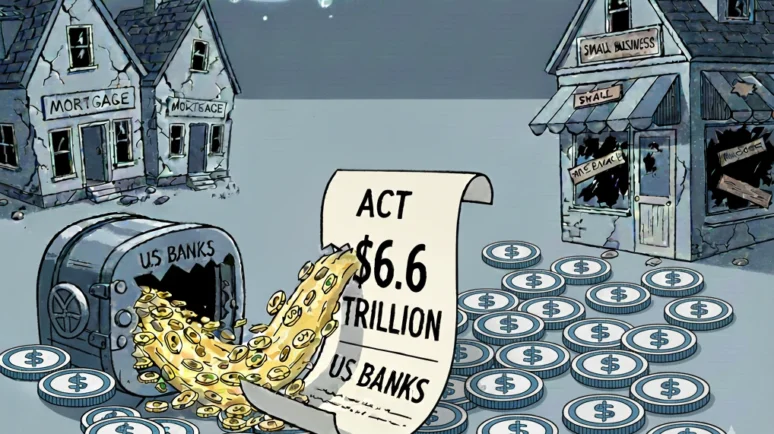
Will The GENIUS Act Shift $6.6T From US Banks? Critics Warn Stablecoin ‘Loophole’ Could Damage Small Businesses, Mortgages and More

A coalition of banking groups warns that a perceived "loophole" in the GENIUS Act could put up to $6.6 trillion in U.S. bank deposits at risk, potentially undermining community lending that supports small businesses, homebuyers, and local economies. The dispute centers on the Act’s ban on stablecoin issuers paying interest or yield directly to holders, which was intended to prevent stablecoins from competing with bank deposits. However, critics argue that some issuers are circumventing this by indirectly funding rewards through exchanges and partners. Banking associations, including the Bank Policy Institute, urge lawmakers to clarify that all forms of inducements—direct or indirect—should be prohibited. They warn that without this, stablecoins could incentivize customers to move savings out of banks, jeopardizing traditional lending. Crypto advocates and industry groups strongly reject these concerns, calling them a "last-ditch effort" by big banks to block competition. They argue there is little evidence that stablecoins threaten the banking system and that rewards benefit everyday users. Pro-crypto figures also warn that tightening the law could have geopolitical consequences, potentially pushing users toward foreign alternatives like China’s Digital Yuan. The stablecoin market, led by Tether’s USDT and Circle’s USDC, has grown to nearly $318 billion, partly driven by reward programs. Banking groups view these incentives as blurring the line between payment tools and deposit-like products, while crypto advocates see them as legitimate competitive features. If lawmakers restrict these rewards, the sector’s growth could slow significantly.

ccn.com01/08 10:55

Will The GENIUS Act Shift $6.6T From US Banks? Critics Warn Stablecoin ‘Loophole’ Could Damage Small Businesses, Mortgages and More

ccn.com01/08 10:55

活动图片