# Competition Related Articles

HTX News Center provides the latest articles and in-depth analysis on "Competition", covering market trends, project updates, tech developments, and regulatory policies in the crypto industry.


Just Spent 250 Million to Buy Companies, Then Laid Off 30%: Polygon Is Changing Its Way of Survival

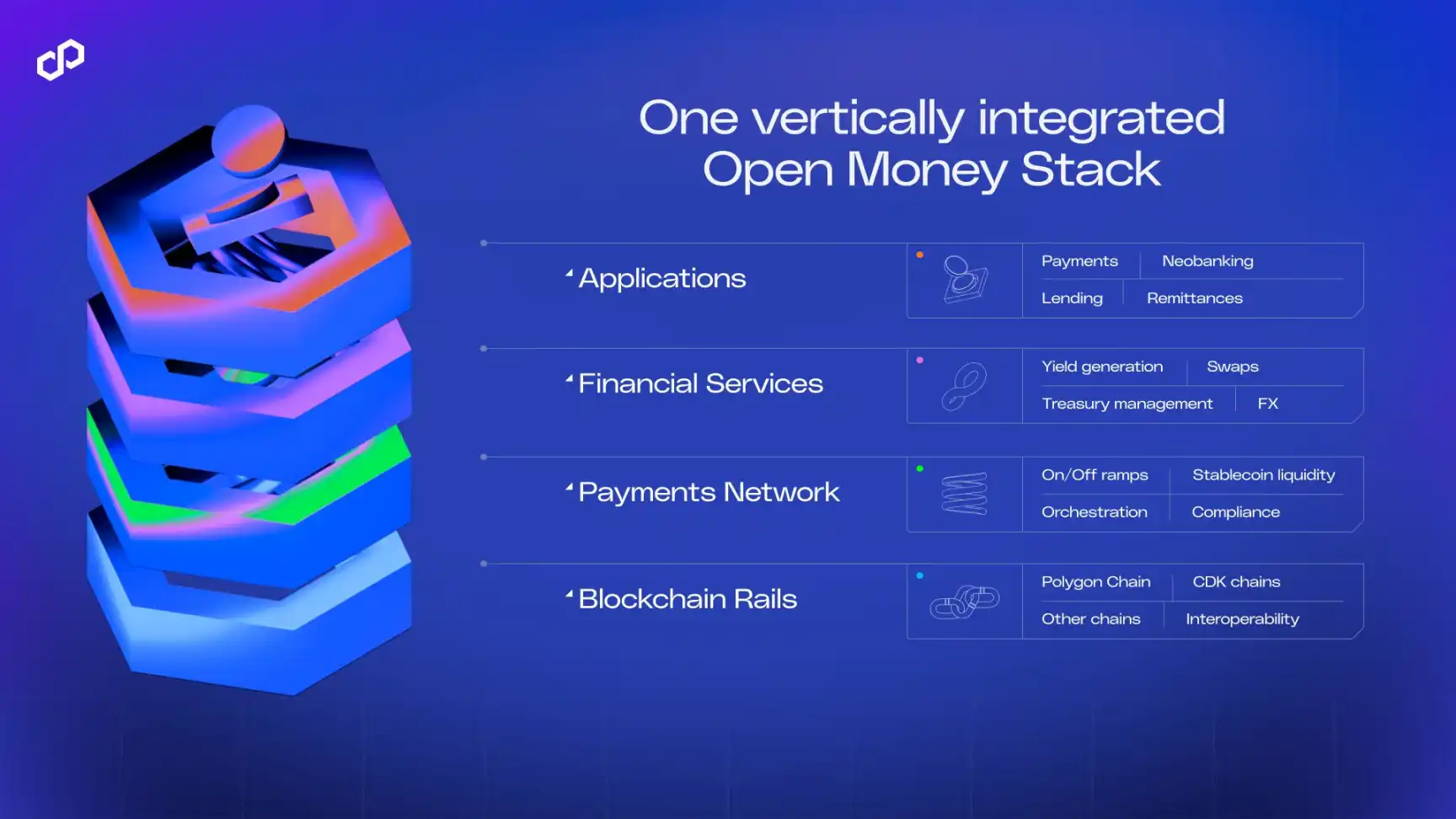
Polygon, a major blockchain scaling solution, has laid off approximately 30% of its workforce while simultaneously spending $250 million to acquire two companies: Coinme, a licensed crypto-fiat exchange with an extensive US ATM network, and Sequence, a wallet infrastructure and cross-chain routing provider. This strategic pivot signals a shift away from its core Layer-2 (L2) business, where it faces intense competition from dominant players like Base, and toward building a comprehensive stablecoin payment infrastructure called the "Open Money Stack." The acquisitions provide critical pieces for this new direction: Coinme offers regulatory licenses and on-ramps/off-ramps, while Sequence provides the technical backend for seamless cross-chain transactions. The goal is to target B2B clients like banks and payment providers. This move is seen as a necessary "blood change." Polygon's previous strategy, focused on enterprise adoption and NFTs, yielded limited long-term results. In the crowded L2 space, it struggled against competitors with superior user distribution, such as Base, which is integrated with Coinbase's massive user base. The new focus on stablecoin payments is a promising but highly competitive market, with giants like Stripe, PayPal also making significant investments. While Polygon CEO claims this puts them in competition with Stripe, the company is betting on an open infrastructure model versus Stripe's more closed ecosystem. The strategy carries risks. Coinme has faced regulatory penalties in the past, and Polygon is entering a field with well-established traditional finance players. However, success could transform Polygon from a protocol reliant on tokenomics into a profitable company with real revenue streams, a rarity in crypto. The core challenge is that the window for crypto-native companies to capture this market is narrowing as traditional finance accelerates its adoption of blockchain technology.

marsbit01/16 04:54

Just Spent 250 Million to Buy Companies, Then Laid Off 30%: Polygon Is Changing Its Way of Survival

marsbit01/16 04:54

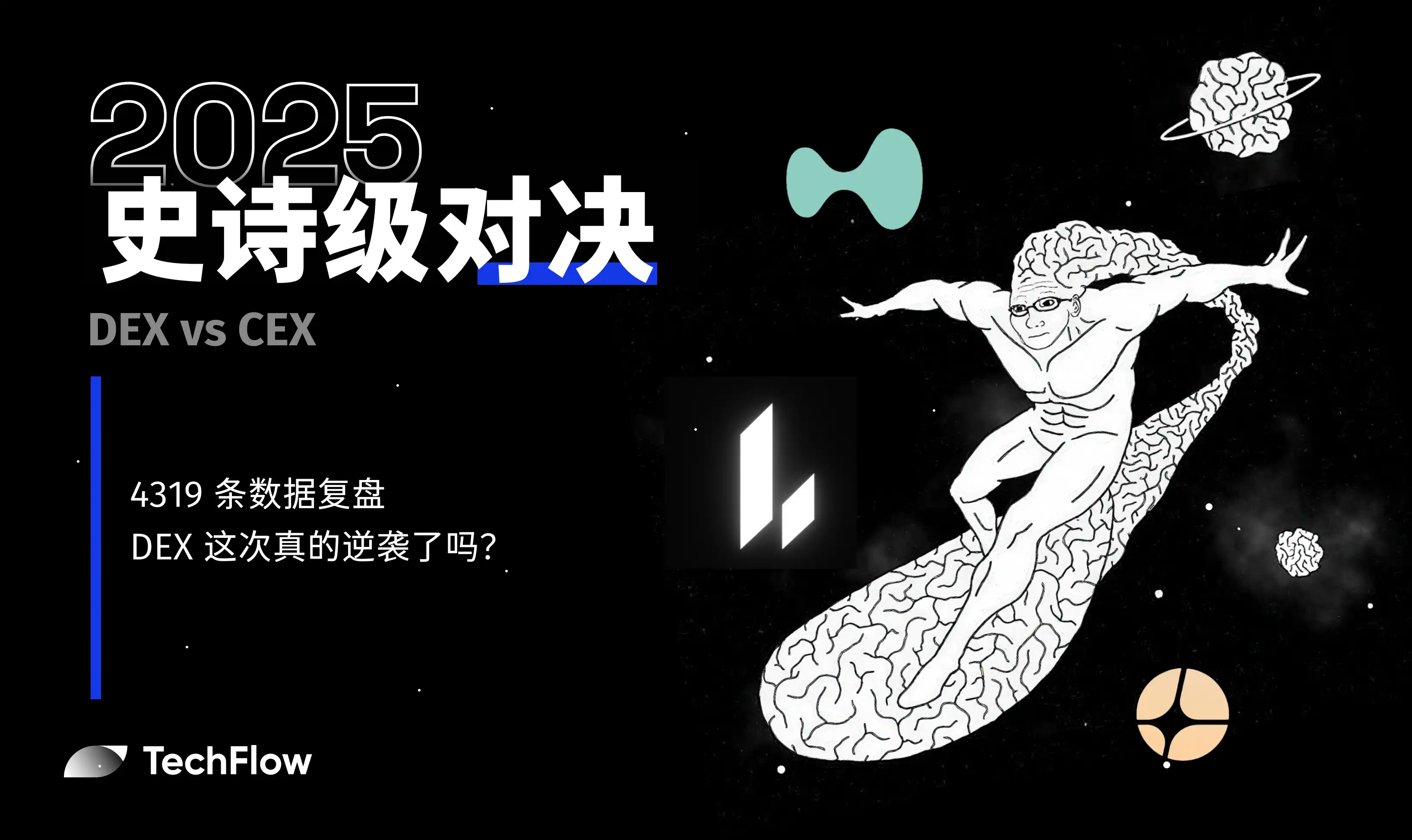
2025 Epic Showdown: Has DEX Finally Overtaken CEX?

In 2025, decentralized exchanges (DEXs) experienced unprecedented growth, with trading volume nearly quadrupling compared to previous years. This surge was particularly driven by the rise of perpetual decentralized exchanges (Perp DEXs), which saw a 176% increase in annual trading volume—exceeding the cumulative total of the previous four years. Key players like Hyperliquid, Lighter, and Aster led this expansion, while established platforms like dYdX and GMX saw slower growth. The year began with Solana-based DEXs outperforming Ethereum in Q4 2024, fueled by meme coin and AI-related trading. However, Ethereum regained momentum in Q1 2025 following its Pectra upgrade and renewed investor confidence. Binance’s collaboration with PancakeSwap in Q2 significantly boosted BSC-based DEX volume, while Q3 saw intensified competition among Perp DEXs and the successful launch of Jupiter Lend, which attracted over $1 billion in deposits within days. Despite a market shake-up in Q4 due to the "10·11" liquidation event, Perp DEXs demonstrated resilience, with Aster and Lighter recovering faster than Hyperliquid. In spot trading, Uniswap maintained dominance in TVL, while Solana-based DEXs collectively reached trading volumes comparable to Uniswap. The article concludes that DEXs are not outright replacing centralized exchanges (CEXs) but are evolving alongside them. Both are integrating each other’s strengths—DEXs improving in efficiency and user experience, and CEXs adopting self-custody and on-chain transparency—suggesting a future of coexistence rather than displacement.

marsbit01/14 10:14

2025 Epic Showdown: Has DEX Finally Overtaken CEX?

marsbit01/14 10:14

Just 6 Days After Launching ChatGPT Health, OpenAI Is Surpassed on Its Own Medical Benchmark

In a significant development in the AI healthcare sector, Baichuan Intelligence has surpassed OpenAI's GPT-5.2 High on the HealthBench benchmark—a medical evaluation dataset created by OpenAI with input from 260+ doctors across 60 countries—just six days after OpenAI launched ChatGPT Health. Baichuan's new model, Baichuan-M3, achieved a top score of 65.1 and also led in the more challenging HealthBench Hard subset, while demonstrating the lowest hallucination rate (3.5%) without relying on external tools. Key to M3’s performance is its Fact Aware RL technique, which improves diagnostic accuracy by balancing factual precision with proactive questioning. The model avoids both over-confident errors and overly vague responses. Additionally, Baichuan introduced SCAN-bench, a new evaluation framework designed to simulate real doctor-patient interactions. In tests, M3 outperformed human specialists in areas like safety stratification, clarity, and diagnostic questioning, partly due to its ability to integrate knowledge across medical disciplines. Baichuan is now rolling out the model via its consumer product Baixiaoying (百小应), offering tailored interfaces for both doctors and patients. The company emphasizes a focus on "serious medicine," prioritizing complex areas like oncology over general wellness, aiming to augment—not just assist—medical professionals. According to CEO Wang Xiaochuan, enhancing AI’s capability in high-stakes medical scenarios is crucial for building user trust and advancing toward AGI through deeper biological understanding.

marsbit01/14 02:31

Just 6 Days After Launching ChatGPT Health, OpenAI Is Surpassed on Its Own Medical Benchmark

marsbit01/14 02:31

活动图片