# Commodities Related Articles

HTX News Center provides the latest articles and in-depth analysis on "Commodities", covering market trends, project updates, tech developments, and regulatory policies in the crypto industry.

Prediction Markets Take Center Stage, But Perp DEXs Quietly Profit from the US-Iran War

In late February 2025, escalating tensions in the Middle East led to large-scale airstrikes by the U.S. and Israel against Iran, causing significant volatility in global financial markets. While traditional markets were closed during the weekend, investors turned to on-chain platforms to trade assets like gold, oil, and silver. Prediction markets such as Polymarket and Kalshi saw a surge in activity, with war-related contracts driving record trading volumes. However, perpetual decentralized exchanges (perp DEXs), particularly Hyperliquid, also capitalized on the situation. Hyperliquid’s commodities contracts—including gold, oil, and silver—experienced unprecedented liquidity and trading volume, with silver contracts alone reaching over $3.5 billion in daily volume at their peak. The platform’s HIP-3 market, trade.xyz, saw weekend trading volumes hit all-time highs, attracting large institutional and high-net-worth users due to its transparency, lack of trading restrictions, and non-custodial nature. In contrast, centralized exchanges (CEXs), though also offering real-world asset (RWA) trading, lacked the same level of visibility and trust among sophisticated traders. Hyperliquid’s upcoming HIP-4 feature introduces outcome-based contracts for prediction and options-like products, further expanding its role as a platform for pricing uncertainty. The growth of perp DEXs reflects a broader trend toward 24/7, globally accessible financial markets, though regulatory challenges remain a potential risk.

marsbit03/20 03:16

Prediction Markets Take Center Stage, But Perp DEXs Quietly Profit from the US-Iran War

marsbit03/20 03:16

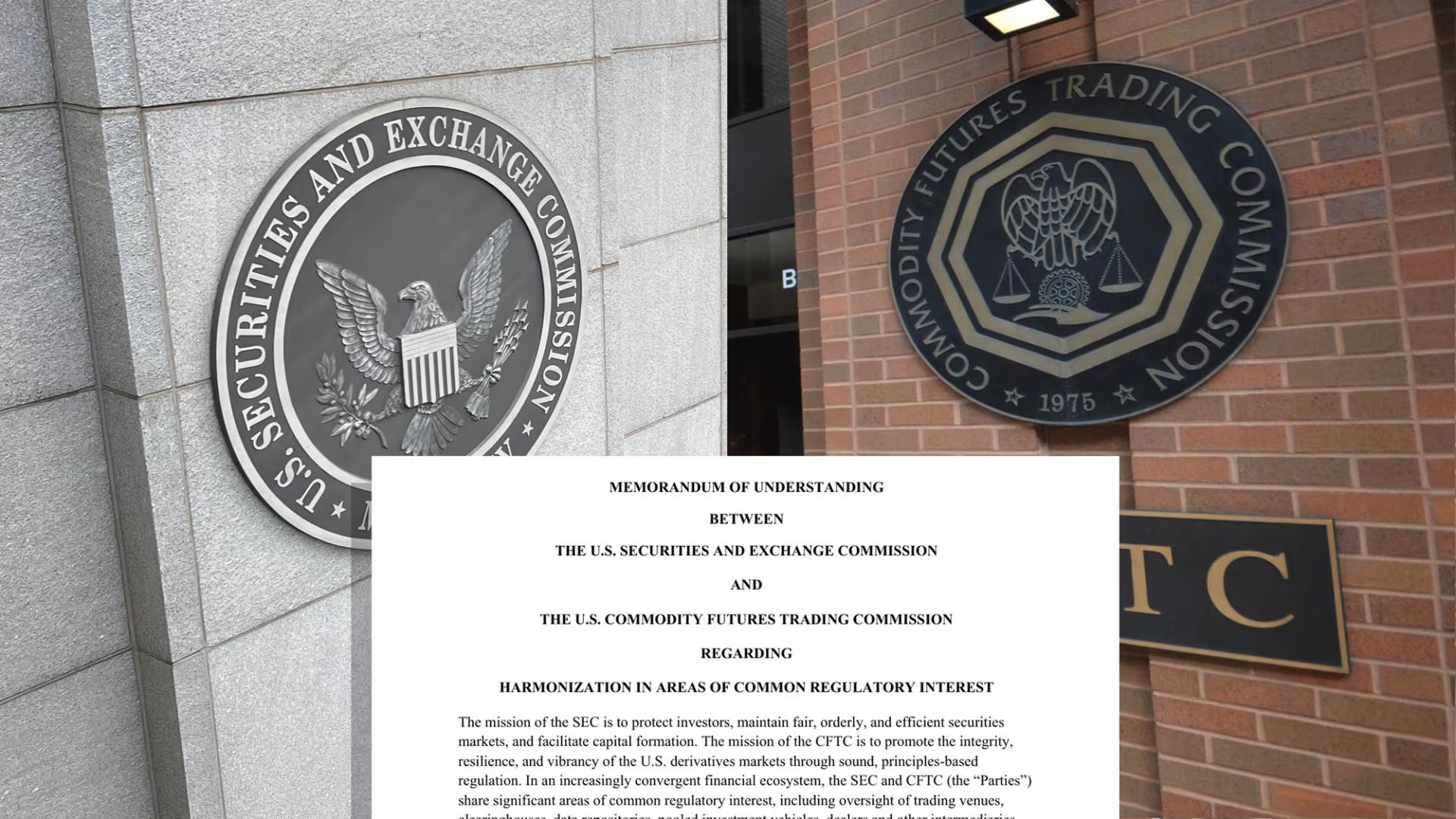
US SEC and CFTC Jointly "Unbind": Crypto Assets Are "Digital Commodities" Not "Securities"

The U.S. SEC and CFTC have jointly issued new interpretive guidance clarifying that most crypto assets are not securities. Instead, they are classified as digital commodities, digital collectibles, digital tools, or stablecoins—provided stablecoin issuers do not pay interest. Only tokenized assets that represent traditional financial instruments are considered securities. Key classifications include: - Digital commodities (e.g., Bitcoin, Ethereum) are non-securities whose value derives from utility and market dynamics. - Digital collectibles (e.g., NFTs, meme coins) are for collection or use. - Digital tools (e.g., membership tokens, credentials) serve functional purposes. - Stablecoins are non-securities if they do not pay yields. The guidance also states that DeFi mining, staking, wrapped assets, and airdrops generally do not constitute securities offerings—unless airdrops require active effort (creating an investment contract risk). Notably, a token initially sold as a security can later be reclassified as a non-security if it becomes decentralized or gains utility. This clarity is expected to benefit crypto IPOs (e.g., exchanges like OKX and Kraken), DeFi protocols, and prediction markets like Polymarket by reducing regulatory uncertainty and attracting institutional liquidity. However, increased regulatory alignment may reduce innovation in gray areas and raise compliance costs. Overall, the move signals tighter integration with mainstream finance, potentially ensuring the industry’s broader adoption and stability.

Odaily星球日报03/18 10:18

US SEC and CFTC Jointly "Unbind": Crypto Assets Are "Digital Commodities" Not "Securities"

Odaily星球日报03/18 10:18

MVC Market View Express (3.9-3.15)

Recent tensions in the Middle East have heightened market sensitivity to geopolitical risks, particularly concerning Iran. The assessment is that the U.S. is unlikely to deploy ground troops, while Iran may use external pressure to legitimize internal political restructuring. A 20% rise in oil prices could trigger a U.S. policy response, keeping the situation broadly manageable. Geopolitical premiums will continue to influence market sentiment until oil falls below $100 per barrel. Long-term trends, especially in commodities and precious metals, remain upward, with new capital being deployed opportunistically on dips. Three key themes are emphasized: 1. Commodities and Resources: Geopolitical risks and the restructuring of the credit system support elevated gold prices. Exposure to gold mining equities is being increased. Copper is viewed as a medium- to long-term allocation, benefiting from future liquidity expansion. 2. Digital Assets: Bitcoin has recently outperformed equities but lacks a clear trend reversal signal. A cautious stance is maintained, prioritizing drawdown control while awaiting confirmation of a turning point in U.S. dollar liquidity. 3. AI and Technology: Current valuations of AI leaders appear full, with limited short-term upside consensus. Future performance will heavily depend on changes in global liquidity conditions. Overall, the strategy remains centered on the themes of “traditional credit system restructuring” and “East-facing allocation,” with a focus on RMB-denominated resource assets to balance certainty and upside potential.

marsbit03/09 11:14

MVC Market View Express (3.9-3.15)

marsbit03/09 11:14

活动图片