SBF asks Supreme Court to overturn conviction, $11B forfeiture: Report

cointelegraphPublished on 2026-09-11Last updated on 2026-09-11

Abstract

Former FTX CEO Sam Bankman-Fried has reportedly petitioned the U.S. Supreme Court to overturn his 2023 fraud conviction and a related $11 billion forfeiture order. According to a court filing, his lawyers are seeking a new trial and the reversal of the forfeiture, arguing that the trial judge improperly excluded evidence that his investments could have covered customer losses and that the fine violates the constitutional ban on excessive fines. This follows a recent decision by a federal appeals court to uphold his conviction and 25-year prison sentence. Bankman-Fried was convicted on seven counts of fraud and conspiracy for misusing billions in FTX customer funds.

Former FTX CEO Sam Bankman-Fried reportedly asked the US Supreme Court to overturn his 2023 fraud conviction.

He sought a new trial and the reversal of an $11 billion forfeiture order, according to a Thursday court filing seen by CNN.

His lawyers argued that the trial judge excluded evidence that his investments were sound and would have covered FTX customers’ losses. They also argued that the $11 billion forfeiture violated the Eighth Amendment’s ban on excessive fines.

A three-judge panel of the 2nd US Circuit Court of Appeals upheld his conviction and 25-year prison sentence on June 12. He has also applied for a pardon from US President Donald Trump.

Bankman-Fried was sentenced to 25 years in prison in March 2024 after his conviction on seven counts of fraud and conspiracy.

Prosecutors said he used billions of dollars in FTX customer funds to repay Alameda Research’s debts and finance investments, political donations and personal spending.

Related: Sam Bankman-Fried claims Biden DOJ silenced witnesses during FTX trial

Related Questions

QWhat did Sam Bankman-Fried's lawyers argue in their appeal to the Supreme Court regarding the evidence at his trial?

AThey argued that the trial judge excluded evidence showing his investments were sound and would have covered FTX customer losses.

QWhat constitutional amendment did Bankman-Fried's lawyers cite to challenge the $11 billion forfeiture order?

AThey cited the Eighth Amendment, arguing the forfeiture violated its ban on excessive fines.

QWhat was the outcome of his appeal at the 2nd US Circuit Court of Appeals on June 12?

AA three-judge panel of the 2nd US Circuit Court of Appeals upheld his conviction and 25-year prison sentence.

QBesides the Supreme Court appeal, what other legal avenue has Bankman-Fried pursued regarding his case?

AHe has applied for a pardon from US President Donald Trump.

QAccording to prosecutors, how did Sam Bankman-Fried misuse FTX customer funds?

AProsecutors said he used billions in FTX customer funds to repay Alameda Research's debts and finance investments, political donations, and personal spending.

Related Reads

Selling Smartphones, Now Competing for the Stablecoin On-Ramp

Samsung, the electronics giant, is integrating USDC stablecoin functionality into its Samsung Wallet for eligible Galaxy users in the US, partnering with Coinbase, Bastion, Solana, and Sui. This move, set for a late-October rollout to potentially 82 million devices, aims to simplify crypto access by allowing users to buy and send USDC directly from a familiar interface without managing separate wallets or private keys. The service will offer two main functions: sending USDC to external crypto wallets/exchanges (with no fees from Samsung) and cross-border remittances to bank accounts in over 60 countries (for a fee, with local currency payout). Partners provide key infrastructure: Bastion handles custody and compliance, Coinbase offers sub-custody, while Solana and Sui provide blockchain support, with Sui enabling gas-free USDC transfers. This marks a new phase in Samsung's seven-year Web3 journey, which began with blockchain wallet features on Galaxy phones in 2019, later expanding to NFT explorations and integrations with Coinbase. Beyond consumer products, Samsung affiliates have invested in digital asset infrastructure, such as acquiring a stake in Upbit operator Dunamu. The core advantage for Samsung lies not in blockchain tech, but in its massive user base and existing wallet ecosystem. The key test is whether this integration can transform stablecoins from a niche crypto feature into a practical, everyday financial tool for mainstream users.

marsbit19m ago

Selling Smartphones, Now Competing for the Stablecoin On-Ramp

marsbit19m ago

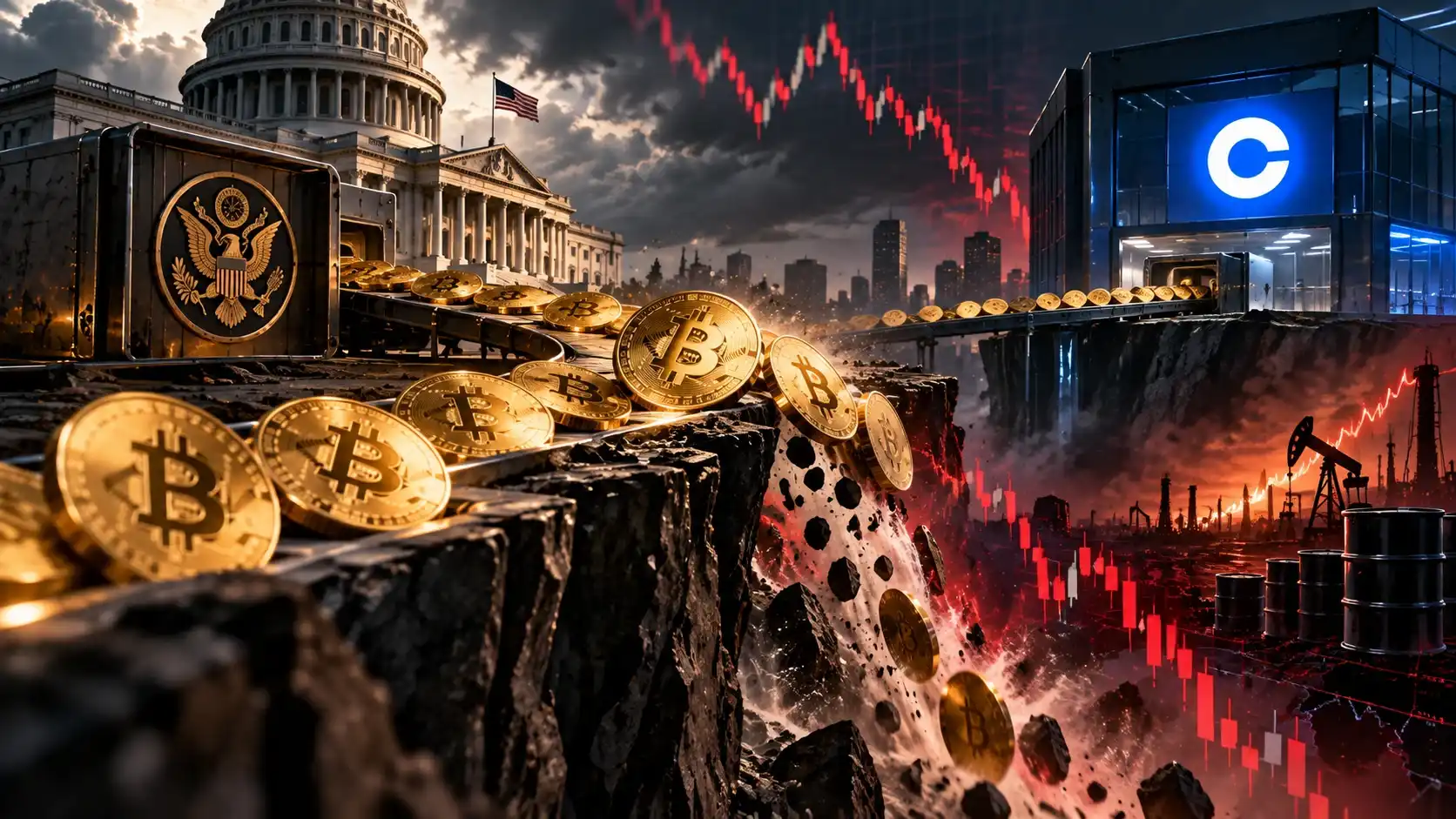
Recent Market Analysis: BTC Short-Term Retreat of 7% - The Reasons Go Far Beyond "US Government Selling Coins"

Recent BTC pullback analysis: More than just "U.S. government selling." Bitcoin's ~7% drop from recent highs sparked a familiar rush to assign blame, with many pointing to large BTC transfers from U.S. government wallets to exchanges. However, attributing the decline solely to potential government sales overlooks key market vulnerabilities. Crucially, there is no evidence these transferred coins have been sold on the open market. The moves are more likely related to asset management procedures. The real driving force behind the drop appears to be an **endogenous stampede** triggered by macro shifts and amplified by fragile internal market structure. On-chain data reveals short-term holders (STH) were sitting on significant unrealized profits. News of potential supply increases prompted profit-taking, which then triggered stop-losses from recent buyers as prices fell below key levels. This created a sell-off driven by traders themselves, not direct government selling. Macro conditions added pressure. Rising oil prices and the 10-year U.S. Treasury yield holding above 5.2% tightened global liquidity, reducing risk appetite across assets like tech stocks and crypto simultaneously. Looking ahead, traders should monitor the **$74,600 level**—the average on-chain cost basis for short-term holders. Holding above it suggests a healthy correction; a breakdown could signal deeper deleveraging. Macro liquidity trends (yields, inflation expectations) remain crucial for a sustained reversal. For altcoins, focus on those showing relative strength during BTC's pullback, particularly within narratives like real yield, AI, or privacy, while watching derivatives data for signs of overheating.

marsbit34m ago

Recent Market Analysis: BTC Short-Term Retreat of 7% - The Reasons Go Far Beyond "US Government Selling Coins"

marsbit34m ago

Trading

Spot
活动图片