Ripple Partners With Florida Athletics For XRP And RLUSD Payment Options

bitcoinistPublished on 2026-09-08Last updated on 2026-09-08

Abstract

Ripple has partnered with Florida Athletics to introduce optional XRP and RLUSD payment options for selected ticketing and merchandise purchases. This integration focuses solely on the athletics program, offering these digital assets alongside existing fiat methods, not as a mandatory or campus-wide rollout. The partnership emphasizes practical use beyond branding. It provides a real-world setting for consumer crypto payments, with XRP offering ecosystem recognition and RLUSD providing a stable, dollar-linked option for spending. The deal also includes Web3 education initiatives, aiming to build broader understanding alongside usage. This development offers XRP a tangible payments narrative, showcasing Ripple's continued push into mainstream-facing use cases within a defined scope, rather than signaling broad institutional adoption.

Ripple has entered a partnership with Florida Athletics that will bring optional XRP and RLUSD payment choices into parts of the athletics program’s ticketing and merchandise experience.

It is a nice mainstream-facing win for Ripple, partly because sports partnerships are easy for normal people to understand. This is not some abstract infrastructure integration buried in a developer doc. It is payments, fans, tickets, concessions, and college athletics.

That said, the wording needs to stay careful.

XRP is not becoming a mandatory payment method for university purchases. This is not a blanket campus-wide crypto rollout. The partnership is tied to Florida Athletics, and the payment options are being introduced alongside existing fiat routes.

For more details, visit the official Ripple platform.

TL;DR

  • Ripple partnered with Florida Athletics.
  • The deal introduces optional XRP and RLUSD payment choices for selected athletics-related purchases.
  • It should not be framed as mandatory XRP adoption across the whole university.
https://x.com/bgarlinghouse/status/2064100000000000000

Why Sports Partnerships Still Matter

Crypto companies have used sports partnerships for years, with mixed results.

Some were splashy branding exercises that aged badly. Others helped put crypto products in front of large mainstream audiences. The difference usually comes down to whether the partnership has practical use beyond a logo.

This Ripple deal has a clearer payments angle.

If fans can use XRP or RLUSD for certain ticketing or merchandise purchases, the partnership becomes more than brand exposure. It gives Ripple a real-world setting to show how digital assets might work in consumer payments.

That is more interesting than a banner ad.

XRP And RLUSD Play Different Roles

The inclusion of both XRP and RLUSD is notable.

XRP carries the long-running Ripple payments narrative. It is liquid, widely recognized, and central to Ripple’s public identity. RLUSD, as a dollar-linked stablecoin, gives users a less volatile option for actual spending.

That distinction matters.

Most consumers do not want to think about price volatility when buying a ticket or a hoodie. Stablecoins can make crypto payments feel more familiar because the unit of account stays closer to the dollar.

XRP gives the partnership the ecosystem hook. RLUSD may make the checkout experience more practical.

Education Adds Another Layer

Ripple is also set to support Web3 education initiatives connected to the athletics program.

That part is easy to overlook, but it matters. Payments are one side of adoption. Understanding is the other. If students and staff are being introduced to digital assets through workshops or education programs, the partnership becomes a broader crypto literacy effort.

Of course, education does not automatically create adoption.

But it can make the integration feel less like a novelty and more like part of a longer-term relationship.

Keep The Scope Clear

The strongest version of this story is also the most precise one.

Ripple has partnered with Florida Athletics. The deal introduces optional digital asset payment rails in selected athletics contexts. It also includes education support.

That is enough.

It does not need to be stretched into a claim that Florida as a whole is adopting XRP, or that every student will suddenly use RLUSD. Those claims would go beyond what the partnership supports.

The XRP Market Read

For XRP holders, the partnership is useful because it gives the ecosystem another practical payments example.

It is not a price forecast. It is not a guarantee of transaction volume. It is not proof that XRP will become the default payment asset for sports.

But it does show Ripple continuing to push into public-facing payments relationships.

That is exactly the kind of story XRP’s community tends to care about: less courtroom drama, more actual usage narrative.

This article draws on Ripple’s Florida Athletics partnership materials and related public comments.

This article was written by the News Desk and edited by Samuel Rae.

This report is based on information released by Ripple. at Ripple

Trending Cryptos

Related Questions

QWhat is the nature of the partnership between Ripple and Florida Athletics?

AThe partnership introduces optional XRP and RLUSD payment choices for selected aspects of the Florida Athletics program's ticketing and merchandise experience, alongside existing fiat payment options. It is not a mandatory or campus-wide crypto rollout.

QAccording to the article, why is the inclusion of both XRP and RLUSD notable?

AThe inclusion of both is notable because they play different roles. XRP carries Ripple's payments narrative and provides an ecosystem hook, while RLUSD, as a dollar-pegged stablecoin, offers a less volatile, more practical option for consumer spending on items like tickets or merchandise.

QBesides payments, what other component does the Ripple partnership with Florida Athletics include?

AIn addition to the payment options, the partnership includes support for Web3 education initiatives connected to the athletics program, aiming to promote broader crypto literacy among students and staff.

QWhat caution does the article advise regarding the scope of this partnership?

AThe article advises to keep the scope clear and precise. It should not be framed as mandatory XRP adoption across the entire University of Florida. The deal is specifically with Florida Athletics for optional payments in selected contexts, alongside education support.

QHow does the article characterize the significance of this partnership for XRP holders and the community?

AThe article states that for XRP holders, the partnership is useful as it provides another practical, real-world payments example. It shifts the narrative from courtroom drama to actual usage, showing Ripple continuing to push into public-facing payments relationships.

Related Reads

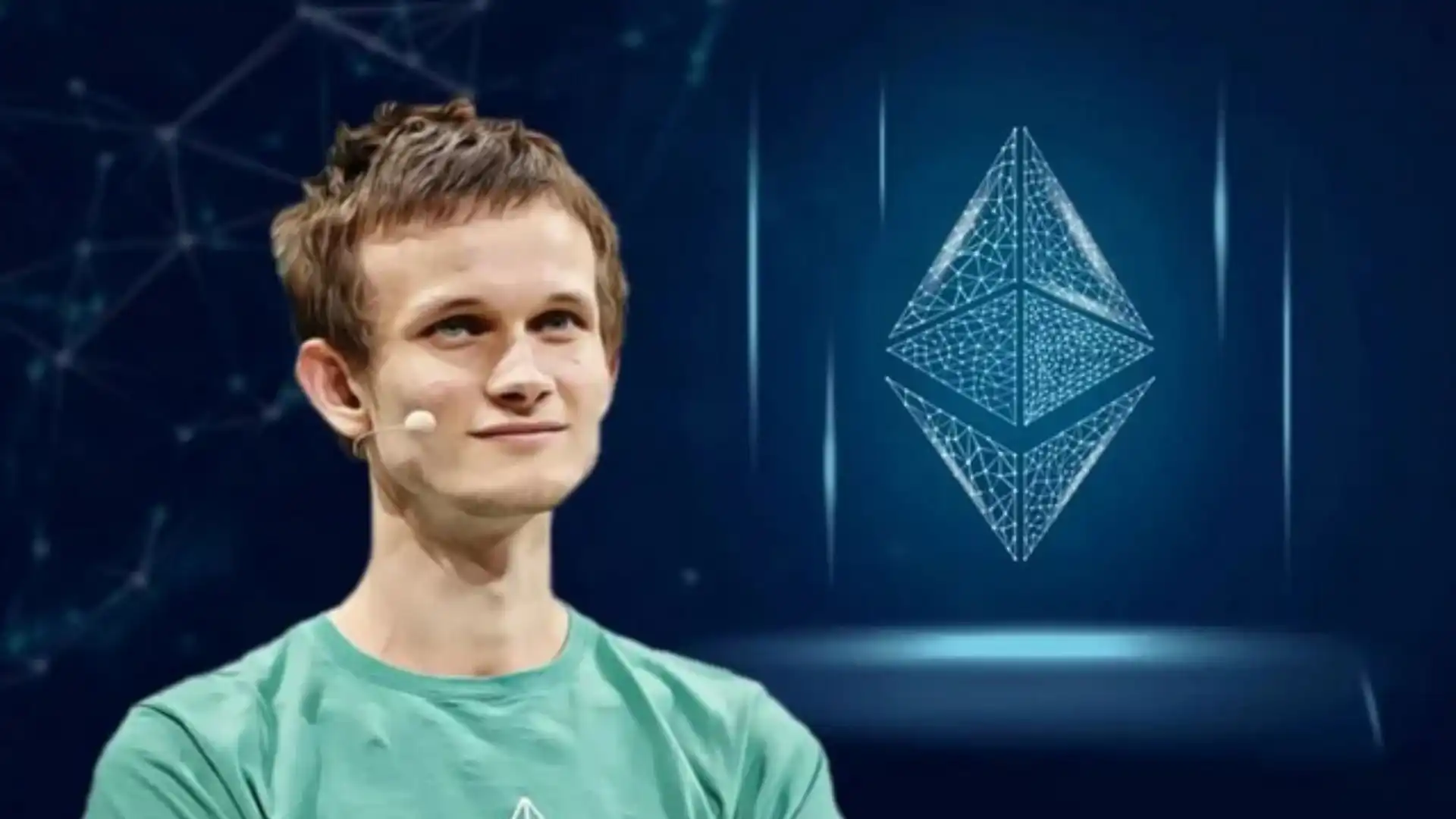
Vitalik "Exposes the Shortcomings" of Burn Efficacy, ETH Value Narrative Shifts

Vitalik Buterin argues that Ethereum should focus more on ETH's store-of-value property rather than relying on fee burning to support its valuation. He explains that fee-burning-based valuation rests on a net present value logic—market cap equals annual burned fees divided by discount rate—but this has never provided a truly solid floor. Much of the past burning came from activity within the crypto ecosystem itself, so if ETH's price fell sharply, that revenue would fall too. Only demand from outside crypto can make such a valuation floor convincing, and while RWA growth may help, mature businesses are unlikely to recreate the massive fee consumption seen during speculative frenzies. He also warns of the costs of pursuing fee burning: to justify ETH's ~$270bn market cap through burning, Ethereum would need to operate like a world-class corporation such as L'Oréal—requiring sustained R&D spending (potentially ~700k ETH per year, cutting validator income by roughly two-thirds), active governance, and higher gas prices that could exclude users most in need of privacy and security. Maximizing "price × usage" conflicts with letting as many people as possible use the network within safe resource limits. As a store-of-value asset, the most important metric is survival. Users value decentralization and CROPS (censorship and capture resistance, open source, privacy, security), which also matter to institutions. Ethereum should make prudent security tradeoffs, address quantum computing and AI risks, stabilize the core protocol, push innovation to layer 2, resist complexity and capture-prone reward mechanisms, and support privacy tools, account abstraction, FOCIL, and reduced infrastructure dependence. Store-of-value and application growth are synergistic: more native RWA and decentralized assets on L1 increase ETH's usefulness. Ethereum's social meaning is broad access to decentralization, privacy, and security—and ETH's value comes from these guarantees.

marsbit24m ago

Vitalik "Exposes the Shortcomings" of Burn Efficacy, ETH Value Narrative Shifts

marsbit24m ago

US Stock Market Trends (November 9): Nasdaq Rebounds 1% on Friday, Nvidia Launches Investigation into Jensen Huang Over the Weekend

US stocks closed mixed on Friday, November 6: the Nasdaq rebounded 1.09% to 24,579.42, the S&P 500 rose 0.31% to 7,376.86, and the Dow fell 237.33 points (-0.46%) to 51,285.73. Chip stocks partly recovered after Thursday's selloff, with Micron up about 5%, Nvidia up nearly 3%, AMD up as much as 9%, and Intel up nearly 7% intraday. For the week, the Nasdaq fell 3.4%, the S&P 500 lost 2.7%, and the Dow dropped 0.9%; the tech sector ETF (XLK) had its worst week since early April 2025, down about 8%. October nonfarm payrolls came in at 165,000, far above the 59,000 expected, while unemployment fell to 4.1%. Markets priced a roughly 76.8% chance of a 25-basis-point rate hike at the December 8-9 meeting. WTI settled at $90.83 a barrel, up 0.34%, but fell about 13% for the week; Brent settled at $98.32 and fell over 16% weekly. The 10-year Treasury yield closed at 4.86%. Over the weekend, Nvidia's board launched an independent investigation into reports that CEO Jensen Huang may have been a target of foreign intelligence activity. The board said there is no reason to believe national security or company secrets were compromised, and Huang will remain CEO. Huang admitted to an extramarital affair and apologized. On Monday in Asia, Japan's Nikkei 225 rose about 2% and Taiwan's weighted index gained over 2%, while US futures were mixed, with Nasdaq 100 futures down about 0.2%. Key upcoming events include US inflation data and Nvidia's Q3 earnings on November 17.

marsbit24m ago

US Stock Market Trends (November 9): Nasdaq Rebounds 1% on Friday, Nvidia Launches Investigation into Jensen Huang Over the Weekend

marsbit24m ago

Vitalik 'Exposes' the Limitations of Burning, ETH Value Narrative Shifts

Vitalik Buterin argues that Ethereum should focus more on ETH's store-of-value property rather than relying on fee burning to support its valuation. He explains that fee-burn-based valuation rests on a net present value logic—market cap equals annual burned fees divided by a discount rate—but notes this never provided a truly solid floor. Much of the burning during 2021–2023 came from within the crypto ecosystem itself, so if ETH's price fell, that revenue would fall too. Only demand from outside crypto can make such a valuation floor more convincing, and while RWA growth may help, mature businesses are unlikely to replicate the massive fee consumption seen during speculative manias. He warns that relying on fee burning to justify ETH's ~$270B market cap would require Ethereum to operate like a world-class corporation (roughly L'Oréal's scale), needing sustained R&D spending—perhaps ~700K ETH annually—and highly interventionist governance, both of which create political problems and undermine decentralization and anti-capture properties. Pursuing burning also implies pursuing higher gas prices, potentially excluding users who most need privacy and security; maximizing "price × usage" differs from maximizing safe access for as many people as possible. As a store-of-value asset, the most important metric is survival. Users most value decentralization and CROPS (censorship and capture resistance, open source, privacy, security), which also matter to institutions for risk management and compliance. Ethereum should make prudent security tradeoffs, address quantum computing and AI risks, stabilize the core protocol while shifting innovation to upper layers, and resist complexity-adding features and capture-prone reward mechanisms. Users should be able to hold assets safely and privately, with confidence transactions won't be blocked. Reducing dependence on infrastructure providers matters—he can run a node on a laptop, syncing in under six hours with about one-eighth of disk space, better than 2019. Store-of-value and application growth are synergistic: more native RWA and decentralized assets on L1 increase what holding ETH enables—trustless swaps or using ETH as collateral—boosting its utility, with tradeoffs smaller than maximizing fees.

Odaily星球日报34m ago

Vitalik 'Exposes' the Limitations of Burning, ETH Value Narrative Shifts

Odaily星球日报34m ago

ICLR 2027 First Round Review: Quite a Few Pain Points

ICLR 2027's first-round reviews have sparked widespread complaints among researchers, with many sharing examples of poor-quality or clearly AI-generated feedback on social media. One reviewer asked an author to explain what "standard deviation" means; another review began with the telltale chatbot opener "Certainly! Here is a review of the paper," while two other reviews appeared to be near-identical copies of the same template. One author received criticism for using AI-assisted writing despite having properly disclosed it, and another reviewer openly admitted lacking the expertise to evaluate the paper—prompting debate over whether the real fault lies with reviewer assignment rather than the reviewer. A recurring concern, raised by Jiaxin Pei of UT Austin, is that AI reviewers cannot distinguish between a paper's ordinary limitations and the critical flaws that actually undermine its core contributions. Large language models can list hundreds of limitations for any paper, including the best ones, but they cannot judge which issues truly matter. As a result, reviews grow longer and demand more experiments while the real determinants of paper quality get buried. ICLR 2027 organizers have acknowledged the strain: rapid growth in submissions, a shortage of qualified reviewers, and AI lowering the barrier to paper production. They introduced measures including submission caps, stricter reciprocal review obligations, and rules permitting limited, disclosed AI use in reviewing—with penalties for low-quality or hallucinated AI-generated reviews. Author-reviewer discussion runs until November 18, with final decisions expected December 16.

marsbit1h ago

ICLR 2027 First Round Review: Quite a Few Pain Points

marsbit1h ago

Without Warning, OpenAI Suddenly Mass-Bans Accounts

OpenAI has abruptly banned a large number of ChatGPT accounts without prior notice or email warnings, deleting accounts outright. Affected users see only an error message stating their account has been deleted or deactivated. The purge heavily targets accounts in the Philippines and Turkey, low-cost Team plans, and accounts using reverse proxy relays, and even long-standing paying users with months of subscription have been hit. Free API accounts, shared team accounts, and $200/month Pro accounts were all affected. Developers report losing years of conversation history and personal data locked in the cloud, with appeals unsuccessful. Some speculate OpenAI is cracking down on account stacking to prevent users from exploiting cheap subscriptions. OpenAI's status page showed elevated error rates for some US commercial Mastercards, though OpenAI characterized the incident as a payment channel issue rather than account bans. Users are advised to appeal via OpenAI's official form with account details and Request ID. This move follows earlier steps: OpenAI previously merged ChatGPT and Codex into a single token pool and, five days ago, imposed device and payment card limits, preventing multiple paid subscriptions on one card or device. Starting November 20, new usage policies require third-party API gateways to obtain official written authorization, and from December, Plus, Pro, and Business plans will share a single quota calculated by token consumption. Users are advised to regularly back up cloud conversations and sync Codex projects locally, as the era of freely exploiting AI compute appears to be over.

marsbit1h ago

Without Warning, OpenAI Suddenly Mass-Bans Accounts

marsbit1h ago

Trading

Spot

Hot Articles

What is XRP 2.0

XRP 2.0: A New Frontier in the Cryptocurrency Landscape Introduction to XRP 2.0 In the ever-evolving realm of cryptocurrency, new projects continuously emerge, vying for attention and adoption. One such promising initiative is XRP 2.0, a novel cryptocurrency project designed to leverage advanced blockchain technology and robust encryption methodologies. While the name draws parallels with Ripple’s XRP, it’s crucial to note that XRP 2.0 operates independently, focusing on enhancing transaction security, privacy, and scalability. As the digital financial landscape increasingly embraces decentralized solutions, XRP 2.0 aims to contribute meaningfully to web3 and the overall expansion of crypto projects. What is XRP 2.0? At its core, XRP 2.0 is a cryptocurrency project that aims to create a secure and decentralized digital currency ecosystem. Its foundational technology integrates sophisticated blockchain principles with cutting-edge encryption techniques. The overarching goal of XRP 2.0 is to establish itself as a reliable and efficient platform enabling swift transaction execution while prioritizing enhanced privacy protections for its users. The project is promoted as a solution to many limitations faced by existing cryptocurrencies, proposing a system that can handle a higher volume of transactions with improved speed and privacy. This versatility positions XRP 2.0 as a significant contender in a marketplace riddled with various digital currencies. Who is the Creator of XRP 2.0? The identity of the creator behind XRP 2.0 has been flagged as ‘Wilbur.’ However, comprehensive details regarding Wilbur or their associated entity remain elusive. The anonymity of many cryptocurrency creators is not an uncommon phenomenon in the industry, often designed to maintain a degree of privacy and security. Who are the Investors of XRP 2.0? As of now, specific information related to the investment foundations or organizations supporting XRP 2.0 is not publicly available. In the cryptocurrency sector, the backing by reputed investors can significantly influence a project's credibility and success, yet the transparency regarding the financial supporters of XRP 2.0 has not been established. How Does XRP 2.0 Work? XRP 2.0 stands out by employing a combination of blockchain technology and advanced encryption algorithms that ensures secure and decentralized transactions. Its innovative structure includes unique features designed to foster user engagement and broaden functionalities beyond conventional cryptocurrency transactions. Among these features, XRP 2.0 incorporates AI-powered capabilities, such as text-to-image and text-to-speech functionalities. These additions are designed to enhance the interactive experience for users, promoting broader applicability across various sectors. By bridging technological advancements with user-centered design, XRP 2.0 aims to capture the attention of a diverse range of individuals and enterprises looking to integrate cryptocurrency solutions into their operational frameworks. Timeline of XRP 2.0 Understanding XRP 2.0 requires examining the milestones that have defined its journey thus far: July 23, 2023: XRP 2.0 is introduced as a novel cryptocurrency project, aiming to revolutionize secure and decentralized transaction capabilities in the blockchain domain. September 8, 2023: The launching of another project, XRP20, occurs, marking the emergence of an ERC-20 token on the Ethereum blockchain that remains unrelated to XRP 2.0. November 13, 2023: The XRP Ledger undergoes a significant update with the release of rippled server software version 2.0.0. It is essential to note that this development is disconnected from the XRP 2.0 cryptocurrency project. Key Points About XRP 2.0 To distill the essence of XRP 2.0, several critical factors emerge: Unique Features: The inclusion of features like AI-powered text-to-image and text-to-speech further diversifies the potential applications of XRP 2.0. Blockchain Technology: The framework utilizes advanced blockchain mechanisms and encryption protocols, ensuring a secure and decentralized environment for transactions. Scalability and Privacy: XRP 2.0 prioritizes enhanced privacy protections in transaction processes and the scalability necessary to accommodate a growing user base. No Affiliation with Ripple: Importantly, despite its name, XRP 2.0 does not have any allegiance or collaboration with Ripple’s XRP, distinguishing its operational framework and objectives within the cryptocurrency ecosystem. Conclusion XRP 2.0 represents an ambitious venture into the cryptocurrency sphere, aiming to offer a combination of security, privacy, and efficiency in digital transactions. By integrating sophisticated technologies and user-friendly features, the project sets out to broaden the horizons of what cryptocurrency can achieve in today's digital economy. While the anonymity of its creator and lack of disclosed investors might raise questions for some, XRP 2.0's focus on advanced functionalities and decentralisation enhances its appeal amidst an increasingly crowded crypto market. As the cryptocurrency landscape continues to evolve, XRP 2.0 may yet emerge as a pivotal player in the expansion of secure and scalable blockchain solutions.

3.3k Total ViewsPublished 2024.04.01Updated 2024.12.03

What is XRP 2.0

Discussions

Welcome to the HTX Community. Here, you can stay informed about the latest platform developments and gain access to professional market insights. Users' opinions on the price of XRP (XRP) are presented below.

活动图片