Trade Snapshot
Catalyst|Divergence in institutional price targets and concerns over memory chip competition. Data Point|The article uses a prior Monday's stock price of $982.14 for calculation; the author's target is $1,059.58, while the analyst average target is $1,555.13. Key Data|Fiscal 2026 Q4 revenue of $54.23 billion, non-GAAP EPS of $33.42. Risks|Reversal in memory chip prices, progress of Chinese competitors, and expansion of capital expenditures.
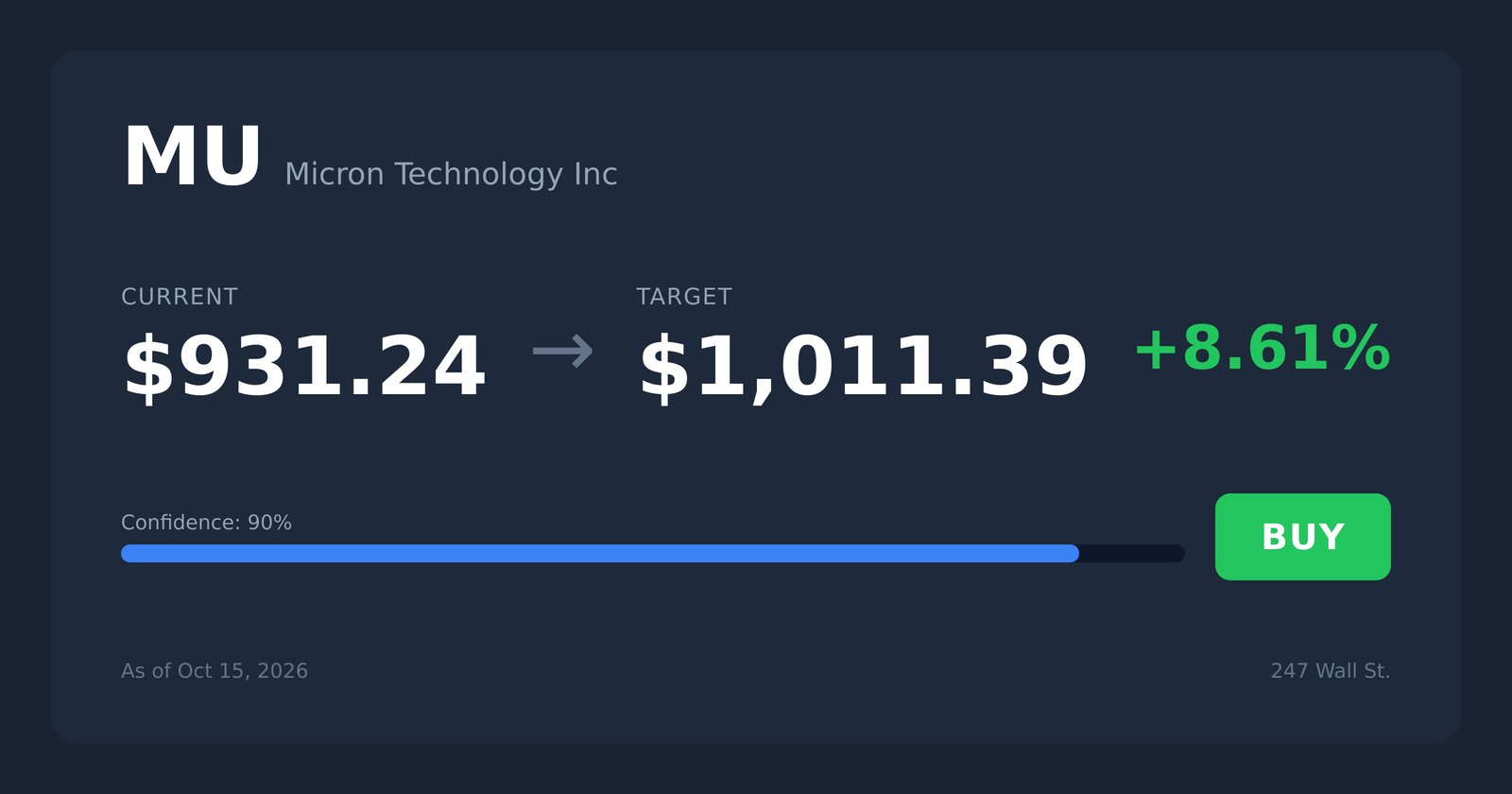
24/7 Wall St. sets a 12-month price target for Micron Technology at $1,059.58. Based on the prior Monday's trading price of $982.14 used in the article, the potential upside is approximately 7.9%. The author's rating is "Hold" with a model confidence level of 90%.
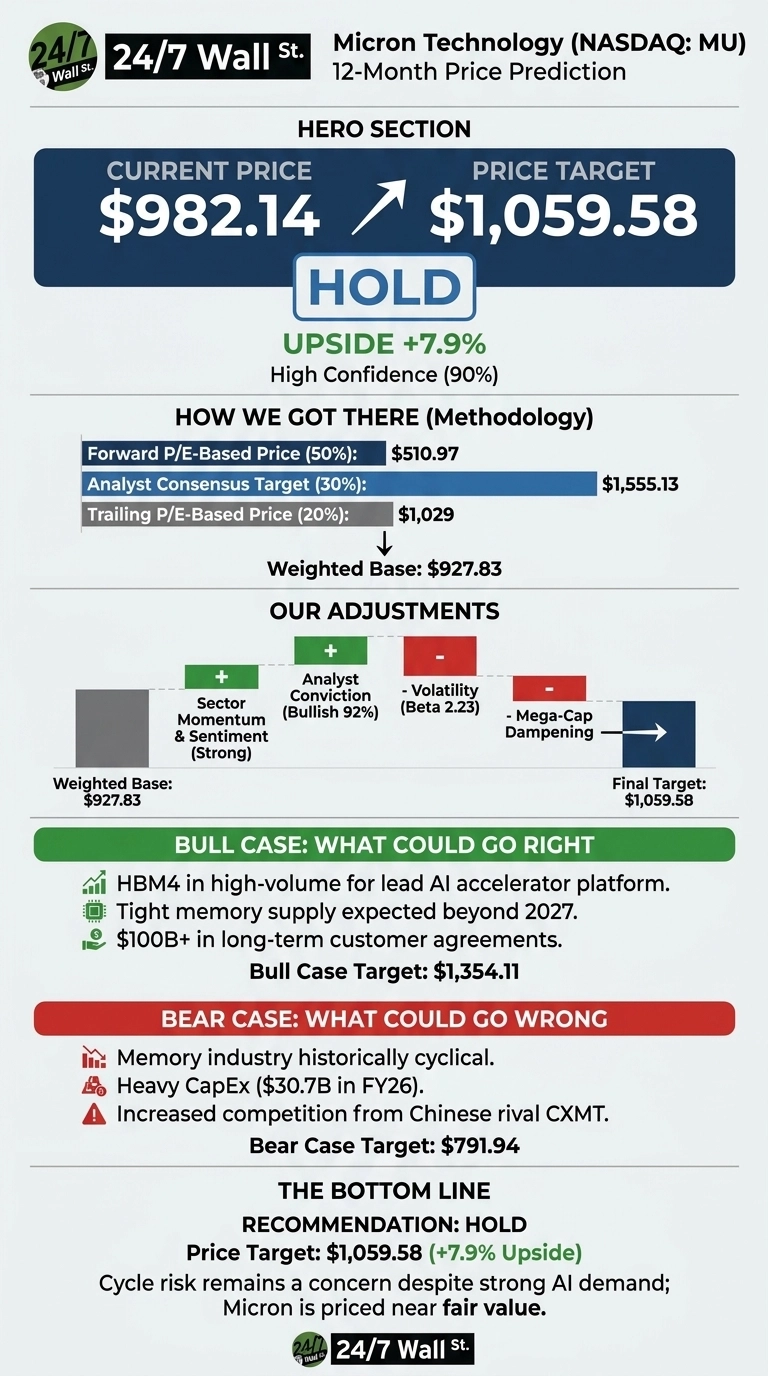
### 24/7 Wall St. Target Price Summary
| Metric | Value |
| --- | --- |
| Stock Price Used in Article | $982.14 |
| 24/7 Wall St. Target Price | $1,059.58 |
| Upside/Downside | 7.9% |
| Rating | Hold |
| Model Confidence | 90% |
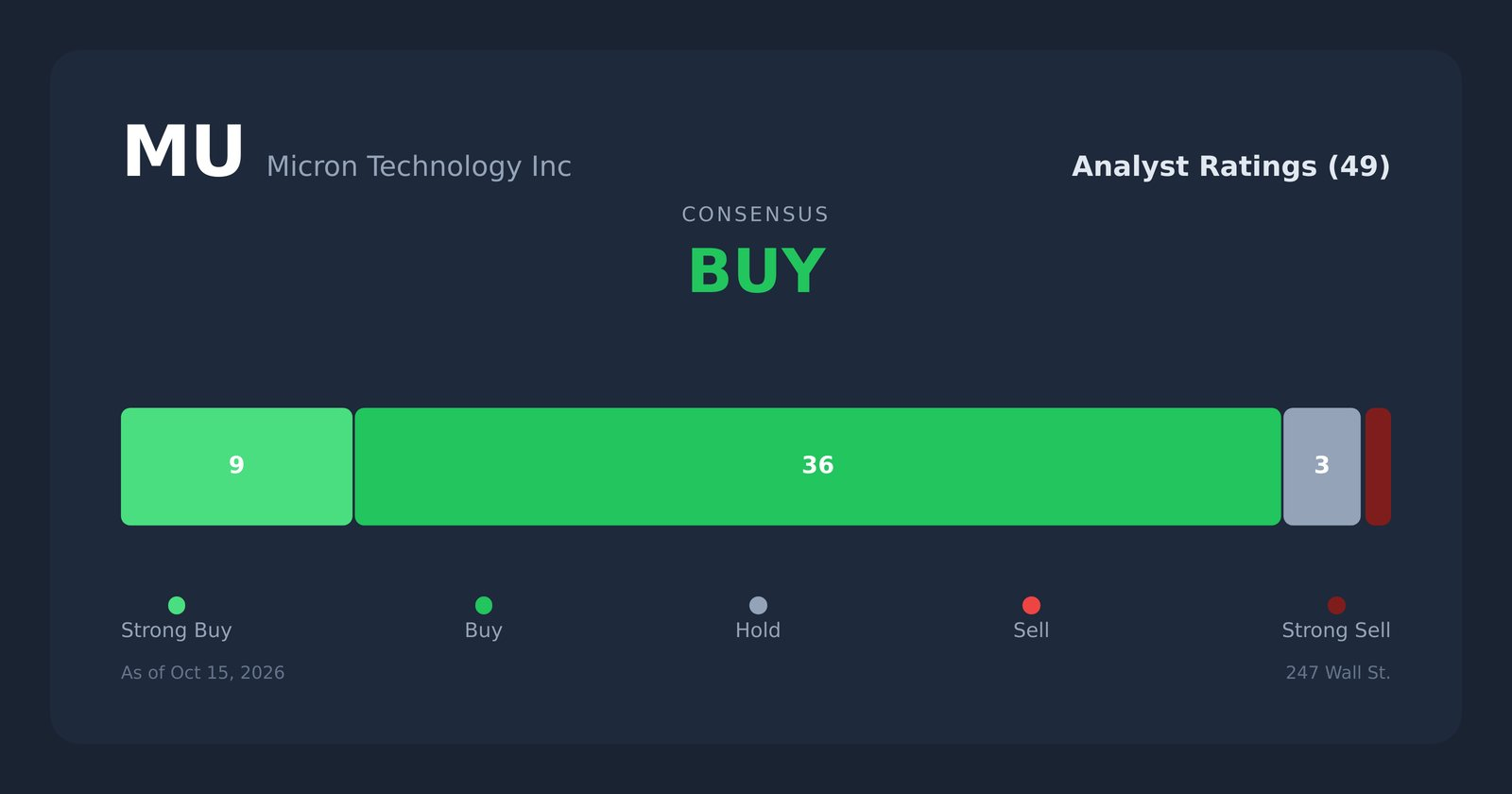
Target prices from other analysts in the market are much higher. The average target price cited in the article is $1,555.13, implying an upside of about 58%; 92% of covering analysts are bullish. The author's model is more conservative, with the core reason being that memory chips are still subject to industry cycles.
Year-to-Date Gain Exceeds 240%, Impact from China Competition News
The snapshot provided by the article shows Micron down 8.63% over the past week and 4.44% over the past month, but still up 244.33% year-to-date. On the prior Monday, Micron fell 4.55%; reports mentioned progress by Chinese competitor CXMT in new chips. The stock is about 22% below its 52-week high of $1,254.81.
Fundamentals remain strong. Fiscal 2026 Q4 revenue reached $54.23 billion, exceeding expectations of $50.97 billion; non-GAAP EPS was $33.42, also above the market consensus of $31.35. The company's guidance for the next fiscal quarter is revenue of $61.5 billion and EPS of $38.15.
Why Does the Bull Case Point to $1,354?
Management expects tight conditions in the DRAM and NAND markets to persist beyond 2027; HBM4 has begun high-volume shipments to a major AI accelerator platform. The author believes the strategic customer agreements are more important.
Micron stated that 14 of the initial 16 agreements collectively cover minimum priced revenue of approximately $100 billion; the floor prices yield profit margins higher than the peaks of any previous industry cycle. If this certainty commands a higher valuation multiple, the optimistic scenario target price in the author's model is $1,354.11.
Industry Cycle Cannot Be Ignored
Just in fiscal 2023 Q2, Micron's EPS was still negative $1.91, reminding investors how quickly memory chip prices can reverse. Fiscal 2026 capital expenditures reached $30.7 billion, and progress by Chinese competitors also raises concerns about new supply.
The pessimistic scenario in the author's model is $791.94. On the other hand, these expenditures are directed towards capacity supported by "take-or-pay" contracts; the $33.2 billion free cash flow in fiscal 2026 Q4 is sufficient to cover the related capital expenditures.
Comparison with Two Chip Companies Shows Micron Valuation Still Low
A NAND-focused memory company serves as a more direct comparison: its forward P/E is about 8x, slightly higher than Micron's 7x, but Micron has additional exposure to the HBM business.
A large AI chip company drives a significant portion of the demand for Micron's HBM. That company's forward P/E is 25x with a PEG ratio of 0.479, while Micron's PEG ratio is 0.16. Relative to these two companies, the author considers their target price conservative.
| Company | Forward P/E | Analyst Target Price |
| --- | --- | --- |
| Micron | 7x | $1,555.13 |
| NAND Peer | 8x | $2,173 |
| AI Chip Peer | 25x | $328.72 |
Price Forecasts for 2026–2030
The 24/7 Wall St. target price of $1,059.58 corresponds to a "Hold" rating with a model confidence of 90%. The determining factor remains industry cycle risk. The author would be more optimistic if more customer agreements are secured and margins stay near the 86.25% guidance; they would remain cautious if Chinese competitors gain share or memory prices moderate. The author views Micron as a high-quality company whose stock is currently near fair value.
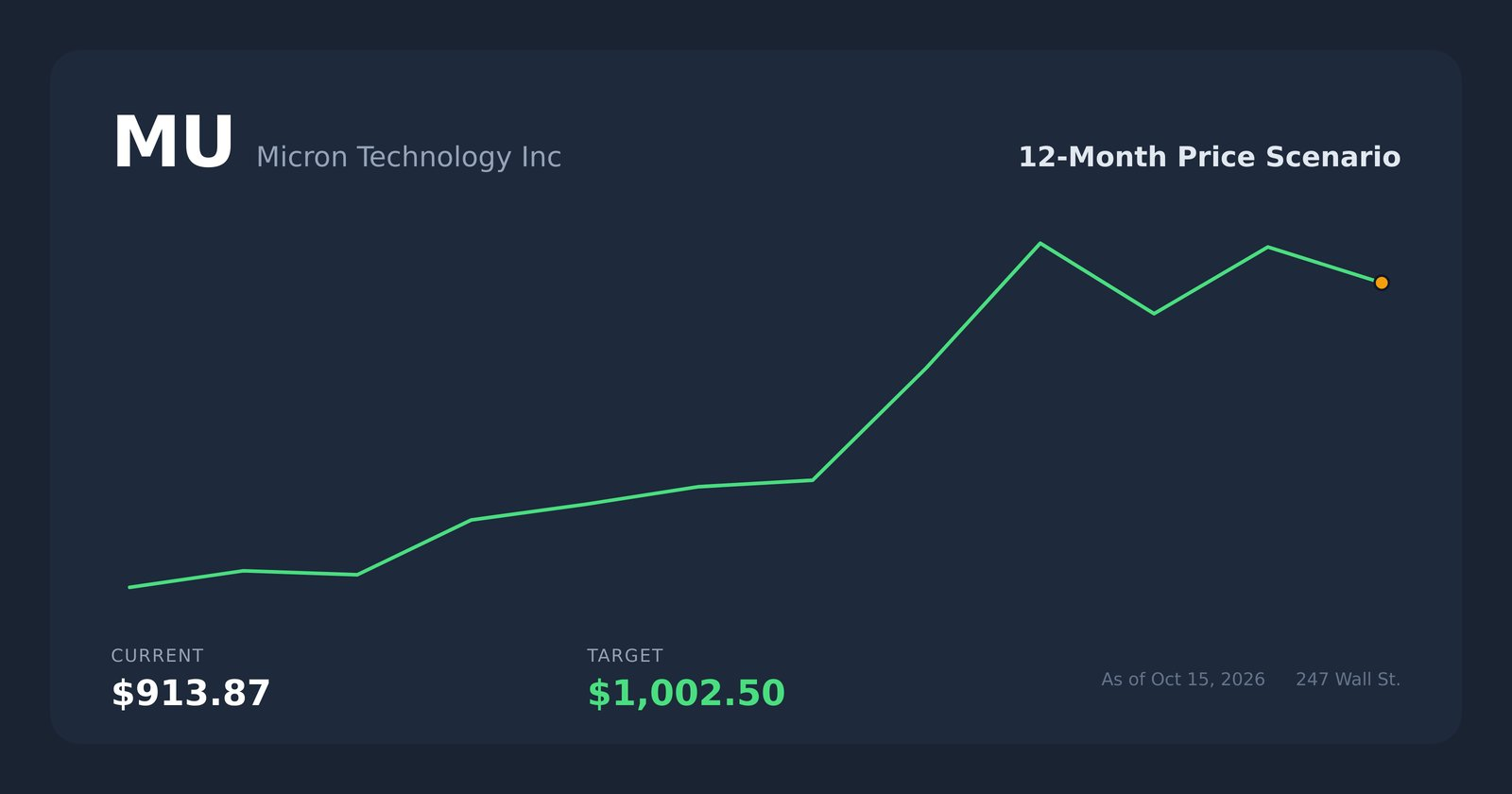
Assuming current trends continue, the model provides the following year-end prices:
| Year | 24/7 Wall St. Target Price |
| --- | --- |
| 2026 | $1,015.05 |
| 2027 | $1,107.38 |
| 2028 | $1,089.59 |
| 2029 | $1,171.88 |
| 2030 | $1,233.84 |
These forecasts are based on Micron continuing to execute on its HBM business and contractual pricing. Faster AI expansion or the memory industry entering a downturn could cause results to deviate significantly.