Meme Season Arrives on Robinhood Chain, but 'Scythes' Are Also Entering the Field

Foresight NewsPublicado em 2026-07-14Última atualização em 2026-07-14

Resumo

A meme coin season has arrived on Robinhood Chain, but it is accompanied by a surge in scammers and fraudulent schemes. Two major incidents highlight the risks: first, compromised X accounts of SpaceX's SpaceXAI and Starlink were used to promote the meme token SCATMAN, leading to a rapid pump-and-dump where developers drained the liquidity pool, causing the token's value to crash. Second, a hacker gained control of a Robinhood founder's wallet and used it to buy a meme token, sparking a frenzy of copycat trading that artificially inflated the price before it collapsed. These events exploit the current hype on Robinhood Chain, which has seen significant activity and trading volume driven primarily by meme coins, despite its stated long-term focus on real-world assets (RWAs). The incidents reveal vulnerabilities in both platform security—such as inadequate protection for high-profile social media accounts and controversial chain-level address freezes—and investor behavior, where the lure of quick profits often overrides due diligence. The article cautions investors to verify token contracts, check liquidity pool locks, and maintain skepticism toward "official" endorsements to avoid becoming exit liquidity for such schemes.


Author: Nicky, Foresight News


The hype around Robinhood Chain has lasted over a week. However, behind the surge of new Meme coins, 'dark hunters' on the chain are also targeting this wave of popularity.


In the early hours of July 13th, the X platform accounts of SpaceXAI and Starlink, two products from the recently listed SpaceX, were compromised. They once forwarded a post promoting the Robinhood Chain network Meme token SCATMAN. The original account promoting this Meme, Sam Catman, even carried the affiliated gold checkmark verification for SpaceXAI.
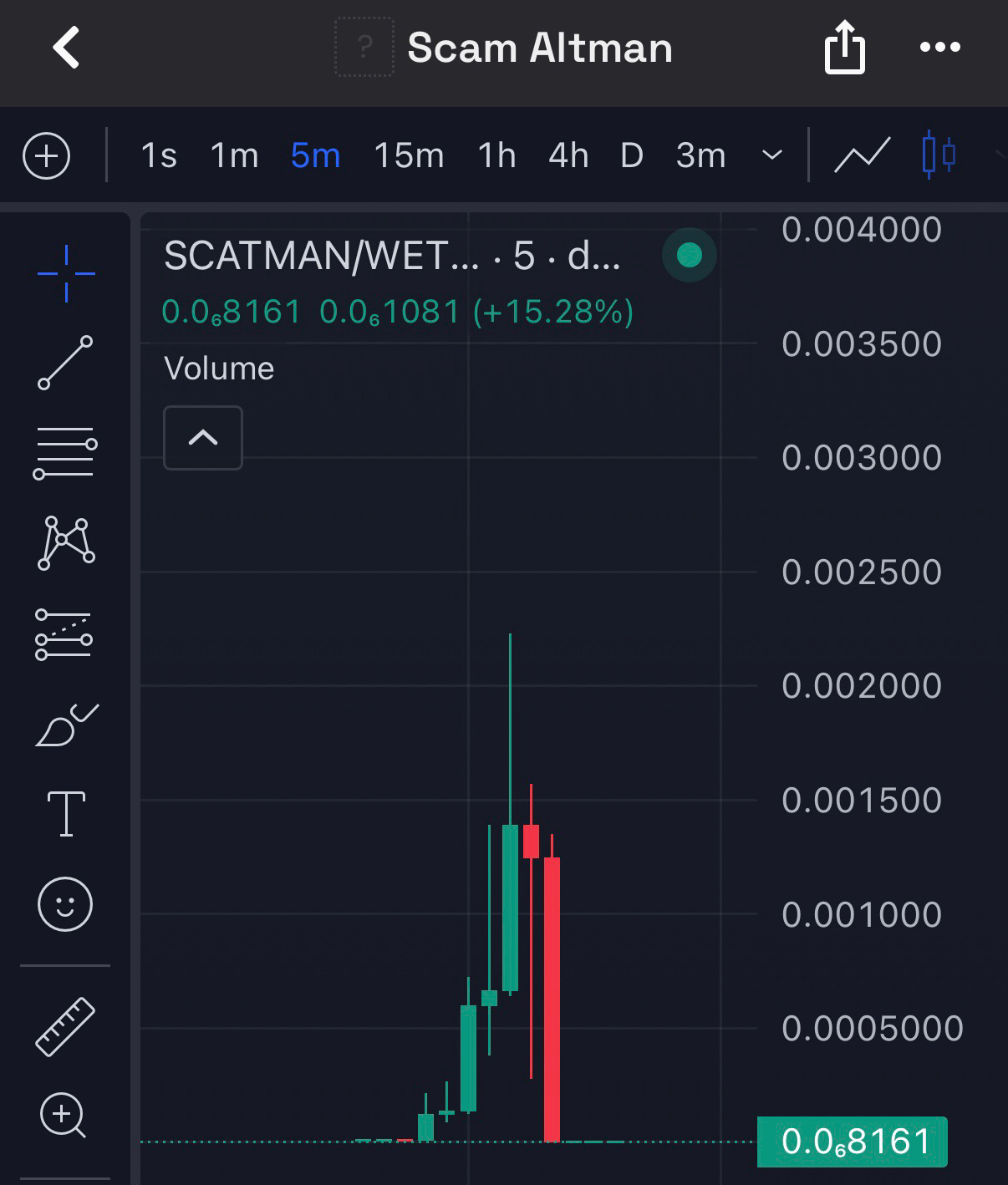


After the repost, the token's market capitalization was quickly pushed to around $2 million. At this point, the deployer immediately withdrew the liquidity pool, causing the Meme's price to plummet almost to zero. Currently, the related post has been deleted, and the original account Sam Catman that posted the Meme token has been suspended on X. As of now, SpaceXAI, Starlink, and X have not publicly responded to this incident.


It is worth noting that SCATMAN was not created through any token launch platform on Robinhood Chain. The contract was deployed by the developers themselves with initial liquidity injected, belonging to a typical self-deployed token scam. The attacker used the compromised accounts to attract traders and immediately executed a liquidity withdrawal.


According to on-chain monitoring platform Lookonchain's tracking, the hacker minted 10 trillion SCATMAN tokens after compromising the account and completed the sell-off through two associated wallets. One wallet exchanged the tokens for 59 ETH, worth approximately $108,000; the other wallet sold part of the tokens for 14.7 ETH, worth about $27,000.


It is reported that the origin of the SCATMAN token name is not without reason. The recent public feud between X platform owner Elon Musk and OpenAI CEO Sam Altman provided a high-traffic backdrop for the account compromise.
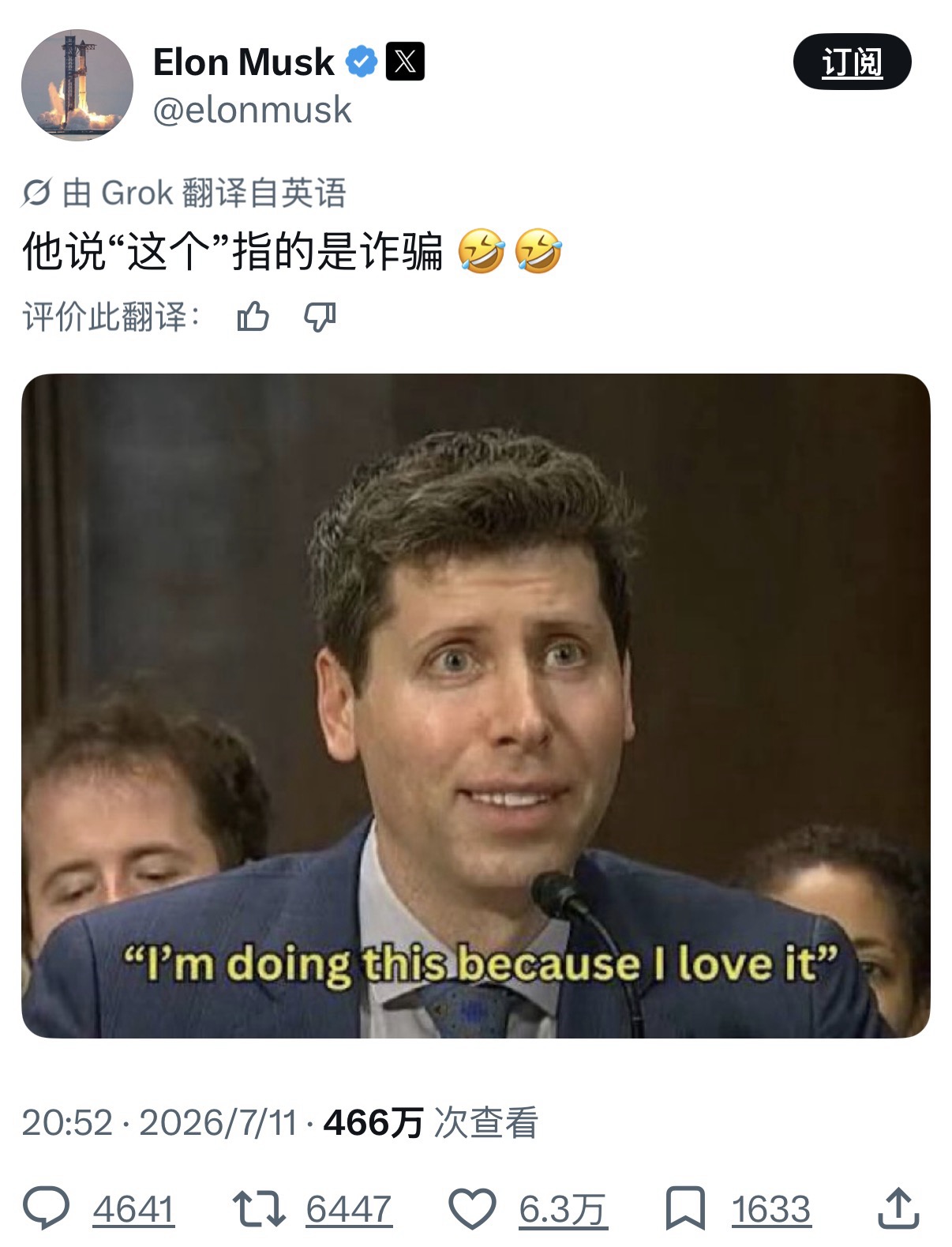


After Apple filed a trade secret theft lawsuit against OpenAI on July 10th, Musk continuously criticized Altman as a 'liar' on X, while Altman retaliated by mocking Musk for promoting space data centers. The massive number of controversial posts generated extremely high attention, making Musk-related accounts like SpaceXAI and Starlink high-value targets for attacks.


The attacker leveraged this wave of public opinion heat to compromise the accounts and used them to promote the SCATMAN token.


The incident of a SpaceX-owned platform being compromised to promote a Meme is not an isolated case; even Robinhood's founder fell victim.


Robinhood co-founder and CEO Vlad Tenev accidentally leaked 8 wallet seed phrase words during a livestream, and the remaining 4 words were reportedly guessed at random by a hacker. On July 12th, after gaining control of the address, the hacker used it to buy the Robinhood chain Meme token $1, triggering a wave of followers from many investors.


Since the transaction records showed the 'founder's address' buying, it prompted thousands of investors to follow suit. The token's market capitalization rapidly surged from around $500,000 to $14 million in a short time, with trading volume reaching approximately $20 million within two hours, before the price sharply corrected to around the $1 million market cap level.


Subsequently, Robinhood Chain's RPC node froze the involved address. Any transactions sent from this address could not be packaged by the node, preventing funds from being transferred or traded further. This handling method also sparked controversy. Some community members argued that Robinhood Chain, positioned as an Arbitrum-based Ethereum Layer 2 network, freezing addresses at the node level deviated from the decentralized nature of blockchain networks.


These two consecutive incidents, both in method, point to exploiting high-profile accounts or individuals to create short-term hype for on-chain tokens, then cashing out after retail investors enter the market.


Starting from July 8th, the Robinhood Chain Meme token CASHCAT began its rally, with intraday gains once exceeding 1000%, reaching a peak market cap of $220 million on July 11th. According to DefiLlama data, the chain's current Total Value Locked (TVL) is approximately $151 million, with a 24-hour decentralized exchange trading volume of $875 million and fee revenue of about $100,000.


On July 8th, Robinhood co-founder and CEO Vlad Tenev posted on X that Robinhood is building the Robinhood Chain focused on real-world assets (RWA), but the network is also 'great for meme coins.' This statement further fueled speculative enthusiasm.


Although Robinhood Chain positions itself with RWA as its long-term focus, currently its main traffic still comes from Meme token trading. Against this backdrop, the chain quickly became an ideal 'soil' for fraudsters to operate.


From the compromise of the official SpaceXAI account to the exploitation of the leaked founder's wallet, two major incidents within two days reflect how the popularity of Robinhood Chain is attracting a large number of fraudsters. They leverage celebrity influence, the halo of official accounts, and investors' tendency to chase trends to quickly generate short-term hype, then cash out rapidly after retail investors enter. This also highlights the shortcomings in Robinhood Chain's early-stage rapid development, particularly in terms of ecosystem infrastructure and user protection mechanisms.


Simultaneously, the X platform, as a crucial medium for information dissemination, showed明显不足 (obvious inadequacies - note: original Chinese phrase retained but translation contextually implied) in security protection capabilities for high-value accounts. This allowed the two official accounts of SpaceXAI and Starlink, with millions of followers, to become channels for distributing scam information, directly converting the platform's immense traffic and user trust into amplifiers for fraud. The platform also did not issue any official response after this incident.


For ordinary investors, before chasing trends, verifying token contract addresses, confirming liquidity pool lock status, and maintaining vigilance towards narratives of 'official endorsement' remain the most basic lines of defense to avoid becoming exit liquidity.

Criptomoedas em alta

Perguntas relacionadas

QWhat were the two major incidents related to scams on Robinhood Chain mentioned in the article?

AThe first incident involved the hacking of SpaceX's SpaceXAI and Starlink X accounts to promote the meme token SCATMAN, leading to a rug pull. The second incident involved a hacker gaining control of Robinhood co-founder Vlad Tenev's wallet after a seed phrase leak, using it to buy the meme token $1 and pump its price.

QHow did the attack on the SpaceX-related X accounts contribute to the SCATMAN token scam?

AThe attacker compromised the high-follower SpaceXAI and Starlink X accounts to post promotional content for the SCATMAN token. This misuse of trusted, high-visibility accounts created a surge of interest and buying activity, allowing the deployer to quickly drain the liquidity pool and abandon the token.

QWhat controversial action did Robinhood Chain take in response to the hacked founder's wallet incident?

ARobinhood Chain's RPC nodes froze the compromised wallet address, preventing any transactions from being processed. This action sparked debate within the community, as it was seen as a centralized intervention that contradicts the decentralized principles of a blockchain network.

QWhat does the article suggest is the main source of current activity and traffic on Robinhood Chain?

AAlthough positioned for Real World Assets (RWA), the article states that the primary traffic and activity on Robinhood Chain currently comes from meme token trading, which has attracted both legitimate interest and fraudulent actors.

QWhat basic precautions does the article recommend for investors to avoid scams in meme token frenzies?

AThe article advises investors to verify a token's contract address, confirm the lock status of its liquidity pool, and maintain a healthy skepticism towards narratives of 'official endorsement' before chasing a trending meme token.

Leituras Relacionadas

Tensions in the Strait of Hormuz Escalate, Bitcoin Plunges to $61,700 Amid Safe-Haven Selling

Bitcoin fell sharply to around $61,700 on Monday, July 13th, as geopolitical tensions in the Strait of Hormuz triggered a broad shift toward risk-off sentiment across global markets. The decline of roughly 4% mirrored weaker performances in major U.S. stock indices. Market analysts attributed the sell-off to a confluence of factors stemming from the heightened U.S.-Iran tensions. These tensions reignited inflation concerns, reduced expectations for near-term Federal Reserve rate cuts, and prompted investors to reduce exposure to risk assets like Bitcoin. Additional pressure came from slowed institutional ETF inflows, Bitcoin's failure to breach a key resistance level, and a wave of liquidations for leveraged long positions. Despite the drop, analysts largely viewed the move as a typical macro-driven correction within a healthy long-term cycle. They emphasized that Bitcoin's underlying growth trajectory remains intact. The sell-off was seen more as a liquidation event targeting over-leveraged longs rather than a structural loss of confidence. Attention now turns to the upcoming U.S. Consumer Price Index (CPI) report. A higher-than-expected inflation reading could further delay Fed rate cuts, making safer assets like bonds more attractive and continuing to pressure volatile assets like Bitcoin. The consensus is that the current volatility reflects short-term macro and geopolitical shocks, not a fundamental breakdown in Bitcoin's long-term proposition.

Foresight NewsHá 32m

Tensions in the Strait of Hormuz Escalate, Bitcoin Plunges to $61,700 Amid Safe-Haven Selling

Foresight NewsHá 32m

BitMart Research Institute Weekly Highlights: Rising Rate Hike Expectations, Crypto Market Stabilizes Amid Fluctuations

BitMart Research Weekly Market Review: Rate Hike Expectations Rise, Crypto Market Stabilizes Macro & Traditional Markets: U.S. stocks weakened with tech and semiconductors leading losses (Nasdaq down 1.55%, Philly Semi Index down 4.78%), while Apple bucked the trend. Brent oil surged 9.3% after Middle East ceasefire破裂, but gold fell 1% as美元 strengthened. The Fed's June FOMC纪要 was hawkish, shifting market expectations toward potential rate hikes, pushing the 10-year Treasury yield to 4.56%. Crypto Market Overview: BTC saw a slight 0.2% weekly gain, trading between ~$61.3K and $64.7K and settling near $64K. ETH outperformed, rising 1.2%. Market fear eased slightly but remained in "Fear" territory. Altcoin performance was mixed, with gains concentrated in large-cap assets. Key Developments: U.S. spot Bitcoin ETFs ended an 8-week outflow streak with a $197.4M net inflow, aiding price stabilization. On-chain, stablecoin growth was minimal. Robinhood Chain's TVL surpassed $132M within two weeks, largely driven by institutional stablecoin deposits. MicroStrategy executed its first major BTC sale (3,588 BTC for $216M) to fund dividends, while maintaining a large BTC reserve. Institutional infrastructure advanced with Swift's blockchain pilot for tokenized deposits and growing Asia-Pacific stablecoin initiatives. *This is market analysis, not investment advice. Cryptocurrency investment is high-risk; assess your risk tolerance and implement strict risk management.*

marsbitHá 1h

BitMart Research Institute Weekly Highlights: Rising Rate Hike Expectations, Crypto Market Stabilizes Amid Fluctuations

marsbitHá 1h

Trading

Spot

Artigos em Destaque

O que é MEME 2.0

Memecoin 2.0: A Ascensão do $MEME 2.0 no Mundo das Criptomoedas Introdução No panorama em constante evolução das criptomoedas, um novo concorrente surgiu. Memecoin 2.0, simbolizado como $MEME 2.0, eleva o conceito de moedas meme a um novo nível emocionante. Como um subproduto do Memecoin original, este projeto capturou a atenção da comunidade crypto ao mudar o foco de incentivos financeiros típicos para uma experiência envolvente e divertida. Operando na blockchain Ethereum, Memecoin 2.0 redefine audaciosamente o envolvimento da comunidade na esfera crypto. O que é Memecoin 2.0, $MEME 2.0? No seu cerne, Memecoin 2.0 é um projeto de criptomoeda que prioriza o espírito comunitário e a diversão associada à cultura meme. Ao contrário das criptomoedas convencionais, que se concentram em casos de uso práticos e benefícios tangíveis, Memecoin 2.0 distingue-se ao abraçar o lado mais leve da moeda digital. O projeto existe sem promessas de utilidade, um roteiro estruturado ou retornos financeiros, focando em vez disso em fomentar uma comunidade vibrante centrada em memes e no prazer partilhado. Ao fazer isso, aproveita a crescente tendência da cultura meme no espaço online, tornando-se num jogador único no mundo dos ativos digitais. Criador do Memecoin 2.0, $MEME 2.0 Apesar de extensa pesquisa sobre as origens do Memecoin 2.0, a identidade explícita do seu criador continua desconhecida. Esta anonimidade não é incomum na comunidade crypto, onde muitos projetos são liderados por indivíduos ou grupos que preferem ficar nos bastidores. A falta de informações publicamente disponíveis sobre o criador pode ser vista como um movimento estratégico, colocando os holofotes no envolvimento da comunidade em vez de na notoriedade individual dentro do espaço. Investidores do Memecoin 2.0, $MEME 2.0 As informações sobre os investidores ou o financiamento do Memecoin 2.0 são escassas. Esta ausência de detalhes pode sugerir que o projeto é autofinanciado ou que o seu foco na comunidade, em vez de estruturas de investimento tradicionais, atraiu um tipo diferente de apoiador. Como o mundo das moedas memes geralmente envolve mais envolvimento de base do que investimento institucional, esta abordagem alinha-se ao ethos de projetos orientados pela comunidade. Como Funciona o Memecoin 2.0, $MEME 2.0? O Memecoin 2.0 opera inteiramente na blockchain Ethereum, aproveitando as suas robustas características de segurança e escalabilidade. Ao aproveitar os pontos fortes da Ethereum, o Memecoin 2.0 pode oferecer um ambiente seguro para interações dos utilizadores enquanto assegura que as transações são eficientes e custo-efetivas. Uma das características únicas do Memecoin 2.0 reside na sua estrutura orientada pela comunidade. O valor e a popularidade do token $MEME 2.0 derivam da participação ativa dos seus utilizadores, em vez de uma utilidade inerente. Este design reforça o foco do projeto no aspecto de entretenimento das criptomoedas, implicando que o riso e o envolvimento da comunidade são as verdadeiras moedas que impulsionam o seu sucesso. Além disso, o projeto insere-se no ecossistema mais amplo das moedas meme, onde o valor de cada moeda meme oscila com base na cultura, nas tendências e no envolvimento da comunidade, em vez de nos princípios económicos tradicionais. Linhas do Tempo do Memecoin 2.0, $MEME 2.0 Para melhor entender a evolução e os marcos do Memecoin 2.0, aqui está uma linha do tempo que destaca eventos significativos na sua história: 2024: O início do Memecoin 2.0 é reconhecido como um desdobramento do Memecoin original, estabelecendo-se dentro do contexto próspero das moedas meme enquanto opera na blockchain Ethereum. 13 de Julho de 2024: O Memecoin 2.0 posiciona-se oficialmente como uma moeda meme centrada na comunidade na rede Ethereum, enfatizando a sua abordagem centrada no entretenimento que convida os utilizadores a participar e envolver-se no seu crescimento. Pontos Chave Sobre o Memecoin 2.0, $MEME 2.0 Várias características críticas definem o Memecoin 2.0: Abordagem Centrada na Comunidade: A missão primária do Memecoin 2.0 é criar uma experiência comunitária divertida e envolvente, capitalizando o prazer coletivo derivado da cultura meme. Construído na Ethereum: Operar na blockchain Ethereum fornece ao projeto uma infraestrutura essencial que garante segurança e escalabilidade. Falta de Utilidade ou Roteiro: Numa notável divergência das criptomoedas tradicionais, o Memecoin 2.0 não promete quaisquer características utilitárias ou retornos financeiros, reafirmando o seu compromisso com o envolvimento da comunidade e a participação social. Foco na Cultura Meme: Ao abraçar os aspectos humorísticos e culturais do fenómeno meme, o Memecoin 2.0 fornece uma plataforma para que os utilizadores se envolvam com a crypto offline e online. Contexto Adicional: A Importância das Moedas Meme As moedas meme emergiram como uma classe distinta de criptomoeda, frequentemente impulsionadas pelo humor e por uma abordagem leve ao comércio. Estas moedas geralmente carecem de utilidade significativa ou roteiros de desenvolvimento, atraindo os utilizadores com a promessa de diversão, interação comunitária e relevância cultural. No panorama do ecossistema crypto mais amplo, as moedas meme revive a importância do envolvimento da comunidade, resistindo contra abordagens exclusivamente orientadas para o lucro. Projetos como o Memecoin 2.0 inauguram uma era em que o entretenimento pode harmonizar-se com aspirações financeiras, transformando a blockchain numa plataforma para criatividade e interação social. Conclusão O Memecoin 2.0, ou $MEME 2.0, representa uma nova onda de criptomoeda que prioriza o envolvimento da comunidade em detrimento de estruturas financeiras rígidas. Com um foco no humor e na interação social, capitaliza a fascinação em torno da cultura meme. Ao operar na blockchain Ethereum, o Memecoin 2.0 aproveita as capacidades da tecnologia, enquanto mantém um compromisso firme com o valor de entretenimento da moeda digital. À medida que o espaço em torno das criptomoedas continua a evoluir, o Memecoin 2.0 serve como um testemunho da ideia de que o futuro dos ativos digitais pode muito bem depender de experiências partilhadas, risadas e conexões comunitárias sólidas. No mundo imprevisível da crypto, talvez a alegria possa ser tão valiosa quanto o ganho financeiro tradicional.

58 Visualizações TotaisPublicado em {updateTime}Atualizado em 2024.12.03

O que é MEME 2.0

Como comprar MEME

Bem-vindo à HTX.com!Tornámos a compra de Memeland (MEME) simples e conveniente.Segue o nosso guia passo a passo para iniciar a tua jornada no mundo das criptos.Passo 1: cria a tua conta HTXUtiliza o teu e-mail ou número de telefone para te inscreveres numa conta gratuita na HTX.Desfruta de um processo de inscrição sem complicações e desbloqueia todas as funcionalidades.Obter a minha contaPasso 2: vai para Comprar Cripto e escolhe o teu método de pagamentoCartão de crédito/débito: usa o teu visa ou mastercard para comprar Memeland (MEME) instantaneamente.Saldo: usa os fundos da tua conta HTX para transacionar sem problemas.Terceiros: adicionamos métodos de pagamento populares, como Google Pay e Apple Pay, para aumentar a conveniência.P2P: transaciona diretamente com outros utilizadores na HTX.Mercado de balcão (OTC): oferecemos serviços personalizados e taxas de câmbio competitivas para os traders.Passo 3: armazena teu Memeland (MEME)Depois de comprar o teu Memeland (MEME), armazena-o na tua conta HTX.Alternativamente, podes enviá-lo para outro lugar através de transferência blockchain ou usá-lo para transacionar outras criptomoedas.Passo 4: transaciona Memeland (MEME)Transaciona facilmente Memeland (MEME) no mercado à vista da HTX.Acede simplesmente à tua conta, seleciona o teu par de trading, executa as tuas transações e monitoriza em tempo real.Oferecemos uma experiência de fácil utilização tanto para principiantes como para traders experientes.

295 Visualizações TotaisPublicado em {updateTime}Atualizado em 2026.06.02

Como comprar MEME

Discussões

Bem-vindo à Comunidade HTX. Aqui, pode manter-se informado sobre os mais recentes desenvolvimentos da plataforma e obter acesso a análises profissionais de mercado. As opiniões dos utilizadores sobre o preço de MEME (MEME) são apresentadas abaixo.

活动图片