Ledger’s Hacked Big Player Actually a Fake Order Fraudster: Loss Exceeds 60 BTC

marsbitPublished on 2026-10-16Last updated on 2026-10-16

Abstract

According to a Chainalysis investigation, a major victim in the recent Ledger security breach was not a legitimate investor but an organized telecom fraud ring. This group operated a "fake review" scam, tricking victims into paying for fake e-commerce transactions and then demanding additional payments under false pretenses of account issues. They accumulated over 60 BTC (worth ~$4.8 million at the time). The fraudsters converted the illicit fiat into Bitcoin to launder the funds. In September 2025, they distributed the 60+ BTC across three Ledger hardware wallet addresses. However, on October 9, an external hacker exploited a supply chain vulnerability in Ledger's software, draining all assets from those addresses in a single transaction. The case highlights that hardware wallets are not impervious, especially if compromised software or firmware is installed. It also presents a legal dilemma: as the original funds were obtained criminally, the fraudsters have no legitimate claim for recovery. The stolen Bitcoin has been flagged, and international law enforcement coordination for tracking is set to begin.

Author: Shenchao TechFlow
According to the original on-chain investigation report disclosed by Chainalysis, one of the victim addresses that suffered the heaviest losses in the recent hardware wallet manufacturer Ledger security vulnerability attack was not a compliant crypto investor, but a long-running organized telecom fraud gang operating online "fake order tasks." Through tactics such as luring victims into fabricating fake transactions and positive reviews for specific e-commerce products, and then tricking them into recharging their accounts under the pretext of negative balances, the gang illegally amassed over 60 Bitcoin (approximately $4.8 million based on the market price at the time).

Fake Sales Volume and Recharge Traps: A $4.8 Million Black-Market Fund Chain

Chainalysis's tracking of the fund source indicates that these involved assets originated from a typical telecom network fraud scheme involving fake orders for part-time jobs.

The fraud gang widely advertised high-paying part-time job offers on social media and instant messaging apps. Initially, they built victim trust by returning small commissions, inducing victims to continuously advance funds to boost sales volumes and positive reviews for designated merchants. As the advanced funds gradually accumulated, the fraud platform artificially altered settlement data in the backend, creating so-called "account violation or negative balance" alerts, forcing victims to inject additional large recharges to unfreeze their principal. Through multi-layered automated settlement channels, the fraudsters quickly exchanged the fraudulently obtained fiat currency funds for over 60 Bitcoin, aiming to launder bank transfer records.

September Diversion and October Looting: The On-Chain Trail of Hackers Stealing from Criminals

After pooling the funds, the fraudsters attempted to evade risk control detection by centralized institutions using cold storage devices:

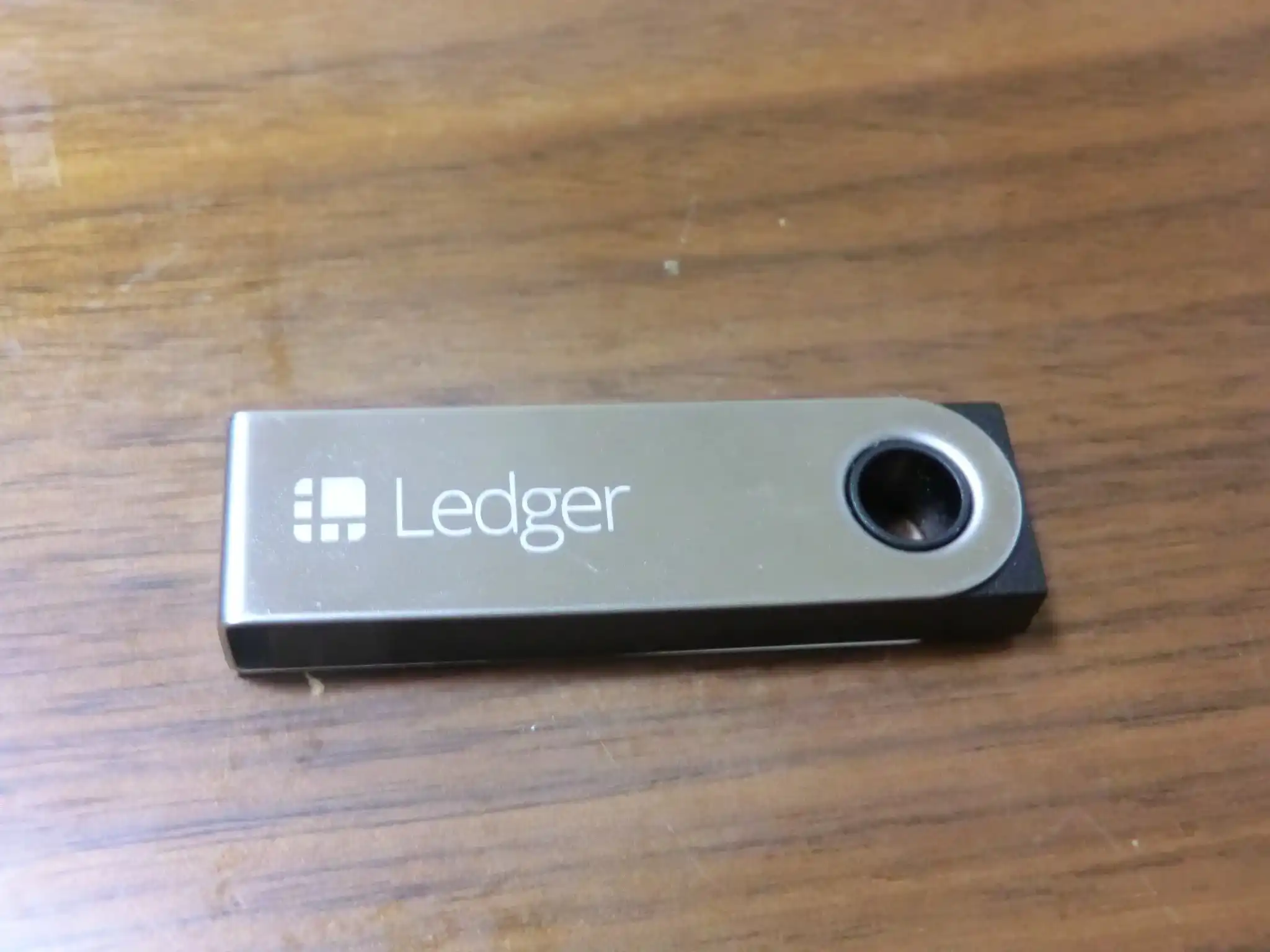
On-chain ledger data clearly records the complete flow. On September 22, 2025, the fraud gang dispersed these illegal proceeds into three separate Ledger hardware wallet custody addresses. Due to an unfixed supply-chain injection backdoor in the external code library relied upon by the hardware wallet's underlying software, on October 9, external hackers exploited a permission vulnerability. Through a single automated signature instruction, they instantly emptied the Bitcoin assets from the aforementioned three dispersed addresses and transferred a total of 60.3 BTC into a hacker-controlled main address that had been widely flagged by security agencies. According to Bitcoin blockchain explorer transaction records, this transfer transaction required only 1 block confirmation, resulting in a one-way looting of the black-market funds.

Cold Wallets Are Not Absolutely Safe Zones and Legal Difficulties in Recovering Stolen Funds

This case of criminals stealing from criminals reveals the practical challenge of defensive layer fractures in the crypto security ecosystem.

Hardware devices can physically isolate private keys from network exposure, but if users install tampered client firmware or malicious connection protocols, the protective effectiveness of physical cold isolation is directly nullified. To guard against supply-chain vulnerabilities, users need to regularly visit the Ledger Official Security Bulletin Center to verify firmware hash signatures. Legally, as the upstream criminal entity, the fraud gang has lost its legitimate claim for compensation. Furthermore, these Bitcoin assets, already looted into mixing pools, have been placed on a secondary involved asset monitoring list by the global judicial cooperation network. The cross-border law enforcement data mutual recognition and tracking assistance procedures are scheduled to commence at 10:28 AM Beijing Time on October 28.

Trending Cryptos

Related Questions

QWhat was the true identity of the most severely affected victim in the Ledger security breach according to Chainalysis?

AThe victim was not a compliant crypto investor, but a long-running organized telecommunications fraud gang that operated a network 'brushing task' scam.

QHow did the fraudulent gang initially gain the trust of victims in the 'brushing task' scheme?

AThey established trust with victims by initially returning small commissions for tasks, which involved making fake transactions and favorable reviews for specific e-commerce goods.

QWhat method did the fraudsters use to launder the fiat currency they obtained from the scam?

AThey laundered the money by quickly exchanging the fraudulently obtained fiat currency for over 60 Bitcoin through multi-layered automated settlement channels.

QHow did the external hacker manage to steal the Bitcoin from the fraud gang's Ledger wallets?

AThe hacker exploited an unfixed supply chain backdoor in the external code library that the hardware wallet's underlying software relied on, using a single automated signature instruction to empty the funds.

QWhat are the security implications highlighted by this 'black eats black' case regarding hardware wallets?

AIt shows that hardware wallets' physical cold storage isolation can be compromised if users install tampered client firmware or malicious connection protocols, rendering the protection ineffective against supply chain vulnerabilities.

Related Reads

Tibo Reassigned: The GPT Reset Button Has a New Owner

Tibo, OpenAI's "reset god" known for frequently resetting usage limits, has been reassigned to lead OpenAI's internal systems security project, according to Reuters. His replacement appears to be Andrew Ambrosino, a founding member of the Codex App team, who has already begun handling user complaints and product feedback publicly. Tibo's move comes amid longstanding employee concerns about operational security at OpenAI, including overly broad access to sensitive code, insufficient security reviews of internal tools, and insider threats. In October, an engineer was prosecuted after planting listening devices in an executive meeting room and hiding a recorder in toilet paper. Since August, Tibo had already reassigned roughly a quarter of OpenAI's production engineers to security infrastructure work, and he has publicly announced forming a world-class cybersecurity team. Andrew Ambrosino studied computer science at UMass Lowell and previously worked at MITRE and Microsoft, founded fintech startup Catch where he served as CTO/CPO for seven years, and later worked at Noyo before joining OpenAI in 2025 as a core member of the Codex App team. He has since led that team and expanded into ChatGPT product work. Recently he announced restored double usage limits for Pro and Business Premium tiers and pledged to improve ChatGPT's simplicity and performance. Users have flocked to Andrew's comments with requests, including better treatment for Plus users, keeping Chat and Work separate, removing the five-hour usage limit, opening Dots to Plus users, and—most notably—begging him to hit the reset button on day one. OpenAI has not officially confirmed Andrew's full takeover of Tibo's former responsibilities, but his public actions suggest he is already stepping into the role.

marsbit1m ago

Tibo Reassigned: The GPT Reset Button Has a New Owner

marsbit1m ago

Zcash Activates NU7 Mainnet Upgrade, Cuts Block Time to 25 Seconds

Zcash has activated its NU7 network upgrade on mainnet, introducing faster block production and changes to how transaction fees support the network's long-term security. The upgrade went live at block height 3,543,405 on November 6 at 02:34 UTC, reducing the target time between blocks from 75 seconds to 25 seconds, allowing transactions to receive their first confirmation more quickly. This could make Zcash payments more practical for everyday transfers, exchange deposits and merchant transactions, though actual wait times will depend on network conditions and confirmation requirements set by individual services. NU7 also introduces changes to the network's shielded transaction system. One major change involves the Network Sustainability Mechanism (NSM): miners now receive 40% of transaction fees, while the remaining 60% goes into a reserve intended to support future mining rewards, with scheduled reissuance expected to begin around February 2031 at block height 8,939,664. The upgrade also retires Zcash's original Sprout privacy pool, introduced in 2016; version 4 transactions are now invalid, making approximately 12,224 ZEC remaining in Sprout unspendable through the existing protocol, with no approved recovery mechanism currently available. NU7 introduces limits on shielded transactions per block to reduce blockchain data wallets must download when searching for private payments, potentially increasing capacity for simple Orchard transactions from approximately 2.9 to 6.6 transactions per second. Despite the faster block schedule and revised fee system, Zcash's maximum supply remains unchanged at 21 million ZEC, and the block subsidy is adjusted to maintain the same daily issuance. NU7 marks a major change to Zcash's transaction processing and mining economics.

TheNewsCrypto2m ago

Zcash Activates NU7 Mainnet Upgrade, Cuts Block Time to 25 Seconds

TheNewsCrypto2m ago

Singapore Blockchain Week 2026 Returns This November, Puts Singapore and Johor, Malaysia Cross-Border Digital Economy Opportunities in the Spotlight

Singapore Blockchain Week (SBW) 2026 will take place from 13 to 17 November 2026 as a government-supported flagship event bringing together regulators, financial institutions, sovereign entities, family offices, founders, investors, enterprises, and ecosystem builders. The event features prominent speakers including H.E. Justin Sun (TRON), Jose Fernandez da Ponte (Stellar Development Foundation), representatives from VISA, J.P. Morgan, SAP, the United Nations Development Programme, Société Générale-Forge, Paxos, World Bank, and others. SBW 2026 is positioned as the world's first cross-border blockchain week, connecting Singapore and Malaysia's Johor-Singapore Special Economic Zone (JS-SEZ) to accelerate innovation, investment, and technology collaboration across Southeast Asia. It is supported by partners including Singapore Global Network – Economic Development Board, Singapore Tourism Board, Malaysia Digital Economy Corporation, Iskandar Regional Development Authority, and Johor Corporation. The week-long programme includes: Special Economic Zone Immersion (13 Nov), Tech-Enabled Sports (14 Nov), Learnathon (15 Nov), Inner Circle (16 Nov), and Institution Summit (17 Nov). The event focuses on the convergence of AI, DeFi, Real World Assets (RWA), and Venture Capital, positioning Singapore and ASEAN at the forefront of global digital transformation. Sebastian Zilliacus, Chair of the Advisory Committee, emphasised that the event aims to move beyond headlines so traditional finance and emerging technology "start building together." CK Ong of SBI Digital Markets noted that tokenisation's key question is now market viability, requiring alignment of regulatory clarity, distribution, custody, and commercial viability. Kiran Mistry of SAP highlighted the importance of interoperability between blockchain and enterprise systems, while Rahul Bhargava of the World Bank and Contour Network discussed addressing the $2.5 trillion trade finance gap through digital documentation and multi-rail settlements. Raymond Ngan of Singapore Innovation Centre noted the event strengthens Singapore and Southeast Asia's position, particularly as Singapore prepares for ASEAN Chairmanship in 2027.

TheNewsCrypto52m ago

Singapore Blockchain Week 2026 Returns This November, Puts Singapore and Johor, Malaysia Cross-Border Digital Economy Opportunities in the Spotlight

TheNewsCrypto52m ago

Trading

Spot

Hot Articles

What is $BITCOIN

DIGITAL GOLD ($BITCOIN): A Comprehensive Analysis Introduction to DIGITAL GOLD ($BITCOIN) DIGITAL GOLD ($BITCOIN) is a blockchain-based project operating on the Solana network, which aims to combine the characteristics of traditional precious metals with the innovation of decentralized technologies. While it shares a name with Bitcoin, often referred to as “digital gold” due to its perception as a store of value, DIGITAL GOLD is a separate token designed to create a unique ecosystem within the Web3 landscape. Its goal is to position itself as a viable alternative digital asset, although specifics regarding its applications and functionalities are still developing. What is DIGITAL GOLD ($BITCOIN)? DIGITAL GOLD ($BITCOIN) is a cryptocurrency token explicitly designed for use on the Solana blockchain. In contrast to Bitcoin, which provides a widely recognized value storage role, this token appears to focus on broader applications and characteristics. Notable aspects include: Blockchain Infrastructure: The token is built on the Solana blockchain, known for its capacity to handle high-speed and low-cost transactions. Supply Dynamics: DIGITAL GOLD has a maximum supply capped at 100 quadrillion tokens (100P $BITCOIN), although details regarding its circulating supply are currently undisclosed. Utility: While precise functionalities are not explicitly outlined, there are indications that the token could be utilized for various applications, potentially involving decentralized applications (dApps) or asset tokenization strategies. Who is the Creator of DIGITAL GOLD ($BITCOIN)? At present, the identity of the creators and development team behind DIGITAL GOLD ($BITCOIN) remains unknown. This situation is typical among many innovative projects within the blockchain space, particularly those aligning with decentralized finance and meme coin phenomena. While such anonymity may foster a community-driven culture, it intensifies concerns about governance and accountability. Who are the Investors of DIGITAL GOLD ($BITCOIN)? The available information indicates that DIGITAL GOLD ($BITCOIN) does not have any known institutional backers or prominent venture capital investments. The project seems to operate on a peer-to-peer model focused on community support and adoption rather than traditional funding routes. Its activity and liquidity are primarily situated on decentralized exchanges (DEXs), such as PumpSwap, rather than established centralized trading platforms, further highlighting its grassroots approach. How DIGITAL GOLD ($BITCOIN) Works The operational mechanics of DIGITAL GOLD ($BITCOIN) can be elaborated on based on its blockchain design and network attributes: Consensus Mechanism: By leveraging Solana’s unique proof-of-history (PoH) combined with a proof-of-stake (PoS) model, the project ensures efficient transaction validation contributing to the network's high performance. Tokenomics: While specific deflationary mechanisms have not been extensively detailed, the vast maximum token supply implies that it may cater to microtransactions or niche use cases that are still to be defined. Interoperability: There exists the potential for integration with Solana’s broader ecosystem, including various decentralized finance (DeFi) platforms. However, the details regarding specific integrations remain unspecified. Timeline of Key Events Here is a timeline that highlights significant milestones concerning DIGITAL GOLD ($BITCOIN): 2023: The initial deployment of the token occurs on the Solana blockchain, marked by its contract address. 2024: DIGITAL GOLD gains visibility as it becomes available for trading on decentralized exchanges like PumpSwap, allowing users to trade it against SOL. 2025: The project witnesses sporadic trading activity and potential interest in community-led engagements, although no noteworthy partnerships or technical advancements have been documented as of yet. Critical Analysis Strengths Scalability: The underlying Solana infrastructure supports high transaction volumes, which could enhance the utility of $BITCOIN in various transaction scenarios. Accessibility: The potential low trading price per token could attract retail investors, facilitating wider participation due to fractional ownership opportunities. Risks Lack of Transparency: The absence of publicly known backers, developers, or an audit process may yield skepticism regarding the project's sustainability and trustworthiness. Market Volatility: The trading activity is heavily reliant on speculative behavior, which can result in significant price volatility and uncertainty for investors. Conclusion DIGITAL GOLD ($BITCOIN) emerges as an intriguing yet ambiguous project within the rapidly evolving Solana ecosystem. While it attempts to leverage the “digital gold” narrative, its departure from Bitcoin's established role as a store of value underscores the need for a clearer differentiation of its intended utility and governance structure. Future acceptance and adoption will likely depend on addressing the current opacity and defining its operational and economic strategies more explicitly. Note: This report encompasses synthesised information available as of October 2023, and developments may have transpired beyond the research period.

4.8k Total ViewsPublished 2025.05.14Updated 2025.05.14

What is $BITCOIN

Discussions

Welcome to the HTX Community. Here, you can stay informed about the latest platform developments and gain access to professional market insights. Users' opinions on the price of BTC (BTC) are presented below.

活动图片