LayerZero and Coinbase Bring Cryptocurrencies Closer to Quantum Attack Resilience

cryptonews.ruPublished on 2026-09-10Last updated on 2026-09-10

Abstract

Major crypto firms are taking steps to prepare for the future threat of quantum computing. LayerZero has introduced Akita, a ready-to-use cryptographic building block for post-quantum security. It's based on lattice cryptography, the standard chosen by NIST, and is designed for zero-knowledge proof systems. Akita reduces proof sizes, speeds up the proving process, and uses less memory. It will first be used within LayerZero's Jolt virtual machine, the foundation of its Zero blockchain. Separately, Coinbase convened a closed-door workshop at Stanford University, bringing together Bitcoin developers, institutional custodians, and hardware wallet experts. The goal was to discuss migration paths for Bitcoin to post-quantum signatures, though no single best solution was agreed upon due to trade-offs. Coinbase emphasized the importance of a solid plan over pinpointing an exact attack date. The company also noted that migration will be gradual, having already launched a post-quantum key management system (PQ-CoreKMS) protecting most client assets. The urgency stems from a 2026 Google report suggesting the resources needed to break current elliptic-curve cryptography are less than previously thought. While the threat is not immediate, Google plans its own post-quantum transition by 2029, with partners including Coinbase and Ethereum. Ethereum's "Lean Ethereum" roadmap aims for full post-quantum protection by 2029, and NIST plans to phase out current ECDSA cryptography by 2035.

In an effort to fortify blockchains against future quantum computers, LayerZero has released a new cryptographic building block for post-quantum cryptography, while Coinbase has organized a meeting for Bitcoin developers and cryptographers at Stanford.

Both initiatives aim to address the problem that the cryptographic mechanisms securing nearly all major blockchains will not withstand the impact of a sufficiently powerful quantum machine.

What does LayerZero's Akita robot do?

Bitcoin and Ethereum use elliptic curve cryptography to secure digital signatures. The issue is that a sufficiently powerful quantum machine could theoretically compute a private key from its public key, allowing someone to steal funds.

The threat became more tangible following the publication of an analytical report in March 2026. In it, Google's quantum AI researchers, namely Ryan Babbush and Hartmut Neven, stated that breaking 256-bit elliptic cryptography might require fewer than 1,200 logical qubits and around 90 million Toffoli gates—a significant reduction from what was previously thought necessary.

The threat is not immediate, as Google's current 'Willow' quantum chip has only 105 physical qubits, but it remains significant.

Google has decided to complete its own transition to post-quantum cryptography by 2029, naming Coinbase, the Stanford Blockchain Research Institute, and Ethereum as its partners.

LayerZero introduced Akita, calling it the first ready-to-use tool of its kind providing quantum-resistant security for zero-knowledge proof systems—the part of a ZK system that captures the execution of a computation and proves its correctness.

Akita is based on lattice-based cryptography, the same field that NIST has already standardized for post-quantum encryption and signatures.

Advantages of Akita over other post-quantum systems include reducing proof size from 200 kilobytes or more down to 65-80 kilobytes, speeding up the proving process by two to three times compared to the Jolt system, and roughly halving memory usage.

The Akita technology will first be used internally within Jolt, a zero-knowledge virtual machine created by LayerZero with a16z crypto. Jolt is the technology underlying LayerZero's Zero blockchain.

What steps has Coinbase taken for blockchain security?

Coinbase also hosted a session on post-quantum Bitcoin at Stanford University in collaboration with Stanford cryptographer Dan Boneh and Localhost Research. The closed session gathered Bitcoin developers, institutional custodians, and hardware wallet specialists to compare approaches.

Participants examined several possible signature schemes, but each involved trade-offs regarding security, transaction size, hardware performance, and key management, preventing consensus on the best option.

Coinbase stated that having a robust, well-vetted plan is more important than worrying about the exact year an attack might occur.

The company also noted that any migration would likely be phased, as with its July introduction of a post-quantum version of its key management system called PQ-CoreKMS. Coinbase stated that its current system already secures about 99.9% of assets stored for clients.

Meanwhile, Ethereum's 'Lean Ethereum' comprehensive protection against post-quantum threats is planned for 2029. Vitalik Buterin's roadmap, presented in February 2026, identified vulnerable areas, including BLS signatures at the consensus layer, KZG commitments for data availability, ECDSA signatures at the account layer, and ZK safeguarding systems.

The National Institute of Standards and Technology (NIST), for its part, plans to deprecate ECDSA by 2030 and completely ban its use by 2035.

end-content

Related Questions

QWhat is LayerZero's Akita and how does it contribute to post-quantum security?

ALayerZero's Akita is a post-quantum cryptographic building block. It's described as the first ready-to-use tool of its kind that provides quantum-resistant security for the proof systems in zero-knowledge (ZK) systems. It's based on lattice-based cryptography and offers benefits like significantly reducing proof sizes (down to 65-80KB), speeding up proof generation 2-3 times compared to the Jolt system, and halving memory usage.

QWhat steps has Coinbase taken regarding post-quantum blockchain security?

ACoinbase organized a closed-door summit on post-quantum Bitcoin at Stanford University with cryptographer Dan Boneh and Localhost Research. They brought together Bitcoin developers, institutional custodians, and hardware wallet experts to evaluate different signature schemes. Coinbase also introduced a post-quantum version of its key management system called PQ-CoreKMS in July, which it claims already protects about 99.9% of client assets.

QWhat is the main threat that quantum computers pose to current blockchains like Bitcoin and Ethereum?

AThe main threat is that a sufficiently powerful quantum computer could theoretically compute a private key from a public key. Current major blockchains use elliptic curve cryptography for securing digital signatures, and this cryptographic mechanism is not expected to withstand the processing power of a future, powerful quantum machine.

QWhat is the timeframe for Ethereum's full transition to post-quantum security according to the article?

AAccording to the article, Ethereum's 'Lean Ethereum' plan for full protection against post-quantum threats is scheduled for 2029. A roadmap presented by Vitalik Buterin in February 2026 identified vulnerable areas like BLS signatures at the consensus layer, account-level ECDSA signatures, and ZK protection systems.

QWhat did researchers from Google's Quantum AI team suggest about quantum attacks in their March 2026 report?

AIn a March 2026 report, Google Quantum AI researchers Ryan Babbush and Hartmut Neven stated that breaking 256-bit elliptic curve cryptography could require less than 1,200 logical qubits and about 90 million Toffoli gates. This represents a significant reduction compared to previous estimates of what would be necessary.

Related Reads

Coinone warns of phishing, identity theft after customer data breach

South Korean crypto exchange Coinone warned customers about potential phishing scams and identity theft after an attacker breached its outsourced customer support provider, MetaM, exposing information shared during customer service interactions. Coinone said the attacker accessed MetaM servers on Thursday and viewed or extracted customer support records, learning of the breach the same day. Potentially exposed data includes names, phone numbers, email addresses, dates of birth, bank account numbers, passwords, national identification numbers, home and wallet addresses, and transaction IDs, varying by customer; those who never contacted the support center were unaffected, and Coinone did not disclose how many customers were impacted. The exchange urged customers who shared passwords during support interactions to change them and warned that fraudsters could impersonate Coinone using details from previous conversations. Coinone said its account, trading, and wallet infrastructure operates separately from MetaM's servers, with no evidence of direct compromise, and it has reported the incident to South Korean authorities. The disclosure comes as South Korea strengthens financial-sector cybersecurity; in October the Financial Services Commission identified security deficiencies at 130 of 555 financial firms reviewed, and on Thursday the regulator said it would allow crypto exchanges to suspend withdrawals when hacking is suspected, alongside calls for round-the-clock monitoring.

cointelegraph1h ago

Coinone warns of phishing, identity theft after customer data breach

cointelegraph1h ago

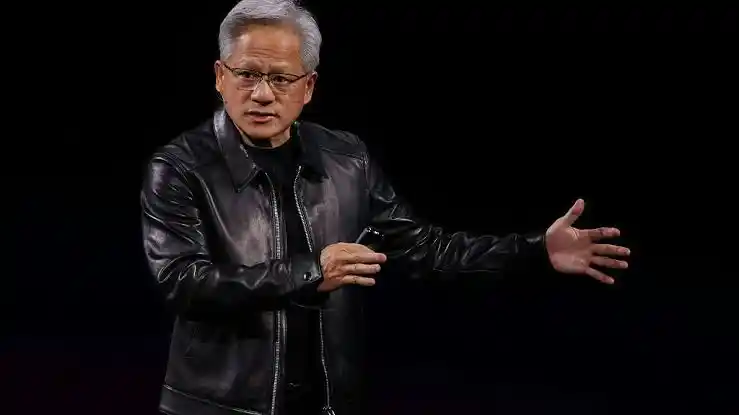
Is There a Hidden Hand Behind Jensen Huang's Departure? Secretary of State Rubio or Anthropic?

The article alleges that Nvidia founder Jensen Huang's departure was the result of a coordinated "hunt" involving two forces: Secretary of State Marco Rubio and AI rival Anthropic. On the policy front, the dispute centers on AI chip export controls—Huang was the most prominent corporate voice opposing built-in tracking and remote kill-switch functions in chips, while three bipartisan chip bills (covering congressional review of export licenses, anti-smuggling measures, and pressure on allies to halt equipment sales) have been folded into the Senate's annual defense authorization bill. The storm began with a highly classified memo leaked to The New York Times; according to The Washington Post, the memo originated with Rubio, who reportedly rewrote a CIA report whose analysts were unconvinced by the underlying intelligence, using "his own more aggressive wording," then sent it to senior officials and briefed the president. David Sacks called the leak a crime and asked why someone would risk prison to bring Huang down. Separately, NYT reporter Tripp Mickle said a mysterious industry contact told him to "drop everything" and investigate Megaspeed, a Singapore-based Nvidia compute rental firm; suspicion points to Anthropic CEO Dario Amodei and a co-founder as the leaker. Anthropic reportedly donated $40 million to Public First Action, which pushes AI safety rules and chip export controls—positions opposite Huang's defense of open-source AI and opposition to backdoors. Nvidia shares fell on the news, and tech leaders including Musk, Garry Tan, and Tim Sweeney are petitioning for Huang's reinstatement, with Sweeney comparing his ouster to Apple firing Steve Jobs.

marsbit3h ago

Is There a Hidden Hand Behind Jensen Huang's Departure? Secretary of State Rubio or Anthropic?

marsbit3h ago

Global Chip Stocks Retreat Nearly 40% from Peak: Has the AI Bubble Burst?

Nvidia is set to report its fiscal Q3 2027 earnings after market close on November 17, but the call will be led by interim CEO and CFO Colette Kress, not Jensen Huang, who resigned as president, CEO, and board member effective November 12 following an apology letter to employees admitting infidelity and a board investigation into reports that he was a target of foreign intelligence activity. The report comes as investors question whether massive AI capital expenditures will pay off. On November 5, the Philadelphia Semiconductor Index plunged 12.25%, its worst single-day drop since March 2020, with Nvidia falling 9.3% and losing about $447 billion in market value; Seoul's KOSPI triggered a circuit breaker the next day. Over the past month, Nvidia has shed nearly $1.4 trillion in market value from its early-October peak, the semiconductor index has pulled back nearly 40% from its June 22 peak of 14,634, Oracle is down over 30% year-to-date, and CoreWeave has retreated about 70% from its June 2025 high. Yet the broader market looks calm: the Nasdaq is only about 12% off its high, and the equal-weighted S&P 500 hit a record during the selloff week—the crash is concentrated in AI. The timeline shows early warnings in Korea in June, with memory stocks falling first; Goldman's AI memory basket is down 51% from its June peak, the largest drawdown since ChatGPT launched. The selloff layered by proximity to end cash flow: memory worst, then leveraged neoclouds like CoreWeave, then power, chips, and optics, while cash-rich cloud giants held up, with the seven giants still up about 9.6% year-to-date before the crash. Nvidia's roughly 14x P/E isn't necessarily cheap—its revenue is others' capex, low multiples on cyclicals often mark peak profits, and chip index declines historically lead semiconductor sales drops by 6-9 months, suggesting real estimate cuts may not appear until Q1 2027. Meanwhile, orders are full but stocks still fall: Lumentum says data center optics are sold out for years, SanDisk beat for six straight quarters yet is down over 60% from its high, and CoreWeave's Q3 beat and $132.5 billion backlog didn't stop a 32% year-to-date decline. Hyperscaler capex guidance for 2026 totals $720-745 billion, up nearly 80% from 2025, but the market's reaction has turned cold—Google fell 12.6% on October 29, its worst day ever. Free cash flow is turning negative: the five biggest players spent $556.9 billion in the first nine months versus $542.9 billion in operating cash flow, with four of the seven giants seeing negative FCF for the first time in a decade, funded by debt—US cloud companies issued about $225 billion in bonds in the first nine months, up 973.7% year-over-year. Oracle's CDS spread widened from about 58 basis points a year ago to 295, and CoreWeave's exceeded 1,000, with bond yields near 15%. The bond market is already pricing default risk while stocks debate bubbles. Politics adds a second layer: Democrats won both chambers in the November 3 midterms, and of 41 local data center ballot measures in 10 states, 40 went against data center construction. Texas, which holds 27% of planned US capacity, elected a governor promising a moratorium. Goldman estimates 45% of planned US data center capacity faces short-term pause risk. Buffers exist—the new Congress seats in January 2027, any restrictions face a presidential veto, and UBS estimates only about 30% of planned 2028 capacity would be affected. Demand hasn't broken; what broke is the belief that spending alone lifts stocks—AI is moving from storytelling to audit. Whether the pullback becomes a collapse depends on three readings: whether cloud giants' free cash flow turns positive, whether Oracle and CoreWeave credit spreads keep widening, and whether state-level data center restrictions take effect.

marsbit3h ago

Global Chip Stocks Retreat Nearly 40% from Peak: Has the AI Bubble Burst?

marsbit3h ago

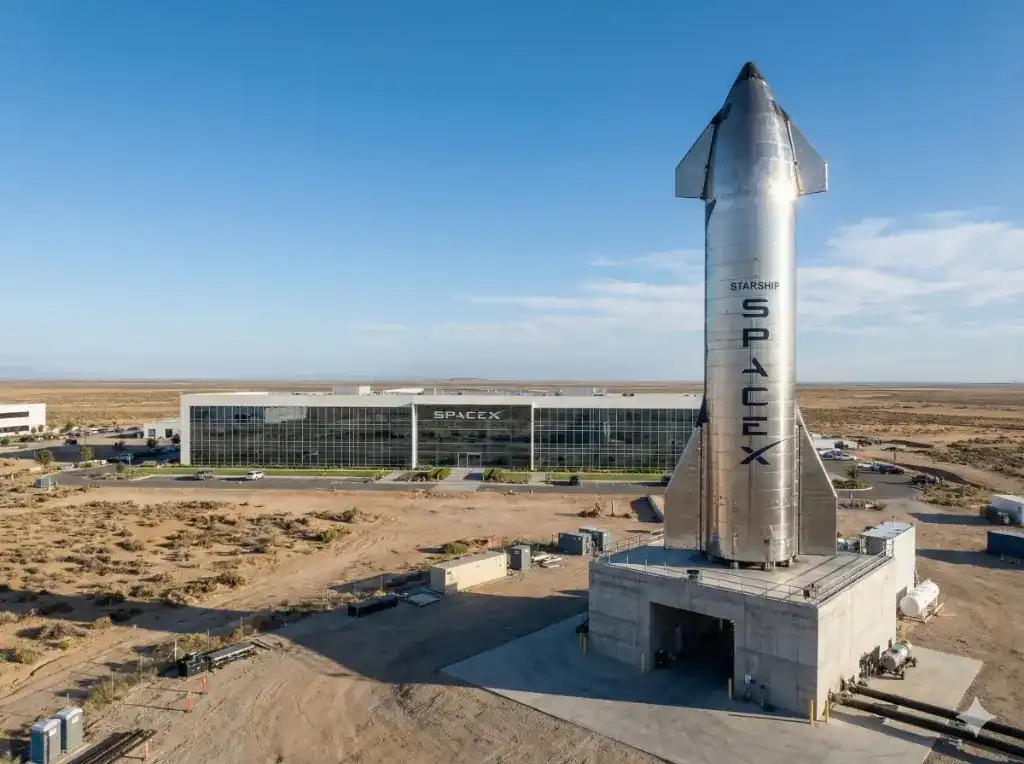
Successfully Recovering Starship Upper Stage, SpaceX Debuts 'Chopsticks Catching the Ship,' Analyst: The Most Critical Step Supporting a Trillion-Dollar Valuation

SpaceX achieved a historic first on November 15, successfully catching the Starship upper stage in mid-air using the launch tower's giant "Mechazilla" robotic arms after the spacecraft completed 14 orbits and re-entered the atmosphere. More than 5 million viewers watched the live broadcast. It marks the first time since NASA's Space Shuttle in 2011 that a spacecraft returning from orbit has been recovered, and the first-ever capture of an orbital spacecraft by a tower. However, the mission was only half successful: the Super Heavy booster aborted its recovery attempt after an early engine shutdown during descent, splashing down in the Gulf of Mexico and exploding. SpaceX engineers are investigating the cause. This was the 15th test flight and the most ambitious, marking the first simultaneous recovery attempt of both stages. Analysts stress the cost implications. Bernstein called full reusability "the most important step" supporting SpaceX's multi-trillion-dollar valuation, key to high launch frequency and lower orbital costs. Citi called fully reusable rockets the industry's "holy grail." Morgan Stanley argued markets underestimate the significance, noting the ship's capture is harder than the booster's because it endures extreme re-entry stress. Success would reduce execution risk across commercialization, Starlink deployment, and future space-based AI computing. The Starship released 26 Starlink V3 satellites during the flight, re-entering at over 26,000 km/h with temperatures reaching 7,000°F. NASA Administrator Jared Isaacman congratulated SpaceX, and Musk shared video of the recovered ship. NASA's Artemis lunar program and Musk's Mars ambitions both depend on Starship. SpaceX stock (SPCX) dipped 2% after the booster failure, trading just 3% above its $135 IPO price and 38% below its June high of $225.64. Bernstein noted SpaceX remains roughly a decade ahead of competitors in reusability. Starlink, SpaceX's profit center, serves over 13 million users in 170+ countries with over 11,000 satellites, posting about $3.5 billion in Q3 EBITDA. Starship can carry up to 60 Starlink V3 satellites—each nearly four times the volume and ten times the data capacity of V2. Musk hopes to build space-based AI data centers, possibly starting in late 2027, with reusability being the prerequisite for lowering per-unit orbital costs.

marsbit6h ago

Successfully Recovering Starship Upper Stage, SpaceX Debuts 'Chopsticks Catching the Ship,' Analyst: The Most Critical Step Supporting a Trillion-Dollar Valuation

marsbit6h ago

Trading

Spot
活动图片