Just Now, Meta's Flagship Model Crushes GPT-6 and Opus! Leaps Back into World's Top Three Overnight

marsbitPublished on 2026-10-13Last updated on 2026-10-13

Abstract

Meta has launched its most powerful flagship AI models yet, Muse Wonder and Muse Wonder Full, positioning them as a historic leap toward "personal superintelligence." Benchmark results show these models are now competitive with leading counterparts from OpenAI and Anthropic. On the Artificial Analysis index, Muse Wonder Full scored 56, placing it in the global top tier alongside Claude Sonnet 5.5 and surpassing GPT-6 Astra. In long-context programming tasks like SWE-Marathon, both Wonder and Wonder Full outperformed Claude Opus 5.5 and GPT-6 Astra. Key new capabilities include "Active Memory" for retaining user information across conversations and "Active Focus" for autonomous problem-solving and plan adjustment. The models show significant gains over the previous Muse Spark 1.3, with the Full version improving by 8 points on the Artificial Analysis index in just six weeks. In professional tasks like legal and financial analysis, Wonder Full exceeded Opus 5.5 in 8 out of 14 tests. It also demonstrated improved efficiency, solving more math problems while reducing output tokens by 40%. Developed using Meta's gigawatt-scale "Prometheus" supercomputing infrastructure, the models feature a 1 million token context window and native multimodal support. Pricing starts at $4 per million tokens for input and $20 for output via API for the standard Wonder model, while Wonder Full is available through Muse Code subscriptions at $50 or $200 per month.

Zuck has really caught up this time!

Late at night, Meta unveiled two large models in one breath: Muse Wonder and Muse Wonder Full.

Officially, it was unapologetically defined as Meta's most powerful model to date, and a historic leap towards "Personal Super Intelligence."


In various benchmark tests, Meta's "Double Punch" can finally compete head-to-head with Claude and GPT.

The current strongest models, Claude Fable 5.1 and GPT-6 Astra, were almost directly stepped on by Muse Wonder.
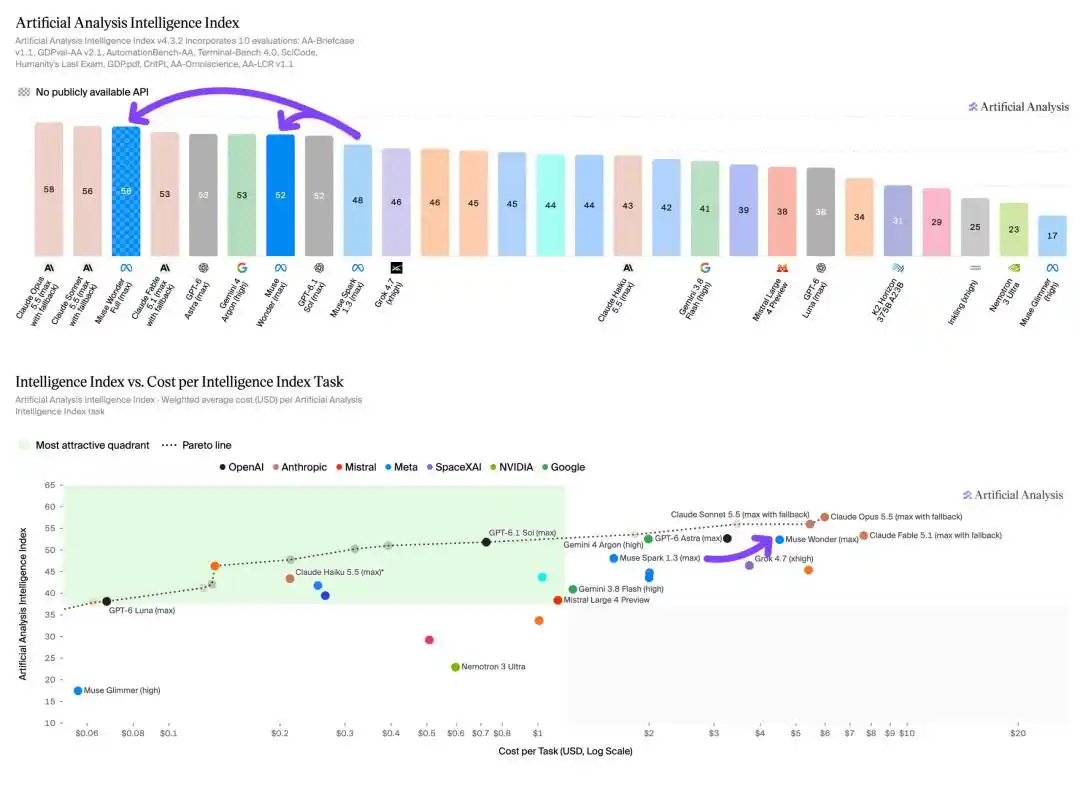
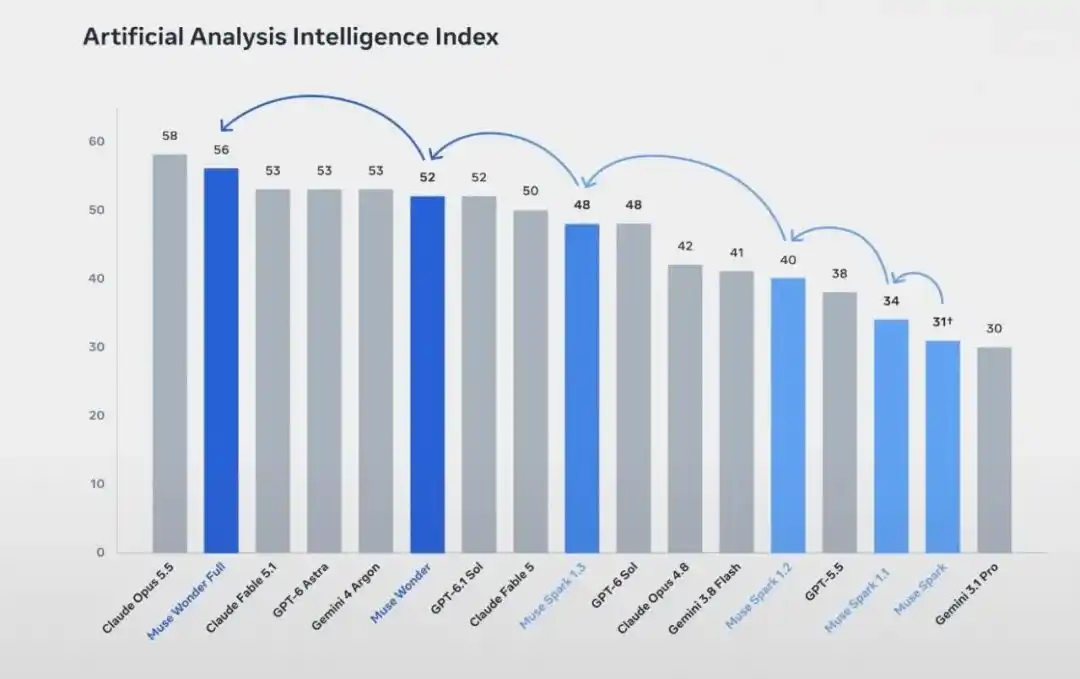
On Artificial Analysis, Muse Wonder Full scored 56 points, securing a spot in the global first tier, keeping pace with Sonnet 5.5 and surpassing GPT-6 Astra.

Muse Wonder also scored 52 points, comprehensively overtaking the previous generation Muse Spark 1.3.
In long-task programming, Meta even surpassed Opus and Astra. Not only did the top-tier Full win, but the standard Wonder also won!

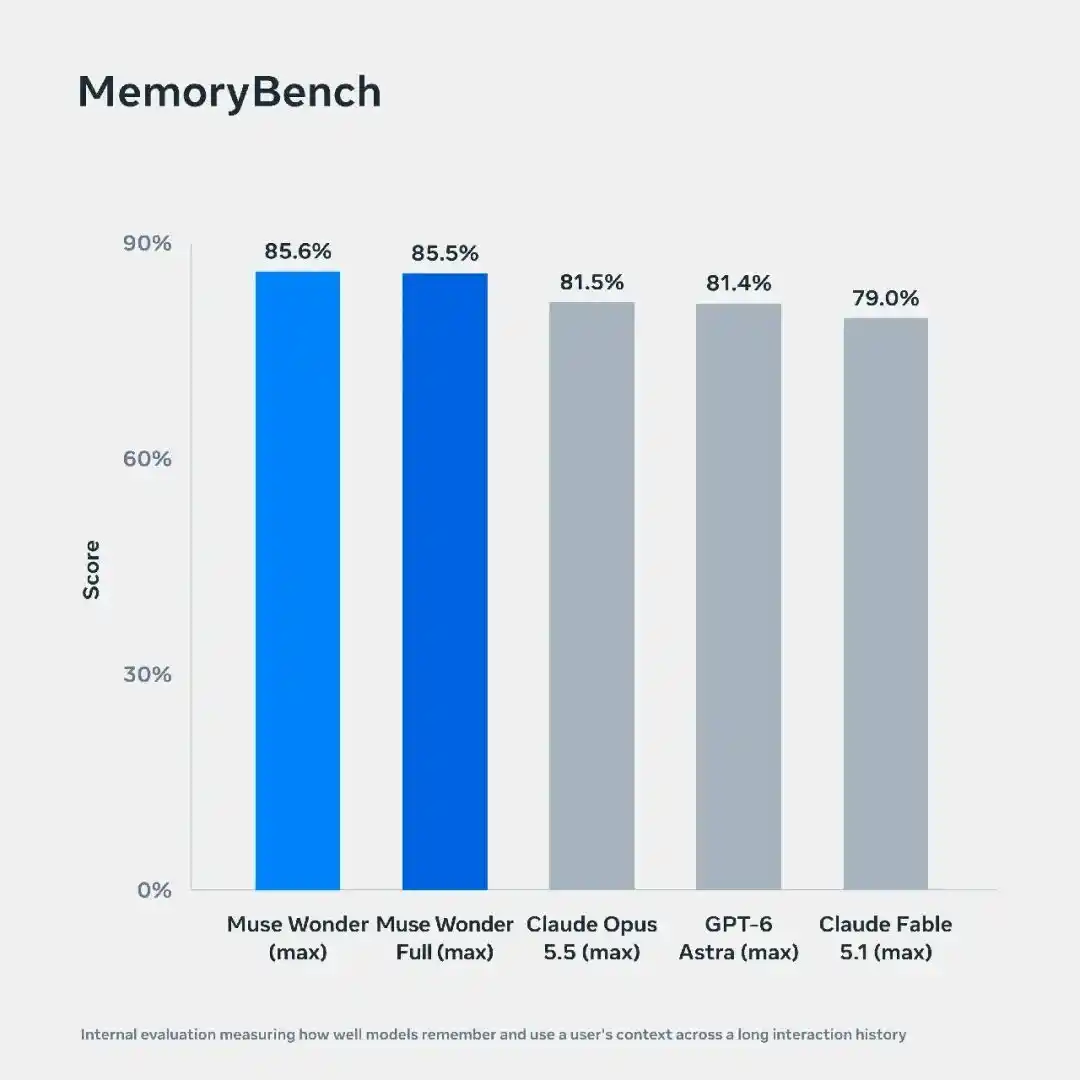
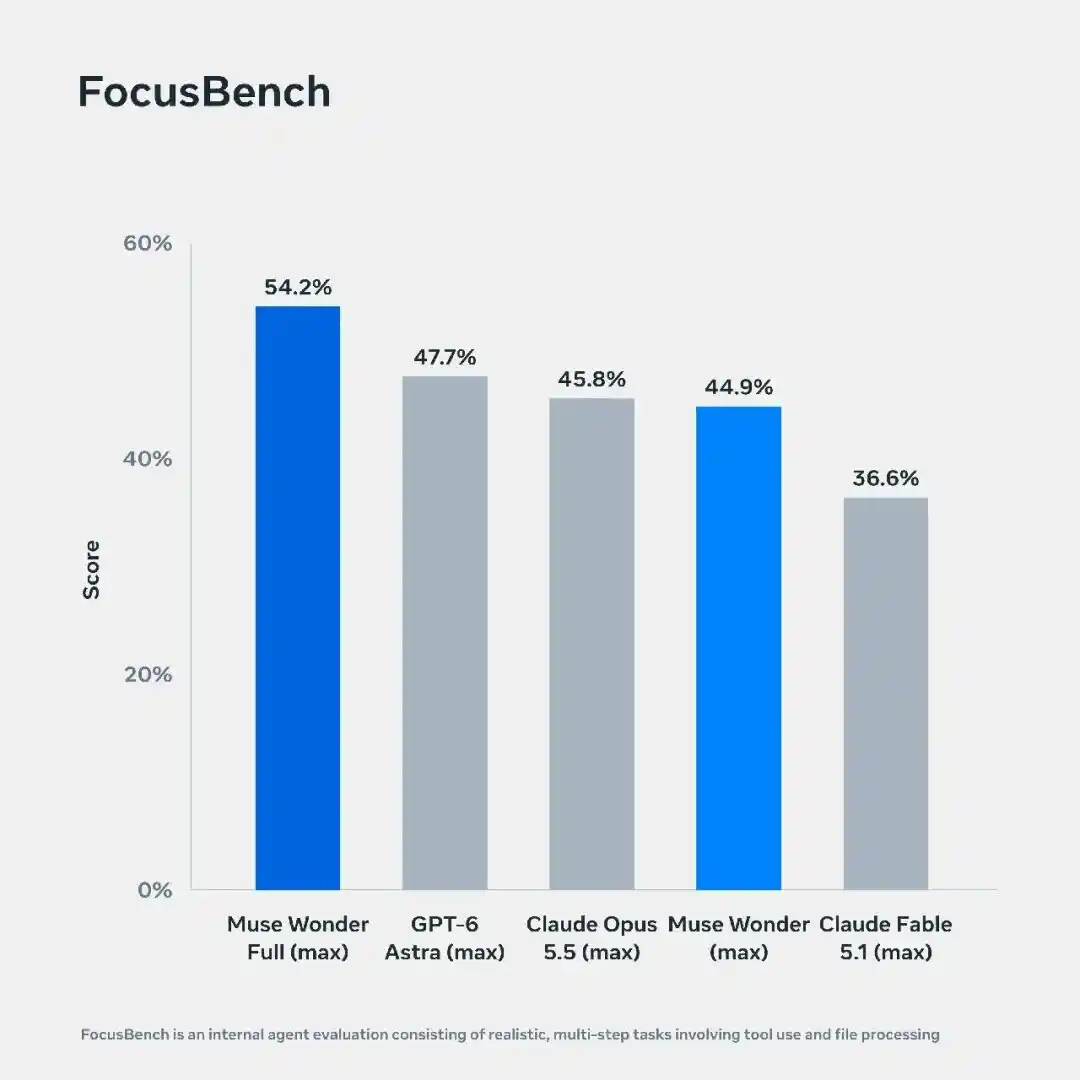
It holds two major trump cards: Active Memory + Active Focus.

For a moment, many were amazed, thinking that major labs have already conquered RSI.
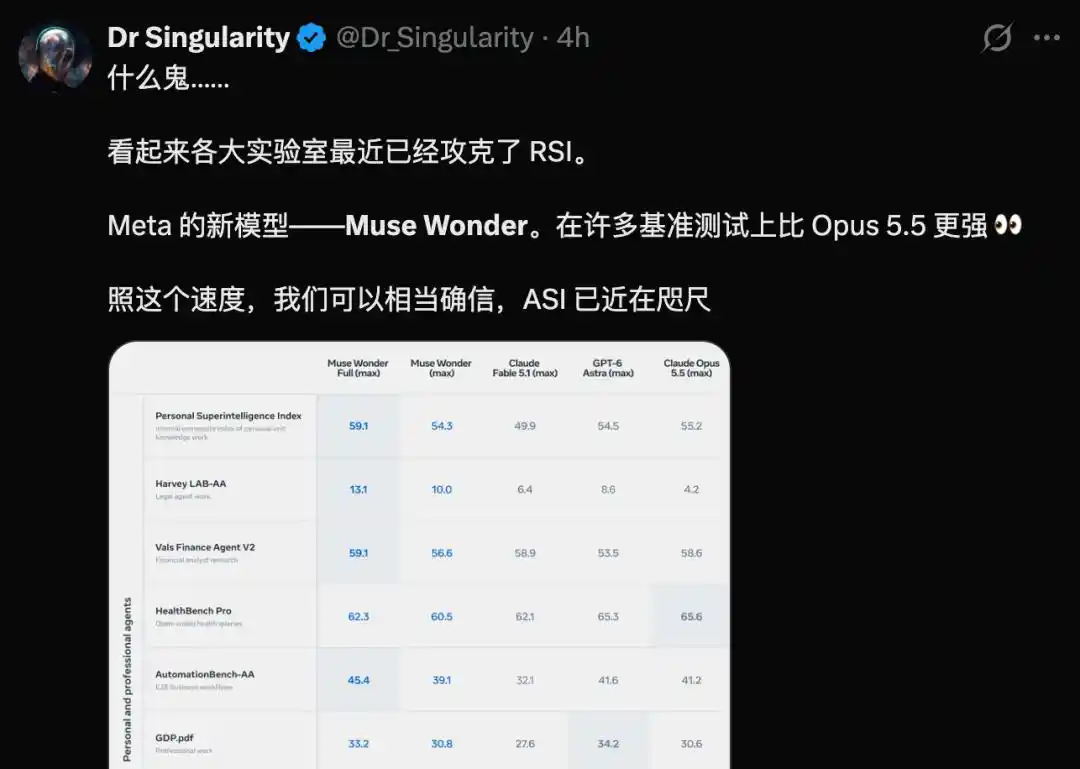
Key highlights of this upgrade across all capabilities —

Programming enters the first tier: Muse Code equipped with Full ties with Claude Sonnet on the AA Programming Agent leaderboard; both Wonder models exceed Opus and Astra in long task tests.

Remembers you across conversations, resumes long tasks: Active Memory retains your important information; Active Focus lets the model change approach when encountering obstacles, check after errors, and adjust plans when receiving new requirements.

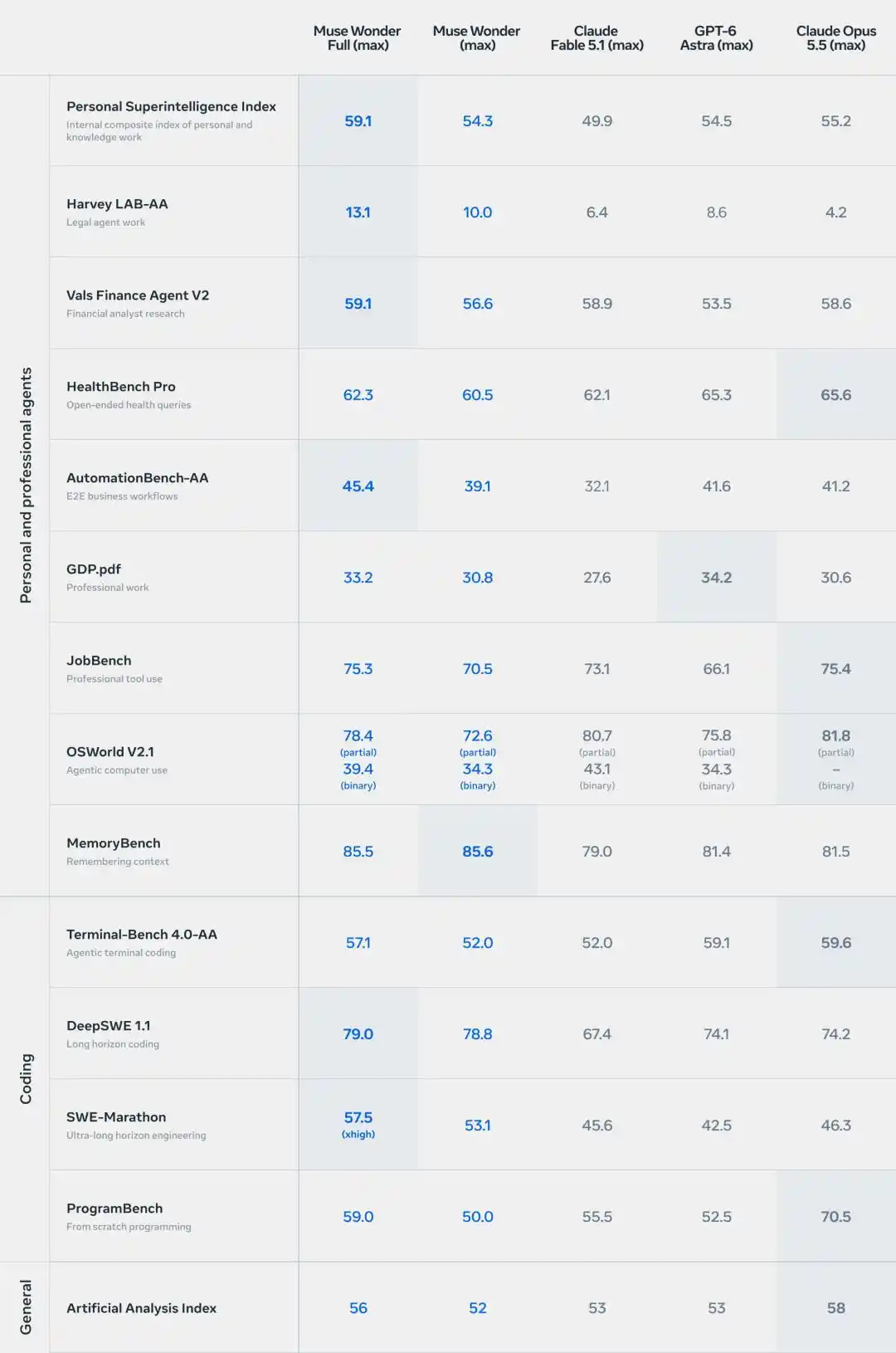
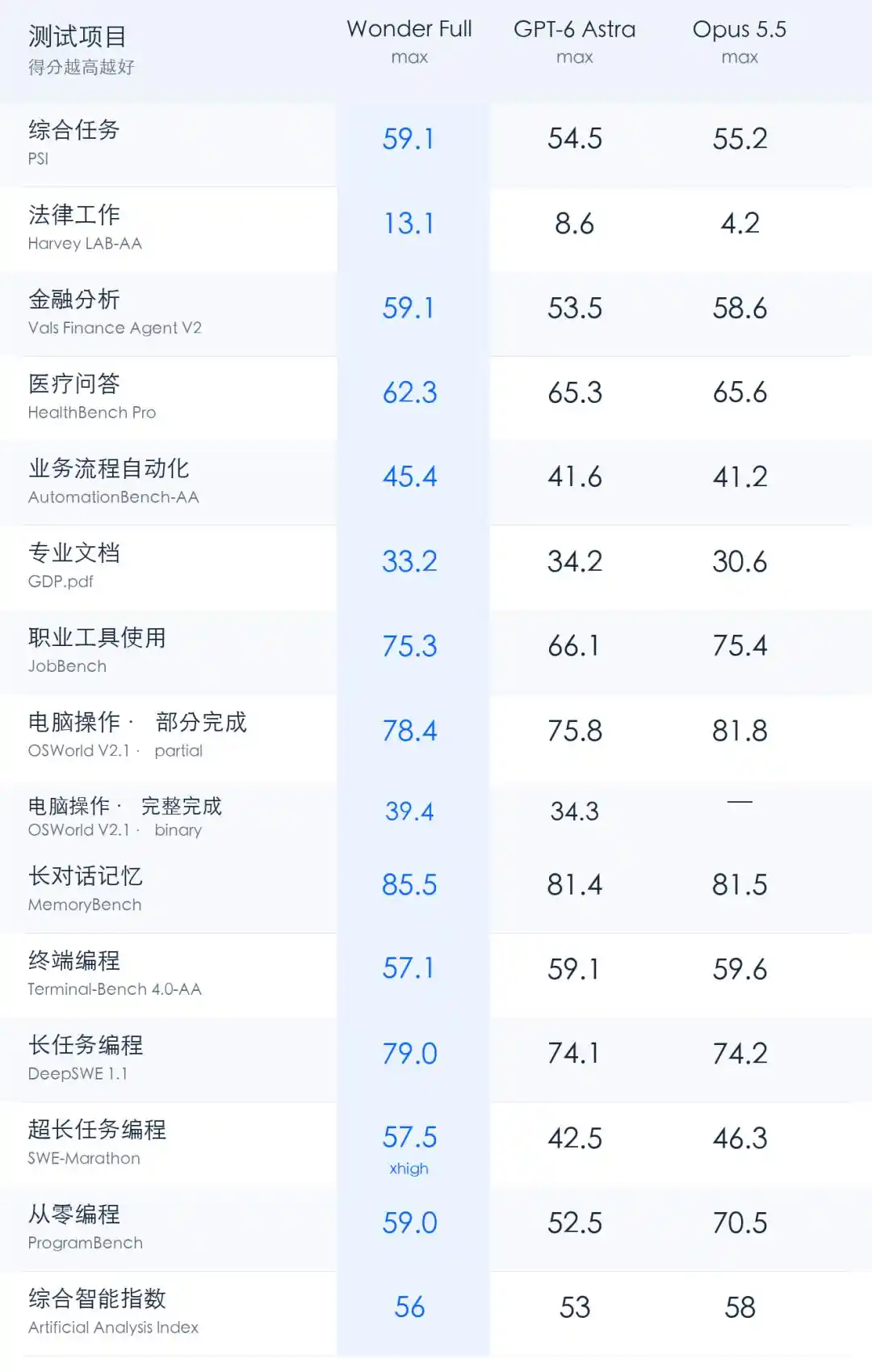
Catches up in professional work: In 14 tests covering law, finance, memory, and continuous execution capabilities, Full surpasses Opus 5.5 in 8 and GPT-6 Astra in 11.

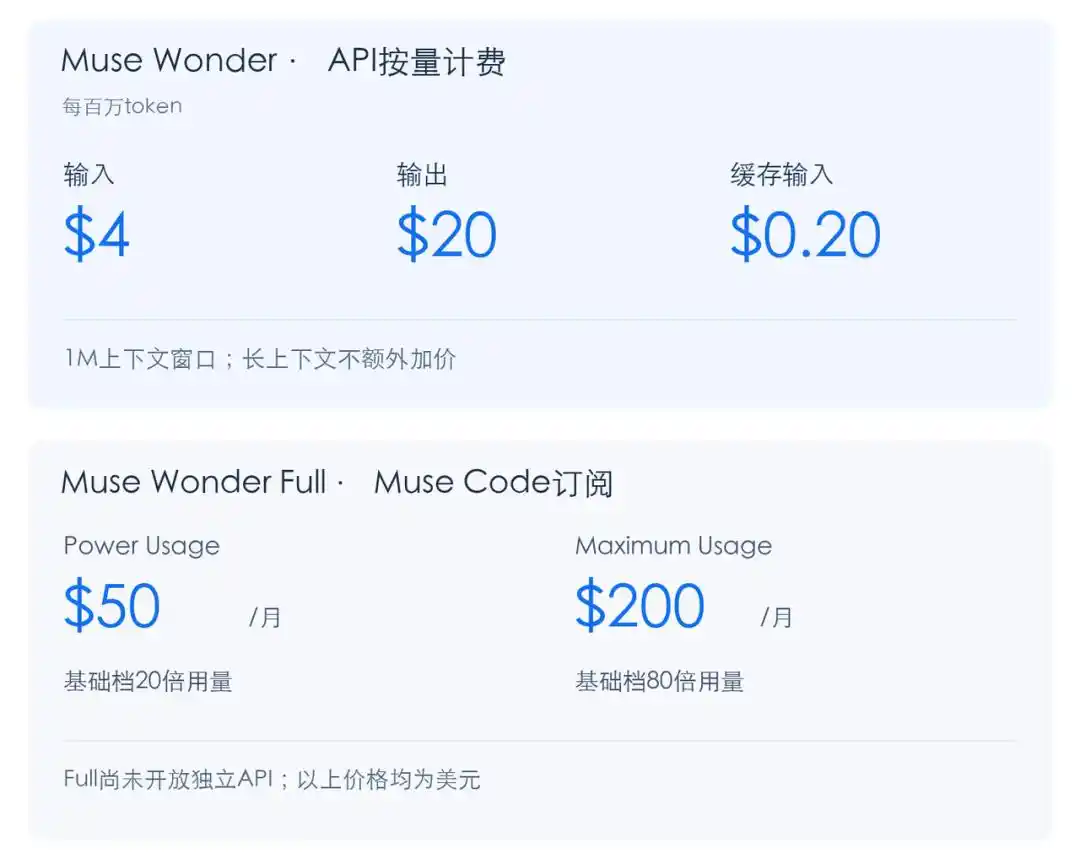
Pricing: Standard version API costs $4 per million tokens for input, $20 for output; Full is available through Muse Code subscription at $50 or $200 per month.
Jumped 8 Points in Six Weeks, Wins All Ten Tests Against Predecessor!

According to Artificial Analysis, only six weeks passed between the release of Muse Spark 1.3 and the new models.

The Intelligence Index surged from 48 points to 56 points, a full 8-point jump!
All ten tests surpass Spark 1.3; six enter the top three, two take first place!

In scientific reasoning CritPt and professional document GDP.pdf, Full scored 33%, ranking first on the AA current leaderboard! In professional knowledge work GDPval-AA v2.1, Full scored 1857 Elo, ranking second.

Three other third-place finishes: knowledge work AA-Briefcase, business process automation AutomationBench-AA, and scientific programming SciCode.

Terminal-Bench 4.0 requires AI to read files, type commands, and handle errors itself. Spark could only complete 33% of tasks, while Full achieves 57%, a 24-percentage-point leap!

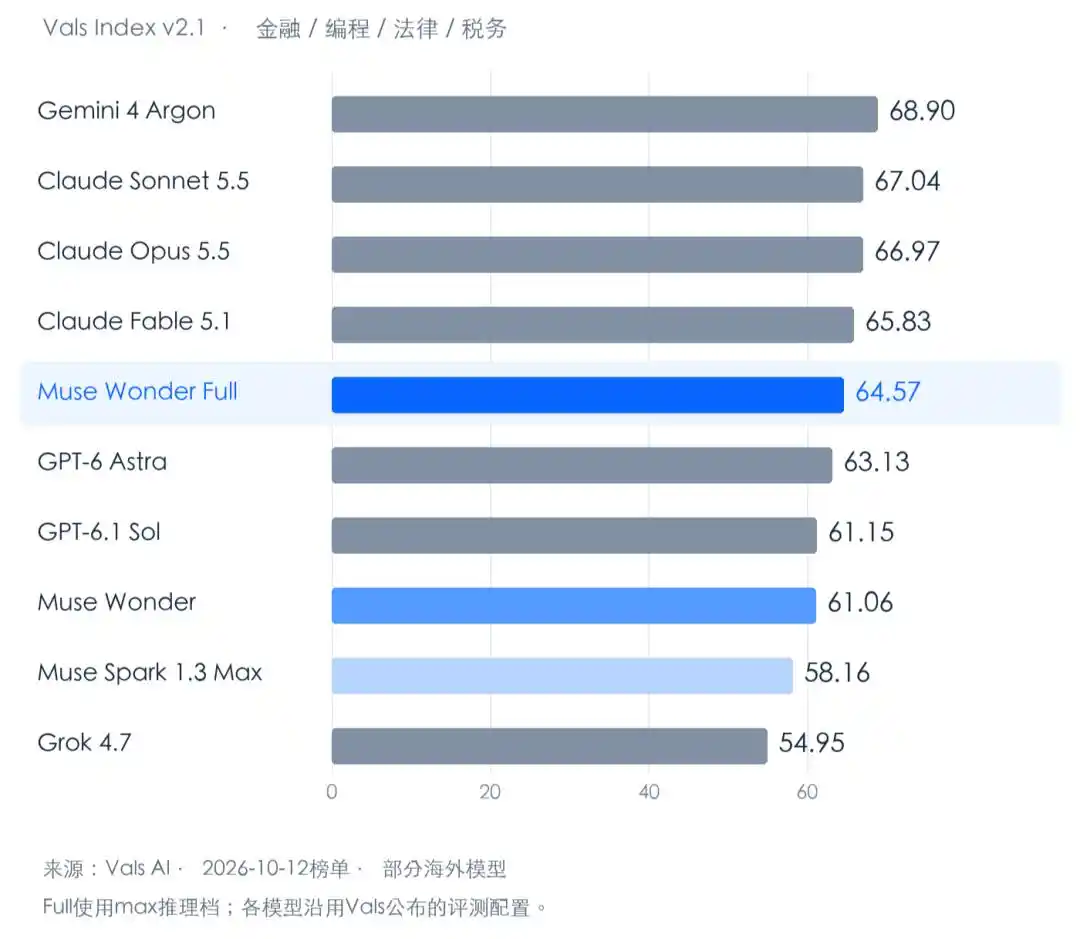
Another evaluator, Vals, also released new results.

On the Vals Index comprehensive benchmark covering finance, programming, law, and tax work, Wonder Full scored 64.57 points, ranking fifth and surpassing all OpenAI models on the list!
Beyond benchmarks, Conductor developer Charlie Holtz has already integrated Wonder into his codebase.

Unexpectedly, Muse found a real security vulnerability in one go, which other Agents had previously missed.

He even praised its design and visualization, CLI speed, and voice mode, boldly stating "Meta is now at the forefront!"

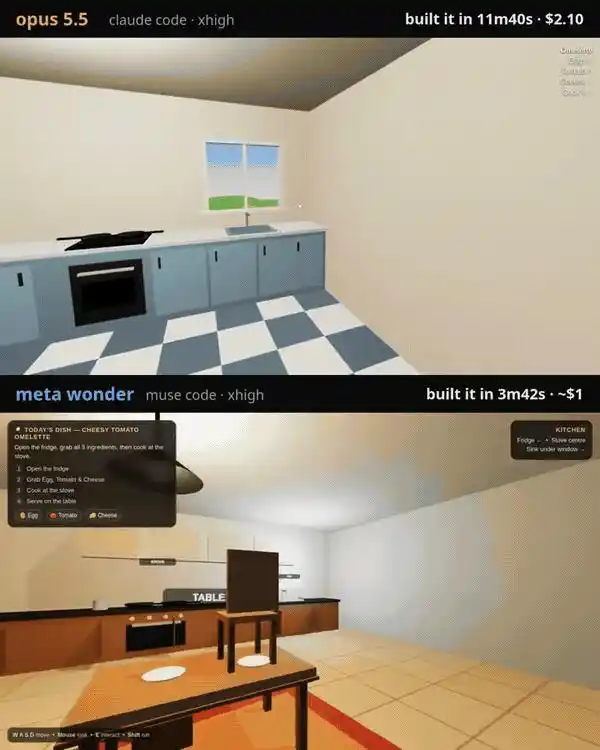
In another test, developer Yair conducted a same-topic comparison, having Wonder and Opus 5.5 create a first-person 3D game.

Claude Code with Opus 5.5 took 11 minutes 40 seconds, while Muse Code with standard Wonder only took 3 minutes 42 seconds, not even four minutes!
Surpasses Opus in Long Tasks, Programming Lands Heavy Blows on Astra

On the SWE-Marathon benchmark for long-term tasks, Full scored 57.5%, Opus 5.5 scored 46.3%, Astra scored 42.5%.

The lead margins are 11.2 and 15 percentage points respectively!

Even without using Full, the standard Wonder scored 53.1%, also surpassing these two flagships.
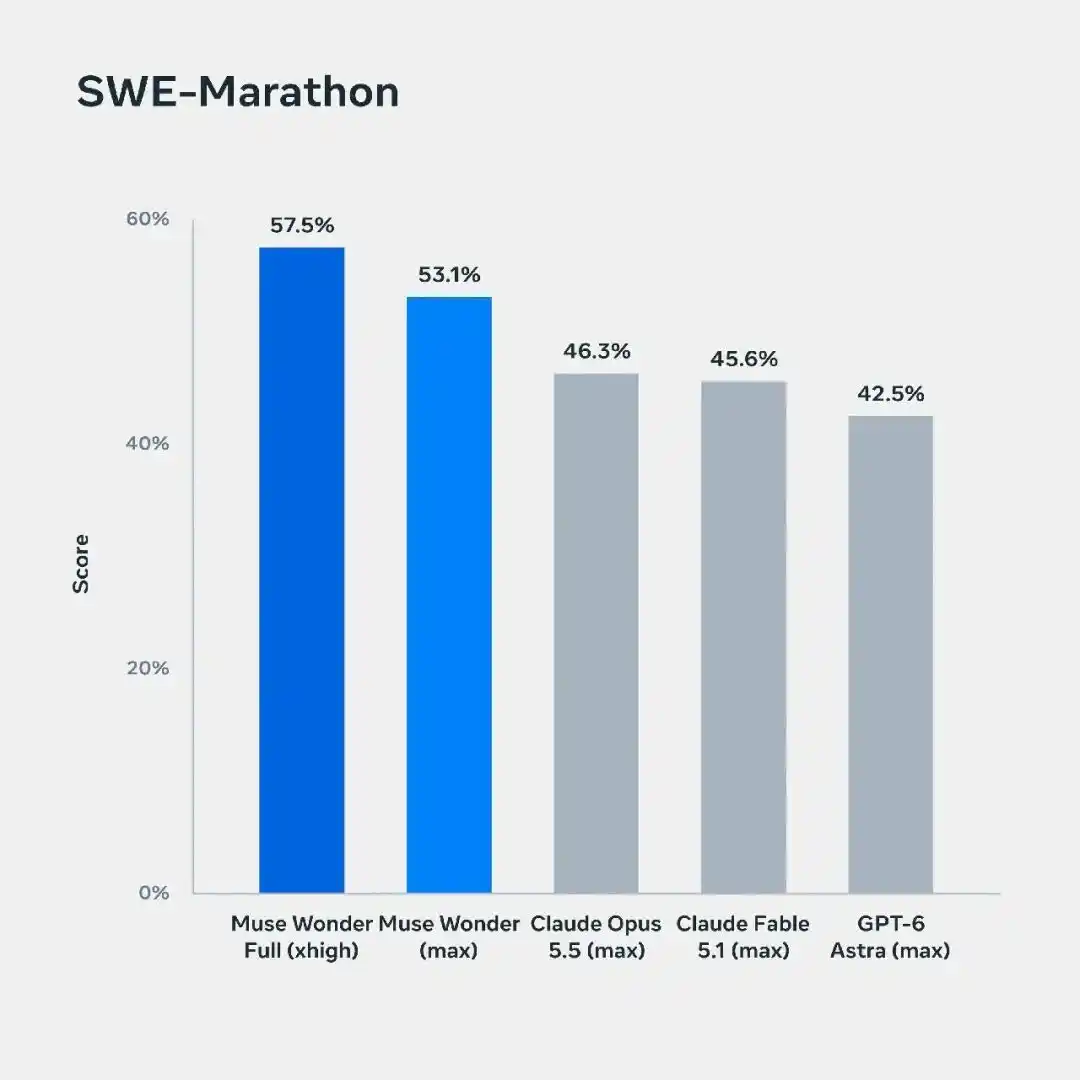
SWE-Marathon requires AI to continuously complete software projects: read requirements, modify multiple files, run tests, find reasons after errors, and continue modifying.

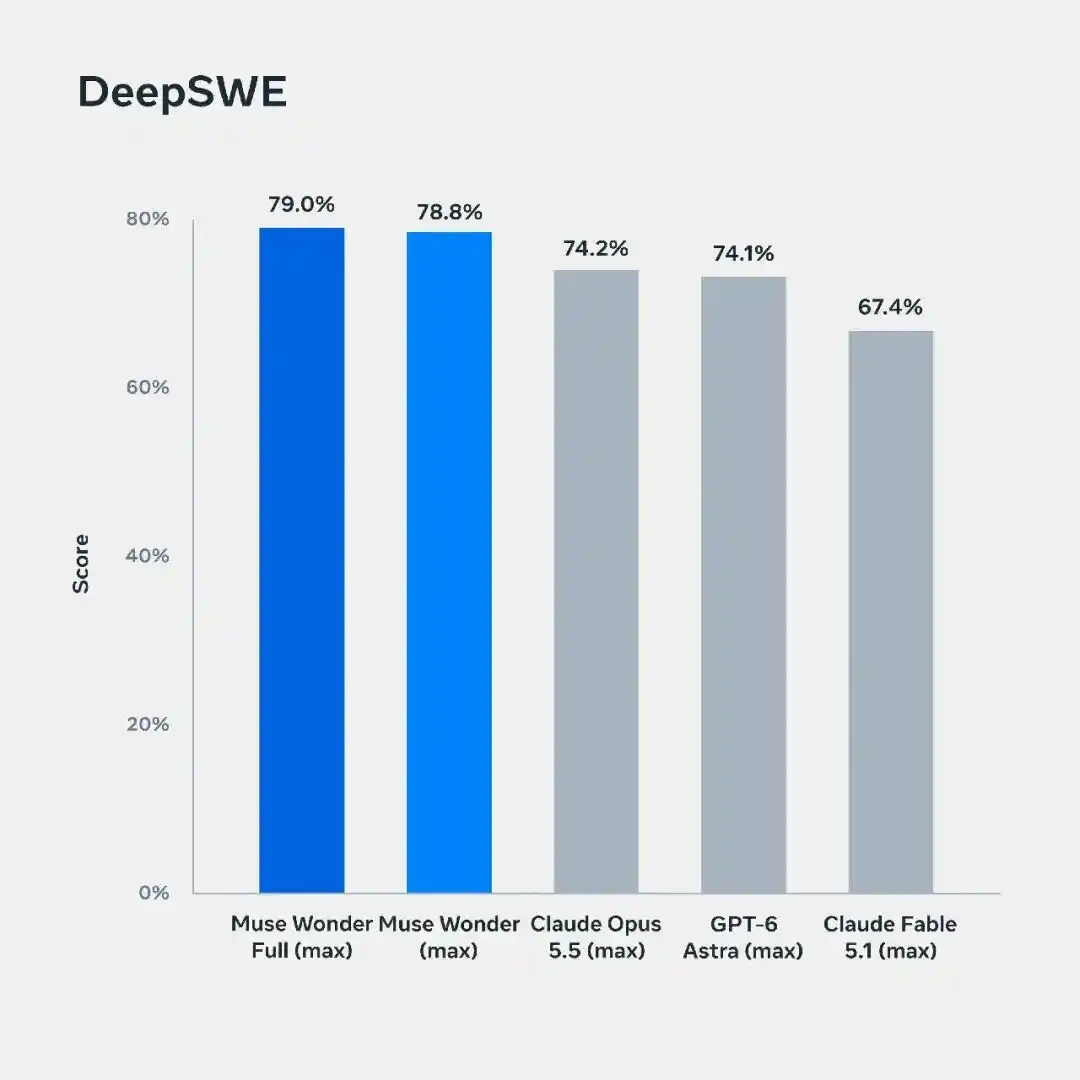
DeepSWE v1.1 contains 113 tasks, involving 91 code repositories and five programming languages.

In Meta's aggregated scores, Full achieved 79.0%, Wonder 78.8%, with Opus and Astra at 74.2% and 74.1% respectively.
Looking at AA's Programming Agent leaderboard (Coding Agents Index), Muse Code with Full scored 68 points, tying Claude Code with Sonnet, and surpassing the 66 points with Opus.

The previous generation Muse Code with Spark 1.3 only scored 54 points. Switching to Full directly increased by 14 points! With standard Wonder, it also scores 63 points.
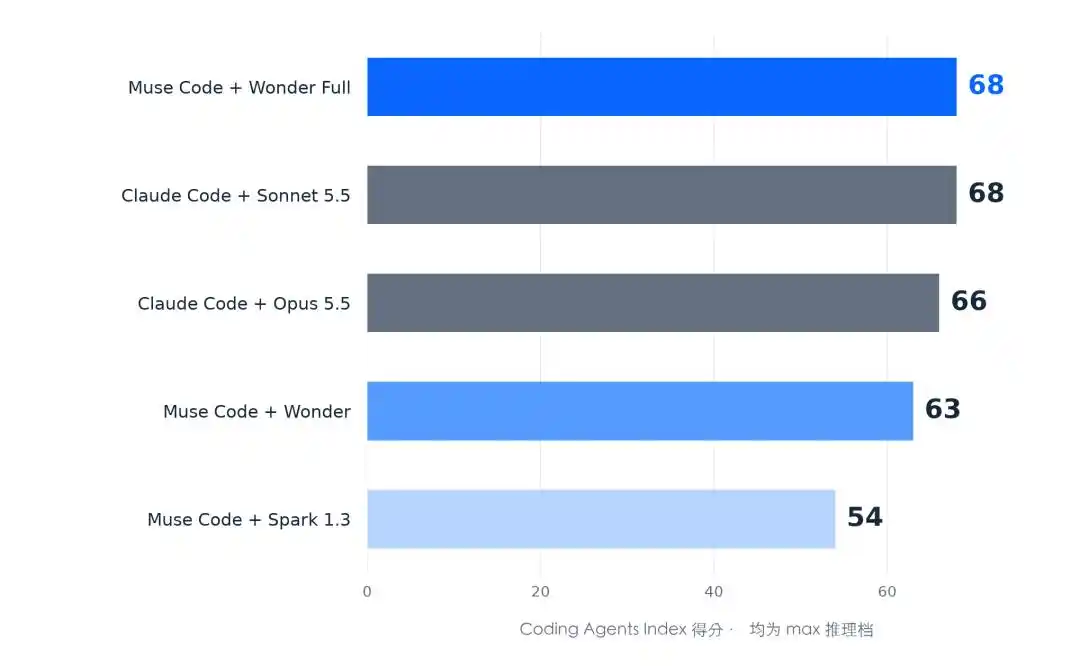
Artificial Analysis programming agent test results for Muse Code and Claude Code.

In zero-shot programming ProgramBench, Full scored 59.0, higher than Astra's 52.5; Opus scored 70.5.

Terminal programming scores: Full 57.1, Astra and Opus 59.1 and 59.6 respectively.

Additionally, results from a larger-scale vulnerability test are in.

The maintainer of VulnPR-100 assigned Wonder 1.0 100 code changes with known vulnerabilities, each with a one-hour time limit.

It found 46, tying with GPT-6 Astra. The total cost was $284.88, averaging $6.19 per vulnerability.

Solves 36 More Math Problems, Uses 40% Fewer Tokens

On Vals AI's ProofBench, Full correctly solved 94 math proof problems, 36 more than the previous generation; on the same list, Opus solved 100, Astra 99.

Solved more problems, yet output tokens dropped from 4.5 million to 2.7 million, 40% less! On application problems, the score remained around 86%, with average steps decreasing from 120 to 62.
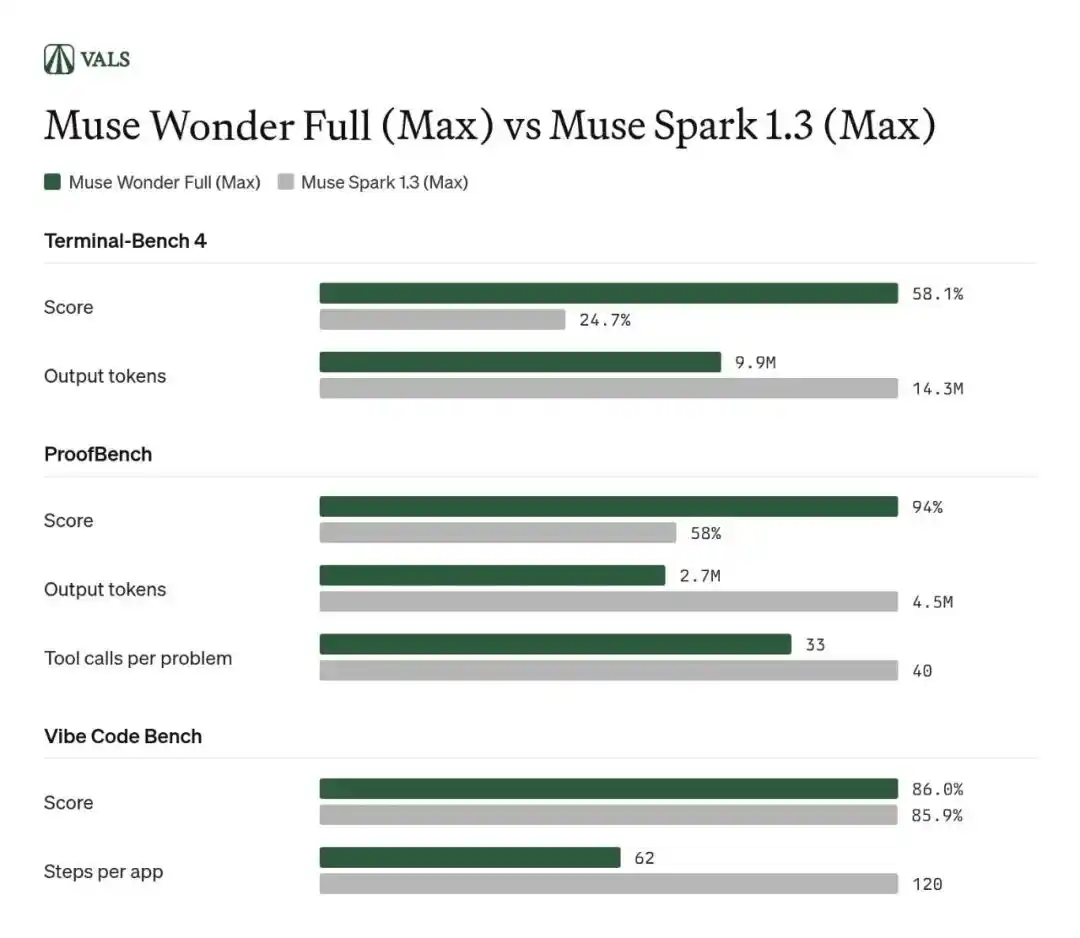
Exceeds Opus in 8 of 14 Areas, Law Score Reaches 3.1x

In the legal task Harvey LAB-AA, Full scored 13.1 points, Opus 4.2 points, the former being 3.1 times the latter! In finance tasks, it scored 59.1 points, surpassing Opus's 58.6 and Astra's 53.5.

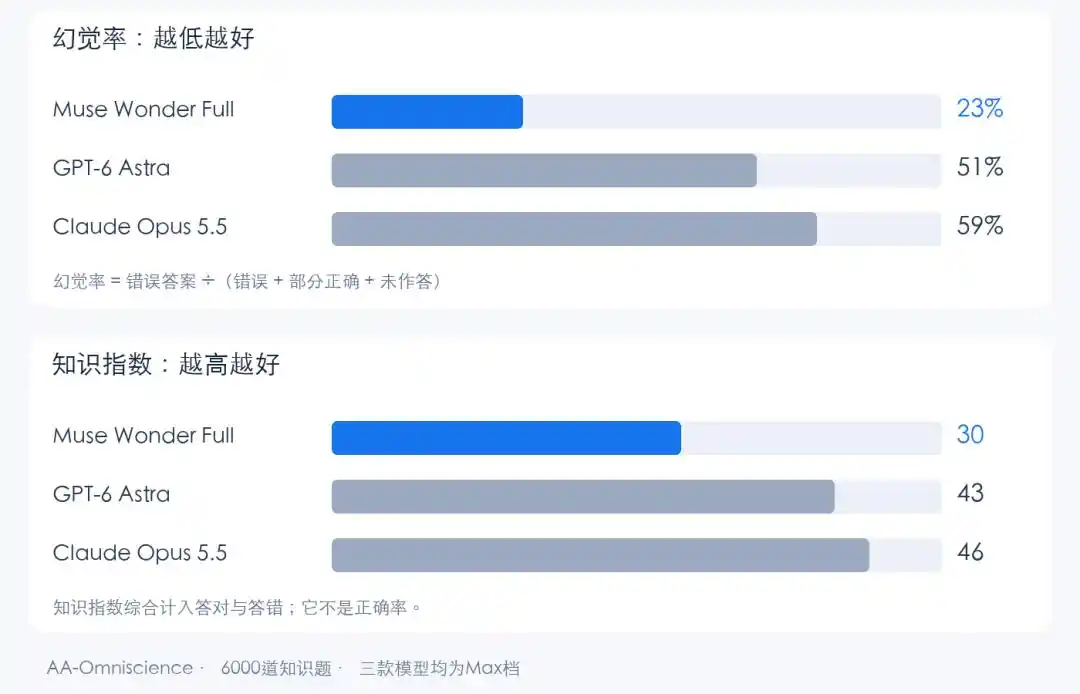
For professional work, fabricating fewer answers is crucial. On AA's 6000 knowledge questions, Full's hallucination rate was 23%, Astra 51%, Opus 59%; this statistic refers to the proportion of incorrect answers still provided among questions not answered correctly.

Full is less likely to force an answer, but its knowledge index is still 30, lower than Astra's 43 and Opus's 46.
Gigawatt-Scale Training

The "Ultimate Beast" from Prometheus

The terrifying strength of Muse Wonder stems precisely from the gigawatt-scale supercomputing behind it.

Fourteen months ago, Meta quietly initiated a complete overhaul of its entire AI infrastructure and R&D paradigm.

The birthplace of this Muse Wonder is the long-rumored gigawatt-scale Prometheus super data center.

Meta continued to scale up pretraining and reinforcement learning here: pretraining builds broad foundational capabilities, and reinforcement learning adjusts the model's behavior based on task feedback.

Even more astonishing are its base capability specifications:

1 million Token massive reasoning context: Whether it's a complete large codebase, hundreds of pages of complex M&A contracts, or several hours of audio/video recordings, it can swallow them all in one go;

Native multimodal input support: Integrates text, high-resolution images, long videos, and continuous audio;

Qualitative change in "Big Model Smell": Meta specifically addressed the AI community's skepticism about model "generalization ability" in its blog.

To ensure models can complete complex projects, Meta incorporated a vast number of diverse, longer-duration tasks into training. Taking programming as an example, models must remember requirements, modify multiple files, undergo rounds of testing and revisions, continuously advancing the project.

A stronger foundation model must also apply learned capabilities to new problems.

Meta incrementally increased computational allocation during inference; both model generations' scores on unfamiliar tasks improved accordingly. When they achieved similar scores on tasks heavily covered during post-training, Full still performed better on tasks not heavily covered.
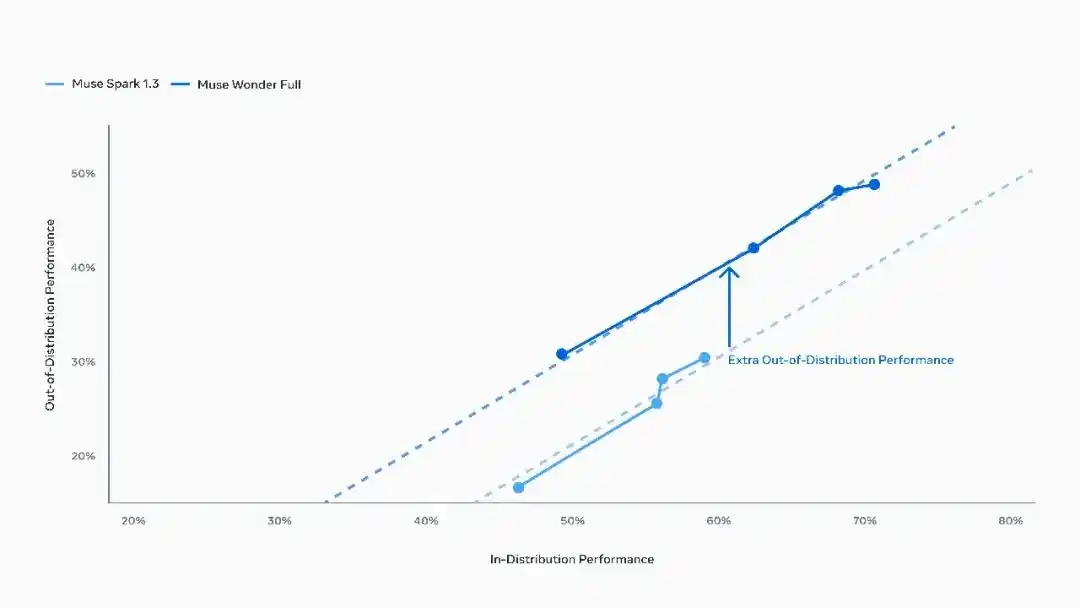
Horizontal axis: Tasks heavily covered in post-training. Vertical axis: Tasks not heavily covered.

After 14 Months of Rebuilding, Zuck Has Finally Fought Back!

Now, the standard Wonder is already available on the Meta Model API and Muse Code.

API usage pricing: $4 per million tokens for input, $20 for output, cached input $0.20. Context window reaches 1 million tokens, with no extra charge for long context.

Full is currently only available through Muse Code subscription: Power Usage is $50/month, Maximum Usage is $200/month, offering 20x and 80x the base usage tier respectively. Independent API is not yet available.

The personal assistant Muse will also integrate Wonder, rolling out first to subscribers as per the official plan.

Although initial users encountered quota anomalies, Alexandr Wang stated the team is fixing it and promised to reset quotas after repair.

Now, Meta is also coming for the territory of Claude Code and Codex!

References:

https://research.meta.ai/blog/muse-wonder/

https://research.meta.ai/static/muse-wonder-model-card

This article is from the WeChat public account "Xin Zhi Yuan", author: ASI Apocalypse
Trending Cryptos

Related Questions

QWhat are the two new large language models recently announced by Meta, and what are they described as?

AMeta recently announced two new large language models: Muse Wonder and Muse Wonder Full. They are described as Meta's strongest models to date and a historic leap towards 'personal superintelligence'.

QWhat key technical capabilities are highlighted as major strengths of the new Muse models?

AThe major technical strengths highlighted for the new Muse models are their 'Active Memory' and 'Active Focus' capabilities, which help the model retain user information and improve its approach when encountering obstacles.

QHow do the new Muse models perform in long-task programming benchmarks according to the article?

AIn the long-task programming benchmark SWE-Marathon, the Muse Wonder Full scored 57.5%, outperforming Claude Opus 5.5 (46.3%) and GPT-6 Astra (42.5%). The standard Muse Wonder also scored 53.1%, surpassing both competitors.

QWhat is the price structure for accessing the Meta Muse Wonder models?

AThe standard Muse Wonder API costs $4 per million tokens for input and $20 per million tokens for output. The Muse Wonder Full model is available through Muse Code subscriptions at $50 or $200 per month, which provide 20x and 80x the base usage, respectively, and is not available as a standalone API yet.

QWhat significant infrastructure project is mentioned as the backbone for training these new powerful models?

AThe models were trained using Meta's massive Prometheus super data center, a gigawatt-scale computational infrastructure, which enabled the extensive pre-training and reinforcement learning necessary for their advanced capabilities.

Related Reads

Research Report Interpretation | Space Fund Scale Grew to $18 Billion in One Year, but In-Orbit Direct Investment Accounts for Only 3%

Barclays analysts Katherine Ogundiya and team published a 61-page report on November 16 introducing an "in-S.P.A.C.E." framework for the in-orbit economy, screening 37 commercial space activities down to 15 priority areas and 3 wildcard sectors. Global space-themed fund assets grew from $1.24 billion in Q2 2024 to over $18 billion by Q2 2026, yet only 3% is directly invested in in-orbit operations, while 47% sits in semiconductors, components, and software. Private markets are more direct: of 33 space unicorns worth about $92 billion, 9 in-orbit operators account for roughly $26 billion, or 28%. Global government space spending reached $141 billion in 2025, up 7.4%. The report identifies five physical bottlenecks—launch concentration, spectrum and network routing, orbital congestion, in-orbit servicing standards, and regulatory approval—noting China and the U.S. accounted for over 82% of orbital launch attempts from 2024 to July 2026, with SpaceX and CASC together near 71%, and Starlink performed over 207,000 collision-avoidance maneuvers between December 2025 and May 2026. Among the highest-scoring priority tracks, GEO satellite life extension offers clear economics: about 85% of GEO satellites retire from fuel depletion, and extending life five years costs roughly $65 million versus $150–300 million for a replacement. Orbital AI computing and data centers scored only 8, ranking as a wildcard due to unresolved thermal, power, and economic challenges. Barclays maps over 350 companies across four investment paths: integrated launch and space systems players like Rocket Lab (RKLB) and Firefly (FLY), bottleneck-breaking specialists such as Astroscale, MDA Space, Mynaric, and Thales, "picks and shovels" suppliers including Linde (LIN) and Air Liquide, and downstream applications like Planet Labs (PL) and AST SpaceMobile (ASTS). A heavy-lift rocket launch now consumes about 8,000 tonnes of liquid oxygen, five times a traditional large rocket's 1,600 tonnes, with Linde projecting about $1 billion in annual space revenue by 2030.

marsbit59m ago

Research Report Interpretation | Space Fund Scale Grew to $18 Billion in One Year, but In-Orbit Direct Investment Accounts for Only 3%

marsbit59m ago

The AI Bubble Has Already Burst, Yet Retail Investors Are Still Frantically Buying the Dip: A Hedge Fund Veteran Warns Nvidia's Risks Are Far From Over

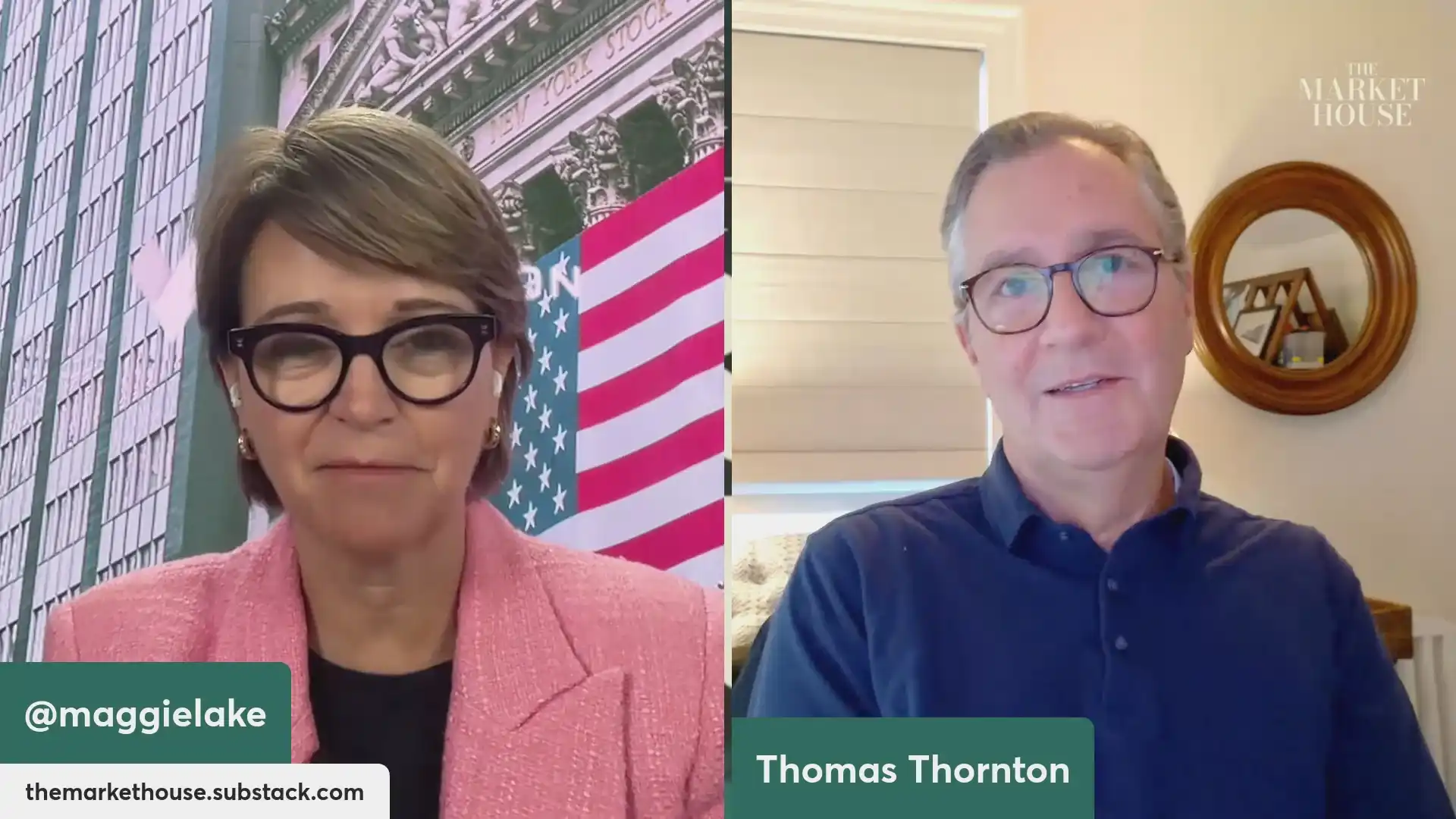
Former hedge fund trader Tom Thornton warns that the AI bubble has already burst, yet retail investors remain trapped in "buy the dip" muscle memory while institutions steadily reduce tech exposure. He points to record single-week inflows into QQQ (~$13.4 billion) even as prices fell—a classic topping pattern where dip-buying eventually fails and confidence collapses. Thornton argues AI's boom rests on a fragile chain of circular financing deals that must unfold perfectly; several links are already cracking. On Nvidia, he stresses that DOJ and congressional investigations aren't short-term noise—any evidence of knowingly bypassing export controls could trigger criminal, not just civil, liability and hammer the business model and valuation. He expects management to spin earnings positively, but even a slight guidance cut could crush the stock and wash out retail dip-buyers, making 2027 a tougher year for markets. Thornton is watching DeMark indicators on the Nasdaq 100 and Mag 7 for true capitulation, noting defensive sectors like staples and utilities are now flashing sell signals. He remains long gold, has started buying silver and gold miners (GDX), is baffled by Anthropic IPO valuations, exited Alibaba on Nvidia-related news, would short a SpaceX-Tesla merger on antitrust grounds, and says the ultimate contrarian buy signal is a front-page photo of a floor trader with his head in his hands.

marsbit59m ago

The AI Bubble Has Already Burst, Yet Retail Investors Are Still Frantically Buying the Dip: A Hedge Fund Veteran Warns Nvidia's Risks Are Far From Over

marsbit59m ago

World Bank Joins Forces with Citi and Circle: Global Aid Funds Poised for On-Chain Settlement via USDC

On November 18, the World Bank Group announced a strategic collaboration with Citi and Circle to explore using the regulated USD stablecoin USDC and blockchain networks to supplement existing cross-border official development assistance (ODA) disbursement systems. The pilot aims to reduce correspondent banking fees, shorten cross-border settlement times, and enhance transparency, starting with borrower countries where digital asset use is legally permitted. Under the division of roles, Circle provides compliant stablecoin infrastructure, minting and clearing USDC on designated blockchains with each token backed 100% by USD cash and short-term Treasuries. Citi leverages its global treasury and trade finance network to bridge traditional fiat payment rails and blockchain networks, validating settlement models interoperable with central banks and local banking systems while ensuring sovereign funds remain fully regulated. Traditional ODA flows rely heavily on SWIFT and多层 correspondent banks, with infrastructure projects in developing countries often routed through three to four intermediary banks, taking three to five business days per transfer, incurring high fees, FX spread losses, and delays from time-zone mismatches and manual reviews. Regulated stablecoin settlement enables near-real-time peer-to-peer on-chain delivery after compliance approval, cutting intermediary layers and sending funds directly to licensed institutions in borrower countries. The initiative builds on the World Bank's FundsChain consortium blockchain, which as of November 18 has connected over 350 sovereign and multilateral development projects across 96 countries, averaging about 3.6 on-chain projects per recipient country. Every transaction—from initial disbursement to treasury receipt to supplier settlement—is recorded on-chain in real time, allowing donors and auditors to verify usage and prevent fund diversion. This marks the first time a core multilateral development institution has formally introduced a regulated stablecoin in sovereign development aid disbursement alongside a major international bank, setting a benchmark for institutional RWA settlement and cross-border payment infrastructure. Next steps include joint testing on central bank FX and digital asset regulatory exemptions, technical standards for commercial bank clearing node access, and automated reconciliation between on-chain stablecoin flows and the FundsChain ledger.

marsbit1h ago

World Bank Joins Forces with Citi and Circle: Global Aid Funds Poised for On-Chain Settlement via USDC

marsbit1h ago

Licenses Are in Hand—So Why Is Crypto Payment Still Not Working?

Why do crypto payment businesses still stall even after obtaining licenses? The core problem is not the number of licenses but whether customers, assets, fiat money, and liability are aligned on a single executable business chain. A license only answers whether a given entity may conduct a regulated activity; it does not resolve who onboards the customer, who controls the stablecoin, who pays out euros, why the bank accepts the funds, or who handles refunds and freezes. Projects often list all group licenses together, assuming they cover the whole business, yet a US MSB registration is not a nationwide money transmission license, and an EU CASP passport under MiCA does not automatically grant payment or e-money institution permissions. Three paths must be reconstructed for any transaction: the customer relationship path (which group company contracts with the client), the crypto asset control path (whose address, whose keys, who decides execution), and the fiat funds path (whose account receives converted funds, whether the bank permits such use, and who pays the merchant). Banks may refuse accounts not because they reject crypto generally but because the proposed account use is unacceptable—licensing does not guarantee banking. With many partners (wallets, KYC providers, liquidity, payment institutions), responsibility easily fragments; MiCA Article 73 makes clear that outsourcing does not transfer regulatory responsibility. Compliance must be continuous—ongoing KYC, transaction monitoring, Travel Rule compliance, sanctions and fraud controls—and must cover before, during, and after a failed transaction. Before launch, projects should stress-test one representative transaction end-to-end, answering who contracts, who controls assets, whose account receives funds, why the bank accepts them, and who is liable when things go wrong. Planning should proceed in three stages: design the business then choose the regulatory path; design licenses, accounts, and fund flows together; and validate the structure through real transactions. The goal is not the most licenses but a complete operating structure in which every payment follows a lawful, clear, sustainable path.

marsbit1h ago

Licenses Are in Hand—So Why Is Crypto Payment Still Not Working?

marsbit1h ago

The Real Reason Jensen Huang Was Brought Down: Rubio's Political Springboard

This article analyzes the 2026 ousting of Nvidia CEO Jensen Huang as a window into the internal power struggle within the American right. The author argues Huang's downfall was not primarily about insufficient political donations but about betting entirely on Trump's "expansionist" faction while alienating the party's hawks and populists. Timeline: Huang cultivated Trump through 2025 with donations and lobbying for chip exports, but reports emerged linking him to Megaspeed and a figure named Huang Le suspected of collecting information for a rival state. Secretary of State Rubio wrote a memo warning of the risk, which was ignored by Trump, then leaked to media after Democrats won Congress in the November midterms. Huang admitted an extramarital affair, and the board forced him out, tanking Nvidia's stock. The deeper cause: Trump's MAGA brand is losing influence, and the midterm defeat signals his lame-duck status. Rubio, only 55, is positioning himself for the post-Trump era by proving he can rein in the president's AI agenda—the memo served as a political springboard. Treasury Secretary Bessent, a hawk, consistently pushed to blacklist Megaspeed and now calls for major change at Nvidia's board. Trump's stubborn pro-AI expansion stance (despite 70% public opposition to local data centers) is attributed to donor money and family enrichment: his sons' ventures secured billions in federal contracts and loans, with presidential pardon power as a potential safety net. The article also raises a more conspiratorial theory that AI is becoming a价值观 (value) transmission tool replacing traditional media, and notes the ethnic background of tech leaders—while observing that Claude refused to engage with that framing. Finally, it asks whether Musk is next: unlike others who donated to both parties, Musk bet $474 million entirely on Republicans and lost badly, and Democratic-led Texas now threatens his data center and SpaceX projects. Democrats are expected to tighten AI policy, reclaim projects from Trump's family, and target Musk via Starshield and DOGE contract investigations.

marsbit1h ago

The Real Reason Jensen Huang Was Brought Down: Rubio's Political Springboard

marsbit1h ago

Trading

Spot

Hot Articles

How to Buy NIGHT

Welcome to HTX.com! We've made purchasing Midnight (NIGHT) simple and convenient. Follow our step-by-step guide to embark on your crypto journey.Step 1: Create Your HTX AccountUse your email or phone number to sign up for a free account on HTX. Experience a hassle-free registration journey and unlock all features.Get My AccountStep 2: Go to Buy Crypto and Choose Your Payment MethodCredit/Debit Card: Use your Visa or Mastercard to buy Midnight (NIGHT) instantly.Balance: Use funds from your HTX account balance to trade seamlessly.Third Parties: We've added popular payment methods such as Google Pay and Apple Pay to enhance convenience.P2P: Trade directly with other users on HTX.Over-the-Counter (OTC): We offer tailor-made services and competitive exchange rates for traders.Step 3: Store Your Midnight (NIGHT)After purchasing your Midnight (NIGHT), store it in your HTX account. Alternatively, you can send it elsewhere via blockchain transfer or use it to trade other cryptocurrencies.Step 4: Trade Midnight (NIGHT)Easily trade Midnight (NIGHT) on HTX's spot market. Simply access your account, select your trading pair, execute your trades, and monitor in real-time. We offer a user-friendly experience for both beginners and seasoned traders.

7.5k Total ViewsPublished 2025.12.08Updated 2026.06.02

How to Buy NIGHT

Discussions

Welcome to the HTX Community. Here, you can stay informed about the latest platform developments and gain access to professional market insights. Users' opinions on the price of NIGHT (NIGHT) are presented below.

活动图片