Has It Already Cozied Up to SK Hynix? With Photovoltaic Main Business Liabilities at 93%, Huamin Shares Chooses to Burn Cash Betting on Semiconductors as Its Second Growth Curve. Is This Reliable?

marsbitPublished on 2026-09-13Last updated on 2026-09-13

Abstract

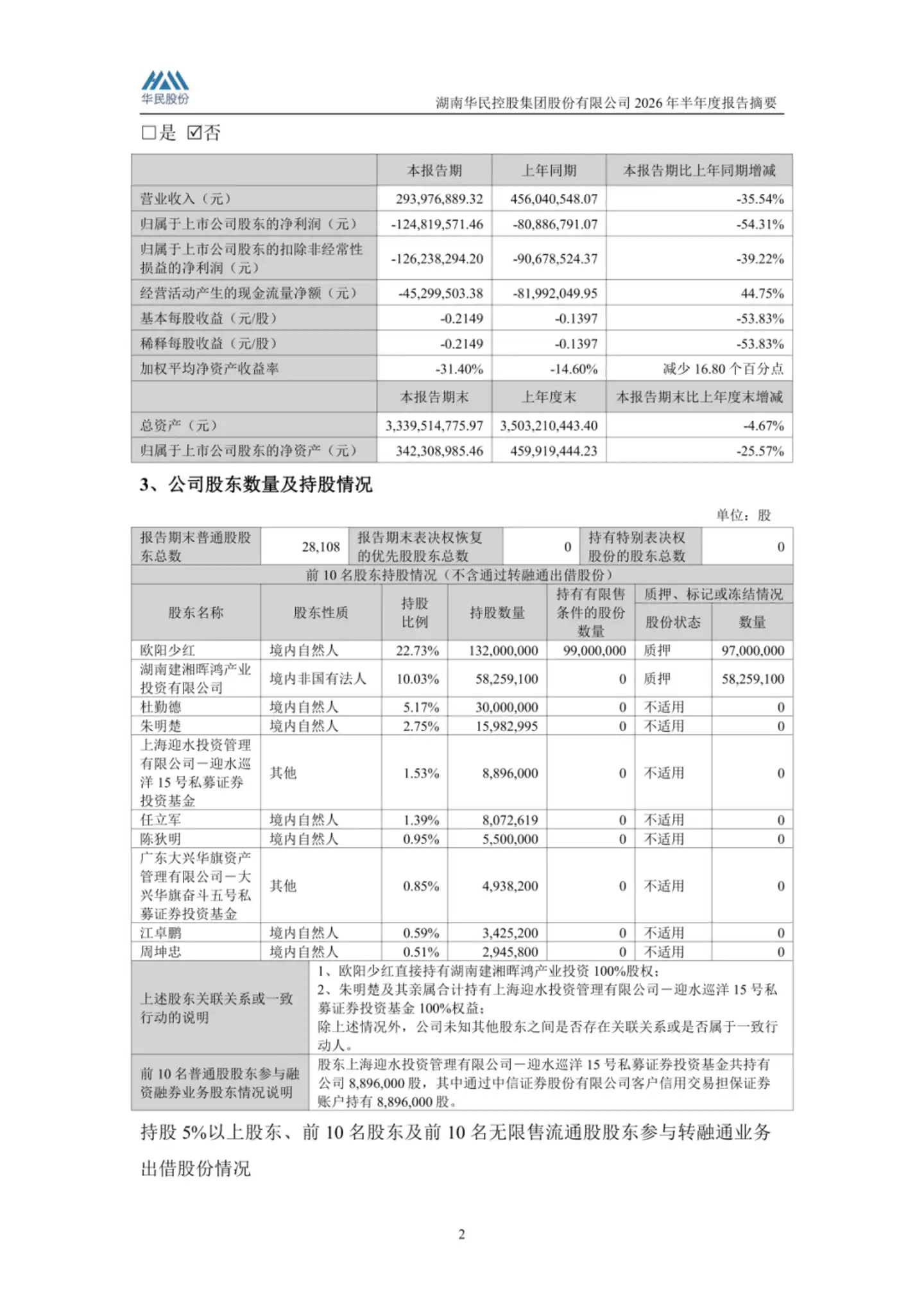
In the context of deep losses across the entire photovoltaic (PV) industry chain, Huamin Co., Ltd. is attempting to pivot towards the semiconductor sector as a second growth curve. Its latest financial report reveals significant challenges: H1 revenue fell 35.54% year-on-year to 294 million yuan, with a net loss of 125 million yuan. The company's debt-to-asset ratio has surged to 93.11%, with short-term debt constituting 95.03% of total debt. Its core PV business, contributing 85.11% of revenue, reported a gross margin of -25.78%. In stark contrast, the nascent semiconductor business generated 2.91 million yuan in revenue with a high gross margin of 62.14%. The company recently entered the semiconductor silicon parts market for etching equipment through a strategic partnership with Huachuan Semiconductor, a Sino-Korean joint venture and supplier to SK Hynix. While the technical transition from PV-grade to semiconductor-grade silicon is feasible, the entry barriers are substantially higher, with the global market dominated by overseas giants. The lengthy and stringent customer qualification process, often taking 18 to 36 months, poses a critical timing challenge. Analysts highlight a severe "second-curve timing mismatch." The cash-burning PV business is deteriorating faster than the semiconductor unit can generate profits. Even if semiconductor revenue meets internal targets (60 million yuan by 2026, 300 million yuan by 2027), the resulting gross profit would be insufficient...

By Foresee Energy

Against the backdrop of deep losses across the entire photovoltaic industry chain, a number of PV companies are setting their sights on semiconductors.

Foresee Energy notes that the financial data from Huamin Shares' interim report is unfavorable: revenue of 294 million yuan, a year-on-year decrease of 35.54%; net profit attributable to shareholders of -125 million yuan; and an asset-liability ratio that has climbed to 93.11%. Of the total debt of 885 million yuan, short-term debt accounts for a high proportion of 95.03%. Notably, the semiconductor business revenue was 2.91 million yuan with a gross margin of 62.14%, forming a stark contrast with the photovoltaic main business revenue of 250 million yuan and a gross margin of -25.78%.

As early as August 6, Huamin Shares announced a strategic cooperation agreement with Huachuan Semiconductor, a Sino-Korean joint venture, to enter the semiconductor etching equipment core silicon component track. Perhaps because Huachuan Semiconductor has long been a supplier to SK Hynix, the stock price deviated cumulatively by over 30% for three consecutive trading days after the cooperation news was announced.

Foresee Energy believes that this company, which crossed over into photovoltaics just four years ago, is experiencing a typical "second curve timing mismatch." The new track direction is correct, but the bleeding rate of the old business is far faster than the hematopoietic capacity of the new business.

Losses in the Photovoltaic Main Business Are Still Accelerating

In fact, Huamin Shares' financial data can no longer be simply explained by the four words "industry cycle."

In the first half of the year, the company's gross margin was -18.84%, net margin was -54.49%, and return on equity was -31.4%. Photovoltaic products contributed 85.11% of revenue, but the gross margin has fallen to -25.78%. Looking at non-GAAP net profit, the company has suffered losses for eight consecutive years since 2017.

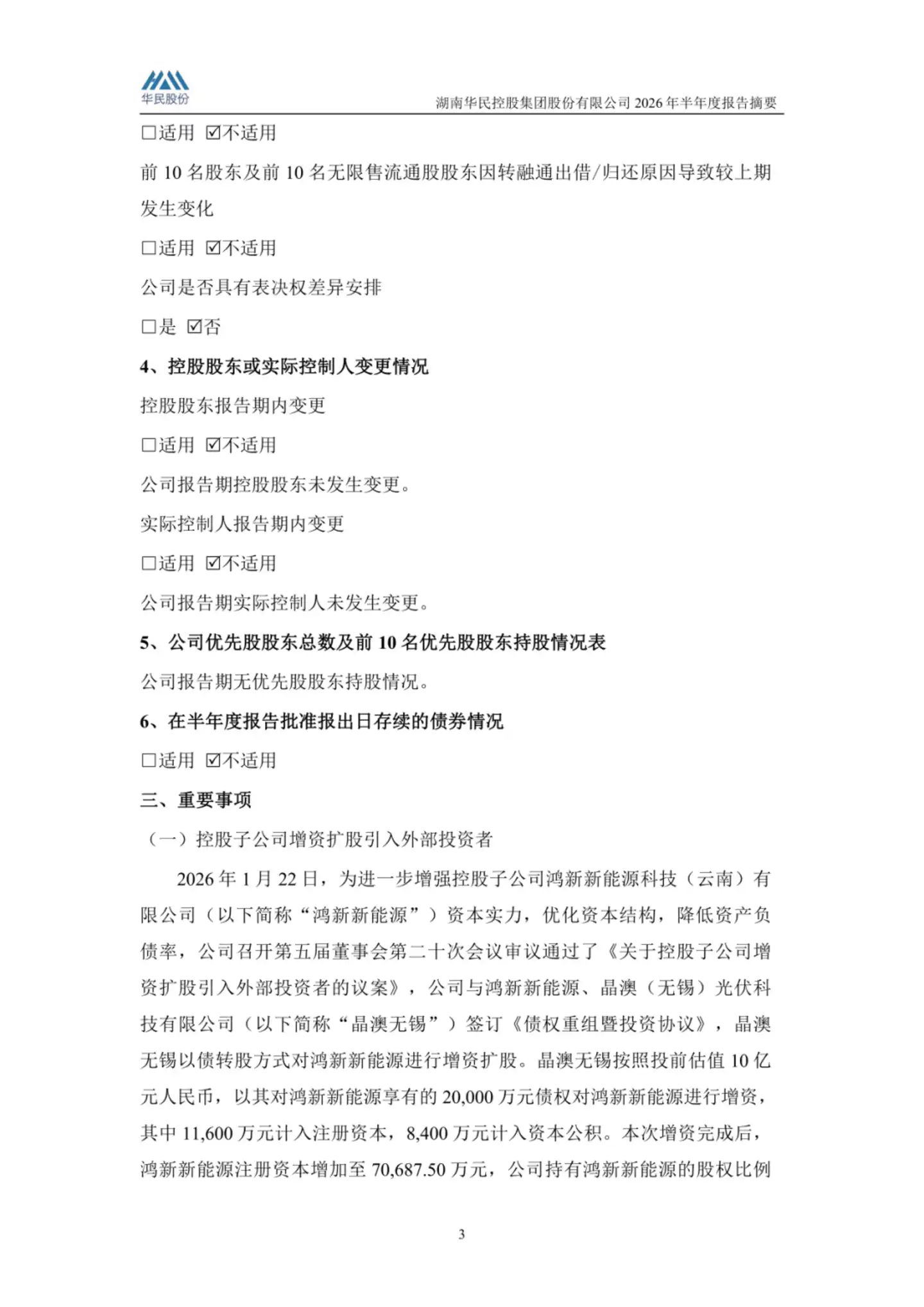
The deeper issue lies in the debt structure. Of the total debt of 885 million yuan, short-term debt accounts for 95.03%, with short-term loans as high as 384 million yuan. As of the reporting period end, the net assets attributable to the listed company's shareholders were only 342 million yuan, a decrease of 25.57% compared to the end of the previous year.

This means that Huamin Shares must repay almost all its debt in a very short time, while the cash-generating capacity of its photovoltaic main business continues to deteriorate. Net cash flow from operating activities was -45.2995 million yuan, and monetary funds decreased by 40.80% compared to the beginning of the year. The company explained this as "increased demand for debt repayment and working capital."

The silicon wafer segment is one of the most severely loss-making sections in the entire industry. In the first half of 2026, mainstream monocrystalline N-type silicon wafer prices fell from 1.40 yuan per piece to 0.88 yuan per piece, a drop of 37.14%.

Calculations by the China Photovoltaic Industry Association show that the fully burdened production cost including tax for N-type G12R silicon wafers is 1.945 yuan per piece, while the actual transaction price is only between 1.2 and 1.3 yuan per piece.

However, Huamin Shares' predicament is not an isolated case. GCL System Integration Technology pre-reported a loss of 590 to 690 million yuan for the first half; Tongwei and LONGi have reported losses for 10 consecutive quarters. But what makes Huamin Shares special is that its balance sheet is more fragile than most peers. A liability ratio of 93.11% far exceeds the industry average.

The industry consensus now is that the capacity clearance in photovoltaics is far from over. This is equivalent to saying that the company's most critical revenue source shows no sign of stopping the bleeding in the short term.

Technologically Homologous, But the Entry Thresholds Are Not on the Same Order of Magnitude

Of course, the logic behind Huamin Shares' move into semiconductor silicon components, as mentioned earlier, is not imagined out of thin air.

Photovoltaic-grade monocrystalline silicon and semiconductor-grade monocrystalline silicon share technological origins in core processes such as crystal pulling, doping, and slicing, differing mainly in precision requirements. Photovoltaic-grade monocrystalline silicon generally requires a purity of six nines (99.9999%), while semiconductor-grade commonly requires ten to eleven nines.

Huamin Shares already possesses the R&D and pulling capabilities for large-diameter semiconductor-grade silicon ingots up to 450mm, and has mastered the mass production technology route for low-oxygen, low-defect single crystals without a magnetic field.

Other companies, such as TCL Zhonghuan, Liancheng CNC, and Jingsheng Mechanical & Electrical, are also deploying along this path. It is reported that TCL Zhonghuan plans to invest 11.96 billion yuan to build a large semiconductor wafer project in Shenzhen, raising the total planned capacity for 12-inch wafers to 2.1 million pieces per month. Liancheng CNC holds about an 18% market share in the PV single crystal furnace field and is in the process of horizontally transferring its single crystal furnace technology to semiconductor-grade equipment.

The shared judgment of these leading companies is that equipment and process accumulation in the silicon material segment of photovoltaics and semiconductors can be reused, and the gross margin and customer stickiness of the semiconductor business are far superior to those of photovoltaics.

However, the difference in entry barriers between the two cannot be ignored. The silicon components for etching chambers have long been dominated by foreign original manufacturers, with domestic localization in mainland China less than 10%. In the global silicon components market, the American company Silfex (a subsidiary of LAM) holds about a 55.3% market share, Korea's Hana about 13.3%, and Japan's Mitsubishi Materials about 8.4%. This means Huamin Shares is not facing a blue ocean, but a highly concentrated market dominated by foreign giants for decades.

Therefore, space for import substitution does exist. Industry forecasts indicate that the domestic silicon component market's localization rate will increase from the current 5% to over 50% in the next 3 to 5 years, with the global silicon component market for etching reaching 20.7 billion yuan by 2027.

But the distance between "space exists" and "can we get a piece of it" is precisely the hardest pass: customer certification.

A Race Between Certification Cycles and Cash Flow

Semiconductor silicon components are key process consumables for equipment. The customer certification process involves sample verification, small-batch machine testing, long-term running tests, stability verification, mass production introduction, and other stages. The overall certification cycle generally ranges from several months to over a year. For a company to go global and connect with overseas leading memory manufacturers, the cycle from factory audit to product certification to mass production may take as long as 18 to 36 months.

Jiangsu Shentong Semiconductor also explicitly stated in investor communications that its downstream customers have extremely strict qualification procedures for suppliers, with long and complex certification cycles.

Facing this situation, Huamin Shares' strategy is to leverage the channels of Huachuan Semiconductor.

It is understood that Huachuan Semiconductor is a Sino-Korean joint venture. The Korean shareholder, SeongHyun Technology, has been deeply involved in the field of semiconductor etching process silicon components for many years, long providing core supporting components for Samsung and SK Hynix. Its flagship product, the CSR high-end silicon ring, is a core component in 3D-NAND flash memory etching equipment.

Previously, Huamin Shares' semiconductor silicon ingot products have penetrated the Korean industrial chain and currently have about four customers.

The problem is the lack of time.

Huamin Shares' equity incentive plan requires revenue from semiconductor-grade silicon ingot and silicon component products in 2026, 2027, and 2028 to be no less than 6 million yuan, 30 million yuan, and 80 million yuan, respectively.

From 2.91 million yuan in the first half of this year to a full-year target of 6 million yuan, an increase of about 3.09 million yuan is needed in the second half. This target is not aggressive. However, the 30 million yuan target for 2027 implies a several-fold growth, which depends on whether customer certification can be completed and introduced in the first half of next year.

Meanwhile, the pressure to repay short-term debt will not wait for the certification cycle.

Huamin Shares' monetary funds on the books are continuously decreasing. The company is attempting to lower its debt scale by replacing capital expenditures with operating leases, debt-to-equity swaps, and monetizing existing assets. But debt-to-equity swaps involve negotiations with creditors, and the pace of monetizing existing assets is not entirely under the company's control.

Furthermore, even if the semiconductor business progresses according to the company's plan, Huamin Shares still faces a structural risk.

Semiconductor business revenue in the first half was only 2.91 million yuan. Even with a gross margin as high as 62.14%, the absolute profit contribution would be only about 1.8 million yuan. And what is the gross loss of the photovoltaic main business? Revenue of 250 million yuan multiplied by a gross margin of -25.78% means the gross profit loss from photovoltaic products alone exceeds 64 million yuan.

Foresee Energy judges that even if Huamin Shares' semiconductor business achieves revenue of 30 million yuan in 2027 and maintains a 60% gross margin, the contributed gross profit of about 18 million yuan would still be difficult to cover the continuous losses of the photovoltaic main business.

Therefore, the financial significance of semiconductors as a second growth curve will, for a considerable period, be reflected more in valuation logic than on the income statement.

From an industry perspective, the transition of photovoltaic equipment manufacturers to semiconductors is not new. It is understood that Maxwell Technology achieved revenue of 662 million yuan in semiconductors and displays in 2025, Laplace raised 2.2 billion yuan in a private placement to boost its semiconductor business, and Jinchen Shares plans to invest 1 billion yuan to build a semiconductor equipment project.

The common characteristic of these companies is that their semiconductor business already has a certain revenue scale, and although their photovoltaic main business is under pressure, it has not yet reached the brink of insolvency.

In contrast, Huamin Shares' situation is more extreme. Eight consecutive years of non-GAAP losses, a liability ratio of 93%, and a semiconductor business just getting started. Huamin Shares' semiconductor transformation is logically sound in terms of technology. The capability for 450mm silicon ingots, cooperation with Huachuan Semiconductor, and the binding effect of equity incentives all point to a seriously pursued strategic direction. But analysis should not only look at direction but also at timing.

The valuation elasticity of the semiconductor business exists in the long term, while the pressure to repay short-term debt exists in the present. The company needs to find a balance between these two time dimensions, and currently available information is insufficient to judge where this balance point lies.

The indicators truly worth following are not the growth rate of semiconductor business revenue, but two more leading signals. First, whether short-term loans can gain breathing room through extension or refinancing. Second, whether semiconductor customer certification can make substantial progress before the fourth quarter of 2026.

These two variables will determine whether Huamin Shares' story is one of "transformation pains" or a "liquidity crisis."

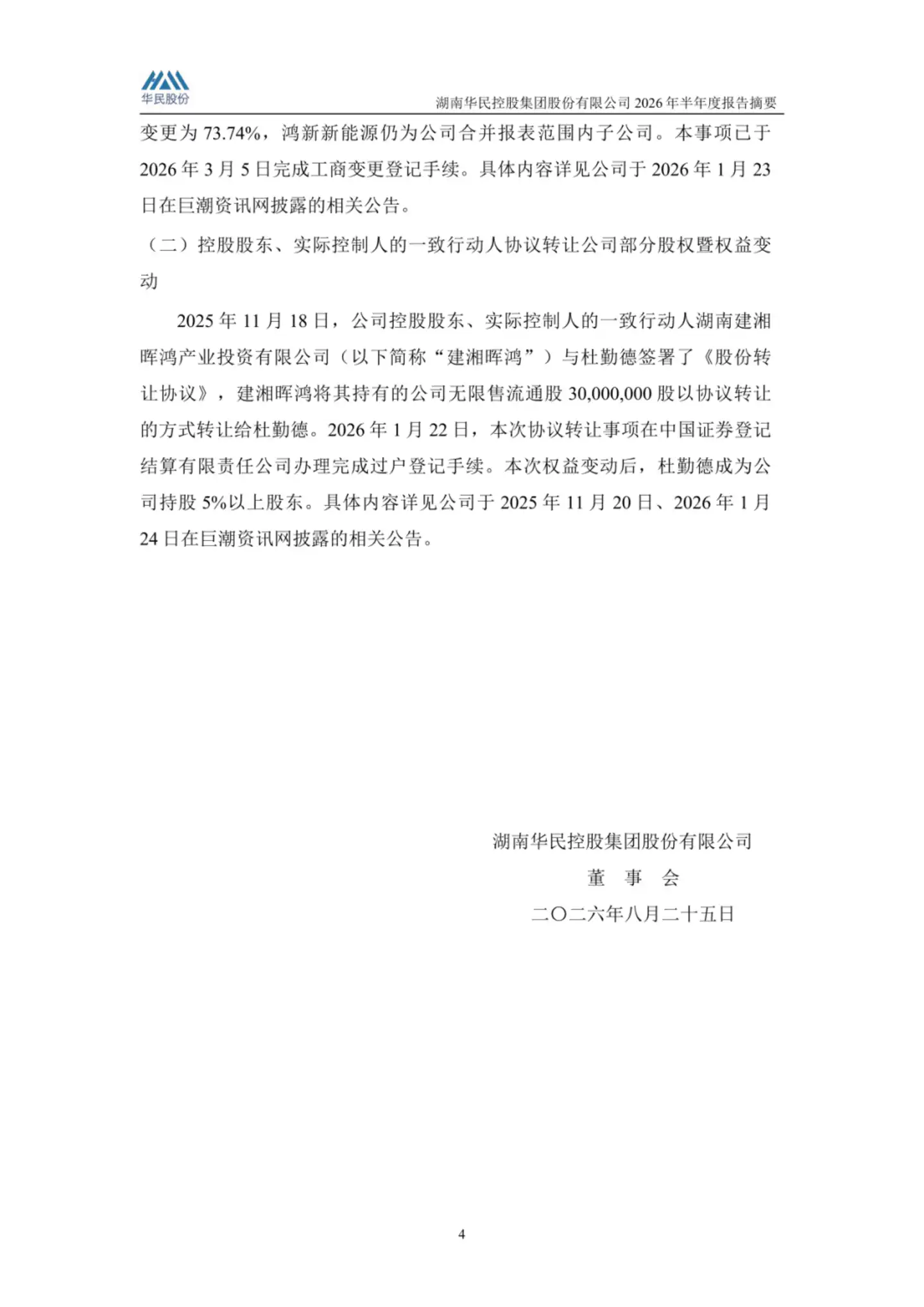
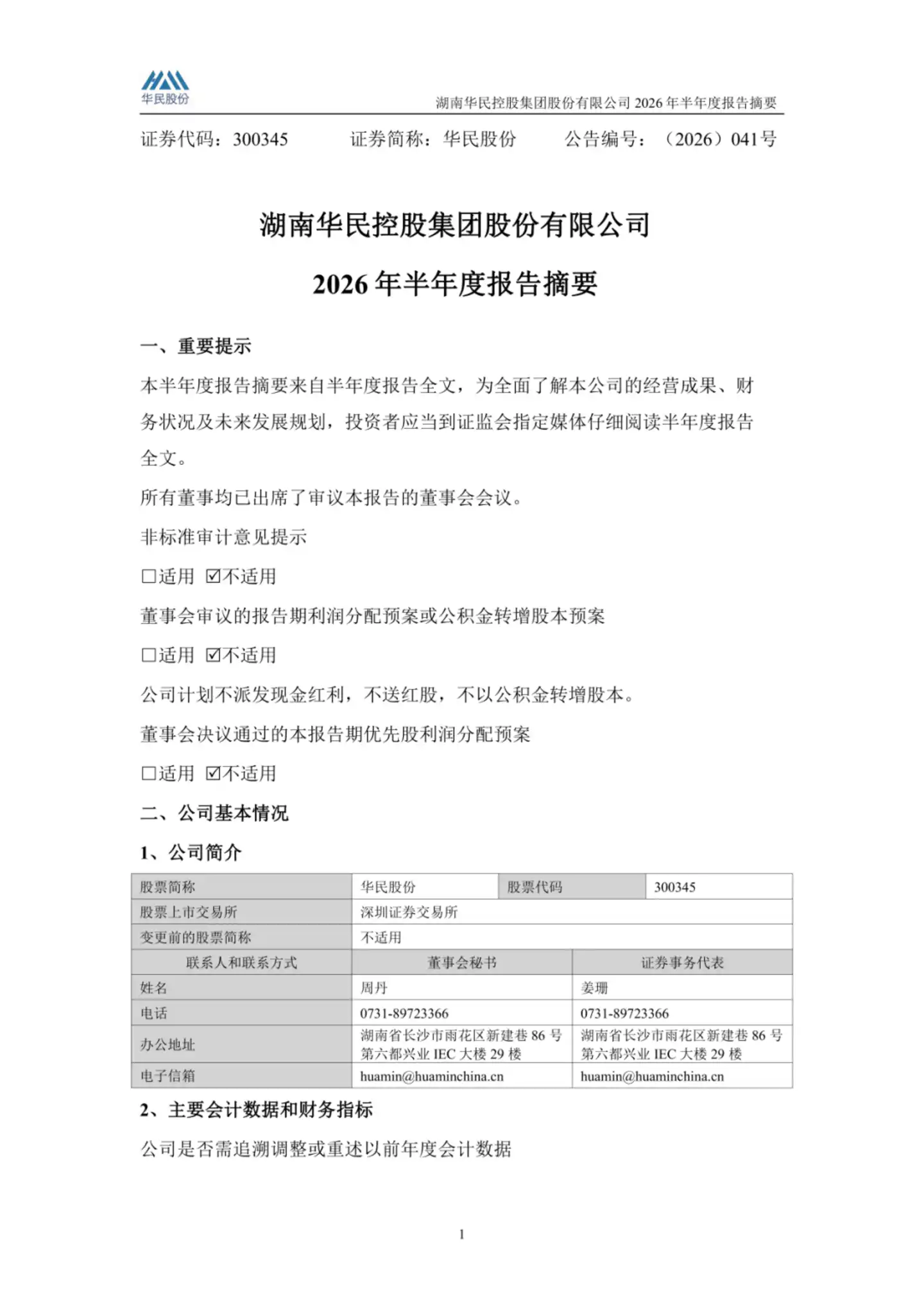
The following are excerpts from Huamin Shares' interim report:
Trending Cryptos

Related Questions

QWhat are the main financial challenges facing Huamin Stock according to the article?

AHuamin Stock faces severe financial challenges, including a 93.11% asset-liability ratio, a net profit of -125 million yuan for the first half of the year, and short-term debt accounting for 95.03% of its total 885 million yuan debt. Its photovoltaic main business is deeply loss-making with a gross margin of -25.78%, contributing to negative operating cash flow. The company has also reported consecutive losses in its non-recurring net profit for eight years.

QWhy is Huamin Stock pursuing the semiconductor business, and what is its current status?

AHuamin Stock is pursuing the semiconductor business as a second growth curve to diversify away from its loss-making photovoltaic operations. The logic is based on technology homology between photovoltaic and semiconductor monocrystalline silicon. Its semiconductor business currently generates minimal revenue (2.91 million yuan in H1) but shows a high gross margin of 62.14%. The company has partnered with Huachuan Semiconductor, a supplier to SK Hynix, to enter the core silicon components market for semiconductor etching equipment.

QWhat is the 'second curve time mismatch' mentioned in the article regarding Huamin Stock?

AThe 'second curve time mismatch' refers to the critical challenge that Huamin Stock's new semiconductor business is growing too slowly to generate sufficient profit, while its core photovoltaic business is losing money at a much faster rate. The cash burn from the old business threatens the company's survival before the new business can become financially self-sustaining.

QWhat are the key barriers for Huamin Stock's success in the semiconductor silicon components market?

AThe key barriers are the long and stringent customer certification cycles (potentially 18-36 months for top-tier clients), high market concentration dominated by foreign giants like Silfex and Hana, and the significant technological leap from photovoltaic-grade to semiconductor-grade silicon purity and defect control. While the partnership with Huachuan Semiconductor provides a channel, success ultimately depends on passing these rigorous certifications and achieving volume orders.

QAccording to the article, what two critical signals should investors monitor regarding Huamin Stock's future?

AInvestors should monitor two critical signals: 1) Whether the company can successfully renegotiate or refinance its massive short-term debt to gain financial breathing room. 2) Whether it can achieve substantial progress in semiconductor customer certifications, particularly by the fourth quarter of 2026. These factors will determine if the company is experiencing a manageable 'transformation pain' or heading towards a 'liquidity crisis'.

Related Reads

OpenAI and Meta Join Forces, Bridging the "Last Mile" of Agent Commerce

On November 13, 2026, two major announcements landed the same day, together addressing the "last mile" of agent commerce: how AI assistants get through the door, and how they pay. Sierra and Meta released Poppy v1.0, a Personal Agent Protocol built on OAuth, HTTPS, OpenAPI, and the Model Context Protocol. Poppy lets businesses cryptographically verify three things: which assistant is making a request, which user it represents, and what permissions it holds. Companies publish a discovery file at /.well-known/poppy describing endpoints and allowed actions, while both user and business must consent to each interaction via two-way authorization. Shopify automatically enabled Poppy discovery files for merchants in 175+ countries, giving the protocol immediate scale, with over 100 design partners including Delta, 1Password, Okta, and Cloudflare. Separately, OpenAI launched ChatGPT Wallet for its personal assistant dots. The assistant can search, compare, and fill a cart, but must stop at checkout—users confirm via biometric authentication. Neither the assistant nor the merchant ever sees the real card number; card networks issue a one-time payment credential instead. Built with Amex, Mastercard, and Visa, the wallet runs entirely on traditional fiat rails—explicitly not crypto or stablecoins. It initially opens only to US Pro subscribers aged 18+. Notably, Visa and Mastercard span both initiatives, and OpenAI itself appears among Poppy's design partners—despite dots and Meta's Muse competing for the consumer entry point. The shared logic: consumer-facing competition, but shared infrastructure on the business side. The common bottom line is "human in the loop"—agent autonomy stops at the shopping cart. Open questions remain: liability when an assistant errs or is manipulated by malicious prompts, coverage beyond Shopify and US Pro users, and whether mandatory biometric confirmation for every small purchase will become friction that undermines the convenience promise.

marsbit39m ago

OpenAI and Meta Join Forces, Bridging the "Last Mile" of Agent Commerce

marsbit39m ago

Has the Time Come to Buy the Dip on Nvidia?

Nvidia announced on November 12 that Jensen Huang resigned as President, CEO, and Director, effective immediately. Shares fell as much as 14% intraday to $148.8, down nearly 40% from October highs, with over $600 billion in market value briefly erased. The founder's departure triggered the selloff, but the market is repricing the entire company rather than reacting to a single risk. Nvidia now trades at roughly 12x forward PE, its lowest in 15 years and below the S&P 500's ~18x, despite strong fundamentals: FY2026 revenue of $215.9 billion (+65%), data center revenue of $62.3 billion in a single quarter, ~75% gross margins, and Q2 FY2027 revenue of $96.2 billion with $21.3 billion free cash flow. Most investment banks cut targets but maintained Buy/Overweight ratings (Barclays $210, Goldman $220, Citi $225, RBC $230), implying ~20% upside, while Truist downgraded to Hold at $174. The consensus: the business is intact, but its valuation multiple needed resetting. Supporting demand, Huang forecast at GTC 2026 that Blackwell and Rubin AI chip demand would reach at least $1 trillion by 2027, double the prior 2026 estimate. However, risks remain beyond CEO succession. CUDA's lock-in effect is eroding on the inference side—Anthropic disclosed that its Claude Mythos Preview autonomously ported core GPU kernels to AMD flagship GPUs in three days with minimal human intervention, prompting investor Marcelo P. Lima's widely cited claim that "Nvidia's CUDA moat no longer exists." Supply bottlenecks lie in HBM and packaging, not wafers: TSMC can cut over 400 million GPU dies annually, but Nvidia ships only ~10 million GPUs yearly, constrained by HBM capacity (~3.75EB globally, ~70% allocated to Nvidia, ~260GB per GPU) and tight packaging, with HBM4 adjustments possibly delaying Rubin. Huang also leaves behind highly personalized assets—strategic technology judgment, supply chain negotiation with TSMC and SK Hynix, and direct channels to customers and governments—that interim CEO Colette Kress, the long-time CFO, may not fully replace. In short, the business remains, but the "faith premium" is being systematically stripped away. At 12x forward PE, much pessimism is priced in, offering a favorable risk-reward window if AI capex holds and demand materializes. Yet cheapness alone isn't sufficient: CUDA's erosion is slow but irreversible, HBM and packaging limit revenue upside, and succession uncertainty means the founder premium may not be fully removed. As Bernstein noted, "if you see two ants in the kitchen, there are more than two," warning that chains from scandal to governance vacuum to government probes could trigger further selloffs. Until the dust settles, what a Jensen-less Nvidia is worth remains an open question.

marsbit1h ago

Has the Time Come to Buy the Dip on Nvidia?

marsbit1h ago

AI Bull Market Trap? The Big Short Seller Strikes Again

Recent signals from Goldman Sachs, the Federal Reserve, and prominent short-seller Michael Burry are converging on concerns about the AI trade. Goldman warns that AI capital expenditure growth will likely peak in early 2027, with the boost to S&P 500 earnings falling from a 12-point peak in 2026 to a 5-point drag by 2028, shifting the market from a one-way rally to two-way volatility. The Fed has flagged AI as a potential threat to asset valuations and financial stability. Burry has doubled his Nasdaq 100 put options and rebuilt short positions in a semiconductor ETF, calling this a "bull market trap" analogous to the 2000 dot-com bubble, with Nvidia's influence a key worry. Four pressures weigh on the AI narrative: peaking capex growth, high interest rates that hit long-duration AI assets and leveraged GPU cloud providers like CoreWeave and Nebius, circular financing risks among interconnected tech firms, and tighter regulation under Democrats affecting data center energy, land, and permitting. Nvidia-related turmoil has shaken the pricing anchor for the entire supply chain. However, a valuation bubble bursting does not mean the AI industry is declining. Goldman notes US cloud giants trade at just 19.7x forward P/E, below their 20-year historical range and even below defensive staples, suggesting much pessimism is already priced in. Opportunities are shifting from upstream hardware "shovel sellers" toward fairly valued cloud giants with improving free cash flow, AI application companies delivering real ROI, and deeply discounted cyclical names like Korean memory. Conversely, GPU cloud providers dependent on Nvidia orders and cash-burning startups without products are most vulnerable. Investors should diversify, hedge, and focus on assets that convert spending into stable returns.

marsbit1h ago

AI Bull Market Trap? The Big Short Seller Strikes Again

marsbit1h ago

Just Offered 3.3 Million Yuan Salaries to Poach Talent, OpenAI Suddenly Dissolves Robotics Team—Is the Industry About to Change!

OpenAI has disbanded its standalone robotics research team, confirmed shortly after booking booth 208 at the CoRL robotics conference in Austin went empty on November 13. The move surprised many, given that just months earlier OpenAI was aggressively hiring robotics talent—some roles paying up to $500,000 base salary—and had expanded its San Francisco data-collection lab to about 100 workers across three shifts, with a second lab planned in Richmond, California. Researchers from the robotics team are now folded into Chief Research Officer Mark Chen's core research division, while robotics applications and hardware staff move to President Greg Brockman's Applied division. OpenAI says robotics remains part of its long-term vision and the reshuffle is meant to accelerate progress. This is not OpenAI's first robotics retreat: it ended its first independent robotics effort in 2020 to focus on large language models, which produced ChatGPT, and only rebuilt a team in 2024. OpenAI explains the latest pivot technically—researchers initially believed video-generation models like Sora could teach robots physics, but general models such as GPT-6 Astra proved capable of directly controlling robots, so robotics work is being merged into the general foundation-model team. The broader industry context supports this shift. Unitree's Wang Xingxing said his biggest mistake over the past decade was not trusting AI enough, noting GPT-6 integration exceeded expectations and that humanoid intelligence's tipping point may arrive within one to two years. Anthropic's Claude Fable 5.2 scored 64.9% on the RoboDojo Sim benchmark versus 29.8% for GPT-6 Astra, and Nvidia's Astranomy study showed GPT-6 Astra controlling simulated robots with 74.8% success using an agentic approach, beating the prior specialized-model best of 51.0%. Yet challenges remain: general models are costly and slow—GPT-6 Astra averaged 18.56 seconds per inference and about 30.9 million tokens (roughly $36.40 in API fees) per successful task—problematic for real factories where conveyor belts don't pause. Google DeepMind, Nvidia, Unitree and AgiBot continue training specialized robotics models; Google's Apollo 2 achieved 96% success sorting parts in Mercedes factories using paired reasoning and action models, while Nvidia's GR00T 2 reached 95% success after brief fine-tuning. Analysts suggest OpenAI now treats robotics as a downstream application of general intelligence, leveraging core model advances while using its data-collection and hardware capabilities to validate models on real robots.

marsbit1h ago

Just Offered 3.3 Million Yuan Salaries to Poach Talent, OpenAI Suddenly Dissolves Robotics Team—Is the Industry About to Change!

marsbit1h ago

Trading

Spot

Hot Articles

How to Buy SKHY

Welcome to HTX.com! We've made purchasing SK hynix (SKHY) simple and convenient. Follow our step-by-step guide to embark on your crypto journey.Step 1: Create Your HTX AccountUse your email or phone number to sign up for a free account on HTX. Experience a hassle-free registration journey and unlock all features.Get My AccountStep 2: Go to Buy Crypto and Choose Your Payment MethodCredit/Debit Card: Use your Visa or Mastercard to buy SK hynix (SKHY) instantly.Balance: Use funds from your HTX account balance to trade seamlessly.Third Parties: We've added popular payment methods such as Google Pay and Apple Pay to enhance convenience.P2P: Trade directly with other users on HTX.Over-the-Counter (OTC): We offer tailor-made services and competitive exchange rates for traders.Step 3: Store Your SK hynix (SKHY)After purchasing your SK hynix (SKHY), store it in your HTX account. Alternatively, you can send it elsewhere via blockchain transfer or use it to trade other cryptocurrencies.Step 4: Trade SK hynix (SKHY)Easily trade SK hynix (SKHY) on HTX's spot market. Simply access your account, select your trading pair, execute your trades, and monitor in real-time. We offer a user-friendly experience for both beginners and seasoned traders.

2.0k Total ViewsPublished 2026.08.06Updated 2026.11.11

How to Buy SKHY

Discussions

Welcome to the HTX Community. Here, you can stay informed about the latest platform developments and gain access to professional market insights. Users' opinions on the price of SKHY (SKHY) are presented below.

活动图片