Farcaster Changes Hands Again: The Hottest Potato in the Decentralized World

marsbitPublished on 2026-10-16Last updated on 2026-10-16

Abstract

The decentralized social protocol Farcaster has changed ownership for the third time in nine months, being described as a "hot potato" in the decentralized world. On October 15, 2026, Rish, co-founder of Neynar, announced that Network School, founded by Balaji Srinivasan, would take over Farcaster, including its application, protocol codebase, and related products. This followed Neynar's acquisition of Farcaster from its original creator, Merkle Manufactory, in January 2026. Farcaster, which achieved a $1 billion valuation after a $150 million Series A round in 2024, saw its user activity and revenue decline sharply post-2025. Daily active users (DAU) dropped 40% from its peak of nearly 100,000, and monthly revenue fell to around $10,000. After taking over, Neynar pivoted Farcaster toward developers, but protocol revenue (including from Clanker) plummeted by 99% from Q1 to Q3 2026, leading to the search for a new owner. Network School, Balaji Srinivasan's venture practicing his "network state" theory and recently valued at $2 billion, plans to rebrand Farcaster as the "Network State Protocol." Significant rule changes include requiring users to accept a "social smart contract" to mint an NFT for full access, implementing content moderation based on Singaporean public conduct codes, and introducing AI-assisted review with potential human verification. These changes, particularly the centralized control over content and access via the dominant official app (formerly Warpcast...

Written by: Xiao Bing

In less than nine months, Farcaster has gotten its third owner.

On October 15th, Rish, co-founder of Neynar, announced that Network School, founded by Balaji Srinivasan, will take over Farcaster. The acquisition includes the Farcaster application, protocol code repositories, and related products. Most of Neynar's employees will join Network School to continue development, while Rish himself and co-founder Manan have chosen to leave.

This marks the second ownership transfer for Farcaster in 2026. In January, Neynar had just purchased it from the founding team, Merkle Manufactory.

A social protocol that claims to be "decentralized," yet the control over its user entry point is being passed around like a hot potato.

Nine Months, Three Owners

First, a look at the timeline.

2024: The Pinnacle Moment. Farcaster completed a $150 million Series A funding round led by Paradigm and a16z crypto, achieving a valuation of $1 billion. After the launch of the Frames feature, DAU surged 400% in a week, peaking near 100,000.

2025: Slow Bleeding. After the hype subsided, DAU dropped 40% from its peak, and new daily registrations plummeted 95% from 15,000 to less than 650. Monthly revenue fell from hundreds of thousands at its peak to about $10,000. In May, the official client Warpcast was rebranded as Farcaster, effectively marginalizing almost all third-party clients. A "protocol" became an "App."

January 2026: The First Sale. Co-founders Dan Romero and Varun Srinivasan announced they were stepping back from day-to-day operations to work on a Farcaster-based wallet application. Romero made a statement that left the community with mixed feelings: "After five years, it's clear Farcaster needs a new path and new leadership." Merkle Manufactory packaged and sold the protocol contracts, code repositories, core applications, and the AI token issuance platform Clanker to Neynar. Simultaneously, they announced they would return the full $180 million in funding to investors.

This move is quite rare in crypto history. A project that raised a $150 million Series A at a $1 billion valuation, its founders said "we didn't succeed," returned the money, sold the assets, and pivoted to a different field. Regardless of the judgment, it's at least more dignified than "running away with the money."

January - August 2026: Neynar's Seven Months. After taking over, Neynar pivoted Farcaster towards a developer-centric direction. However, data continued to worsen. Data from DefiLlama shows that protocol revenue (including Clanker) dropped from approximately $27.88 million in Q1 to $3.88 million in Q2, and only about $246,000 in Q3. Revenue evaporated by 99%.

August 17, 2026: Neynar Couldn't Hold On Either. Rish posted on X, stating that Neynar had begun searching for a "new home" for Farcaster, Clanker, and the Neynar developer platform.

October 15, 2026: Network School Takes Over. Rish said the team considered multiple options and ultimately chose Balaji's Network School. The ownership of Clanker was not mentioned in the announcement. According to the host of the GM Farcaster podcast, Rish is considering spinning off Clanker to find a separate buyer.

Who is Network School?

This Network School taking over is backed by Balaji Srinivasan, the crypto world's "prophet."

Balaji's resume needs little introduction: former CTO of Coinbase, former General Partner at a16z, author of "The Network State," and the initiator of the crazy 2023 bet of "Bitcoin to $1 million in 90 days."

Network School is his practical project for the "network state" theory. It was initially launched in Singapore, later attempted Malaysia but faced regulatory resistance. In July 2026, it signed a memorandum with Kazakhstan's Ministry of AI and Digital Development, moving its headquarters to Astana. Over 200 people relocated to work at the local alem.ai International AI Center.

Balaji has called Astana "the next Dubai, the next Singapore."

On October 9th, just six days before the Farcaster acquisition, Network School announced a new funding round at the Network State Conference 2026, led by Polychain Capital with participation from a16z and Coinbase, valuing the company at $2 billion.

A "network state" project that just raised money at a $2 billion valuation, acquiring a decentralized social protocol abandoned successively by its founders and second operators — what exactly does Balaji see in it?

"Social Smart Contract": The Centralized Pivot of a Decentralized Protocol

The answer lies in the new rules announced by Network School.

Farcaster will be rebranded as the "Network State Protocol" (also reported as "Network Nation Protocol"). Its positioning shifts from a "decentralized social network" to a "voluntary digital social network, ultimately mapping to the real world."

In terms of specific operations, three changes are noteworthy:

First, the Social Smart Contract. All users must choose to accept or reject a "Social Smart Contract." Users who accept will mint an on-chain NFT as proof. Users who reject retain read-only permissions; their keys, funds, follow lists, and posting history will be migrated to other clients.

Second, Content Moderation Rules. Referencing Singapore's "Public Code of Conduct," a series of "digital felonies" are defined: hate speech, death threats, scams, repeated trolling, stalking/harassment, and misrepresenting AI-generated content as human creation.

Third, AI Moderation and Human Verification. Introduce AI-assisted content moderation and gradually require users to complete "proof-of-humanity" verification to reduce bots.

This set of rules has already sparked controversy within the community. The Block reported that multiple users stated they were retrospectively banned for posts made months ago regarding Elon Musk, Flock cameras, and "Gay Thanks Day."

A decentralized protocol now requires users to sign a "code of conduct," uses AI to moderate content, and uses NFTs to distinguish "good citizens" from "read-only users."

Is this building a new type of digital society, or is it building a centralized platform with blockchain decoration?

The Real Problem: The Contradiction Between Protocol and Application Layers

The three transfers of Farcaster expose a fundamental structural contradiction in the decentralized social track.

The protocol layer is indeed decentralized. Farcaster's Snapchain achieves over 10,000 TPS with 780-millisecond confirmation latency — technical metrics even better than many L1 blockchains. The code is open-source; anyone can build a client on the protocol.

But the application layer never has been.

Warpcast (later the official Farcaster App) long held "basically 100% of user activity," completely marginalizing third-party clients. The protocol is open, but the user entry point is monopolized. This means whoever controls that App controls the entire protocol's user experience, content strategy, and commercialization direction.

That's why Farcaster can be "sold." You can't sell a truly decentralized protocol, just as you can't sell TCP/IP. But you can sell the company that occupies the only meaningful user entry point on the protocol.

Merkle sold it because the founders wanted to do something else. Neynar couldn't hold on after seven months because users and revenue were collapsing. Now Balaji has taken it over, wanting to reshape it into the social infrastructure for his "network state."

Each new owner enters with a different vision.

But they all face the same problem: on a platform with less than 250,000 MAU, less than 60,000 DAU, and monthly revenue fallen to tens of thousands of dollars, any grand narrative must first answer a simple question.

Where are the people?

Related Questions

QAccording to the article, what is the core structural contradiction exposed by Farcaster's multiple ownership changes?

AThe article exposes a fundamental structural contradiction in decentralized social protocols: while the protocol layer (Farcaster's Snapchain) is technically decentralized, the application layer is not. The official client (Warpcast/Farcaster App) held a near-monopoly on user activity, completely marginalizing third-party clients. This means whoever controls the dominant user-facing application effectively controls the entire protocol's user experience, content policy, and commercial direction, making the 'protocol' sellable like a centralized asset.

QWhat were the key changes announced for Farcaster under its new owner, Network School?

ANetwork School announced several key changes: 1) Rebranding Farcaster to 'Network State Protocol' with a new focus on a voluntary digital social network mapping to the real world. 2) Introducing a mandatory 'Social Smart Contract' for users, with accepting users minting an on-chain NFT credential and rejecting users being downgraded to read-only access. 3) Implementing content moderation rules based on Singapore's 'Code of Conduct for Public Behaviour', defining 'digital felonies'. 4) Introducing AI-assisted content review and plans for 'proof-of-personhood' verification.

QHow did Farcaster's financial and user metrics change from its peak in 2024 to 2026 according to the article?

AFarcaster's metrics declined sharply from its 2024 peak. Daily Active Users (DAU) peaked near 100,000 after the Frames launch but later fell by 40%. New daily registrations plummeted by 95% from 15,000 to under 650. Monthly revenue dropped from hundreds of thousands of dollars at its peak to around $10,000. Under Neynar's ownership in 2026, protocol revenue (including Clanker) collapsed from ~$27.88 million in Q1 to ~$246,000 in Q3, a drop of over 99%.

QWhat was unusual about the Merkle Manufactory team's exit from Farcaster in January 2026?

AThe Merkle Manufactory team's exit was highly unusual in the crypto space. After raising a $150 million Series A at a $1 billion valuation, the founders (Dan Romero and Varun Srinivasan) did not continue development or 'run away with the money'. Instead, they announced they were stepping back from daily operations to work on a Farcaster-based wallet, stated Farcaster needed new leadership, sold the protocol assets to Neynar, and returned the entire $150 million in funding to their investors—an act the article describes as 'far more respectable than taking the money and running away'.

QWho is Balaji Srinivasan and what is Network School's background as described in the article?

ABalaji Srinivasan is a prominent figure in crypto, known as a former CTO of Coinbase, former general partner at a16z, author of 'The Network State', and initiator of a famous 2023 bet on Bitcoin's price. Network School is his project to实践 his 'network state' theory. Initially based in Singapore, it faced regulatory issues in Malaysia and relocated its headquarters to Astana, Kazakhstan, in July 2026 after signing an MoU with the Kazakh Ministry. Just six days before acquiring Farcaster, Network School announced a new funding round led by Polychain Capital with participation from a16z and Coinbase, valuing the project at $2 billion.

Related Reads

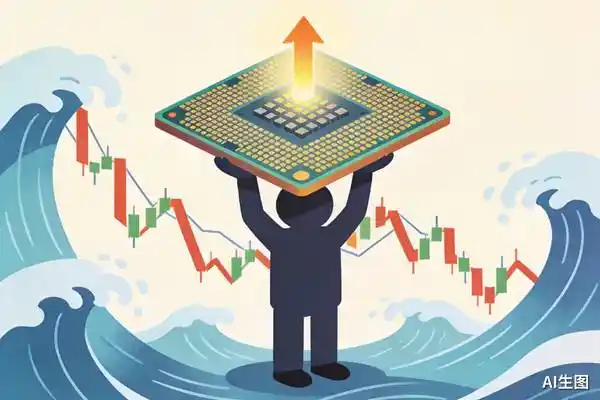
This Round of Sharp Decline: Technology Giants Clearly Oversold

The article argues that the recent market selloff—triggered by Democratic wins in the midterms and new state governors in data-center hubs like Texas and Ohio pledging to pause approvals—has conflated two very different things: companies whose revenue is tightly bound to new data-center construction, and companies holding scarce assets or whose demand doesn't depend on that path. The former deserve repricing; the latter are being wrongly sold off. The author applies three criteria—scarcity, order visibility, and reasonable or undervalued pre-crash valuation—to identify the truly mispriced names. TSMC is the clearest case, meeting all three: it is the only scalable 3nm/2nm pure-play foundry with ~90% AI chip foundry share, its advanced-node capacity is booked past 2028, and only about 30% of revenue ties to AI data centers, with HPC at 68% but smartphones, auto, and IoT providing a buffer. Its ADR trades near 24x PE after the drop, low for semiconductors. Nvidia fell ~10% overnight and 25% in a month; its 17x forward PE is a three-year low and order visibility is strong (management cites chip supply, not demand, as the constraint), but with data-center revenue over 90% of the total, it is a high-beta bet rather than a defensive mispricing. Apple is defensive—capex is only ~2.5% of sales and on-device AI runs on already-sold chips—but its 36x forward PE sits at the 99th percentile of its own history, so it fails the valuation test. Google and Amazon have huge backlogs ($514B and $496B respectively) but their conversion depends on compute supply, so they aren't fully decoupled. Meta, at 18–19x forward PE near a three-year low, is partly mispriced: its three flagship US projects (Ohio, Louisiana, Texas) are already past permitting, though new pipelines will slow. Broadcom, AMD, and Intel are falling for real exposure reasons, not mispricing. In China, SMIC best fits the criteria, with 89.6% China revenue tied to domestic fabless demand rather than US cloud orders; North China Innovation has strong visibility but a fuller valuation; ChangXin Memory shows an emotional discount versus fundamentals. Among model makers, US pure-plays are hit hardest, while Chinese firms' structural cost advantages are amplified—Zhipu, running GLM-5.3 on AWS Bedrock with revenue sharing, benefits from existing cloud capacity and may be somewhat mispriced. The conclusion: only TSMC truly satisfies all three criteria; the broad "anything AI rises" phase is over, and differentiation will favor companies with real orders, revenue, and compute reserves.

marsbit10m ago

This Round of Sharp Decline: Technology Giants Clearly Oversold

marsbit10m ago

Breaking News: Claude Cracks the First Prokaryotic Giant Protein, a 40-Year Mystery Structure Revealed

In a breakthrough spanning less than four months, Anthropic's Claude helped solve a 40-year-old biological mystery: the first three-dimensional structure of a prokaryotic "Vault" particle. Discovered in 1986 by Leonard Rome's UCLA team, vaults are among the largest protein complexes in cells—three times the mass of a ribosome—but their function remained unknown, since common model organisms like yeast, fruit flies, and nematodes lack them, and mice lacking vault genes develop normally. The team used Claude to search roughly 15 billion protein sequences, expanding the known vault protein family from 41 to 1,507 members—a 36-fold increase—across 29 bacterial phyla and 4 archaeal phyla, often near antiviral defense genes. Of 44 candidate proteins, 15 produced soluble protein in E. coli. Claude initially opposed using size-exclusion chromatography, correctly noting that misfolded protein aggregates would co-elute with vaults, but after being overruled it helped optimize the approach—including the counterintuitive suggestion to load crude lysate directly onto the column, cutting purification from three days to just 90 minutes. Eight candidates yielded clear vault particles, the first ever seen outside eukaryotes. Using a multi-agent framework, Claude ran RELION across hundreds of GPUs to reconstruct the phage L05 vault in just 34 hours, reaching 3.2 Å resolution within a week. The structure revealed 96 identical chains forming a shell 25% larger inside than human vaults, plus a hidden coenzyme A molecule tucked into each chain's inner pocket—hinting the vault serves as a molecular container during viral attack or metabolic stress. Engineered single-amino-acid changes opened the shell into flat "protein lotus" arrays, while inserting repeat modules expanded interior volume by 50% over human vaults. All code and computational analysis were performed by Claude, which the paper formally credits. Leonard Rome himself praised the work as opening new paths to understanding vault function, signaling a "Moore's Law" moment for basic science discovery.

marsbit12m ago

Breaking News: Claude Cracks the First Prokaryotic Giant Protein, a 40-Year Mystery Structure Revealed

marsbit12m ago

Tibo Reassigned: The GPT Reset Button Has a New Owner

Tibo, OpenAI's "reset god" known for frequently resetting usage limits, has been reassigned to lead OpenAI's internal systems security project, according to Reuters. His replacement appears to be Andrew Ambrosino, a founding member of the Codex App team, who has already begun handling user complaints and product feedback publicly. Tibo's move comes amid longstanding employee concerns about operational security at OpenAI, including overly broad access to sensitive code, insufficient security reviews of internal tools, and insider threats. In October, an engineer was prosecuted after planting listening devices in an executive meeting room and hiding a recorder in toilet paper. Since August, Tibo had already reassigned roughly a quarter of OpenAI's production engineers to security infrastructure work, and he has publicly announced forming a world-class cybersecurity team. Andrew Ambrosino studied computer science at UMass Lowell and previously worked at MITRE and Microsoft, founded fintech startup Catch where he served as CTO/CPO for seven years, and later worked at Noyo before joining OpenAI in 2025 as a core member of the Codex App team. He has since led that team and expanded into ChatGPT product work. Recently he announced restored double usage limits for Pro and Business Premium tiers and pledged to improve ChatGPT's simplicity and performance. Users have flocked to Andrew's comments with requests, including better treatment for Plus users, keeping Chat and Work separate, removing the five-hour usage limit, opening Dots to Plus users, and—most notably—begging him to hit the reset button on day one. OpenAI has not officially confirmed Andrew's full takeover of Tibo's former responsibilities, but his public actions suggest he is already stepping into the role.

marsbit14m ago

Tibo Reassigned: The GPT Reset Button Has a New Owner

marsbit14m ago

Zcash Activates NU7 Mainnet Upgrade, Cuts Block Time to 25 Seconds

Zcash has activated its NU7 network upgrade on mainnet, introducing faster block production and changes to how transaction fees support the network's long-term security. The upgrade went live at block height 3,543,405 on November 6 at 02:34 UTC, reducing the target time between blocks from 75 seconds to 25 seconds, allowing transactions to receive their first confirmation more quickly. This could make Zcash payments more practical for everyday transfers, exchange deposits and merchant transactions, though actual wait times will depend on network conditions and confirmation requirements set by individual services. NU7 also introduces changes to the network's shielded transaction system. One major change involves the Network Sustainability Mechanism (NSM): miners now receive 40% of transaction fees, while the remaining 60% goes into a reserve intended to support future mining rewards, with scheduled reissuance expected to begin around February 2031 at block height 8,939,664. The upgrade also retires Zcash's original Sprout privacy pool, introduced in 2016; version 4 transactions are now invalid, making approximately 12,224 ZEC remaining in Sprout unspendable through the existing protocol, with no approved recovery mechanism currently available. NU7 introduces limits on shielded transactions per block to reduce blockchain data wallets must download when searching for private payments, potentially increasing capacity for simple Orchard transactions from approximately 2.9 to 6.6 transactions per second. Despite the faster block schedule and revised fee system, Zcash's maximum supply remains unchanged at 21 million ZEC, and the block subsidy is adjusted to maintain the same daily issuance. NU7 marks a major change to Zcash's transaction processing and mining economics.

TheNewsCrypto15m ago

Zcash Activates NU7 Mainnet Upgrade, Cuts Block Time to 25 Seconds

TheNewsCrypto15m ago

Trading

Spot
活动图片