EU Proposes Ban On Russian Crypto Transactions To Crack Down Sanctions Evasion – Report

bitcoinistPublicado a 2026-02-11Actualizado a 2026-02-11

Resumen

The European Union is considering a comprehensive ban on all cryptocurrency transactions with Russia to prevent the country from using digital assets to evade sanctions. According to a report, the European Commission has proposed prohibiting engagement with any crypto asset service provider established in Russia, arguing that targeting individual entities would lead to the creation of new ones to circumvent restrictions. The proposal specifically aims to prevent the growth of platforms like the sanctioned exchange Garantex and targets the payments platform A7 and its ruble-pegged stablecoin. Additionally, the Commission suggested adding 20 Russian banks to the sanctions list, banning digital ruble transactions, and restricting certain exports to Kyrgyzstan. The measures require unanimous support from EU member states, though some countries have expressed doubts. This potential crackdown coincides with Russia's ongoing development of its digital assets regulatory system.

As Russia moves to regulate the crypto sector later this year, the European Union (EU) is considering implementing strict sanctions on all digital asset transactions linked to the country to curb sanctions evasion.

EU Seeks Sanctions On Russian Crypto Transactions

On Tuesday, the Financial Times (FT) reported that the European Commission (EC) is evaluating measures to prohibit all crypto transactions with Russia, stepping up its efforts to crack down on the country’s use of digital assets to evade sanctions.

According to documents reviewed by the FT, the Commission has seemingly proposed a broader prohibition “instead of attempting to ban copycat Russian crypto entities spun out of already sanctioned platforms.”

“In order to ensure that sanctions achieve their intended effect [the EU] prohibits to engage with any crypto asset service provider, or to make use of any platform allowing the transfer and exchange of crypto assets that is established in Russia,” explained the internal document outlining the proposed sanctions.

The Commission argued that “any further listing of individual crypto asset service providers ... is therefore likely to result in the set-up of new ones to circumvent those listings.”

Notably, the proposal reportedly focuses on preventing the growth of successors to the Russia-linked crypto exchange Garantex. In 2022, the US sanctioned the platform for “operating as the exchange of choice for cybercriminals”.

Moreover, the document is aimed at the payments platform A7, a company reportedly conceived as a mechanism to facilitate cross-border trades due to sanctions imposed after Russia invaded Ukraine, and its connected ruble-pegged stablecoin A7A5, previously used by Garantex to transfer funds to Kyrgyz exchange Grinex.

As reported by Bitcoinist, the EU, UK, and US have adopted restrictive measures against the payment platform. Despite this, recent reports revealed the stablecoin has an aggregate transaction volume of $100 billion.

In addition, the EC suggested adding 20 banks to the list of sanctioned entities and a ban on any digital ruble-related transactions. The Commission also proposed a ban on the export of certain dual-use goods to Kyrgyzstan, claiming that local companies have sold prohibited goods to Russia.

Nonetheless, imposing the measures would require the unanimous support of member states, and three of the bloc’s countries have reportedly expressed doubts, three diplomats briefed on discussions told the FT.

Russia’s Digital Assets Landscape

The potential crackdown comes as Russia continues to develop its upcoming digital assets framework. The CBR recently unveiled its comprehensive regulatory proposals to enable retail and qualified investors to buy digital assets through licensed platforms in the country.

Last month, the Committee on State Building and Legislation at the State Duma also advanced a bill to regulate the seizure of crypto assets in criminal proceedings and reduce the risks associated with the use of digital assets in criminal activities, including money laundering, corruption, and terrorist financing.

Meanwhile, Russia’s largest bank by assets, Sberbank, recently announced that it is preparing to offer crypto-backed loans to corporate clients following strong corporate interest.

The bank affirmed its readiness to work with the Central Bank of Russia (CBR) to develop regulations, and it is finalizing the necessary infrastructure and procedures for potential scaling of crypto-backed lending.
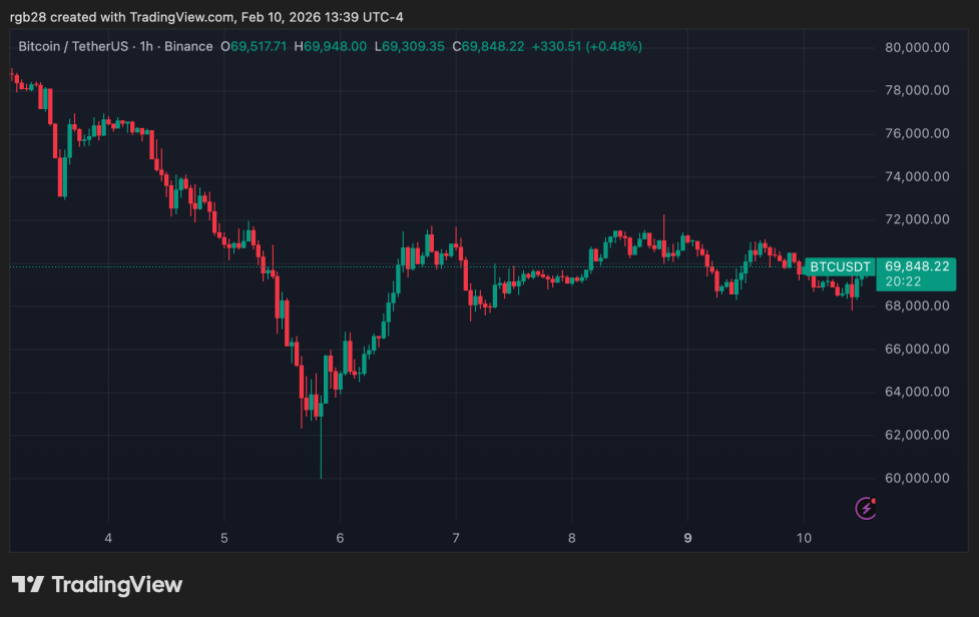
Bitcoin (BTC) trades at $69,848 in the one-week chart. Source: BTCUSDT on TradingView


Criptos en tendencia

Lecturas Relacionadas

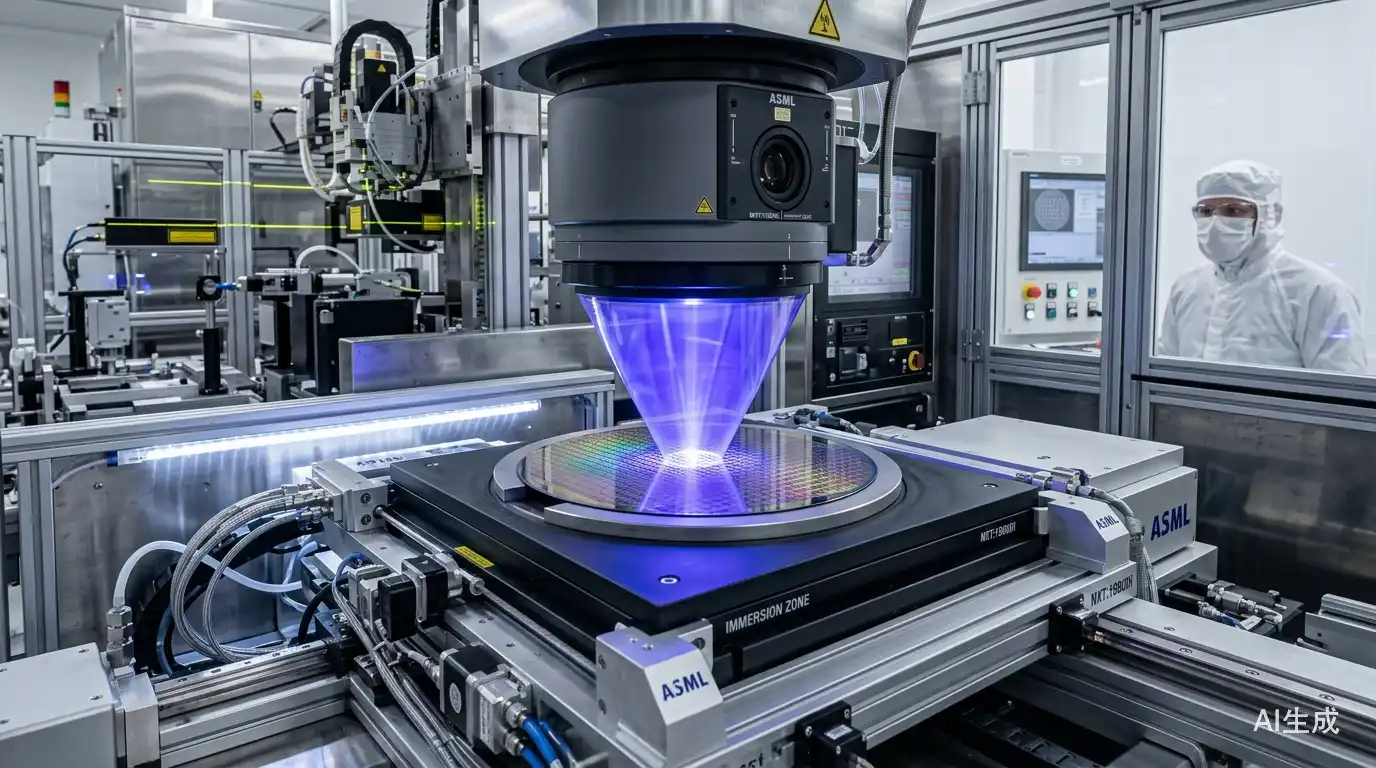
A Brief History of the Lithography Machine: How a Beam of Light Walked Sixty-Nine Years

A Brief History of Lithography: 69 Years of Light In July 2026, reports of a Chinese state-backed company producing five immersion DUV lithography machines sent shockwaves through Wall Street, wiping roughly $44 billion from ASML's market cap in a single day. This event signaled a crack in the long-held assumption of Western monopoly over advanced chipmaking equipment. The journey began in 1957 when Jay Lathrop coined the term "photolithography." Early contact aligners (1960s) gave way to PerkinElmer's revolutionary projection aligners in 1973, boosting yields dramatically. GCA's step-and-repeat system (1978) established the modern stepper blueprint. However, within a decade, Japanese firms like Nikon and Canon, supported by a strong domestic market, captured nearly 90% of the global market from American pioneers, who ultimately exited the business. ASML, founded in a leaky shed in 1984, rose to dominance through key strategic moves: the TWINSCAN dual-stage platform (2001) and the acquisition of SVG, gaining access to Intel. A pivotal moment came in the early 2000s with the industry at a 193nm wavelength impasse. While most invested in the costly 157nm path, TSMC's Burn Lin proposed immersion lithography—using water between the lens and wafer. ASML bet on this simpler idea and, with Zeiss, delivered the first commercial immersion tool in 2004, effectively ending the 157nm roadmap and leaving competitors behind. The subsequent push for Extreme Ultraviolet (EUV) lithography was an even greater marathon. Deemed the least promising option in 1997, EUV's development, led by ASML, required vacuum chambers, reflective optics, and a complex tin-droplet laser plasma source. Critical to its eventual success (first high-volume manufacturing in 2018) was the 2012 "Customer Co-Investment Program," where Intel, TSMC, and Samsung provided upfront funding and equity, sharing the immense risk and cost. Today, ASML holds a near-total monopoly in EUV and immersion DUV. The core lesson of this 69-year history is not merely one of technological invention but of sustained partnership. Successive leaders—PerkinElmer, GCA, Nikon—were not ultimately defeated by superior technology but by losing the vital connection to customers willing to tolerate years of iteration, fund long-term R&D, and integrate early, imperfect tools into their production lines. The "light" that completed the journey was always carried by those patient, invested partners.

marsbitHace 1 hora(s)

A Brief History of the Lithography Machine: How a Beam of Light Walked Sixty-Nine Years

marsbitHace 1 hora(s)

Trading

Spot

Artículos destacados

Cómo comprar BAN

¡Bienvenido a HTX.com! Hemos hecho que comprar Comedian (BAN) sea simple y conveniente. Sigue nuestra guía paso a paso para iniciar tu viaje de criptos.Paso 1: crea tu cuenta HTXUtiliza tu correo electrónico o número de teléfono para registrarte y obtener una cuenta gratuita en HTX. Experimenta un proceso de registro sin complicaciones y desbloquea todas las funciones.Obtener mi cuentaPaso 2: ve a Comprar cripto y elige tu método de pagoTarjeta de crédito/débito: usa tu Visa o Mastercard para comprar Comedian (BAN) al instante.Saldo: utiliza fondos del saldo de tu cuenta HTX para tradear sin problemas.Terceros: hemos agregado métodos de pago populares como Google Pay y Apple Pay para mejorar la comodidad.P2P: tradear directamente con otros usuarios en HTX.Over-the-Counter (OTC): ofrecemos servicios personalizados y tipos de cambio competitivos para los traders.Paso 3: guarda tu Comedian (BAN)Después de comprar tu Comedian (BAN), guárdalo en tu cuenta HTX. Alternativamente, puedes enviarlo a otro lugar mediante transferencia blockchain o utilizarlo para tradear otras criptomonedas.Paso 4: tradear Comedian (BAN)Tradear fácilmente con Comedian (BAN) en HTX's mercado spot. Simplemente accede a tu cuenta, selecciona tu par de trading, ejecuta tus trades y monitorea en tiempo real. Ofrecemos una experiencia fácil de usar tanto para principiantes como para traders experimentados.

614 Vistas totalesPublicado en 2024.12.11Actualizado en 2026.06.02

Cómo comprar BAN

Discusiones

Bienvenido a la comunidad de HTX. Aquí puedes mantenerte informado sobre los últimos desarrollos de la plataforma y acceder a análisis profesionales del mercado. A continuación se presentan las opiniones de los usuarios sobre el precio de BAN (BAN).

活动图片