Apple Launches First 2nm Smartphone Chip, Introducing New Packaging

marsbitPublished on 2026-09-10Last updated on 2026-09-10

Abstract

Apple has unveiled its first 2nm smartphone chip, the A20 Pro, at the iPhone 18 launch event. Powering the new iPhone 18 Pro, Pro Max, and the debut foldable iPhone Duo, the SoC features a 6-core CPU with two "super cores," a 7-core GPU offering 40% faster performance, and a new dual 16-core Neural Engine for twice the AI performance of its predecessor. A key innovation is the new WMCM (Wafer-Level Multi-Chip Module) packaging. Instead of stacking DRAM memory on top, WMCM places the memory chips side-by-side with the SoC, improving thermal management. This, combined with a redesigned vapor chamber cooling system three times larger, allows the chip to sustain peak performance longer, with Apple claiming up to a 40% improvement in sustained performance over the iPhone 17 Pro. The phones also feature Apple's new in-house C2 5G modem, which adds mmWave support in the US and promises 15% lower power consumption. Battery life is also improved, with Apple citing up to 30 hours of usage per charge for the Pro Max.

Apple has introduced a new flagship smartphone System-on-a-Chip (SoC)—the A20 Pro. This new processor debuted at today's Apple iPhone launch event, which was also the first event presided over by the new CEO, John Ternus. Also unveiled was a new self-developed modem (C2).

The A20 Pro is Apple's first 2-nanometer chip to be used in an iPhone. (Apple's first 2nm chip was the M6, which the company announced in August and will debut later this month in the Mac Mini.) Like the M6, the A20 is equipped with a dual Neural Engine, and new CPU and GPU cores.
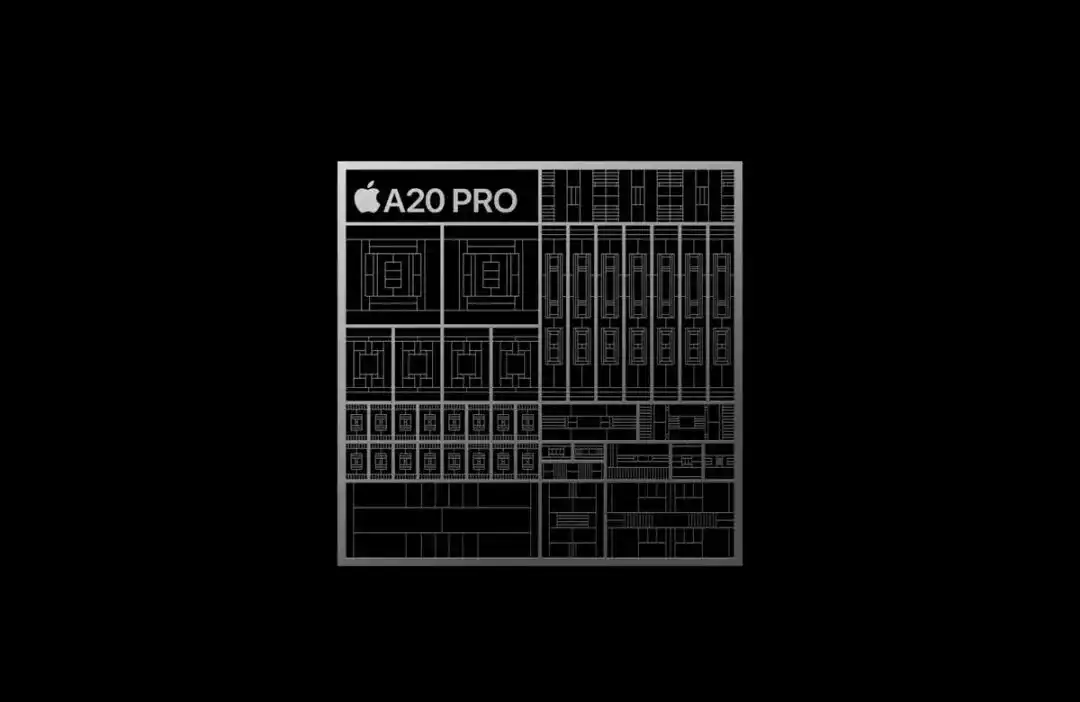
The A20 Pro will power the new foldable iPhone Duo as well as the iPhone 18 Pro and Pro Max.

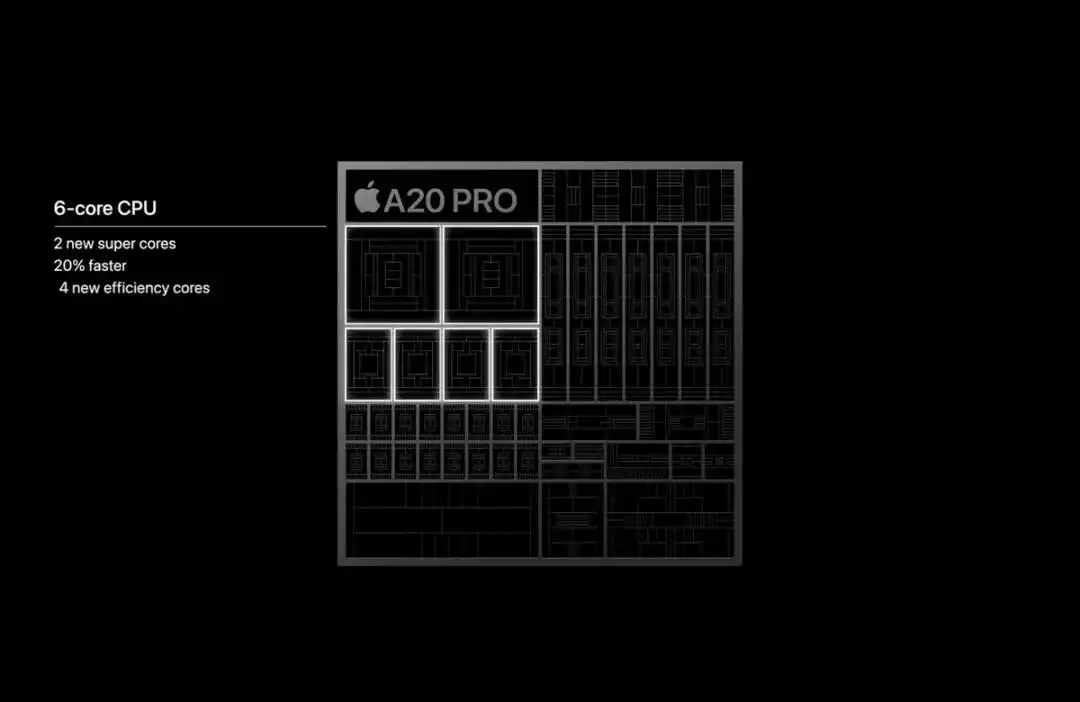
This new SoC features a 6-core CPU, which includes two of Apple's performance cores (20% faster than the previous generation) and four efficiency cores with neural network accelerators. Apple calls it a "desktop-class" processor and the "fastest CPU in a smartphone."
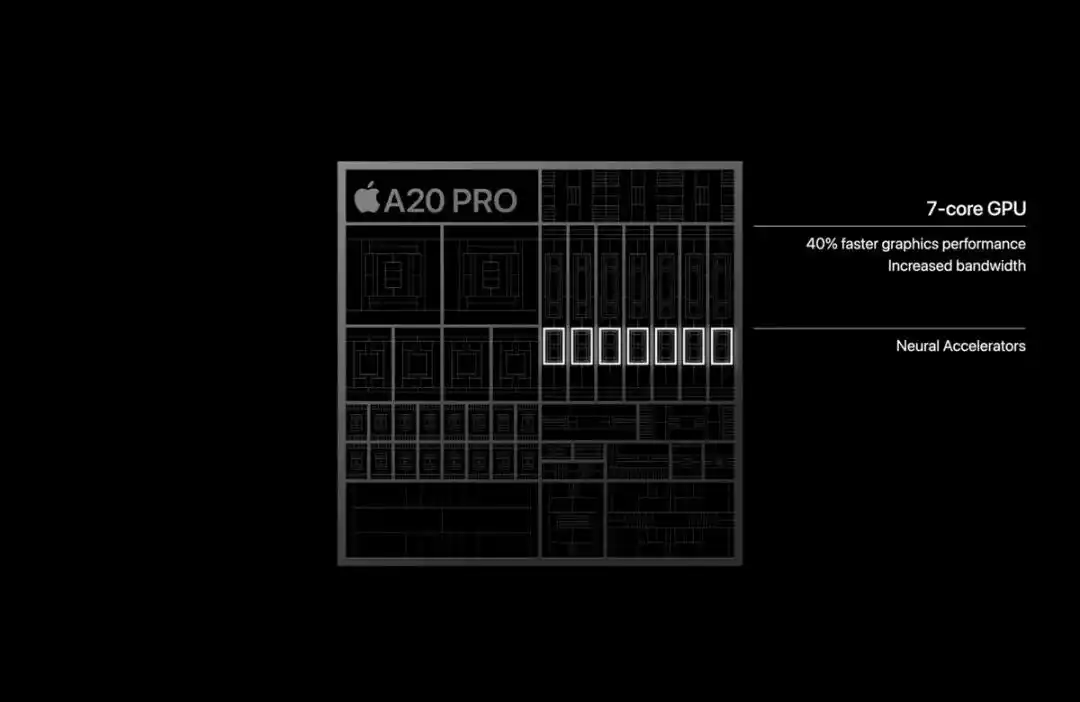
The 7-core GPU offers 40% better performance than the previous generation, along with increased bandwidth, and features new neural accelerators which the company says double FP8 compute speeds.
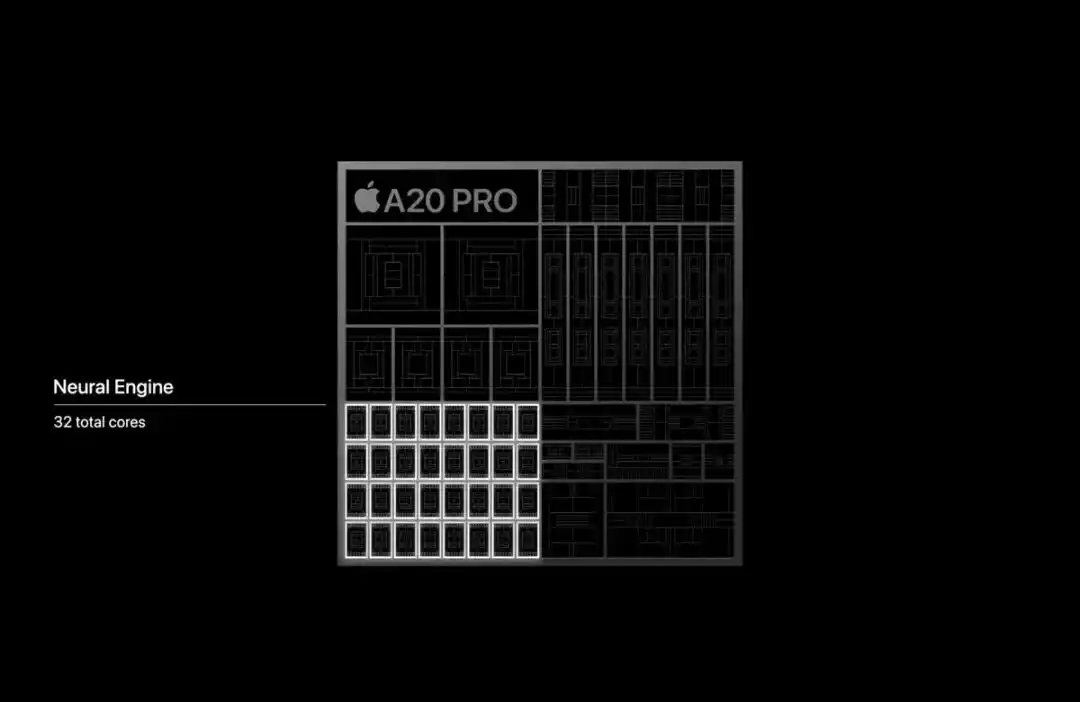
The A20 Pro also features a brand-new dual 16-core Neural Engine for accelerating on-device AI models and computational photography, totaling 32 cores, providing double the AI processing power of the A19 Pro. Memory bandwidth has been increased by 50%, which Apple says is the widest memory interface in an iPhone.
Apple has also improved the packaging by placing the silicon die away from the SoC's thermal path, allowing it to connect directly to a vapor chamber. Compared to the 17 Pro, this vapor chamber has three times the surface area, uses more graphite and copper, and features 80% recycled stainless steel.
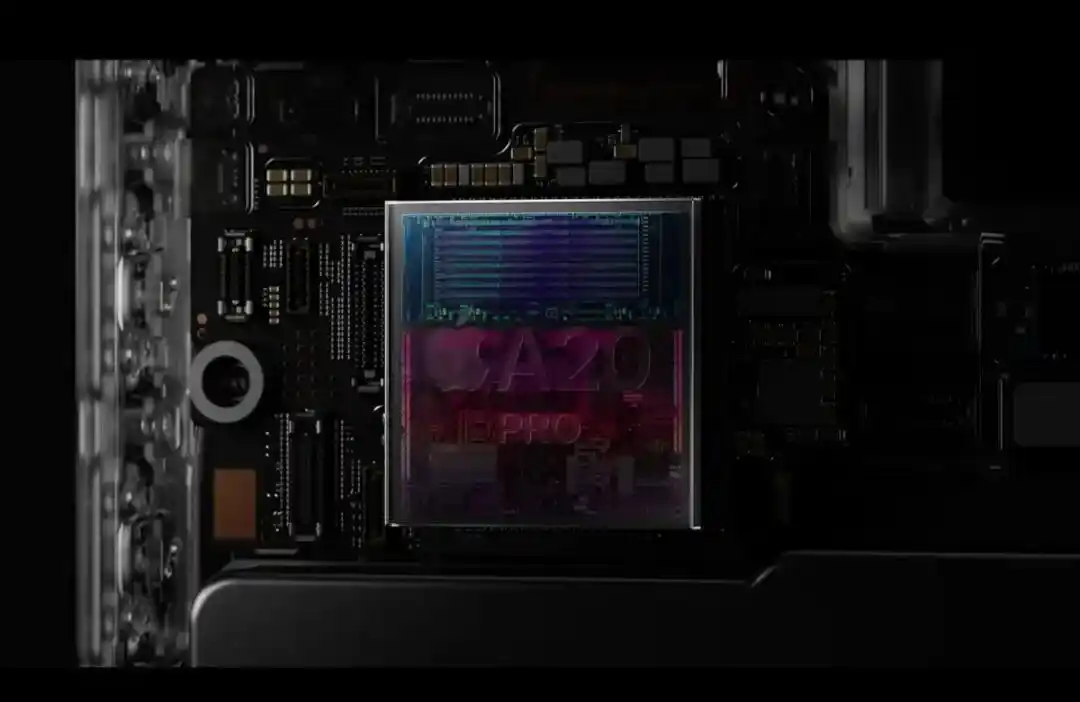
Apple introduced a redesigned thermal system centered around a new-generation vapor chamber, whose surface area is three times that of the previous generation.
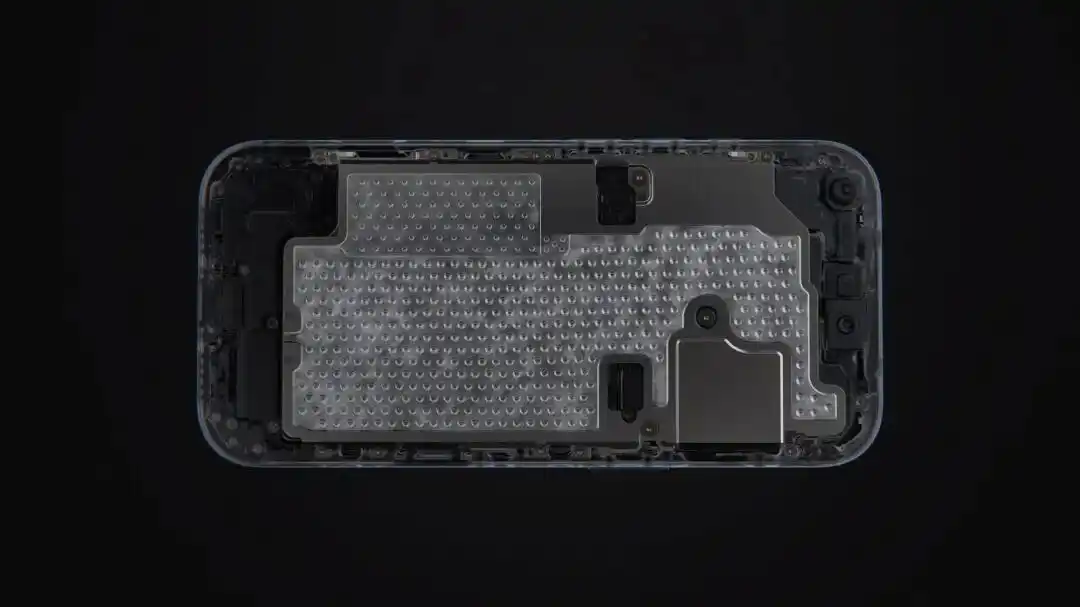
The new vapor chamber continuously circulates deionized water, significantly improving heat dissipation, allowing the A20 Pro chip to sustain higher performance for longer under heavy workloads.

Apple redesigned the silicon packaging, adopting "a custom packaging inspired by the M-series chips," placing the silicon die and memory side-by-side rather than stacked. This removes the memory from the chip's thermal path, enabling the A20 Pro to connect directly to the vapor chamber.

To achieve these improvements, Apple had to redesign the physical packaging of the A20 Pro. The old InFO_PoP packaging has been abandoned in favor of a new technology called WMCM (Wafer-Level Multi-Chip Module). Simply put, DRAM chips are no longer stacked on top of the A20 Pro die; instead, they are packaged side-by-side.

This design provides ample space for SoC heat dissipation, thereby improving sustained performance while preventing the DRAM chips from causing the SoC to overheat. As always, Apple did not reveal more specific technical details of the A20 Pro at launch.

Apple states that the combination of the new packaging, new thermal materials, and larger vapor chamber results in a 40% improvement in the iPhone's sustained performance compared to the previous generation, which the company calls the highest sustained performance ever in an iPhone.

The company claims this brings up to a 40% improvement in sustained performance over the iPhone 17 Pro, and double the sustained performance of the iPhone 16 Pro.

Apple says the A20 Pro's efficient performance and new battery design deliver longer battery life. The company claims the iPhone 18 Pro achieves 36 hours of video playback, while the iPhone 18 Pro Max achieves 45 hours. Apple also claims, based on a proprietary test using data on how users actually use their phones, that the iPhone 18 Pro lasts 24 hours per charge and the iPhone 18 Pro Max lasts 30 hours per charge.

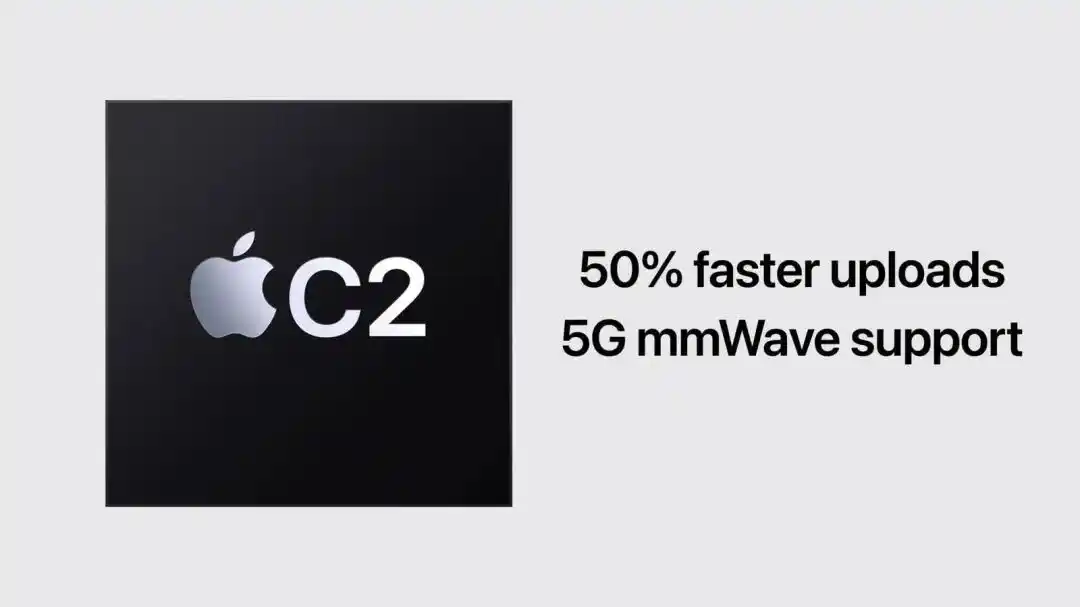
In addition to the System-on-a-Chip (SoC), Apple has adopted a new C2 cellular modem, replacing the equivalent product from Qualcomm. Apple claims the C2 modem "delivers significantly faster upload speeds compared to the C1X, while consuming 15% less power," and adds support for mmWave in the US. Both phones also feature the N1 networking chip, supporting Wi-Fi 7, Bluetooth 6, and Thread.

Another new chip from Apple is the S11, designed for the Apple Watch Series 12 and Ultra 4. It features two efficiency cores, a single-core GPU, and a quad-core AI accelerator.

The New C2 Modem

Apple today launched the new iPhone 18 Pro models and the iPhone Duo—its first foldable iPhone. Both the iPhone 18 Pro and iPhone Duo are equipped with Apple's new custom-designed C2 modem, supporting 5G connectivity.
Prior to today's announcement, there were rumors that Apple's self-developed C2 modem would not support mmWave 5G in the US market, and the company would rely on Qualcomm again to fill this gap for US carriers. However, that is apparently not the case, at least regarding mmWave support.

The iPhone 18 Pro and Pro Max press releases and technical specification pages from Apple seem to indicate that the C2 modem is limited to the smaller iPhone 18 Pro model, while the iPhone 18 Pro Max uses a Qualcomm modem. The reason for this distinction is unclear, considering the iPhone 18 Pro and Pro Max have nearly identical features.

Apple says the C2 chip uses AI to improve cellular quality and reliability and now supports mmWave technology in the US. The company claims upload speeds are also significantly faster compared to the C1X, while power consumption is reduced by 15%.

Regarding mmWave support, Apple's US specifications list bands n258, n260, and n261, along with sub-6GHz 5G with 4x4 MIMO, but the UK specifications only list sub-6GHz.

Meanwhile, both models are equipped with the N1, an Apple-designed wireless networking chip supporting Wi-Fi 7, Bluetooth 6, and Thread.

Introduction to the New WMCM Packaging

Earlier, we mentioned Apple introduced the latest WMCM packaging for its new chip. So what exactly is this technology?

It is reported that WMCM packaging will utilize MUF (Molded Underfill) technology, which integrates underfill and molding processes.

This packaging technology is said to be an upgraded version of TSMC's InFO-PoP (Integrated Fan-Out Package-on-Package) technology, integrating advanced packaging technologies like CoW (Chip-on-Wafer) and RDL (Redistribution Layer). By horizontally packaging the logic chip and DRAM, it replaces the traditional vertical stacking method, achieving significant improvements in heat dissipation and performance. This is also an advanced packaging technology jointly developed by TSMC and Apple, designed specifically for Apple, becoming another highlight alongside the A20 processor's adoption of the 2nm process.

Industry insiders point out that WMCM not only enables thinner packaging but can also integrate more memory, which is crucial for meeting the stringent demands of future edge AI applications for computing power and energy efficiency. Chip industry analysts believe this upgrade is a necessary move to address the high-performance computing demands of the AI era.

Analysts note that WMCM is one of the first packaging technologies to blur the lines of traditional packaging. It is considered likely to be applied to iPhone packaging in the future, but the logic behind it is quite similar to that of High-Performance Computing (HPC): shifting from stacked packaging to smarter integration, reducing bottlenecks, improving yield, and avoiding thermal throttling.

WMCM is not a "single technology" but a hybrid way of thinking.

A widely circulated description that best illustrates this technology is that WMCM operates similarly to a hybrid approach, blending concepts from InFO and CoWoS. This perhaps hints at how TSMC wants the industry to view it:

  • InFO showed the world how much fan-out capabilities can do.
  • CoWoS taught the world how to scale integration for performance.
  • WMCM attempts to get the best of both: tighter integration while avoiding the full complexity (and cost) of traditional interposer-intensive methods.
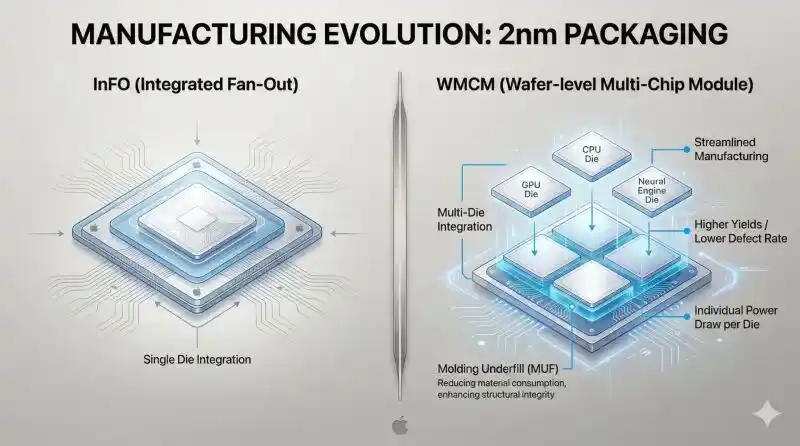
From a packaging perspective, WMCM offers several structural advantages. By integrating memory directly into the module, it reduces the need for separate components and eliminates traditional interposers or substrates. Using molded underfill material further simplifies the stacking structure, reduces material consumption and process steps, and may also free up internal space for other components, such as a larger battery.

This article is from the WeChat public account "Semiconductor Industry Observation" (ID: icbank), by the Editorial Department.

Trending Cryptos

Related Questions

QWhat is the name of Apple's first 2nm chip for iPhone and what key feature distinguishes its packaging?

AThe chip is named the A20 Pro. A key distinguishing feature of its packaging is the introduction of the new WMCM (Wafer-Level Multi-Chip Module) technology, which places the DRAM chips side-by-side with the SoC instead of stacking them on top.

QWhich iPhone models are powered by the new A20 Pro chip according to the article?

AThe A20 Pro chip powers the new foldable iPhone Duo, as well as the iPhone 18 Pro and iPhone 18 Pro Max.

QWhat are the claimed performance and battery life improvements for the iPhone 18 Pro models with the A20 Pro?

AApple claims the A20 Pro provides up to 40% higher sustained performance compared to the iPhone 17 Pro. For battery life, the iPhone 18 Pro is claimed to last for 36 hours of video playback (or 24 hours of proprietary 'all-day' use), while the iPhone 18 Pro Max is claimed to last for 45 hours of video playback (or 30 hours of proprietary 'all-day' use).

QWhat is the new custom-designed cellular modem announced alongside the A20 Pro, and what are its key improvements?

AThe new modem is called the C2. Key improvements include significantly faster upload speeds, 15% lower power consumption compared to the C1X, and the addition of mmWave support in the United States.

QHow does the new WMCM packaging technology benefit the A20 Pro chip's performance?

AThe WMCM packaging removes the DRAM from the thermal path above the SoC by placing them side-by-side. This allows the SoC to connect directly to a larger vapor chamber for better heat dissipation, preventing overheating and enabling higher sustained performance.

Related Reads

Bernstein Research Report Interpretation: Fiscal 2028 Revenue to Top $740 Billion, Yet Only a Neutral Rating for Nvidia

Nvidia reported Q3 FY2027 revenue of $115.844 billion, beating consensus of $109.330 billion, with adjusted EPS of $2.68 versus $2.47 expected. Data Center revenue reached $107.610 billion, up 21% QoQ and 110% YoY, driven by the Vera Rubin architecture, which contributed about $20 billion in its first quarter, alongside continued Blackwell Ultra shipments. Hyperscale cloud revenue was $60.136 billion, while AI cloud and enterprise customers reached $47.474 billion, up 195% YoY. Networking contributed about $21 billion, and adjusted gross margin came in at 74.9%. Q4 FY2027 guidance stands at $130 billion, above the $125.1 billion consensus, but Bernstein notes this includes an extra accounting week worth roughly $5-10 billion; excluding it, the normalized outlook is slightly below consensus. Q3 also benefited from about $2.4 billion in Hopper sales to China, which are excluded from Q4 guidance. Q4 gross margin is guided at 71.5%, expected to be the cycle trough before price increases lift margins to 72-73% in FY2028. Management raised FY2028 revenue growth guidance to about 75% from 70%, implying revenue above $740 billion, saying strong global demand offsets new export controls. Supply commitments rose to $390 billion, or $518 billion including cloud, leasing, and equity commitments. Inventory climbed to $39.7 billion. Free cash flow was $43.8 billion, with $22.1 billion in buybacks and a new $150 billion authorization. Bernstein raised its FY2028 revenue forecast to $742.4 billion and EPS to $17.18. Despite strong fundamentals, Bernstein maintains a Market-Perform rating and $200 target price, citing governance and long-term execution risks following management changes. The board has said it does not intend to bring back Jensen Huang and is searching for a new leader, raising questions about supplier negotiations, product roadmap, decision speed, and talent retention, plus potential investigation risks. At around $155.46, the stock trades at just 9.0x FY2028 EPS, or about 10x the $200 target based on average FY2028-29 EPS of $20.59. Bernstein remains on the sidelines pending clarity.

marsbit1h ago

Bernstein Research Report Interpretation: Fiscal 2028 Revenue to Top $740 Billion, Yet Only a Neutral Rating for Nvidia

marsbit1h ago

Bitcoin Volatility Falls to 43%, Below Nearly One-Fifth of S&P 500 Constituents: Is the Crypto Asset Risk Narrative Being Rewritten?

Grayscale Research argues that Bitcoin's risk profile has structurally changed and that investors' framework for assessing crypto risk needs a fundamental reset. Bitcoin's one-year realized volatility has fallen from roughly 64% a decade ago and 81% five years ago to about 43% today, placing it within the normal range of S&P 500 large-cap stocks and below roughly 19% of S&P 500 constituents. This decline reflects deeper institutional market-making, spot ETP launches, and established regulatory boundaries. The report cautions against judging Bitcoin by volatility alone. Its returns exhibit fat tails and momentum clustering, with the bulk of long-term compound gains concentrated in a handful of best trading days; missing the top 10 days would erase most cumulative returns. Downside-only measures such as the Sortino ratio therefore flatter Bitcoin more than the Sharpe ratio does. Although drawdowns exceeding 50% have occurred, risk-parity-adjusted drawdowns look less exceptional versus traditional assets. Crucially, Bitcoin's returns are poorly explained by traditional macro factors, giving it low correlation with equities, bonds, and commodities. Backtests show that adding a 1–5% Bitcoin allocation to a classic 60/40 portfolio improves risk-adjusted returns without proportionally worsening maximum drawdown. Beyond Bitcoin, crypto sub-sectors are structurally decoupling: Bitcoin now explains only about 50% of overall crypto return variance. Smart contract platforms show roughly 58% volatility driven by on-chain fundamentals, while consumer and AI sectors show 76% and 85% respectively, driven by distinct narratives. This rotation creates room for bottom-up alpha. Institutions should adopt a two-layer approach: Bitcoin as a macro diversifier, plus selective exposure to vertical-sector infrastructure, managed through volatility budgeting and disciplined rebalancing.

marsbit1h ago

Bitcoin Volatility Falls to 43%, Below Nearly One-Fifth of S&P 500 Constituents: Is the Crypto Asset Risk Narrative Being Rewritten?

marsbit1h ago

Strategy Removed from MSCI: Will BlackRock's 123,000 Shares Really Hit the Market?

After Nov 30, MSCI will remove Strategy (Michael Saylor's bitcoin-holding company) from several indices, effective Dec 1, under new eligibility rules for "non-operating" companies. Investors expect selling pressure, since index-tracking funds that bought Strategy solely to mirror the index no longer have a reason to hold it. But two BlackRock funds tracking the same MSCI USA Index illustrate why holdings can't simply be summed into one sell order: iShares MSCI USA ETF (MLRG) holds Strategy shares directly (5,227 shares as of Nov 13), while iShares MSCI USA Swap UCITS ETF (MUSD) gets index exposure via total return swaps, so its counterparties may adjust their own positions without disclosure. BlackRock's URTH (29,300 shares) and ACWI (88,500 shares) also hold Strategy, bringing the three identified funds to 123,000 shares worth about $13.74 million — a specific snapshot, not the full universe of affected funds. USXF holds 16,100 shares but its specialized index adjustment is pending. Strategy says index funds collectively hold about 13 million shares, or 3.1% of free float. Crucially, shrinking holdings don't prove selling: ETFs grow and shrink with creations and redemptions, and shares can leave a fund via in-kind redemptions without exchange sales. Index removal may weaken demand for Strategy's stock and complicate its bitcoin-funding model, but it does not require Strategy to sell any bitcoin.

marsbit1h ago

Strategy Removed from MSCI: Will BlackRock's 123,000 Shares Really Hit the Market?

marsbit1h ago

US Chip Controls Extend from Overseas Compute to Lithography Machines: Why ASML May Be Hurt More Than Nvidia?

The article discusses how U.S. chip export controls are expanding from overseas computing power to lithography machines, arguing that ASML may be more vulnerable than Nvidia. It notes that after Jensen Huang's sudden resignation as Nvidia CEO, the U.S. Commerce Department's BIS issued an interim final rule on November 16 extending semiconductor export controls to third-country offshore AI data centers, requiring licenses for advanced chip and high-bandwidth network equipment exports to overseas data centers that may serve restricted entities. The rule closes loopholes by aggregating distributed cluster computing power, covering indirect training arrangements, mandating KYC checks, and giving existing data centers a 90-day transition period. For Nvidia, the direct exposure is mainly in Southeast Asia, where Singapore alone accounts for about 10% of revenue, but strong capex from North American hyperscalers like Microsoft, Meta, and Amazon should absorb any diverted GPU capacity, making the new rule more a compliance cost than a revenue cliff. The bigger risk is the bipartisan MATCH Act, which would turn administrative discretion into hard federal law, permanently locking in restrictions on DUV lithography and advanced etching and deposition equipment. The article argues this would hit upstream equipment makers—ASML, Lam Research, and Applied Materials—harder than downstream chip designers, since cutting off their largest cash-flow market without sufficient domestic fab subsidies would pressure both profits and valuations. It also warns that markets are underestimating retaliation risks in rare earths and critical minerals, and notes ASML's China shipment share once jumped from 11% to 39% during the last semiconductor downturn.

marsbit2h ago

US Chip Controls Extend from Overseas Compute to Lithography Machines: Why ASML May Be Hurt More Than Nvidia?

marsbit2h ago

Trading

Spot

Hot Articles

How to Buy CHIP

Welcome to HTX.com! We've made purchasing USD.AI (CHIP) simple and convenient. Follow our step-by-step guide to embark on your crypto journey.Step 1: Create Your HTX AccountUse your email or phone number to sign up for a free account on HTX. Experience a hassle-free registration journey and unlock all features.Get My AccountStep 2: Go to Buy Crypto and Choose Your Payment MethodCredit/Debit Card: Use your Visa or Mastercard to buy USD.AI (CHIP) instantly.Balance: Use funds from your HTX account balance to trade seamlessly.Third Parties: We've added popular payment methods such as Google Pay and Apple Pay to enhance convenience.P2P: Trade directly with other users on HTX.Over-the-Counter (OTC): We offer tailor-made services and competitive exchange rates for traders.Step 3: Store Your USD.AI (CHIP)After purchasing your USD.AI (CHIP), store it in your HTX account. Alternatively, you can send it elsewhere via blockchain transfer or use it to trade other cryptocurrencies.Step 4: Trade USD.AI (CHIP)Easily trade USD.AI (CHIP) on HTX's spot market. Simply access your account, select your trading pair, execute your trades, and monitor in real-time. We offer a user-friendly experience for both beginners and seasoned traders.

9.4k Total ViewsPublished 2026.04.21Updated 2026.06.02

How to Buy CHIP

Discussions

Welcome to the HTX Community. Here, you can stay informed about the latest platform developments and gain access to professional market insights. Users' opinions on the price of CHIP (CHIP) are presented below.

活动图片