Breaking: "Source God" MiniMax Open-Sources H3 Image, the Strongest Open-Source Model Made in China
MiniMax has released H3 Image, an open-source image generation model positioned as SOTA among open-source image models and competitive with the global top tier. Weights, API access, and integrations with MiniMax Code, the open platform, and Hailuo AI were all made available on launch day.
Key specs: up to 16 reference images, prompts up to 7,500 characters, and 4K (4096×4096) output generated in just 10–20 seconds—far faster than the minute-level times typical of mainstream models. The headline capability is instruction following: H3 Image handles long text, complex spatial relationships, diagrams, and multi-reference consistency far better than art-focused models like Midjourney, which struggle with text and spatial logic.
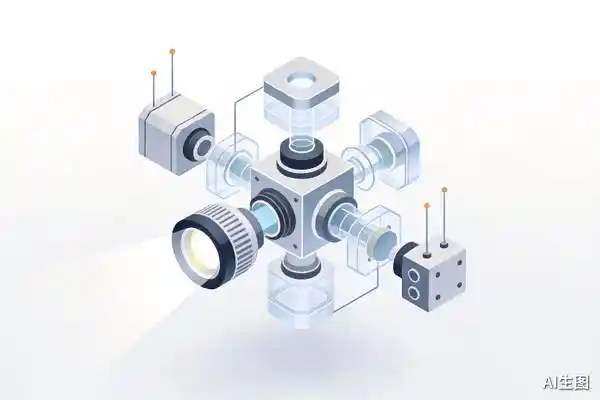
Early testers highlighted photorealistic portraits without the usual "plastic skin," retro game screenshots upgraded to next-gen 3A quality, 3A game assets, large-text posters, American Sign Language gestures (48.1% accuracy vs. Moss's 20%), CAD-style blueprints, and mechanical exploded views. Tests included an Eiffel Tower reimagined as a cyberpunk relay station in CAD blueprint form, a quadruped robot's HUD with correctly perspective-aligned 3D bounding boxes, a dark fantasy game UI screenshot, felt stop-motion and pen-and-watercolor styles, and a 16-image "matching" task assigning heads, outfits, instruments, and environments without a single mismatch. An ORB-7 flashlight exploded view correctly ordered seven parts with exactly three screws, based only on a front view, cross-section, and parts list.
The capability comes from a two-step process: H3's pretraining treated text, images, video, and audio as unified context, building strong image fundamentals; then post-training used reinforcement learning, reduced sampling steps, prompt enhancement, and deployment optimization. MiniMax had previewed a unified generation-editing image model in an August community Q&A.
The "源神" (open-source god) reputation stems from H3's generous licensing: free commercial use under $20M annual revenue in covered regions, with separate licenses required above that or for deployment in the US, EU, UK, and South Korea. H3 surpassed 24 million downloads and 300+ derivative models within a month, with derivatives from NVIDIA researchers, Pika, and fal. The strategy: let the world run it on their own GPUs, build trust through code, then monetize. The article concludes that open source and profit don't conflict, and image demand—game art, e-commerce, industrial design—is denser than video, implying even greater opportunity.
marsbit3m ago