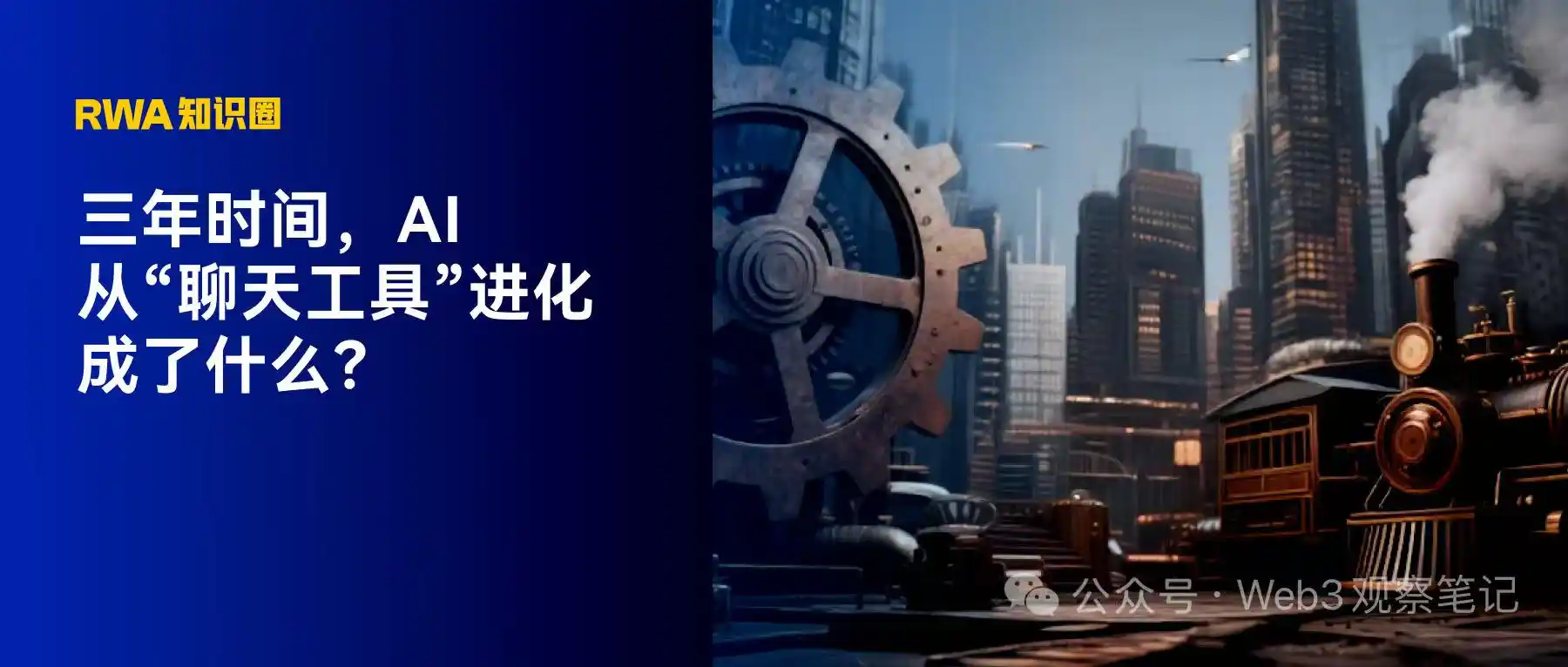
Three Years Later: How Has AI Evolved from a 'Chat Tool'?

marsbitPublished on 2026-03-20Last updated on 2026-03-20

Abstract

Three years ago, AI was primarily seen as a novel tool for chatting, image generation, and entertainment—products like ChatGPT, Midjourney, and Character.AI were used more for demonstration than daily reliance. The evolution occurred in two major phases. First, AI became embedded into established applications like CapCut, Canva, and Notion, transforming from a feature into core infrastructure. Platforms diverged: ChatGPT aimed to become a super-app entry point for consumer internet use, while Claude evolved into a professional operating system for knowledge work, creating sticky platform flywheels through integration into calendars, email, and workflows. The true breakthrough emerged recently as AI shifted from generating content to executing tasks autonomously. AI agents like OpenClaw now decompose goals, retrieve information, process data, and deliver results without human intervention. Simultaneously, "Vibe Coding" tools (e.g., Cursor, Replit) enable AI to build entire software products based on human-defined objectives. This progression toward autonomous action is naturally aligning AI with Web3. Blockchain offers machine-native interfaces, programmable assets, and 24/7 operational capability, allowing AI to execute and settle transactions trustlessly without human intermediaries. Together, AI and Web3 are forming the foundational stack for the next internet—where AI acts, and Web3 enables seamless, auditable machine-to-machine coordination and commerce.

Introduction

If you've been following AI over the past three years, you'll have noticed a significant shift: it's no longer just "useful"—it's becoming "indispensable." This change didn't happen overnight; it evolved through three distinct stages.

Phase One: AI Was a "New Species," But Not Yet Part of Daily Life

Three years ago, the hottest AI products were very concentrated:

  • ChatGPT: Chat and Q&A
  • Midjourney: Image generation
  • Character.AI: Virtual character conversations

What they had in common: They were all "AI-native applications," essentially existing to showcase AI capabilities.

User behavior at the time was also typical:

  • Asking questions
  • Generating images
  • Chatting for entertainment

It was essentially about "experiencing AI," not "relying on AI." In other words, AI in this phase was more of a capability showcase than a production tool.
Phase Two: AI Begins to "Embed into Every Product"

The real change happened in the last two years.

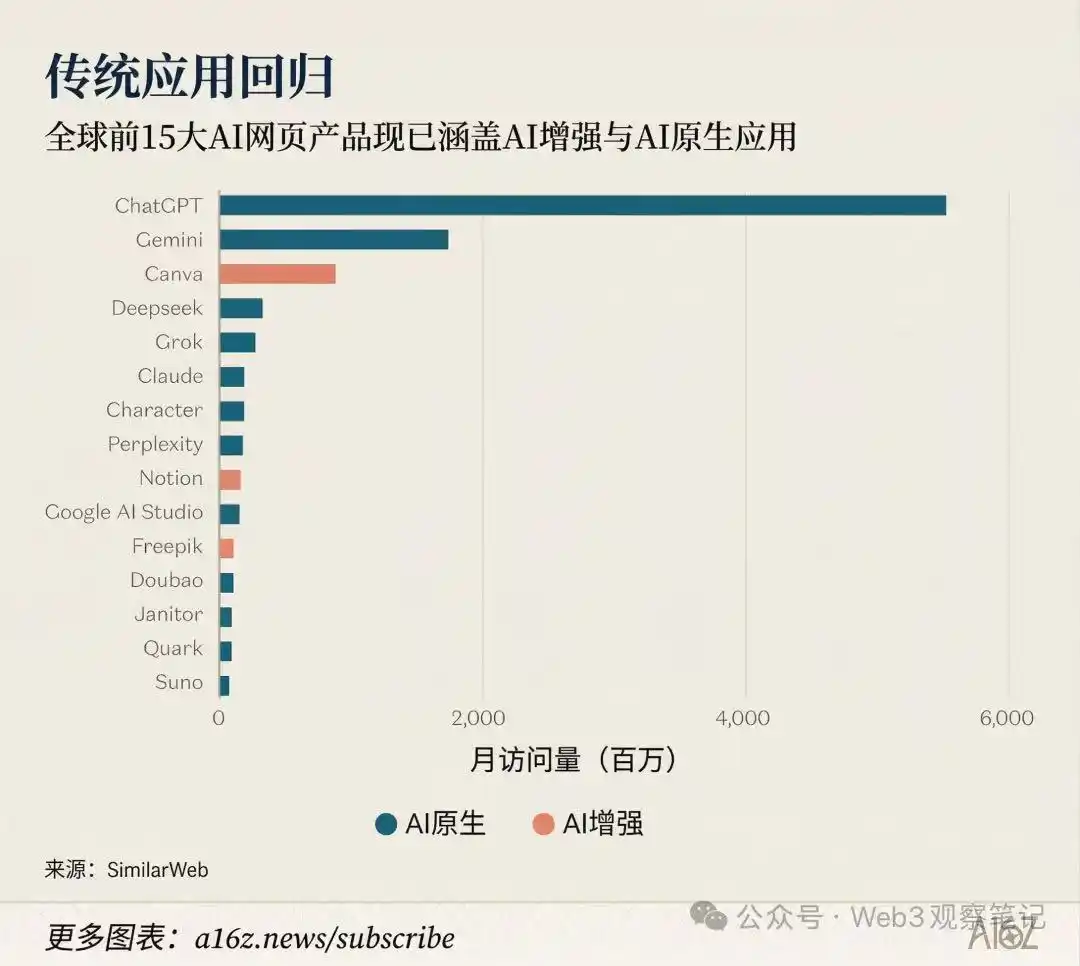
The leaders on the AI application charts are no longer "pure AI products" but established applications that have been rebuilt with AI:

  • CapCut (Jianying): 736 million monthly active users, with almost all core features AI-powered
  • Canva: Redesigned the design workflow around AI tools
  • Notion: AI feature adoption grew from 20% → 50%+

An even more critical signal emerged:

AI began contributing close to half of the revenue (ARR)

This signifies one thing:

AI is no longer just a feature; it's infrastructure.

Platform Differentiation Begins

As AI became a foundational capability, the role of large models also changed:

From "chat tool" to "usage entry point."

Two distinct paths became clear:

1) The Super Entry Point (Consumer)

What ChatGPT is doing includes:

  • GPTs + App Store
  • "Login with ChatGPT" account system
  • Integration into life scenarios like shopping, travel, health

The goal is clear: Become the starting point for your internet use

2) The Professional Work Platform (Productivity)

Claude's path is entirely different:

  • MCP (Model Context Protocol)
  • Deep integration with developer tools, data systems
  • Building complex workflows

It's more like: An AI operating system for knowledge workers

An Emerging Structure: The Platform Flywheel

As users began integrating AI into their daily systems:

  • Calendars
  • Email
  • CRM
  • Workflows

Switching costs rose rapidly, and platform stickiness began to form.

Thus, the classic flywheel effect emerged:

  • More users → More developers
  • More developers → Richer functionality
  • Richer functionality → Users become more dependent

This also leads to one outcome: This competition won't be winner-take-all; it will more likely be two ecosystems coexisting long-term.

Phase Three: AI Begins to "Act on Your Behalf"

The real watershed moment happened in the last year.

AI is no longer just "generating content for you"; it's starting to: Execute tasks for you. From "generating content" to "completing tasks"

Early AI (like Midjourney, DALL·E) solved:

  • Writing content
  • Generating images

But the new generation of products is now doing:

  • Task decomposition
  • Automatic execution
  • Complete delivery

AI Agents Emerge

Represented by products like OpenClaw, a key change has occurred:

  • Not just answering questions
  • But decomposing tasks
  • And automatically executing the entire process

For example, a complete workflow:

  • Receive objective
  • Query information
  • Analyze and process
  • Output result
  • Automatically send

At this stage, AI is no longer just a tool; it is: An "actionable software entity"

Another Trend: AI Starts "Building Products for You"

Vibe Coding is rapidly rising, represented by products including:

  • Cursor
  • Replit
  • Lovable

They are essentially doing one thing: Letting AI directly help you "build" the product This change isn't just about efficiency gains; it's a shift from "humans writing code" to "humans defining goals, AI completing the build."

Four: As AI Takes Action, Why is It Moving Towards Web3?

As AI moves from "answering questions" to "executing tasks," a practical question arises: How does it complete transactions and settlements? In the traditional internet, these rely on platforms and intermediaries, but this system was designed for "humans," not for machines to operate independently.

Web3 provides an underlying structure more suited for AI:

  • 24/7 Operation: AI can continuously execute and respond
  • Machine-Native Interfaces: Contracts as APIs, directly callable
  • Programmable Assets: Fund transfers can be automated

The change this brings: AI doesn't just "do things"; it can also automatically handle payment and settlement in the process.

More importantly, blockchain provides immutability and auditability, enabling AIs to collaborate without intermediaries. This signifies a shift in how trust works on the internet—from "trusting the platform" to "trusting the rules."

Therefore, the relationship between AI and Web3 is more like a natural division of labor: AI handles action, Web3 handles settlement. As AI truly begins to participate in transactions and collaboration, this combination will likely become the foundation of the next generation of the internet.

Related Questions

QWhat are the three main stages of AI evolution described in the article?

AThe three stages are: 1) AI as a 'new species' for demonstration and experience, 2) AI becoming embedded into all products as infrastructure, and 3) AI starting to perform tasks and execute actions autonomously.

QHow did user behavior towards AI change from the first to the second stage?

AIn the first stage, users primarily used AI to 'experience' it through activities like asking questions, generating images, or chatting for entertainment. In the second stage, AI became integrated into mature applications, and users began to depend on it as a core part of their workflow, with AI contributing significantly to product revenue.

QWhat are the two distinct platform paths that emerged as AI became a foundational capability?

AThe two paths are: 1) The 'Super Entry' for consumer use, exemplified by ChatGPT aiming to be the starting point for internet use, and 2) The 'Professional Work Platform' for productivity, exemplified by Claude, which functions like an AI operating system for knowledge workers.

QWhat is the key difference between early AI tools and the newer generation of AI agents like OpenClaw?

AEarly AI tools like Midjourney were focused on generating content (text, images). Newer AI agents like OpenClaw are capable of task decomposition, automatic execution, and full delivery of results, acting as a 'software entity that can act' rather than just a tool.

QWhy does the article suggest that AI's evolution towards performing tasks will lead it to integrate with Web3 technologies?

ABecause Web3 provides a machine-native infrastructure with 24/7 operation, smart contracts as APIs, and programmable assets, allowing AI to autonomously complete transactions and settlements. This creates a trust model based on rules and code rather than centralized platforms, which is essential for AI-to-AI collaboration and action.

Related Reads

People Laid Off by AI Won't Disappear; They Will Become the Creators of the Next Economy

The article argues that the real question surrounding AI is not whether it will cause unemployment, but what happens to the people displaced. AI is replacing not humans, but the standardized, replicable, and automatable parts of human work. This follows historical patterns where technological revolutions, from stone tools to computers, made old skills obsolete and dissolved old structures—but humanity adapted and reorganized. The author draws a parallel to China’s large-scale layoffs during state-owned enterprise reforms 30 years ago, which initially seemed catastrophic but eventually fueled the growth of a new private economy, new companies, and new types of jobs. Engineers, though among the first impacted, are also positioned to recover fastest. Their systemic understanding and proximity to new productive forces make them ideal candidates to adapt and create in the new economy. More importantly, AI is reshaping companies themselves—reducing organizational bloat, communication costs, and bureaucracy. This enables smaller, more agile teams and empowers strong creators who may have previously struggled with management rather than innovation. The core issue is not job loss, but self-definition: will individuals wait to be reassigned by the old system, or use new tools to reorganize production? AI accelerates differentiation—eliminating some jobs, shattering illusions for some, and offering others a chance to leap forward. The author’s view is that AI is dismantling an entire generation’s belief in stable career paths. Those laid off won’t vanish; instead, many will reinvent themselves—transitioning from employees in old systems to creators of the next economy. Every productivity revolution淘汰 (eliminates) not people, but those who refuse to rewrite themselves. The first to accept this and start building the new world will succeed.

marsbit20분 전

People Laid Off by AI Won't Disappear; They Will Become the Creators of the Next Economy

marsbit20분 전

Trading

Spot
Futures

Hot Articles

Discussions

Welcome to the HTX Community. Here, you can stay informed about the latest platform developments and gain access to professional market insights. Users' opinions on the price of AI (AI) are presented below.

活动图片