Crypto Crackdown Intensifies: Canada Revokes 47 Licenses

bitcoinistPublished on 2026-03-20Last updated on 2026-03-20

Abstract

Canada's financial regulator FINTRAC has intensified its crackdown on the crypto sector, revoking 47 money services business licenses from crypto-related firms in 2026 alone. This follows earlier major penalties, including a $126 million fine for Cryptomus and a $14 million penalty for KuCoin. Finance Minister François-Philippe Champagne signaled continued strict enforcement, specifically highlighting risks associated with crypto ATMs and money laundering. The move represents a significant shift in Canada's regulatory approach, with FINTRAC strengthening enforcement and using its actions as a public deterrent. The broader context notes that while illicit crypto transactions are estimated at under 1%, the sector faces stricter scrutiny than traditional finance.

Canada’s financial watchdog fined crypto platform Cryptomus $126 million last October after the company allegedly failed to flag suspicious transactions on 1,068 separate occasions in a single month.

A month before that, crypto exchange KuCoin was handed a $14 million penalty for operating in Canada without registering as a foreign money services business.

Those two cases now look like early warnings of what was coming.

In the months since, the Financial Transactions and Reports Analysis Centre — better known as FINTRAC — has revoked 50 money services business registrations in 2026 alone.

Forty-seven of those belonged to crypto-related firms. The latest round, announced Monday, cut 23 registrations in one move.

Finance Minister Signals More Actions On The Way

Finance Minister François-Philippe Champagne called the pace of enforcement “significantly increased” and said the government has no plans to slow down.

“Our government will continue to monitor and pursue new measures to address risks posed by virtual currency businesses, such as cryptocurrency MSBs and crypto ATMs, which can be used to facilitate money laundering and fraud,” he said in a statement Tuesday.
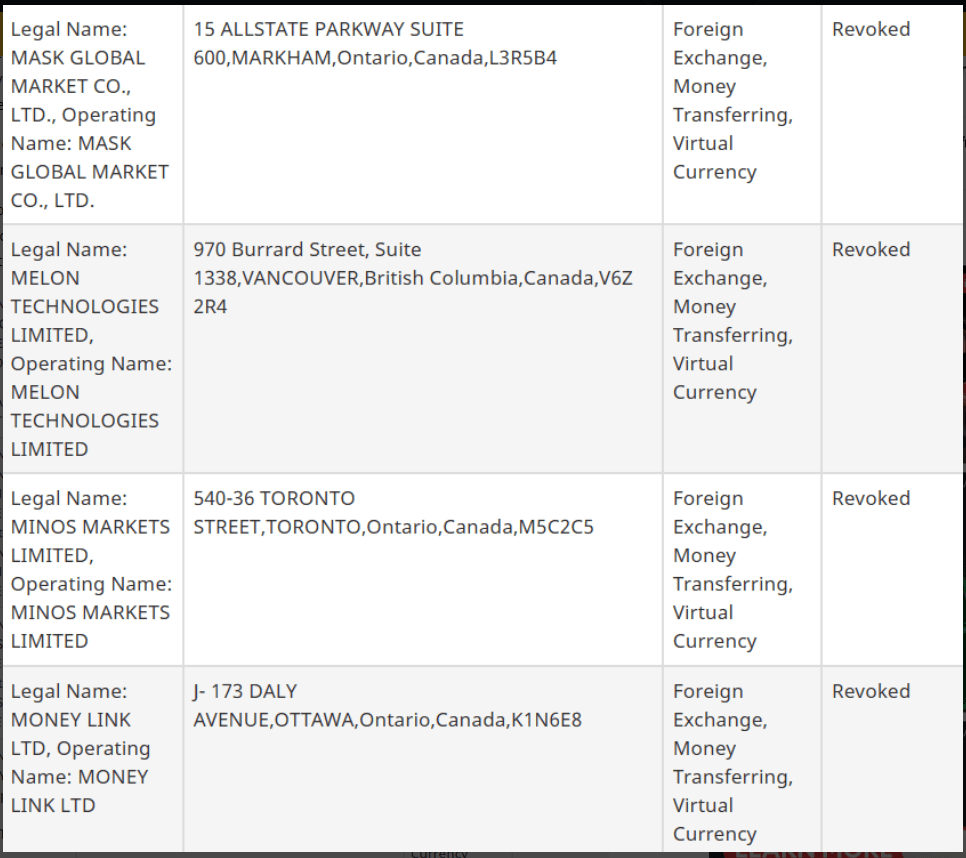
FINTRAC canceled 23 MSB registrations on Monday, according to the agency.

Any business that loses its registration has 30 days to request a review. Some may get reinstated. But the scale of the sweep — nearly 50 revocations in under three months — signals a shift in how Canada is policing the crypto sector.

FINTRAC also said it is strengthening enforcement and increasing transparency around compliance actions, a move that suggests the agency wants its actions to serve as a public deterrent, not just a regulatory cleanup.

Total crypto market cap currently at $2.38 trillion. Chart: TradingView

What The Numbers Say About Crypto And Crime

Canada’s crackdown comes at a time when the relationship between cryptocurrency and illicit finance is still hotly debated.

The Financial Action Task Force estimates that between 2% and 5% of global GDP moves through illegal channels each year — almost entirely through traditional banking systems.

Blockchain analytics firm Chainalysis puts the share of crypto transactions tied to illicit activity at under 1%.

Those figures don’t mean crypto is clean. But they do raise questions about whether the sector is being held to a stricter standard than older financial industries.

For now, Canada appears committed to its current direction. Officials have specifically called out crypto ATMs as a concern, suggesting future enforcement could extend beyond online platforms to physical kiosks scattered across the country.

Businesses that aren’t in full compliance with registration and reporting rules have reason to take that warning seriously.

Featured image from Unsplash, chart from TradingView

Related Questions

QWhat was the total number of money services business registrations revoked by FINTRAC in 2026 alone, and how many of these were crypto-related firms?

AFINTRAC revoked 50 money services business registrations in 2026 alone, and 47 of those belonged to crypto-related firms.

QWhat were the two major enforcement actions taken by Canadian regulators against crypto platforms prior to the recent wave of license revocations?

ACanada's financial watchdog fined crypto platform Cryptomus $126 million for failing to flag suspicious transactions, and crypto exchange KuCoin was handed a $14 million penalty for operating without registering as a foreign money services business.

QAccording to the article, what is the estimated percentage of global GDP that moves through illegal channels each year, and what is the estimated share of crypto transactions tied to illicit activity?

AThe Financial Action Task Force estimates that between 2% and 5% of global GDP moves through illegal channels each year, while blockchain analytics firm Chainalysis puts the share of crypto transactions tied to illicit activity at under 1%.

QWhat did Finance Minister François-Philippe Champagne say about the government's future plans regarding virtual currency businesses?

AFinance Minister François-Philippe Champagne stated that the government will continue to monitor and pursue new measures to address risks posed by virtual currency businesses, such as cryptocurrency MSBs and crypto ATMs, which can be used to facilitate money laundering and fraud.

QWhat specific physical infrastructure, beyond online platforms, did Canadian officials call out as a concern for future enforcement actions?

ACanadian officials specifically called out crypto ATMs as a concern, suggesting future enforcement could extend to these physical kiosks scattered across the country.

Related Reads

Trading

Spot
Futures
活动图片