6,000 Investors Lost Everything On A 1,001x Solana Meme Coin — South Korea Just Made Its Move

bitcoinistPublicado a 2026-05-27Actualizado a 2026-05-27

Resumen

South Korean prosecutors have indicted five individuals for a landmark Solana-based meme coin rug pull, marking the first-ever criminal prosecution of a decentralized exchange (DEX) scam under the country's Virtual Asset User Protection Act. The group launched the CATFI token on pump.fun, artificially inflated its value through fake social media promotions and circular trading under the influencer alias "EtherFather," and then abandoned the project. The scam caused the token's price to surge 1,001 times, attracting about 6,000 investors and resulting in approximately $650,000 in confirmed losses for 256 victims. This precedent-setting case extends South Korea's crypto fraud enforcement framework to DEX transactions and influencer-driven manipulation for the first time.

South Korean prosecutors have indicted five individuals in the country’s first-ever criminal prosecution of a decentralized exchange rug pull — and the first case in which fraudulent trading charges under South Korea’s Virtual Asset User Protection Act have been applied, setting a landmark legal precedent for how the country’s crypto enforcement framework handles DEX-based market manipulation on Solana and other blockchains.

The Seoul Southern District Prosecutors’ Office Virtual Asset Crime Joint Investigation Unit announced on May 27 that it had arrested and indicted two suspects on market manipulation charges, indicted a third without arrest, and separately indicted two additional suspects for obstructing justice by helping the ringleader evade capture — five defendants in total across two separate charging tracks, per Digital Asset’s May 27 reporting of the prosecutor’s statement.
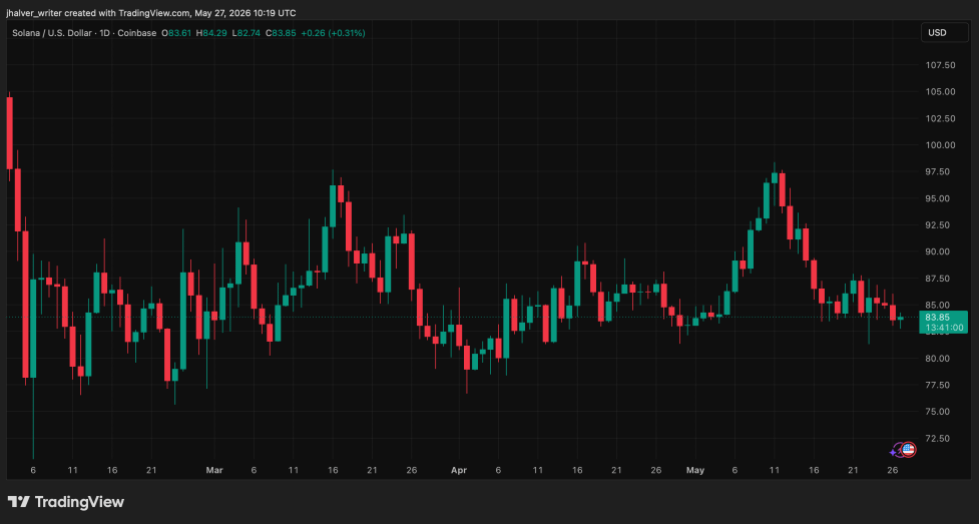
SOL's price moving sideways on the daily chart. Source: SOLUSD on Tradingview

How The Solana Scheme Worked

The operation centered on CATFI — a Solana-based meme coin launched on pump.fun, the widely used Solana token issuance platform that gained significant traction during the early 2025 meme coin frenzy. The group spent several million Korean won to launch the token and list it on a decentralized exchange, per the prosecution’s account.

The ringleader, identified only by his surname Park, operated under the influencer alias “EtherFather” on social media — presenting himself as an independent third party with no financial interest in the project while actively recommending CATFI purchases to his followers. Simultaneously, the group operated the project’s official social media accounts, artificially inflating follower counts and publishing false promotional announcements to drive retail buying interest, per the prosecutor’s statement as reported by Digital Asset.

To conceal their control over the token’s supply, the group distributed holdings across multiple wallets and conducted circular trading — a technique designed to create the appearance of organic market activity while masking the fact that the issuing parties controlled the token’s liquidity. Once retail investors had entered, the group executed the rug pull — abandoning the project and exiting with approximately 400 million Korean won in illicit proceeds from an initial outlay of roughly 10 million won, per the filing.

The Scale Of The Damage

CATFI’s price surged 1,001 times in the 26 hours following its launch, attracting approximately 6,000 investors. Of those, 256 suffered confirmed financial losses totaling approximately 900 million Korean won — roughly $650,000 at current exchange rates — per the prosecution’s figures cited in the Digital Asset report.

Why The Precedent Matters

Two firsts define this case’s significance. It is the first prosecution under the Virtual Asset User Protection Act using fraudulent trading charges — specifically the act’s prohibition on “use of fraudulent means, plans, or schemes” and “false statements on material matters” in connection with digital asset transactions, per the prosecution’s legal framing.

The prior landmark case under the same law applied market manipulation charges relating to centralized exchange activity. This case extends that framework to decentralized exchange transactions for the first time — a meaningful expansion of regulatory reach into a space prosecutors have historically struggled to address.

This development marks a critical juncture for the nascent sector’s regulatory trajectory in South Korea. A successful rug pull prosecution targeting DEX activity on Solana, influencer-driven manipulation, and coordinated wallet obfuscation simultaneously signals that Korean enforcement agencies are developing both the technical capability and the legal framework to pursue crypto fraud beyond the centralized exchange perimeter.

Cover image from Grok, SOLUSD chart from Tradingview

Preguntas relacionadas

QWhat is the landmark legal significance of the CATFI rug pull case in South Korea?

AIt is the first criminal prosecution of a decentralized exchange rug pull in South Korea and the first case to apply fraudulent trading charges under the Virtual Asset User Protection Act to DEX-based market manipulation, setting a key precedent.

QWhat meme coin was at the center of the scheme, and on which platform was it launched?

AThe scheme centered on the CATFI meme coin, which was launched on the Solana token issuance platform pump.fun.

QHow did the perpetrators conceal their control over the CATFI token and manipulate the market?

AThey distributed holdings across multiple wallets, conducted circular trading to simulate organic activity, used the alias 'EtherFather' to falsely promote the coin as a disinterested party, and inflated social media follower counts with false announcements to drive retail buying.

QWhat was the financial scale of the damage caused to investors in the CATFI scheme?

AApproximately 6,000 investors were attracted, with 256 confirmed to have suffered losses totaling about 900 million Korean won (roughly $650,000). The perpetrators made about 400 million won in illicit proceeds from an initial 10 million won outlay.

QWho was indicted in the case, and what were the general charges?

AFive individuals were indicted. Two were arrested and indicted for market manipulation, a third was indicted without arrest for the same, and two others were separately indicted for obstructing justice by helping the ringleader evade capture.

Lecturas Relacionadas

Retail Investors' 'Lead Brother' Serenity vs. Newly Minted Stock God Leopold: How Are the Two Top Hunters Mining AI's 'Physical Limits'?

The article profiles two prominent figures, Serenity and Leopold Aschenbrenner, who are gaining attention for their unconventional investment strategies focused on the physical constraints of the AI boom, moving beyond mainstream software narratives. Serenity, an anonymous online trader, advocates a "shiso leaf" theory. He targets small-cap companies with monopolies on critical, overlooked components in the AI hardware supply chain, such as specific semiconductor materials. His deep, technical analysis of bottlenecks in areas like co-packaged optics (CPO) has reportedly yielded massive returns, though his anonymity and focus on illiquid micro-cap stocks pose significant risks for followers. Leopold Aschenbrenner, a former OpenAI researcher, founded a multi-billion dollar hedge fund. His macro thesis argues that physical infrastructure—power grids, land, data centers—is the true bottleneck for AI growth, lagging far behind chip production. Consequently, his fund employs an infrastructure arbitrage strategy: heavily investing in storage and compute infrastructure companies while placing massive bearish bets (put options) against major semiconductor stocks, betting their valuations will correct as physical constraints become apparent. While their methods differ—Serenity drills into microscopic supply chain details, while Leopold takes a macroscopic, infrastructure-focused view—both share a core belief: the real power and investment alpha in the AI era lie in controlling scarce physical resources, not just software. The article concludes by noting the inherent risks in both approaches, such as liquidity issues for micro-caps and timing risks for macro bets, but suggests they signal a broader market re-evaluation of AI's foundational assets.

marsbitHace 5 hora(s)

Retail Investors' 'Lead Brother' Serenity vs. Newly Minted Stock God Leopold: How Are the Two Top Hunters Mining AI's 'Physical Limits'?

marsbitHace 5 hora(s)

Who Will Make Money in the Age of Agents?

In the Agents era of blockchain, traditional value capture theories face challenges. The "Fat Protocol" theory, dominant since 2016, suggested protocols capture most value as their tokens are essential for network use. However, the proliferation of interchangeable L1s, L2s, and modular layers has eroded protocol scarcity and pricing power. Conversely, the "Fat App" theory posits that applications capturing user relationships (like wallets and exchanges) become the primary value layer by controlling distribution and transaction flows. This aligns with the current "Great Repricing" cycle. Agents disrupt this logic. As software users, they lack brand loyalty, prioritize cost and efficiency, and switch between platforms seamlessly. This undermines the front-end UX moats that "Fat Apps" rely on. The article explores several potential futures: 1. **Headless Applications:** Current leading apps could strip their front-ends and become backend API infrastructure for Agents, preserving their role. 2. **Protocol Resurgence:** If integration becomes trivial, Agents might bypass aggregators and interact directly with protocols, reviving "Fat Protocol" dynamics. 3. **Pricing Power Collapse:** Agents' rational, frictionless routing could commoditize the entire stack, compressing margins toward cost and leaving little profit for intermediaries. 4. **Unprecedented Activity:** Agents may enable new, high-frequency, machine-to-machine economic activities, expanding the total value pie even if margins are thin. 5. **A New, Unnamed Model:** Historically, major tech shifts (like the internet's attention economy) create unforeseen business models. The Agents era may spawn entirely new ways to capture value. The most likely outcome is a coexistence where "Fat Apps" continue to serve human users valuing UX, while a separate, Agent-driven economy emerges governed by different rules—where loyalty is based on factors like liquidity, latency, and settlement guarantees rather than brand.

marsbitHace 6 hora(s)

Who Will Make Money in the Age of Agents?

marsbitHace 6 hora(s)

Trading

Spot
Futuros

Artículos destacados

Qué es MEME 2.0

Memecoin 2.0: El Ascenso de $MEME 2.0 en el Mundo de las Criptomonedas Introducción En el panorama siempre cambiante de las criptomonedas, ha surgido un nuevo contendiente. Memecoin 2.0, simbolizada como $MEME 2.0, lleva el concepto de las monedas meme a un emocionante nuevo nivel. Como un subproducto del Memecoin original, este proyecto ha capturado la atención de la comunidad cripto al cambiar el enfoque de los incentivos financieros típicos a una experiencia comprometida y entretenida. Operando en la blockchain de Ethereum, Memecoin 2.0 redefine audazmente la participación de la comunidad en la esfera cripto. ¿Qué es Memecoin 2.0, $MEME 2.0? En su núcleo, Memecoin 2.0 es un proyecto de criptomoneda que prioriza el espíritu comunitario y la diversión asociada con la cultura meme. A diferencia de las criptomonedas convencionales, que se concentran en casos de uso prácticos y beneficios tangibles, Memecoin 2.0 se distingue al abrazar el lado más liviano de la moneda digital. El proyecto existe sin promesas de utilidad, un mapa estructurado o retornos financieros, enfocándose en cambio en fomentar una comunidad vibrante centrada en memes y en el disfrute compartido. Al hacerlo, aprovecha la creciente tendencia de la cultura meme en el espacio en línea, convirtiéndose en un jugador único en el mundo de los activos digitales. Creador de Memecoin 2.0, $MEME 2.0 A pesar de la extensa investigación sobre los orígenes de Memecoin 2.0, la identidad explícita de su creador sigue siendo desconocida. Esta anonimidad no es inusual en la comunidad cripto, donde muchos proyectos son liderados por individuos o grupos que prefieren permanecer en las sombras. La falta de información disponible públicamente sobre el creador podría verse como un movimiento estratégico, poniendo el foco en la participación comunitaria en lugar de la notoriedad individual dentro del espacio. Inversores de Memecoin 2.0, $MEME 2.0 La información sobre los inversores o el respaldo financiero de Memecoin 2.0 es escasa. Esta ausencia de detalles puede sugerir que el proyecto es autofinanciado o que su enfoque en la comunidad en lugar de las estructuras de inversión tradicionales ha atraído a un tipo diferente de apoyo. Dado que el mundo de las monedas meme generalmente involucra una participación más de base en lugar de inversión institucional, este enfoque está alineado con la ética de los proyectos impulsados por la comunidad. ¿Cómo Funciona Memecoin 2.0, $MEME 2.0? Memecoin 2.0 opera completamente en la blockchain de Ethereum, capitalizando sus robustas características de seguridad y escalabilidad. Al aprovechar las fortalezas de Ethereum, Memecoin 2.0 puede ofrecer un entorno seguro para las interacciones de los usuarios, asegurando que las transacciones sean tanto eficientes como rentables. Uno de los atributos únicos de Memecoin 2.0 radica en su estructura impulsada por la comunidad. El valor y la popularidad del token $MEME 2.0 derivan de la participación activa de sus usuarios, en vez de de una utilidad inherente. Este diseño refuerza el enfoque del proyecto en el aspecto de entretenimiento de las criptomonedas, lo que implica que la risa y la participación comunitaria son las verdaderas monedas que impulsan su éxito. Además, el proyecto encaja dentro del ecosistema más amplio de las monedas meme, donde el valor de cada moneda meme oscila basado en la cultura, tendencias y la participación de la comunidad, en lugar de principios económicos tradicionales. Cronología de Memecoin 2.0, $MEME 2.0 Para entender mejor la evolución y los hitos de Memecoin 2.0, aquí hay una cronología que destaca eventos significativos en su historia: 2024: Se reconoce la creación de Memecoin 2.0 como una ramificación del Memecoin original, estableciéndose dentro del contexto próspero de las monedas meme mientras opera en la blockchain de Ethereum. 13 de julio de 2024: Memecoin 2.0 se posiciona oficialmente como una moneda meme centrada en la comunidad en la red de Ethereum, enfatizando su enfoque centrado en el entretenimiento que invita a los usuarios a participar y crecer. Puntos Clave Sobre Memecoin 2.0, $MEME 2.0 Varios rasgos críticos definen a Memecoin 2.0: Enfoque Centrado en la Comunidad: La misión principal de Memecoin 2.0 es crear una experiencia comunitaria divertida y atractiva, capitalizando en el disfrute colectivo derivado de la cultura memética. Construido sobre Ethereum: Operar en la blockchain de Ethereum proporciona al proyecto una infraestructura esencial que garantiza seguridad y escalabilidad. Falta de Utilidad o Hoja de Ruta: En un notable desvío de las criptomonedas tradicionales, Memecoin 2.0 no promete características utilitarias ni retornos financieros, reafirmando su compromiso con la participación comunitaria y el compromiso social. Enfoque en la Cultura Memética: Al abrazar los aspectos humorísticos y culturales del fenómeno meme, Memecoin 2.0 proporciona una plataforma para que los usuarios interactúen con cripto tanto fuera de línea como en línea. Contexto Adicional: La Importancia de las Monedas Meme Las monedas meme han surgido como una clase distinta de criptomonedas, a menudo impulsadas por el humor y un enfoque desenfadado para el comercio. Estas monedas generalmente carecen de una utilidad significativa o hojas de ruta de desarrollo, atrayendo a los usuarios con la promesa de diversión, interacción comunitaria y relevancia cultural. En el panorama del ecosistema cripto más amplio, las monedas meme reviven la importancia de la participación comunitaria, revirtiendo enfoques únicamente motivados por el lucro. Proyectos como Memecoin 2.0 inauguran una era donde el entretenimiento puede armonizar con las aspiraciones financieras, convirtiendo la blockchain en un parque de diversiones para la creatividad y la interacción social. Conclusión Memecoin 2.0, o $MEME 2.0, encarna una nueva ola de criptomonedas que prioriza la participación comunitaria sobre estructuras financieras rígidas. Con un enfoque en el humor y la interacción social, capitaliza sobre la fascinación que rodea la cultura meme. Al operar en la blockchain de Ethereum, Memecoin 2.0 aprovecha las capacidades de la tecnología mientras se mantiene firme en su compromiso con el valor de entretenimiento de la moneda digital. A medida que el espacio alrededor de las criptomonedas continúa evolucionando, Memecoin 2.0 sirve como un testimonio de la noción de que el futuro de los activos digitales podría depender, en gran medida, de experiencias compartidas, risas y sólidas conexiones comunitarias. En el mundo impredecible de las criptomonedas, quizás la alegría pueda ser tan valiosa como la ganancia financiera tradicional.

95 Vistas totalesPublicado en 2024.04.04Actualizado en 2024.12.03

Qué es MEME 2.0

Cómo comprar MEME

¡Bienvenido a HTX.com! Hemos hecho que comprar Memeland (MEME) sea simple y conveniente. Sigue nuestra guía paso a paso para iniciar tu viaje de criptos.Paso 1: crea tu cuenta HTXUtiliza tu correo electrónico o número de teléfono para registrarte y obtener una cuenta gratuita en HTX. Experimenta un proceso de registro sin complicaciones y desbloquea todas las funciones.Obtener mi cuentaPaso 2: ve a Comprar cripto y elige tu método de pagoTarjeta de crédito/débito: usa tu Visa o Mastercard para comprar Memeland (MEME) al instante.Saldo: utiliza fondos del saldo de tu cuenta HTX para tradear sin problemas.Terceros: hemos agregado métodos de pago populares como Google Pay y Apple Pay para mejorar la comodidad.P2P: tradear directamente con otros usuarios en HTX.Over-the-Counter (OTC): ofrecemos servicios personalizados y tipos de cambio competitivos para los traders.Paso 3: guarda tu Memeland (MEME)Después de comprar tu Memeland (MEME), guárdalo en tu cuenta HTX. Alternativamente, puedes enviarlo a otro lugar mediante transferencia blockchain o utilizarlo para tradear otras criptomonedas.Paso 4: tradear Memeland (MEME)Tradear fácilmente con Memeland (MEME) en HTX's mercado spot. Simplemente accede a tu cuenta, selecciona tu par de trading, ejecuta tus trades y monitorea en tiempo real. Ofrecemos una experiencia fácil de usar tanto para principiantes como para traders experimentados.

206 Vistas totalesPublicado en 2024.12.12Actualizado en 2025.03.21

Cómo comprar MEME

Discusiones

Bienvenido a la comunidad de HTX. Aquí puedes mantenerte informado sobre los últimos desarrollos de la plataforma y acceder a análisis profesionales del mercado. A continuación se presentan las opiniones de los usuarios sobre el precio de MEME (MEME).

活动图片