US Senate Tucks CBDC Ban Into Housing Bill, Sets 2030 Deadline

bitcoinistPublished on 2026-03-03Last updated on 2026-03-03

Abstract

The US Senate has included a ban on the Federal Reserve issuing a central bank digital currency (CBDC) in a housing affordability bill. The amendment, part of the 21st Century ROAD to Housing Act, prohibits the Fed from directly or indirectly offering a retail digital dollar to the public. The ban is broad, covering any digital asset functioning as a CBDC, regardless of its name. However, it includes an exception for open, permissionless, and private digital currencies that offer cash-like privacy. The prohibition is set to expire on December 31, 2030, unless Congress renews it. This move reinforces the Fed's existing position that it would not issue a digital currency without explicit congressional approval.

The US Senate has moved to block the Federal Reserve from ever putting a government-issued digital dollar (CBDC) into Americans’ hands — at least for now. The ban is part of a sweeping housing affordability package and comes with an expiration date attached.

A Housing Bill With A Hidden Twist

The 21st Century ROAD to Housing Act is mostly about making homes more affordable. But buried in Title X of the bill is a standalone amendment to the Federal Reserve Act that has nothing to do with mortgages or rent.

It targets central bank digital currency — a government-issued, digital form of the US dollar. According to reports, Banking Committee Chairman Tim Scott and Ranking Member Elizabeth Warren released the bill text together ahead of a Senate vote, an unusual pairing given how differently the two lawmakers have historically approached financial regulation.
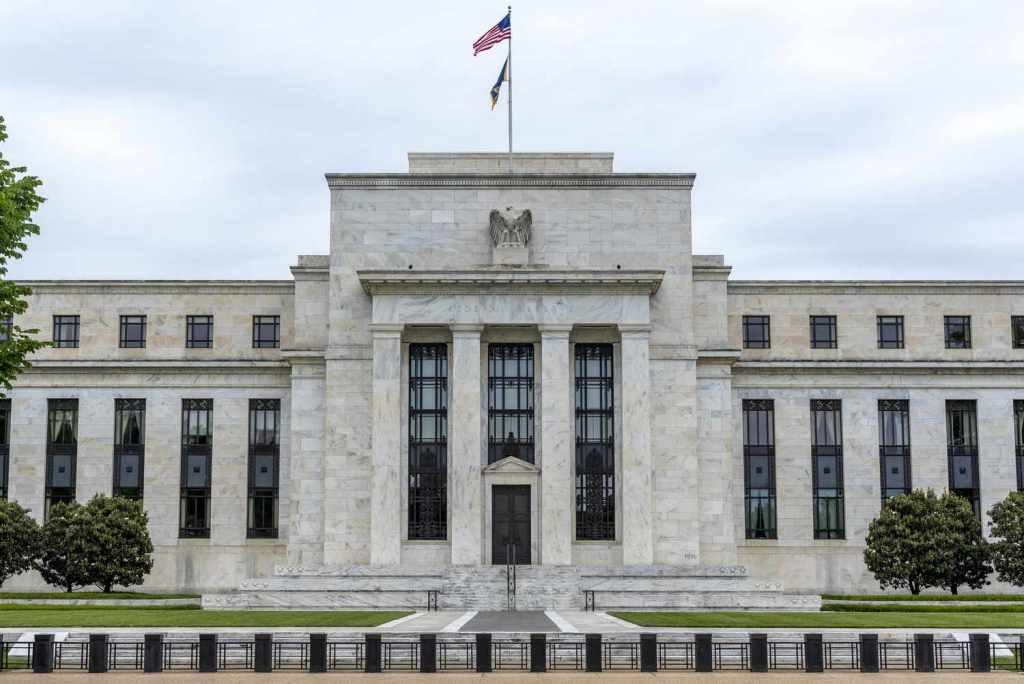
The US Federal Reserve. Image: Richard Sharrocks/Getty Images

The prohibition is sweeping in scope. It bars the Fed from issuing a retail digital dollar not just on its own, but also through banks and other financial middlemen.

Reports say the bill even covers any digital asset that functions like a central bank digital currency under a different name — closing off potential workarounds before they can be tried.

What Counts As A CBDC

The bill spells out exactly what it is targeting. A central bank digital currency, or commonly known as CBDC, under the proposed law, is a dollar-denominated digital asset that is a direct liability of the Federal Reserve and is broadly available to regular consumers.

That definition draws a firm line between a government-issued digital dollar and private-sector options like stablecoins or crypto assets.

BTCUSD trading at $66,673 on the 24-hour chart: TradingView

There is, however, one carved-out exception. Any digital currency that is open, permissionless, and private — and that offers the same privacy protections as physical cash — would not be blocked by the ban.

Reports note this exception appears designed to ensure that private innovation in digital payments is not accidentally swept up in legislation aimed solely at the government.

CBDC: The Clock Is Already Running

The CBDC ban is not meant to last forever. Under the bill’s own terms, the prohibition expires on December 31, 2030. Unless Congress acts again before then, the door to a retail digital dollar reopens automatically.

This sunset clause signals that lawmakers are not permanently opposed to the idea — they just want more time before anything moves forward.

The Federal Reserve has already said publicly that it would not issue a digital dollar without clear authorization from Congress.

So in practical terms, the bill reinforces a position the central bank has already taken. Still, getting that stance written into law carries real weight.

Featured image from The Daily Economy, chart from TradingView

Related Questions

QWhat is the main purpose of the 21st Century ROAD to Housing Act, and what unrelated amendment does it contain?

AThe main purpose of the 21st Century ROAD to Housing Act is to make homes more affordable. Buried within it is an unrelated standalone amendment to the Federal Reserve Act that bans the issuance of a retail central bank digital currency (CBDC).

QWho were the two key lawmakers from opposing sides that released the bill text together, and why is this pairing considered unusual?

ABanking Committee Chairman Tim Scott and Ranking Member Elizabeth Warren released the bill text together. This is an unusual pairing because the two lawmakers have historically approached financial regulation very differently.

QAccording to the bill's definition, what specific characteristics make a digital asset a CBDC that would be banned?

AAccording to the bill, a CBDC is a dollar-denominated digital asset that is a direct liability of the Federal Reserve and is broadly available to regular consumers.

QWhat is the one type of digital currency that is explicitly exempted from the ban and why?

AThe ban exempts any digital currency that is open, permissionless, and private, and that offers the same privacy protections as physical cash. This exception is designed to ensure private innovation in digital payments is not accidentally restricted by legislation aimed solely at the government.

QWhen does the CBDC ban expire, and what does this sunset clause indicate about lawmakers' stance?

AThe CBDC ban expires on December 31, 2030. This sunset clause indicates that lawmakers are not permanently opposed to the idea of a digital dollar but want more time before anything moves forward.

Related Reads

Unlocking Unicorn Tickets: From Robinhood to MSX, An On-Chain Experiment in Pre-IPO Democratization

"Unicorn Ticket Opening: From Robinhood to MSX, A Chain-Based Pre-IPO Equality Experiment" The article explores the emerging trend of using tokenization to democratize access to Pre-IPO shares of high-value unicorn companies like SpaceX, OpenAI, and ByteDance. While RWA (Real World Asset) tokenization has already brought traditional assets like bonds and stocks on-chain, the primary market for pre-IPO equities remains largely inaccessible to retail investors. Two main approaches are emerging: 1. **Perpetual Contracts (exemplified by Hyperliquid):** Offers synthetic exposure to a company's valuation through derivatives, providing low barriers and high liquidity but lacking direct ownership of the underlying asset and carrying regulatory uncertainty. 2. **Tokenized Equity Mirrors (exemplified by Robinhood Europe and MSX):** Uses a compliant structure where a regulated third-party custodian (like Republic) holds the actual shares in an SPV (Special Purpose Vehicle). This SPV's equity is then tokenized and distributed to investors. This method, though more complex to implement, provides legally protected ownership rights and a direct claim on the equity. The collaboration between MSX and Republic to launch a Pre-IPO专区 (dedicated zone) in the Asia market, following Robinhood's earlier experiment, is highlighted as a key development. It aims to bridge the gap for Asian investors, offering access to tokenized shares of top unicorns with a low entry threshold (e.g., 10 USDT). The core narrative is that blockchain technology is creating a new "1.5-level market" between the closed primary market and the public secondary market. This democratizes access for users seeking pre-IPO growth红利 (dividends) while also providing private companies and early shareholders with access to a new, global pool of incremental capital and liquidity options. The conclusion notes that while the underlying technology is mature, the success of this model depends on clear regulatory paths, reliable risk mechanisms, and effective liquidity matching between institutions and retail users. The year 2026 is seen as a critical juncture to determine if this becomes a mainstream asset class or remains a conceptual experiment.

比推17m ago

Unlocking Unicorn Tickets: From Robinhood to MSX, An On-Chain Experiment in Pre-IPO Democratization

比推17m ago

Trading

Spot
Futures

Hot Articles

How to Buy BAN

Welcome to HTX.com! We've made purchasing Comedian (BAN) simple and convenient. Follow our step-by-step guide to embark on your crypto journey.Step 1: Create Your HTX AccountUse your email or phone number to sign up for a free account on HTX. Experience a hassle-free registration journey and unlock all features.Get My AccountStep 2: Go to Buy Crypto and Choose Your Payment MethodCredit/Debit Card: Use your Visa or Mastercard to buy Comedian (BAN) instantly.Balance: Use funds from your HTX account balance to trade seamlessly.Third Parties: We've added popular payment methods such as Google Pay and Apple Pay to enhance convenience.P2P: Trade directly with other users on HTX.Over-the-Counter (OTC): We offer tailor-made services and competitive exchange rates for traders.Step 3: Store Your Comedian (BAN)After purchasing your Comedian (BAN), store it in your HTX account. Alternatively, you can send it elsewhere via blockchain transfer or use it to trade other cryptocurrencies.Step 4: Trade Comedian (BAN)Easily trade Comedian (BAN) on HTX's spot market. Simply access your account, select your trading pair, execute your trades, and monitor in real-time. We offer a user-friendly experience for both beginners and seasoned traders.

2.8k Total ViewsPublished 2024.10.27Updated 2025.03.21

How to Buy BAN

Discussions

Welcome to the HTX Community. Here, you can stay informed about the latest platform developments and gain access to professional market insights. Users' opinions on the price of BAN (BAN) are presented below.

活动图片