Garden Finance disables app as Blockaid reports $450,000 exploit

cointelegraphPublicado a 2026-07-27Actualizado a 2026-07-27

Resumen

Garden Finance has temporarily taken its app offline following an incident reported by Blockaid involving approximately $450,000. Blockaid stated an attacker drained funds from Garden's hash time-locked contracts (HTLCs) on multiple blockchains. However, Garden Finance clarified that its protocol and HTLC smart contracts were not compromised. The company attributed the loss to a breach of an independent solver's off-chain database, where fraudulent records caused the solver to release its own funds for unfunded swaps. Garden emphasized no user funds were lost or at risk, with the incident confined to solver-owned assets. The firm is working with security companies to trace and recover the funds and expects to restore services after completing security reviews. This follows a previous solver-related breach in October 2025.

[Updated July 27, 2026, 2:16 UTC: Revised to reflect clarifications from a Garden Finance spokesperson.]

Garden Finance said an independent solver’s off-chain database was compromised in an incident that prompted the cross-chain bridge and atomic swap protocol to temporarily take its app offline.

On Sunday, Blockaid said an attacker drained about $450,000 in USDT from Garden’s hash time-locked contracts (HTLC) on Ethereum, Base, Arbitrum and BNB Smart Chain. HTLCs are time-bound escrow contracts that Garden uses to facilitate atomic swaps between Bitcoin and assets on other networks. Blockaid described the exploit as ongoing and published addresses linked to the attacker and affected contracts.

However, a Garden Finance spokesperson told Cointelegraph that neither the protocol nor its HTLC smart contracts had been compromised. The company said the attacker breached the off-chain database of an independent solver and inserted fraudulent transaction records, causing the solver to release funds for swaps that had not been funded by the counterparty.

Garden said no user funds were lost or placed at risk and that the incident affected only solver-owned assets. The company is still confirming the total amount, assets and networks involved. It said services were paused as a precaution while the affected infrastructure was isolated and reviewed.

Blockaid acknowledged Cointelegraph’s request for comments.

Garden works with security firms to trace funds

Garden said it is working with zeroShadow, Quantstamp and Blockaid to trace and recover the funds. The protocol expects to restore services shortly, subject to completing security checks, but did not give a specific timeline.

“Garden’s protocol and HTLC smart contracts were not compromised, and no user funds were lost or at risk,” the company told Cointelegraph, adding that the incident was isolated to the off-chain infrastructure of one solver in its network of independent solvers.

The company also pointed to its recent SOC 2 Type II attestation as evidence of its investment in security and operational controls. Garden told Cointelegraph that its immediate priorities are securing the affected systems, tracing the solver’s funds and ensuring services resume only after the relevant reviews are completed.

Related: WEMIX says attacker moved about $724,000 after contract breach

The incident follows an October 2025 breach in which an attacker stole about $11.4 million after compromising the operating environment of one of Garden’s solvers. Garden said that incident also did not affect its protocol contracts or put user funds at risk.

Magazine: Inside the ‘fake police raid’ that forced a $1M Bitcoin transfer

Preguntas relacionadas

QAccording to the article, what was the root cause of the $450,000 exploit affecting Garden Finance?

AThe root cause was the compromise of an independent solver's off-chain database. The attacker inserted fraudulent transaction records, which caused the solver to release funds for swaps that were not actually funded by the counterparty.

QDid the exploit compromise Garden Finance's core protocol or smart contracts, according to the company's statement?

ANo, according to Garden Finance's statement, neither the protocol nor its HTLC smart contracts were compromised. The incident was isolated to the off-chain infrastructure of a single independent solver.

QWhat action did Garden Finance take in response to the incident, and which security firms are they working with?

AGarden Finance temporarily took its app offline as a precaution. They are working with the security firms zeroShadow, Quantstamp, and Blockaid to trace and recover the stolen funds.

QWhat type of contracts were specifically targeted by the attacker, and on which networks?

AThe attacker targeted hash time-locked contracts (HTLCs) on the Ethereum, Base, Arbitrum, and BNB Smart Chain networks.

QHow does this recent incident relate to a previous security event involving Garden Finance mentioned in the article?

AThe article mentions a previous breach in October 2025 where an attacker stole about $11.4 million after compromising a solver's operating environment. Similar to the recent incident, Garden stated that the 2025 breach also did not affect its protocol contracts or user funds.

Lecturas Relacionadas

Millisecond 'Pay-to-Cut': How Did Hyperliquid's Priority Fee Turn into a Multi-Million Dollar Business?

"Millisecond 'Paid Queue-Jumping': How Hyperliquid's Priority Fee Became a Multi-Million Dollar Annual Business" In traditional finance, high-frequency trading firms spend millions on infrastructure for millisecond advantages. Hyperliquid has translated this race onto the blockchain with its "Priority Fee" system, creating an open economic game for speed. This system auctions two types of priority: **Gossip Priority** for faster data feeds (via a Dutch auction every 3 minutes), and **Order Priority** for front-of-queue trade execution (users bid a fee for lower latency). This converts a hardware race into a transparent, market-priced mechanism. Since launch, this feature has generated over $5M in protocol revenue. Projected annualized buybacks from this income exceed $30M, accounting for ~7% of total protocol revenue. The demand stems from large traders and market makers on Hyperliquid, for whom milliseconds can mean the difference between profit/loss or avoiding liquidation. Market makers pay these fees as "protection" to ensure their orders execute first, which in turn improves liquidity for all users. Crucially, Hyperliquid internalizes Maximum Extractable Value (MEV) that typically leaks to external validators or searchers, creating a new revenue stream beyond trading fees. The mechanism also strengthens HYPE's tokenomics. While 97% of trading fees fund secondary market buybacks (via the Assistance Fund), Priority Fees are **directly burned**, adding a second deflationary engine. Furthermore, fees for order priority are deducted from users' undelegated HYPE balances, encouraging large traders to hold and lock up tokens, reducing circulating supply. However, a key challenge remains: balancing the speed needs of institutional players with fair market access for retail users, as those who cannot pay high fees may suffer worse slippage during volatility. In summary, Hyperliquid's Priority Fee is a novel model that monetizes latency, captures MEV for the protocol, and enhances its native token's value through burning and lock-ups.

marsbitHace 3 min(s)

Millisecond 'Pay-to-Cut': How Did Hyperliquid's Priority Fee Turn into a Multi-Million Dollar Business?

marsbitHace 3 min(s)

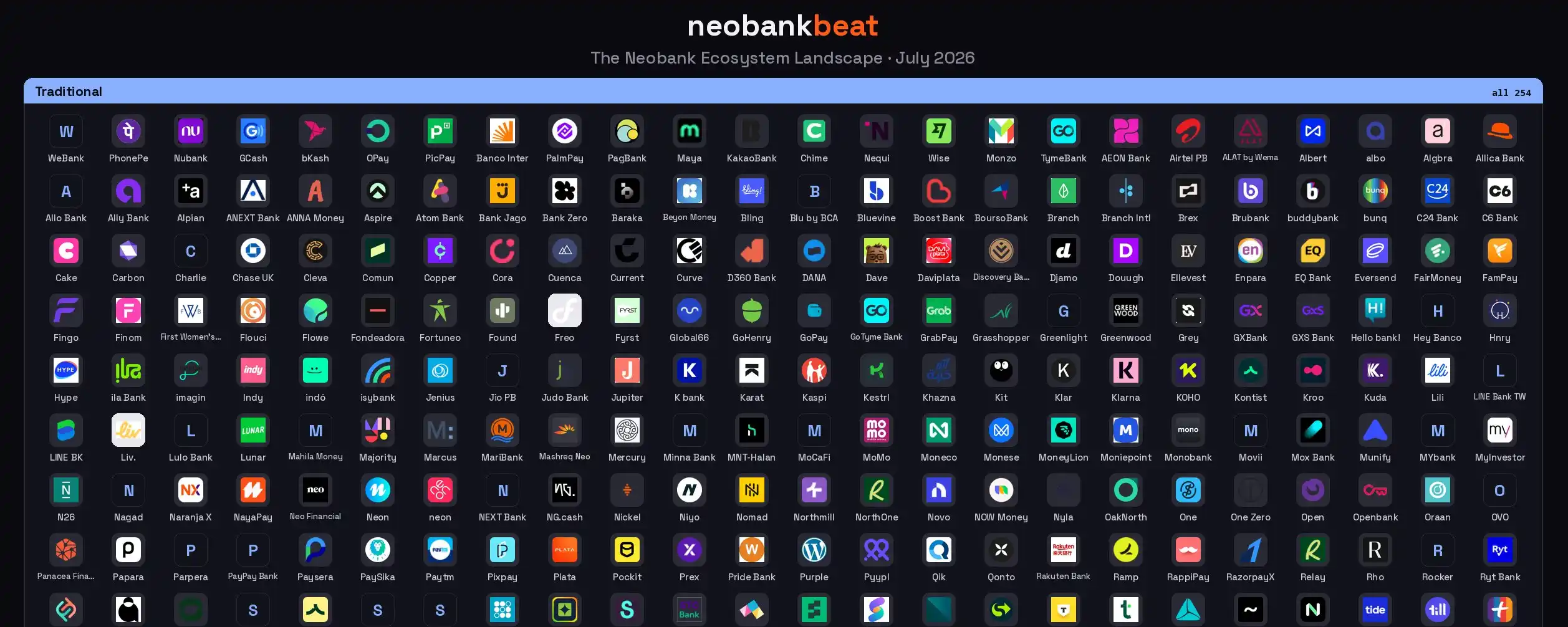
The Truth Behind Digital Banking: The Fragile Ecosystem Supporting 1.46 Billion Users

The article "The Truth About Digital Banks: The Fragile Ecosystem Behind 1.46 Billion Users" provides a data-driven analysis of the digital banking sector based on a verified list of 368 active neobanks as of July 2026. While these platforms collectively serve 1.46 billion users, with Asia (817 million users) and institutions like WeBank and Nubank dominating the landscape, the sector faces significant structural vulnerabilities. A key finding is that only 127 of the 368 neobanks hold full banking licenses. The majority operate atop third-party infrastructure providers like Banking-as-a-Service (BaaS) platforms, creating systemic risk where the failure of a single provider, as seen in past cases like Wirecard and Synapse, can jeopardize multiple consumer brands. Furthermore, the industry experiences a steady, quiet stream of failures, mergers, and shutdowns that often go unreported. The analysis also examines the adoption of artificial intelligence (AI), finding only 67 platforms (18%) have deployed AI at scale, with many innovators based in emerging markets like Nigeria and the Philippines. The infrastructure layer is highly concentrated, with 106 providers supporting the entire ecosystem of 368 consumer-facing brands. The article concludes with three predictions: the unlicensed gap will close through acquisitions or exits; an AI credit model is likely to fail in the next economic downturn; and a nascent but significant trend is the emergence of financial services designed for AI agents rather than humans.

marsbitHace 18 min(s)

The Truth Behind Digital Banking: The Fragile Ecosystem Supporting 1.46 Billion Users

marsbitHace 18 min(s)

Digital Asset Trading Platform Uphold Cuts 17% of Global Workforce Amid 'Crypto Winter'

Cryptocurrency trading platform Uphold has laid off approximately 17% of its global workforce, affecting 85 full-time employees and contractors. The cuts are part of a strategic shift to reallocate resources towards its rapidly growing corporate services business, as retail cryptocurrency trading activity has declined amid the ongoing market downturn. CEO Simon McLaughlin stated the company is restructuring after years of significant growth and remains confident in the long-term prospects of digital assets and blockchain technology. Founded in 2015, Uphold offers trading and custody services for cryptocurrencies, fiat, stocks, and precious metals. It has recently expanded to provide infrastructure for banks, fintech firms, and broker-dealers to integrate crypto services. The layoffs occur against a backdrop of a prolonged crypto market slump, with total market capitalization falling to around $2.1 trillion by Q2 2024. Factors include weakened trading volumes, reduced retail participation, interest rate hikes, geopolitical uncertainty, and net outflows from U.S. spot Bitcoin ETFs. Uphold clarified it is not shutting down its UK operations or any international offices. The company highlighted strong growth in its corporate platform and announced plans to evolve its consumer app into a broader blockchain-based financial assistant by 2026, offering U.S. stocks, tokenized securities, lending, credit cards, and DeFi yield opportunities.

cryptonews.ruHace 18 min(s)

Digital Asset Trading Platform Uphold Cuts 17% of Global Workforce Amid 'Crypto Winter'

cryptonews.ruHace 18 min(s)

Trading

Spot
活动图片