Institutions Are Using XRP As Collateral, Says Ripple Prime CEO

bitcoinistPublished on 2026-03-19Last updated on 2026-03-19

Abstract

Ripple Prime CEO Mike Higgins states that institutions are beginning to use XRP as collateral within their market structures. Ripple's acquisition and rebranding of Hidden Road to Ripple Prime aims to integrate prime brokerage, clearing, custody, and treasury services. The platform enables firms to use XRP as collateral to finance trades without needing to liquidate it first, providing dollar credit for activities like trading CME futures. This approach, similar to traditional commodity finance, allows for balance-sheet efficiency and access to additional return strategies. Higgins highlights the advantages of digital collateral, such as 24/7 movement and liquidation, crucial for risk management. He emphasizes that institutional adoption requires compliance, transparency, and permissioned access, bridging traditional and digital finance. At the time of reporting, XRP was trading at $1.46.

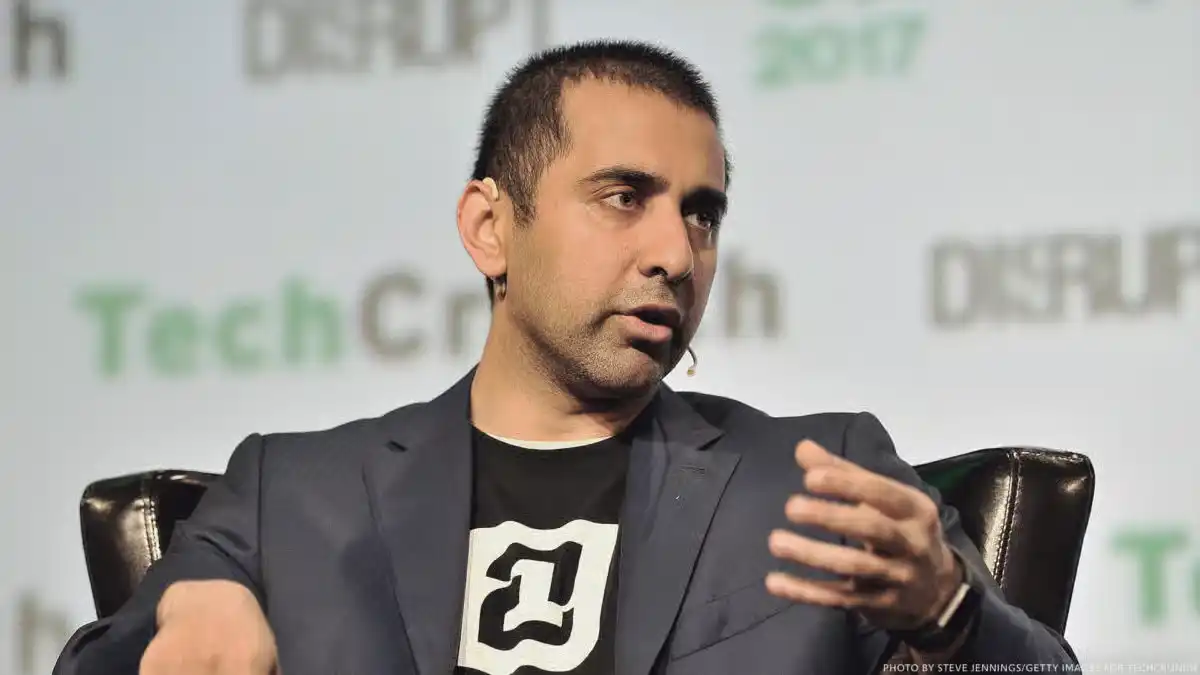
Ripple Prime is pitching XRP not just as a traded asset, but as working collateral inside institutional market structure. In a March 17 interview with Jake Claver, international CEO Mike Higgins said Ripple’s acquisition of Hidden Road, now rebranded as Ripple Prime, is designed to bring prime brokerage, clearing, custody and treasury functions into a single institutional stack.

Higgins framed Ripple Prime as an access layer for firms trading across both traditional and digital markets. The core idea, he said, is that those markets are no longer separate for much longer, and institutions will need balance-sheet access, collateral mobility and cross-margining tools that work across both.

The Role Of XRP Within Ripple Prime

That is where XRP enters the picture. Higgins said Ripple Prime has built “innovative ways around taking XRP as collateral” and using it to finance trades, allowing institutional clients to post digital assets without first liquidating them into dollars. In practice, that means a firm holding XRP can keep the position on its balance sheet while still accessing leverage or liquidity in markets that do not natively accept XRP.

He gave a concrete example using CME futures. “If you wanted to trade futures on the CME, the CME doesn’t take XRP as good collateral,” Higgins said. “Instead of transforming that and selling that into dollars to give to your clearer, what you can do through Ripple Prime is post your XRP as good margin. We give you dollar credit to trade on the CME, and so now you could be long spot, front-month future, capturing the basis trade.”

That comparison was central to his argument. Higgins likened the model to traditional commodity finance, where a bank would lend against oranges, gold or Treasuries rather than require a client to sell the underlying asset first. The difference now is that crypto-native collateral is starting to be recognized inside institutional risk systems. For holders of assets like XRP, he said, that avoids crystallizing profit and loss, preserves treasury positions and opens up additional return strategies.

He also argued that digital collateral has one structural advantage over traditional assets: it can be moved and liquidated around the clock. That matters not only for trading, but for risk management. “When you trade traditional assets, they have an open and a close every day and they have weekends or long periods of holidays,” Higgins said. “What you get the next day are these huge gaps. A smooth 24/7 market where you can move collateral, that velocity of collateral to meet collateral calls shrinks.”

In Higgins’ telling, the institutional case for tokenization is broader than a single asset. He pointed to Treasury operations, tokenized repo, onchain money-market products and, eventually, tokenized equities as part of the same transition. “You already have crypto as an asset class itself. You have stablecoin usage,” he said. “The world is inexorably moving in this direction and the pace of that is increasing now that we’ve already proven out the thesis of using the technologies with crypto.”

Still, he did not suggest a clean handoff from legacy finance to open DeFi. Higgins repeatedly stressed compliance, counterparty transparency and permissioned access as prerequisites for serious institutional adoption.

Public decentralized venues may be winning market share, he said, but large firms still need AML, KYC and balance-sheet visibility before they can deploy capital at scale. That leaves prime brokers in a familiar role: connecting fragmented pools of liquidity while managing credit, margin and settlement across venues.

At press time, XRP traded at $1.46.
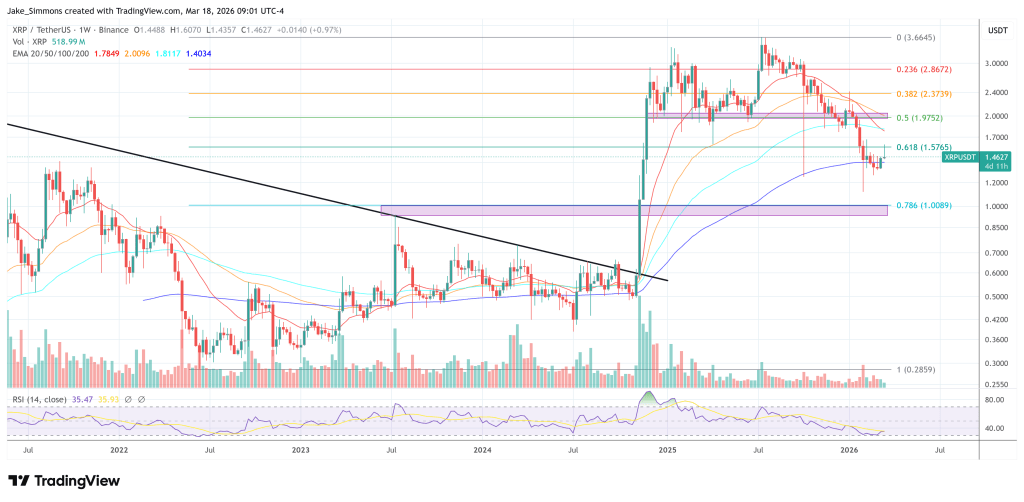
XRP must rise above the 0.618 Fib, 1-week chart | Source: XRPUSDT on TradingView.com

Related Questions

QWhat is the primary function of Ripple Prime according to CEO Mike Higgins?

ARipple Prime serves as an access layer for firms trading across both traditional and digital markets, providing prime brokerage, clearing, custody, and treasury functions in a single institutional stack.

QHow is XRP being used as collateral within the Ripple Prime system?

ARipple Prime has built innovative ways to accept XRP as collateral, allowing institutional clients to post their XRP to obtain dollar credit for trading in markets like the CME without having to first liquidate their digital assets.

QWhat specific example did Higgins give to illustrate the use of XRP as collateral?

AHiggins gave the example of trading CME futures. Instead of selling XRP for dollars to post as margin, a firm can post its XRP directly with Ripple Prime, which then provides them with dollar credit to trade on the CME.

QWhat structural advantage does digital collateral like XRP have over traditional assets, according to the article?

ADigital collateral can be moved and liquidated 24/7, which provides a significant advantage for risk management and meeting collateral calls, unlike traditional assets which have market closures, weekends, and holidays.

QWhat prerequisites for serious institutional adoption did Higgins repeatedly stress?

AHiggins stressed that compliance, counterparty transparency, and permissioned access are essential prerequisites for serious institutional adoption of these new financial technologies.

Related Reads

Prediction Markets Take Center Stage, But Perp DEXs Quietly Profit from the US-Iran War

In late February 2025, escalating tensions in the Middle East led to large-scale airstrikes by the U.S. and Israel against Iran, causing significant volatility in global financial markets. While traditional markets were closed during the weekend, investors turned to on-chain platforms to trade assets like gold, oil, and silver. Prediction markets such as Polymarket and Kalshi saw a surge in activity, with war-related contracts driving record trading volumes. However, perpetual decentralized exchanges (perp DEXs), particularly Hyperliquid, also capitalized on the situation. Hyperliquid’s commodities contracts—including gold, oil, and silver—experienced unprecedented liquidity and trading volume, with silver contracts alone reaching over $3.5 billion in daily volume at their peak. The platform’s HIP-3 market, trade.xyz, saw weekend trading volumes hit all-time highs, attracting large institutional and high-net-worth users due to its transparency, lack of trading restrictions, and non-custodial nature. In contrast, centralized exchanges (CEXs), though also offering real-world asset (RWA) trading, lacked the same level of visibility and trust among sophisticated traders. Hyperliquid’s upcoming HIP-4 feature introduces outcome-based contracts for prediction and options-like products, further expanding its role as a platform for pricing uncertainty. The growth of perp DEXs reflects a broader trend toward 24/7, globally accessible financial markets, though regulatory challenges remain a potential risk.

marsbit35m ago

Prediction Markets Take Center Stage, But Perp DEXs Quietly Profit from the US-Iran War

marsbit35m ago

Trading

Spot
Futures

Hot Articles

How to Buy XRP

Welcome to HTX.com! We've made purchasing XRP (XRP) simple and convenient. Follow our step-by-step guide to embark on your crypto journey.Step 1: Create Your HTX AccountUse your email or phone number to sign up for a free account on HTX. Experience a hassle-free registration journey and unlock all features.Get My AccountStep 2: Go to Buy Crypto and Choose Your Payment MethodCredit/Debit Card: Use your Visa or Mastercard to buy XRP (XRP) instantly.Balance: Use funds from your HTX account balance to trade seamlessly.Third Parties: We've added popular payment methods such as Google Pay and Apple Pay to enhance convenience.P2P: Trade directly with other users on HTX.Over-the-Counter (OTC): We offer tailor-made services and competitive exchange rates for traders.Step 3: Store Your XRP (XRP)After purchasing your XRP (XRP), store it in your HTX account. Alternatively, you can send it elsewhere via blockchain transfer or use it to trade other cryptocurrencies.Step 4: Trade XRP (XRP)Easily trade XRP (XRP) on HTX's spot market. Simply access your account, select your trading pair, execute your trades, and monitor in real-time. We offer a user-friendly experience for both beginners and seasoned traders.

14.1k Total ViewsPublished 2024.03.29Updated 2025.03.21

How to Buy XRP

What is XRP 2.0

XRP 2.0: A New Frontier in the Cryptocurrency Landscape Introduction to XRP 2.0 In the ever-evolving realm of cryptocurrency, new projects continuously emerge, vying for attention and adoption. One such promising initiative is XRP 2.0, a novel cryptocurrency project designed to leverage advanced blockchain technology and robust encryption methodologies. While the name draws parallels with Ripple’s XRP, it’s crucial to note that XRP 2.0 operates independently, focusing on enhancing transaction security, privacy, and scalability. As the digital financial landscape increasingly embraces decentralized solutions, XRP 2.0 aims to contribute meaningfully to web3 and the overall expansion of crypto projects. What is XRP 2.0? At its core, XRP 2.0 is a cryptocurrency project that aims to create a secure and decentralized digital currency ecosystem. Its foundational technology integrates sophisticated blockchain principles with cutting-edge encryption techniques. The overarching goal of XRP 2.0 is to establish itself as a reliable and efficient platform enabling swift transaction execution while prioritizing enhanced privacy protections for its users. The project is promoted as a solution to many limitations faced by existing cryptocurrencies, proposing a system that can handle a higher volume of transactions with improved speed and privacy. This versatility positions XRP 2.0 as a significant contender in a marketplace riddled with various digital currencies. Who is the Creator of XRP 2.0? The identity of the creator behind XRP 2.0 has been flagged as ‘Wilbur.’ However, comprehensive details regarding Wilbur or their associated entity remain elusive. The anonymity of many cryptocurrency creators is not an uncommon phenomenon in the industry, often designed to maintain a degree of privacy and security. Who are the Investors of XRP 2.0? As of now, specific information related to the investment foundations or organizations supporting XRP 2.0 is not publicly available. In the cryptocurrency sector, the backing by reputed investors can significantly influence a project's credibility and success, yet the transparency regarding the financial supporters of XRP 2.0 has not been established. How Does XRP 2.0 Work? XRP 2.0 stands out by employing a combination of blockchain technology and advanced encryption algorithms that ensures secure and decentralized transactions. Its innovative structure includes unique features designed to foster user engagement and broaden functionalities beyond conventional cryptocurrency transactions. Among these features, XRP 2.0 incorporates AI-powered capabilities, such as text-to-image and text-to-speech functionalities. These additions are designed to enhance the interactive experience for users, promoting broader applicability across various sectors. By bridging technological advancements with user-centered design, XRP 2.0 aims to capture the attention of a diverse range of individuals and enterprises looking to integrate cryptocurrency solutions into their operational frameworks. Timeline of XRP 2.0 Understanding XRP 2.0 requires examining the milestones that have defined its journey thus far: July 23, 2023: XRP 2.0 is introduced as a novel cryptocurrency project, aiming to revolutionize secure and decentralized transaction capabilities in the blockchain domain. September 8, 2023: The launching of another project, XRP20, occurs, marking the emergence of an ERC-20 token on the Ethereum blockchain that remains unrelated to XRP 2.0. November 13, 2023: The XRP Ledger undergoes a significant update with the release of rippled server software version 2.0.0. It is essential to note that this development is disconnected from the XRP 2.0 cryptocurrency project. Key Points About XRP 2.0 To distill the essence of XRP 2.0, several critical factors emerge: Unique Features: The inclusion of features like AI-powered text-to-image and text-to-speech further diversifies the potential applications of XRP 2.0. Blockchain Technology: The framework utilizes advanced blockchain mechanisms and encryption protocols, ensuring a secure and decentralized environment for transactions. Scalability and Privacy: XRP 2.0 prioritizes enhanced privacy protections in transaction processes and the scalability necessary to accommodate a growing user base. No Affiliation with Ripple: Importantly, despite its name, XRP 2.0 does not have any allegiance or collaboration with Ripple’s XRP, distinguishing its operational framework and objectives within the cryptocurrency ecosystem. Conclusion XRP 2.0 represents an ambitious venture into the cryptocurrency sphere, aiming to offer a combination of security, privacy, and efficiency in digital transactions. By integrating sophisticated technologies and user-friendly features, the project sets out to broaden the horizons of what cryptocurrency can achieve in today's digital economy. While the anonymity of its creator and lack of disclosed investors might raise questions for some, XRP 2.0's focus on advanced functionalities and decentralisation enhances its appeal amidst an increasingly crowded crypto market. As the cryptocurrency landscape continues to evolve, XRP 2.0 may yet emerge as a pivotal player in the expansion of secure and scalable blockchain solutions.

941 Total ViewsPublished 2024.04.01Updated 2024.12.03

What is XRP 2.0

Discussions

Welcome to the HTX Community. Here, you can stay informed about the latest platform developments and gain access to professional market insights. Users' opinions on the price of XRP (XRP) are presented below.

活动图片