XRP treasury filing signals institutional push – Can demand sustain the shift?

ambcryptoPublished on 2026-03-21Last updated on 2026-03-21

Abstract

Ripple's XRP treasury strategy is gaining institutional momentum as Evernorth Holdings moves toward a Nasdaq listing via a SPAC merger. The company plans to hold 473 million XRP, supported by SBI Holdings and Pantera Capital, and aims to generate yield through lending, DeFi, and validator activities—shifting from passive holding to active management. However, while the model draws inspiration from MicroStrategy’s Bitcoin treasury approach, XRP faces challenges in institutional adoption and capital flow compared to Bitcoin. Recent on-chain data shows significant whale outflows and large transfers, suggesting possible accumulation but also highlighting the need for sustained demand to support price stability and growth.

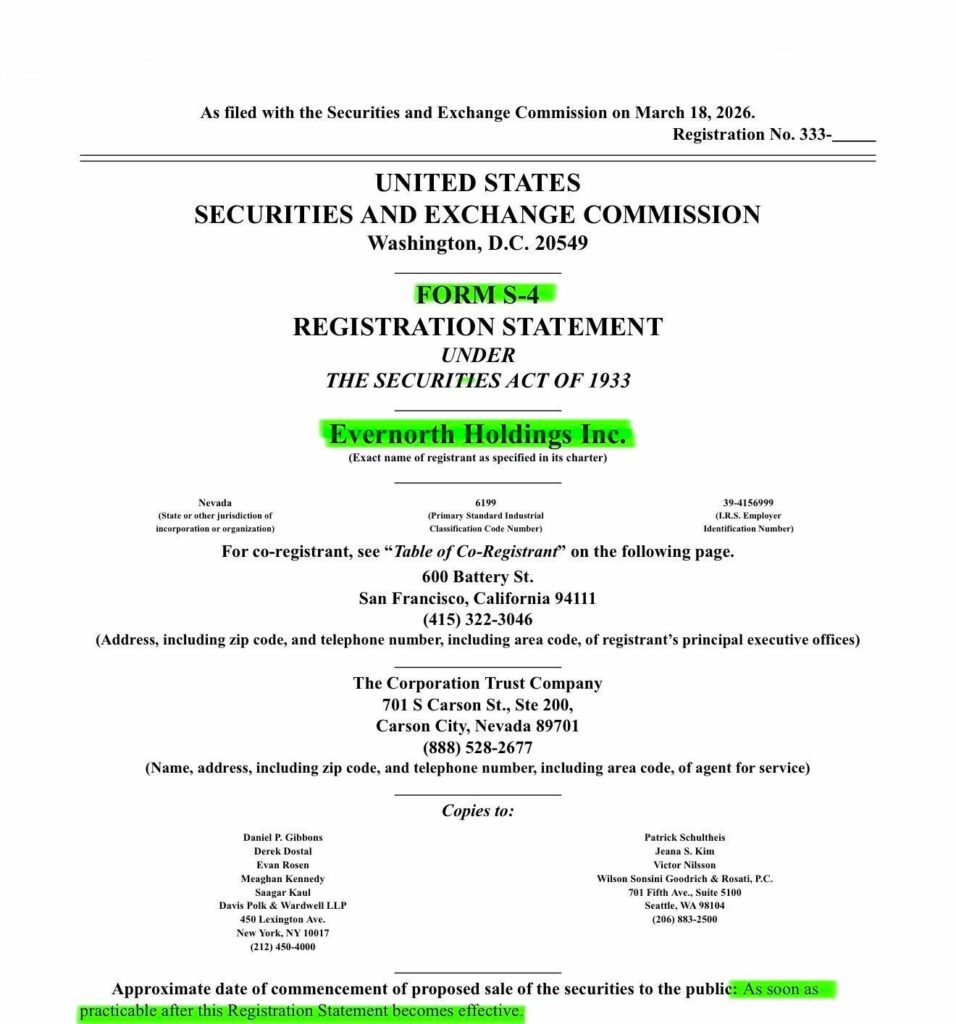
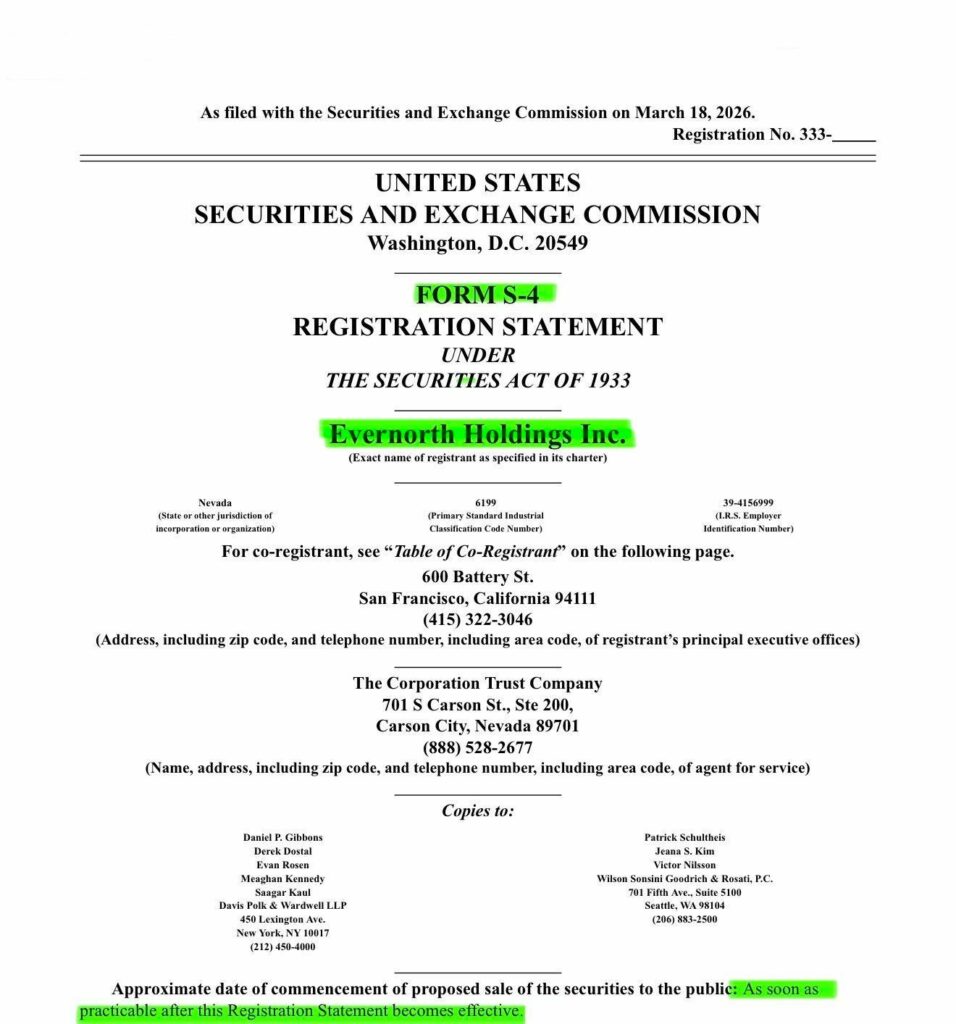
Armada Acquisition Corp. II filed the S-4 to register its proposed merger with Evernorth Holdings, moving the Ripple [XRP] treasury deal closer to market approval. As this process advances, the filing will set the legal path for Evernorth to enter public markets through a Nasdaq listing under XRPN.

Building on this, Evernorth targets holding about 473 million XRP at launch, forming a sizeable treasury base. Backing from SBI Holdings and Pantera Capital strengthens capital credibility, while leadership from Asheesh Birla adds operational depth.
Source: X

From here, the strategy shifts towards application, using lending, DeFi yields, and validator participation to grow XRP per share.

As this model unfolds, it moves beyond passive holding towards active yield generation, hinting at a new institutional framework that markets are yet to fully price in.

Evernorth’s XRP treasury model faces Bitcoin’s institutional benchmark

Evernorth’s XRP treasury model takes cues from MicroStrategy’s Bitcoin approach. And yet, the structure differs in depth and market positioning. Strategy holds 761,068 BTC worth about $53.9 billion, while its multiple to Net Asset Value (mNAV) ranges between 0.96x and 1.18x – A sign of strong conviction.

On the contrary, XRP’s price was trading near $1.45 with daily volume around $2.3–$2.4 billion – Evidence of steady liquidity, but lower institutional preference. As Bitcoin continues to dominate treasury allocations, XRP captures a smaller share of capital flows.

Building on this, Evernorth’s plan to raise over $1 billion introduces a new entry point for XRP exposure. However, the model also relies on developing a stronger narrative beyond payments.

As liquidity remains deep and reserves gradually decline, XRP can absorb demand. However, sustained strength will depend on consistent inflows rather than short-term capital bursts.

XRP outflows rise as whales reposition

As institutional positioning around XRP builds, on-chain flows have begun to reflect how capital is moving beneath the surface.

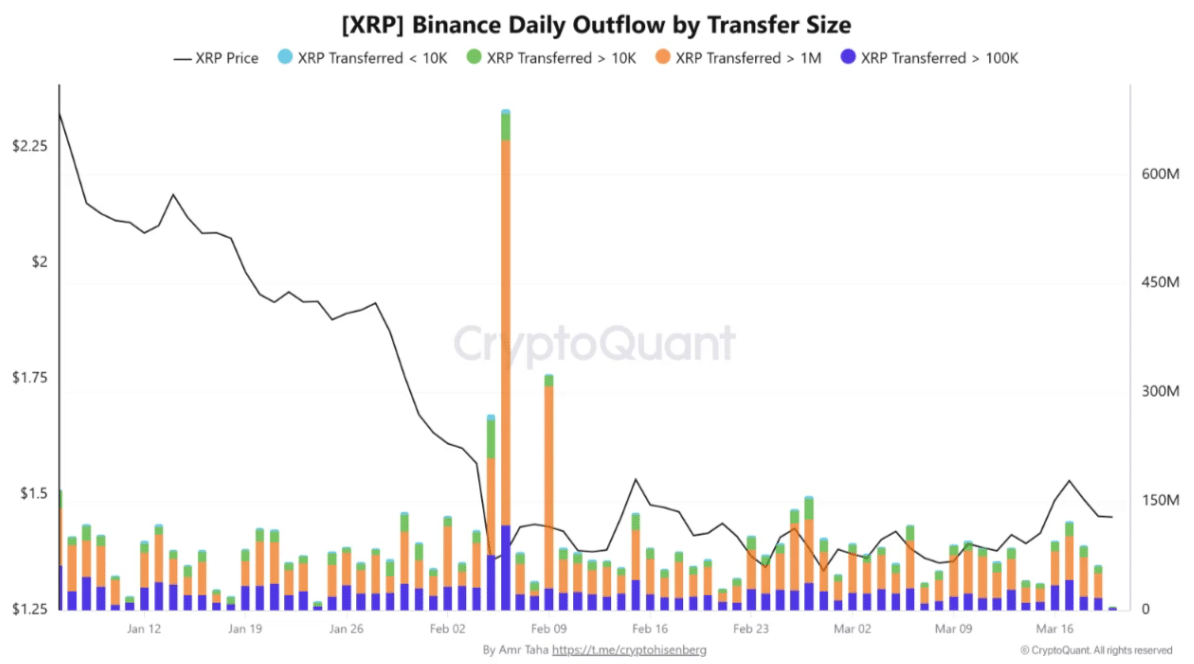
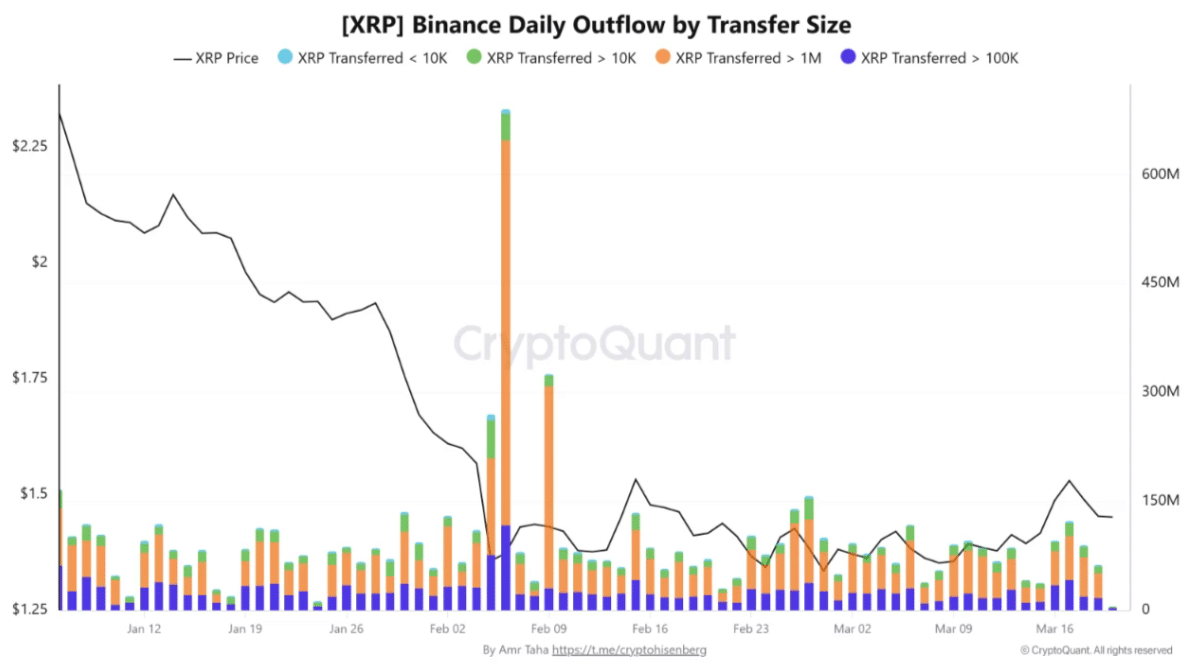
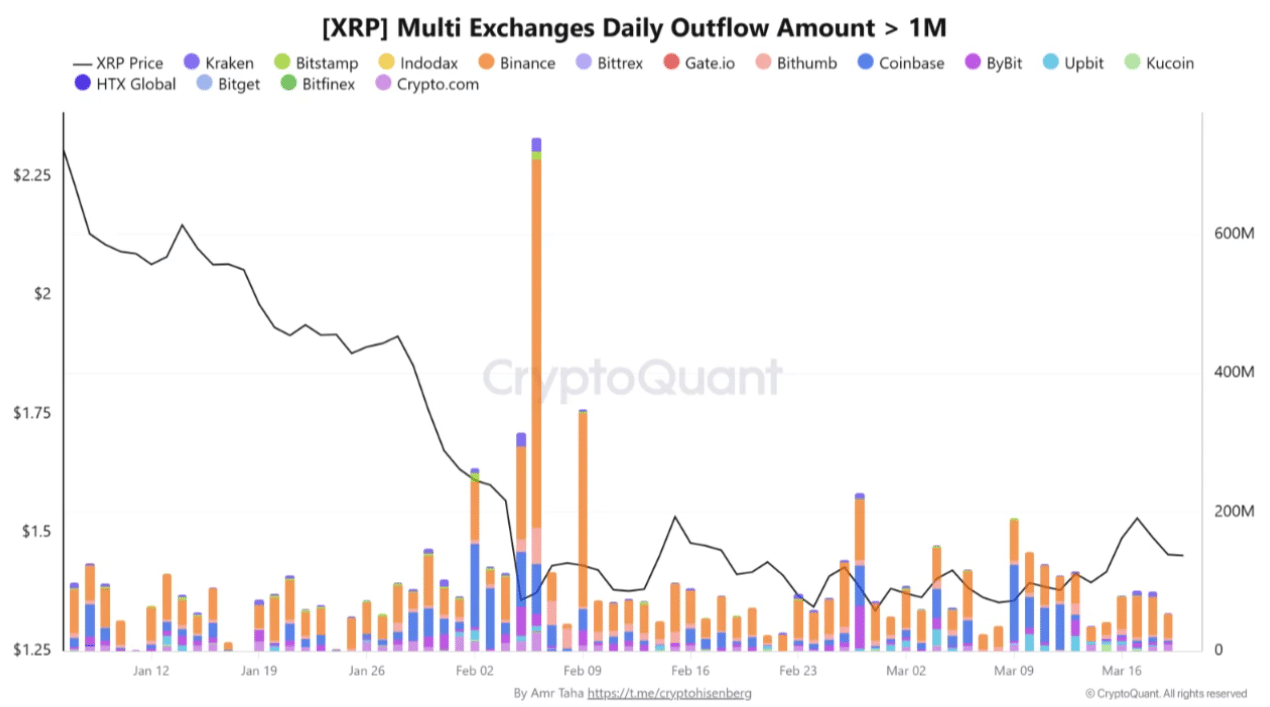
At press time, large outflows seemed to be dominating activity, with Binance leading across exchanges. Early February marked a key spike as 530 million XRP exited in one day, signaling strong whale movement.
Source: CryptoQuant

Following this surge, the altcoin’s price fell from above $2.20 towards the $1.30–$1.50 range, suggesting supply initially outweighed demand. As this pressure faded, daily outflows stabilized near 50 million XRP in March – A sign of more controlled positioning.

At the same time, transfer data revealed that over 1 million XRP transactions reinforced whale control.
Source: CryptoQuant

This pattern could mean that accumulation might be underway. However, sustained price strength will depend on consistent demand absorbing these large-scale movements.


Final Summary

  • Ripple [XRP] treasury strategy gained institutional traction through Evernorth’s SPAC structure, although sustained adoption will depends on consistent capital inflows.
  • Ripple whale outflows and rising large transfers alluded to accumulation trends.

Related Questions

QWhat is the significance of Armada Acquisition Corp. II filing the S-4 in relation to Ripple's XRP treasury?

AThe S-4 filing registers the proposed merger with Evernorth Holdings, moving the Ripple XRP treasury deal closer to market approval and setting the legal path for Evernorth to enter public markets through a Nasdaq listing under XRPN.

QHow does Evernorth's XRP treasury model compare to MicroStrategy's Bitcoin approach?

AEvernorth's model takes cues from MicroStrategy's Bitcoin strategy but differs in depth and market positioning. While MicroStrategy holds a massive amount of BTC with a strong conviction multiple, XRP has lower institutional preference and captures a smaller share of capital flows, with Evernorth aiming to raise over $1 billion for XRP exposure.

QWhat on-chain activity suggests whale movement and accumulation for XRP?

ALarge outflows dominated activity, with a key spike of 530 million XRP exiting in one day in early February, followed by stabilized daily outflows of around 50 million XRP in March. Additionally, over 1 million XRP transfers indicate strong whale control, which could signal accumulation is underway.

QWhat factors will determine the sustained strength of XRP's price according to the article?

ASustained price strength will depend on consistent capital inflows rather than short-term bursts, and the ability of demand to absorb large-scale movements and outflows, as well as developing a stronger narrative beyond payments.

QWhat is Evernorth's strategy for growing XRP per share after launch?

AEvernorth's strategy shifts towards active application, using lending, DeFi yields, and validator participation to generate yield and grow XRP per share, moving beyond passive holding towards an active institutional framework.

Related Reads

The Second Half of Stablecoins No Longer Belongs to the Crypto World

The article discusses the shift in the stablecoin market from the crypto sector to traditional finance, highlighted by Mastercard's acquisition of BVNK for up to $1.8 billion in March 2026. This move came after Coinbase abandoned a $2 billion deal for BVNK months earlier, signaling intensified competition for stablecoin infrastructure. BVNK specializes in cross-border payments using a "stablecoin sandwich" model: converting fiat to stablecoins like USDC for blockchain transfer, then back to local currency, reducing transaction times and costs. Its key asset is a suite of global licenses, including EMI from the UK FCA and CASP under EU MiCA, enabling compliance across 130+ countries. Mastercard's acquisition aims to integrate BVNK into its Multi-Token Network (MTN), a private blockchain for tokenized assets, addressing MTN's lack of connectivity with public chains. This enables atomic settlements, 24/7 B2B transactions, and programmable payments. The strategy contrasts with Visa’s partnership-focused approach, emphasizing direct control over infrastructure. The U.S. GENIUS Act (July 2025) provided regulatory clarity, defining stablecoins as non-securities under OCC oversight, which facilitated Mastercard’s move. The deal pressures players like Ripple and traditional correspondent banks, as Mastercard’s global network could disrupt cross-border payment fees. Ultimately, stablecoin evolution is becoming invisible to users—embedded in traditional finance for efficiency, not crypto adoption. Mastercard’s investment secures a foothold in the next-generation payment ecosystem.

marsbit24m ago

The Second Half of Stablecoins No Longer Belongs to the Crypto World

marsbit24m ago

Trading

Spot
Futures

Hot Articles

How to Buy PUSH

Welcome to HTX.com! We've made purchasing Push Protocol (PUSH) simple and convenient. Follow our step-by-step guide to embark on your crypto journey.Step 1: Create Your HTX AccountUse your email or phone number to sign up for a free account on HTX. Experience a hassle-free registration journey and unlock all features.Get My AccountStep 2: Go to Buy Crypto and Choose Your Payment MethodCredit/Debit Card: Use your Visa or Mastercard to buy Push Protocol (PUSH) instantly.Balance: Use funds from your HTX account balance to trade seamlessly.Third Parties: We've added popular payment methods such as Google Pay and Apple Pay to enhance convenience.P2P: Trade directly with other users on HTX.Over-the-Counter (OTC): We offer tailor-made services and competitive exchange rates for traders.Step 3: Store Your Push Protocol (PUSH)After purchasing your Push Protocol (PUSH), store it in your HTX account. Alternatively, you can send it elsewhere via blockchain transfer or use it to trade other cryptocurrencies.Step 4: Trade Push Protocol (PUSH)Easily trade Push Protocol (PUSH) on HTX's spot market. Simply access your account, select your trading pair, execute your trades, and monitor in real-time. We offer a user-friendly experience for both beginners and seasoned traders.

2.3k Total ViewsPublished 2024.03.29Updated 2025.04.02

How to Buy PUSH

Discussions

Welcome to the HTX Community. Here, you can stay informed about the latest platform developments and gain access to professional market insights. Users' opinions on the price of PUSH (PUSH) are presented below.

活动图片