Zcash hits highest price since 2016 as market cap tops $20B

cointelegraphPublished on 2026-09-07Last updated on 2026-09-07

Abstract

Zcash (ZEC) has surged to its highest price since 2016, with its market capitalization exceeding $20 billion. The privacy-focused cryptocurrency reached $1,249.28 before settling around $1,195, marking gains of 45% over the past week and 138% over the past month. While still below its all-time high from October 2016, the rally follows Grayscale's conversion of its Zcash Trust into an exchange-traded fund (ZCSH), which began trading on NYSE ARCA on August 25. Analysts, including Grayscale's Zach Pandl, suggest growing demand for financial privacy, potentially accelerated by AI's ability to analyze public blockchain data, is driving interest. Zcash's key feature is its option for "shielded" transactions using zero-knowledge proofs to conceal sender, recipient, and amount details.

Zcash (ZEC) climbed to its highest price since 2016, extending a rally that has pushed the privacy-focused cryptocurrency’s market capitalization above $20 billion.

ZEC reached $1,249.28 before retreating to about $1,195 on Monday, according to CoinGecko data. The token gained about 45% over the past week and 138% over 30 days.

The rally leaves Zcash below its launch-era record. CoinGecko lists an all-time high of $3,191.93 on Oct. 28, 2016, when only a small supply of tokens was available.

Zcash allows users to choose between public and “shielded” transactions. The latter uses zero-knowledge proofs to verify payments without revealing the sender, recipient or transaction amount.

“For users that prioritize privacy, this could become a ‘must have’ feature,” Grayscale’s head of research, Zach Pandl, said in an Aug. 31 analysis.

Pandl said that AI could increase demand for financial privacy by making it easier to link public blockchain transactions to users’ identities.

Zcash has been on a tear since Grayscale converted its existing Zcash Trust into an exchange-traded fund. The product, trading under the ticker ZCSH, began trading on NYSE ARCA on Aug. 25, giving investors exposure to ZEC through brokerage accounts.

The ETF closed Friday at $83.77 a share, with $463.2 million in assets under management, according to the fund’s website. US markets are closed Monday for the Labor Day holiday.

Related: Grayscale says Zcash can challenge Bitcoin’s network effects as privacy demand grows
Related Reads

You've Never Heard of These Equipment Companies, and They're Appearing in Batches

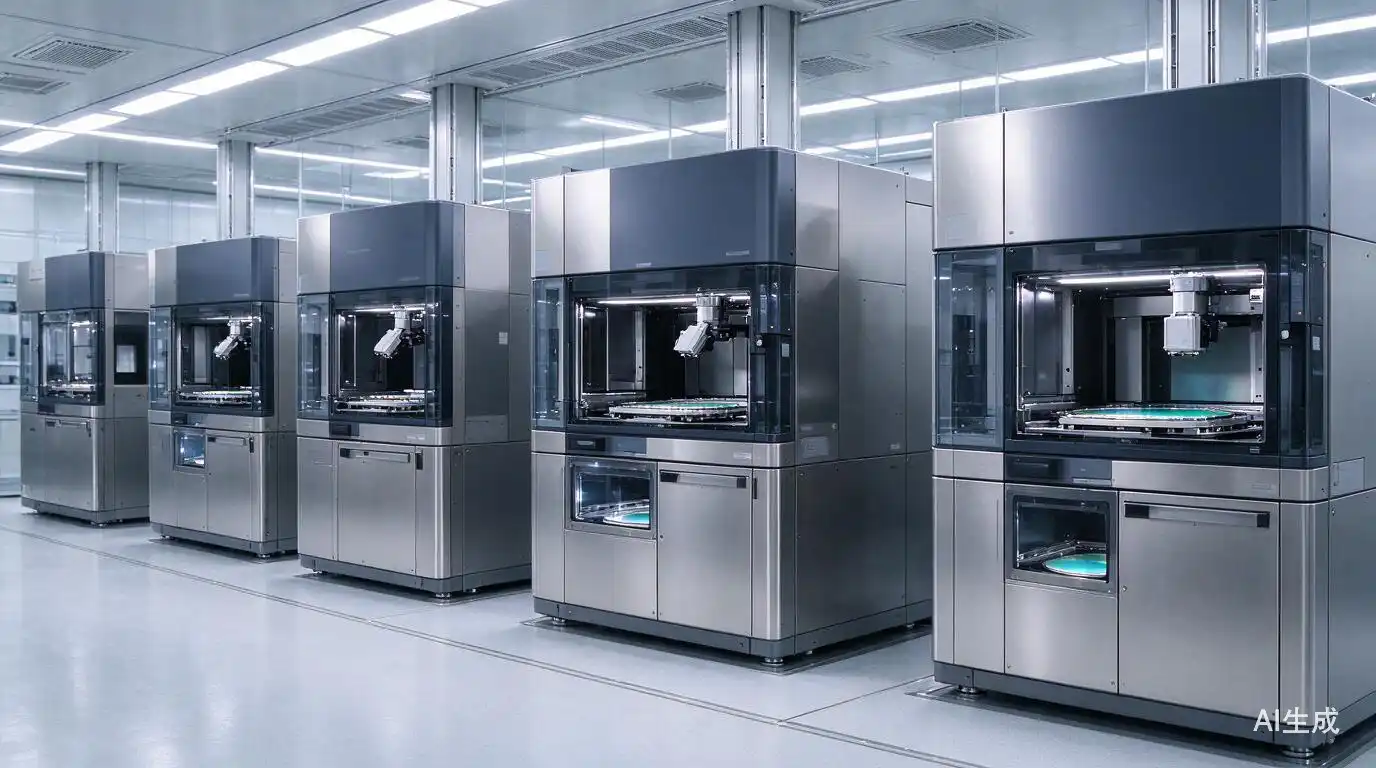
A wave of new Chinese semiconductor equipment companies has emerged since 2024—names like Egram, Shenwei Zhichuang, Hengsheng Tianji, and others—most backed by state capital or major industrial players rather than traditional VCs. Registered capital ranges from tens of millions to 5.566 billion yuan, and many are targeting low-domesticated segments such as lithography, metrology, light sources, and advanced etching. Three common traits stand out: state or corporate dominance, a consistent focus on hard-to-localize links, and capital arriving before products. The core challenge in semiconductor equipment is not building a prototype but securing fab validation. Fabs are reluctant to risk yield on unproven tools, creating a vicious cycle: no machine time means no process data, no data means no orders, and no orders means no funding for iteration. This round of change centers on solving that validation bottleneck. A multi-layered validation ecosystem has formed. Public pilot lines for third-generation semiconductors, silicon photonics, MEMS, and specialty processes offer low-cost, high-tolerance machine time—Pinghu Laboratory's 8-inch line, for example, has validated hundreds of domestic tools. New fabs reserve isolated validation slots during planning, as Huarun Micro does for power devices. Risk-sharing mechanisms, such as Xiamen's 50% cost subsidy (up to 5 million yuan per firm) and national first-unit insurance covering up to 80% of premiums, reduce downstream trial costs. Demand has also diversified. AI-driven HBM and server expansion boosted fab capex, while export controls and 12–18 month lead times for foreign tools forced fabs to try domestic alternatives. Many new fab projects—new storage IDMs, specialty process plants, power and compound semiconductor lines, advanced packaging—are independent from established players and motivated to adopt domestic suppliers. Local funds often invest in both fabs and equipment firms, coordinating validation slots internally, though hard metrics like particle control and MTBF remain strict. Talent and capital conditions matured only recently. The 2018–2022 expansion trained a pool of engineers skilled in complete tools, process, vacuum RF, precision motion, and optics. Investors now accept years without revenue, betting on narrow segments—electron-beam metrology, light sources, vacuum subsystems, specialty cleaning, bonding—that avoid direct competition with established leaders and fit the new validation ecosystem. The industry is shifting from isolated breakthroughs by a few leaders to cluster-wide supply chain filling. Yet risks abound: multiple teams crowd the same niche, pilot-line success may not survive mass-production stability tests, over-reliance on affiliated lines can lead to customization traps, and new fab delays can abruptly halt validation.

marsbit19m ago

You've Never Heard of These Equipment Companies, and They're Appearing in Batches

marsbit19m ago

Nomura Research Report Interpretation: US Stock ETFs Absorb $6.9 Billion in a Single Week, Stock-Bond Divergence Continues to Intensify

Nomura's FX Insights report, dated November 16, 2026, notes that although foreign inflows into U.S. equity ETFs and mutual funds rose to $6.9 billion in the week of November 9–13, up from $5.4 billion the prior week, the dip-buying momentum slowed somewhat in the latter half of the week. Nearly 39% of the weekly total (about $2.5 billion) flowed in on November 9 alone, extending the bargain-hunting seen after the previous week's selloff, when $2.1 billion entered on November 6. Daily buying stayed above $1 billion (November 11: $1.6 billion; November 12: $1.4 billion), but Nomura says the overall pace has begun to ease slightly. Divergence between equities and bonds is intensifying. U.S. bond ETFs and mutual funds saw $287 million of net outflows during the week, extending the prior week's $182 million outflow. Emerging-market thematic ETF inflows fell to $1.4 billion from $2.2 billion, with the split again favoring equities: $1.9 billion into stock funds versus $425 million of net outflows from bond funds. Asia-Pacific cross-border flows showed clear signs of braking. Net purchases of U.S. portfolio assets by previously active Korean retail investors plunged to $768 million from $2.6 billion, driven mainly by a sharp contraction in Korean retail buying of U.S. stocks. Taiwanese investors continued selling dollar assets, offloading another $439 million of USD-denominated bonds after net sales of $697 million the prior week.

marsbit1h ago

Nomura Research Report Interpretation: US Stock ETFs Absorb $6.9 Billion in a Single Week, Stock-Bond Divergence Continues to Intensify

marsbit1h ago

Trading

Spot
活动图片