SpaceX Is Close to Launching the First Operator to Deploy Satellite and Cellular Connectivity Simultaneously

cryptonews.ruPublished on 2026-10-10Last updated on 2026-10-10

Abstract

On October 8, SpaceX announced an agreement to purchase a nationwide portfolio of low-band spectrum licenses from Grain Management. The deal, pending FCC and other standard approvals, covers 100% of Grain's 800 MHz portfolio, which includes up to 14 MHz of paired spectrum. SpaceX plans to use this spectrum to enable next-generation direct-to-device (D2D) satellite connectivity for its Starlink Mobile service. This acquisition is intended to allow Starlink Mobile to become a major U.S. mobile operator by providing seamless connectivity from both terrestrial networks and space, potentially transforming how Americans access communication services. Financial details were not disclosed.

On October 8, SpaceX announced an agreement to purchase a nationwide portfolio of low-band spectrum licenses. The company expects the deal will allow Starlink Mobile to become a major mobile operator in the United States.

What Exactly Is SpaceX Buying

The purchase involves 100% of the nationwide 800 MHz spectrum portfolio owned by Grain Management. This portfolio includes up to 14 MHz of paired spectrum in the 817-824 MHz and 862-869 MHz bands. The deal requires approval from the U.S. Federal Communications Commission (FCC) and the fulfillment of other standard closing conditions. The financial terms were not disclosed by the parties.

Grain Management confirmed the execution of a definitive agreement in its own press release. The company's Founder and CEO, David Grain, stated that the deal has the potential to change where and how Americans connect. Under the terms of the agreement, the scarce low-band spectrum will be used for next-generation direct-to-device (D2D) satellite connectivity. This will enable Starlink Mobile to serve customers both from the ground and from space.

Related Questions

QWhat is the main goal of SpaceX's purchase of a nationwide spectrum portfolio from Grain Management?

AThe main goal is to enable Starlink Mobile to become a major mobile operator in the US, offering integrated terrestrial and satellite connectivity.

QWhat specific spectrum range is involved in the SpaceX and Grain Management deal?

AThe deal involves a nationwide portfolio of 800 MHz spectrum, specifically including up to 14 MHz of paired spectrum in the 817-824 MHz and 862-869 MHz bands.

QWhat regulatory approval is required for the spectrum deal between SpaceX and Grain Management to be finalized?

AThe deal requires approval from the Federal Communications Commission (FCC) of the United States, as well as the fulfillment of other standard closing conditions.

QWhat technology will the purchased low-frequency spectrum be used for, according to the agreement?

AAccording to the agreement, the low-frequency spectrum will be used for next-generation direct-to-device (D2D) satellite connectivity.

QHow did Grain Management's CEO, David Grain, describe the potential impact of this deal?

ADavid Grain stated that the deal has the potential to change where and how Americans connect by enabling Starlink Mobile to serve customers from both the ground and space.

Related Reads

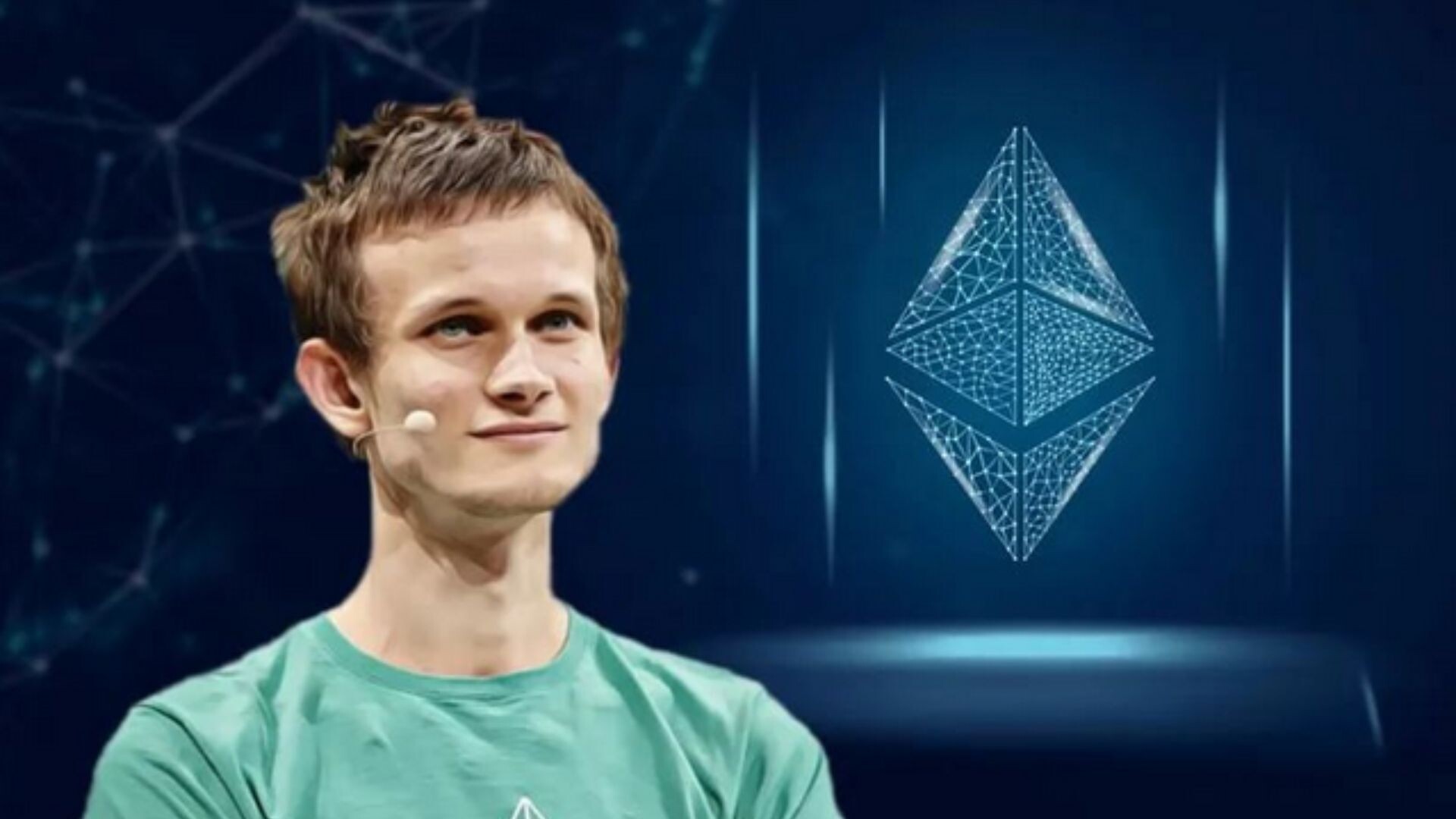
Vitalik 'Exposes' the Limitations of Burning, ETH Value Narrative Shifts

Vitalik Buterin argues that Ethereum should focus more on ETH's store-of-value property rather than relying on fee burning to support its valuation. He explains that fee-burn-based valuation rests on a net present value logic—market cap equals annual burned fees divided by a discount rate—but notes this never provided a truly solid floor. Much of the burning during 2021–2023 came from within the crypto ecosystem itself, so if ETH's price fell, that revenue would fall too. Only demand from outside crypto can make such a valuation floor more convincing, and while RWA growth may help, mature businesses are unlikely to replicate the massive fee consumption seen during speculative manias. He warns that relying on fee burning to justify ETH's ~$270B market cap would require Ethereum to operate like a world-class corporation (roughly L'Oréal's scale), needing sustained R&D spending—perhaps ~700K ETH annually—and highly interventionist governance, both of which create political problems and undermine decentralization and anti-capture properties. Pursuing burning also implies pursuing higher gas prices, potentially excluding users who most need privacy and security; maximizing "price × usage" differs from maximizing safe access for as many people as possible. As a store-of-value asset, the most important metric is survival. Users most value decentralization and CROPS (censorship and capture resistance, open source, privacy, security), which also matter to institutions for risk management and compliance. Ethereum should make prudent security tradeoffs, address quantum computing and AI risks, stabilize the core protocol while shifting innovation to upper layers, and resist complexity-adding features and capture-prone reward mechanisms. Users should be able to hold assets safely and privately, with confidence transactions won't be blocked. Reducing dependence on infrastructure providers matters—he can run a node on a laptop, syncing in under six hours with about one-eighth of disk space, better than 2019. Store-of-value and application growth are synergistic: more native RWA and decentralized assets on L1 increase what holding ETH enables—trustless swaps or using ETH as collateral—boosting its utility, with tradeoffs smaller than maximizing fees.

Odaily星球日报10m ago

Vitalik 'Exposes' the Limitations of Burning, ETH Value Narrative Shifts

Odaily星球日报10m ago

ICLR 2027 First Round Review: Quite a Few Pain Points

ICLR 2027's first-round reviews have sparked widespread complaints among researchers, with many sharing examples of poor-quality or clearly AI-generated feedback on social media. One reviewer asked an author to explain what "standard deviation" means; another review began with the telltale chatbot opener "Certainly! Here is a review of the paper," while two other reviews appeared to be near-identical copies of the same template. One author received criticism for using AI-assisted writing despite having properly disclosed it, and another reviewer openly admitted lacking the expertise to evaluate the paper—prompting debate over whether the real fault lies with reviewer assignment rather than the reviewer. A recurring concern, raised by Jiaxin Pei of UT Austin, is that AI reviewers cannot distinguish between a paper's ordinary limitations and the critical flaws that actually undermine its core contributions. Large language models can list hundreds of limitations for any paper, including the best ones, but they cannot judge which issues truly matter. As a result, reviews grow longer and demand more experiments while the real determinants of paper quality get buried. ICLR 2027 organizers have acknowledged the strain: rapid growth in submissions, a shortage of qualified reviewers, and AI lowering the barrier to paper production. They introduced measures including submission caps, stricter reciprocal review obligations, and rules permitting limited, disclosed AI use in reviewing—with penalties for low-quality or hallucinated AI-generated reviews. Author-reviewer discussion runs until November 18, with final decisions expected December 16.

marsbit45m ago

ICLR 2027 First Round Review: Quite a Few Pain Points

marsbit45m ago

Without Warning, OpenAI Suddenly Mass-Bans Accounts

OpenAI has abruptly banned a large number of ChatGPT accounts without prior notice or email warnings, deleting accounts outright. Affected users see only an error message stating their account has been deleted or deactivated. The purge heavily targets accounts in the Philippines and Turkey, low-cost Team plans, and accounts using reverse proxy relays, and even long-standing paying users with months of subscription have been hit. Free API accounts, shared team accounts, and $200/month Pro accounts were all affected. Developers report losing years of conversation history and personal data locked in the cloud, with appeals unsuccessful. Some speculate OpenAI is cracking down on account stacking to prevent users from exploiting cheap subscriptions. OpenAI's status page showed elevated error rates for some US commercial Mastercards, though OpenAI characterized the incident as a payment channel issue rather than account bans. Users are advised to appeal via OpenAI's official form with account details and Request ID. This move follows earlier steps: OpenAI previously merged ChatGPT and Codex into a single token pool and, five days ago, imposed device and payment card limits, preventing multiple paid subscriptions on one card or device. Starting November 20, new usage policies require third-party API gateways to obtain official written authorization, and from December, Plus, Pro, and Business plans will share a single quota calculated by token consumption. Users are advised to regularly back up cloud conversations and sync Codex projects locally, as the era of freely exploiting AI compute appears to be over.

marsbit50m ago

Without Warning, OpenAI Suddenly Mass-Bans Accounts

marsbit50m ago

Young People Flocking to Semiconductors: Two Years of Dividends Equal a Lifetime for Others

The article explores the surge of young graduates rushing into China's semiconductor industry, drawn by lucrative salaries and long-term career prospects amid a cooling internet sector and cautious civil-service tracks. At a job fair, semiconductor booths are overwhelmed with applicants, while internet giants' stalls stand empty. The industry's appeal is clear: average starting salaries for R&D roles reach 523,000 yuan, far above the 353,000 yuan for core internet positions, with companies like ChangXin earning 54.4 billion yuan in a single quarter—matching Baidu's decade-long profits. The boom has rewritten traditional hiring hierarchies, with microelectronics students receiving offers almost instantly and even "lesser" majors like materials and chemical engineering landing high-paying roles. Yet the article stresses this is a "slow dividend" rather than a short-term windfall: semiconductor manufacturing is capital-intensive, requiring years of process expertise, and offers no "35-year-old crisis" like the internet sector, where youth and speed are prioritized over accumulated experience. A process engineer's career curve is gradual—five years to lead projects, eight to become a technical authority. However, the pressure is intense: long hours, constant client demands, rapid product iterations, and the risk that a single mistake can damage a company's reputation. Some newcomers burn out and leave, only to return. With a talent gap exceeding 300,000 and projected to reach 500,000 by 2030—especially in high-end R&D—the structural mismatch will persist. Many graduates now accept "get on board first, choose your seat later," betting on the industry's long-term growth as China's semiconductor push, less than a decade old, continues to ride tailwinds from AI computing, HBM, and advanced packaging.

marsbit1h ago

Young People Flocking to Semiconductors: Two Years of Dividends Equal a Lifetime for Others

marsbit1h ago

Trading

Spot
活动图片