Bitcoin Sees “Most Aggressive” Institutional Selling Ever, Analyst Says

bitcoinistPublished on 2026-02-25Last updated on 2026-02-25

Abstract

Bitcoin is experiencing its most aggressive institutional net selling in history, according to Capriole Investments founder Charles Edwards. Analysis of institutional activity, measured through spot ETFs and treasury companies, shows a sharp decline in their monthly rate-of-change (ROC) into negative territory, indicating significant capital outflows. The Net Institutional Buying metric has plummeted to a record low of -319%, meaning institutions are selling far more Bitcoin than miners are producing. Edwards attributes this shift to concerns over the Quantum Computing threat, which could compromise old BTC wallets. He estimates this risk has already discounted Bitcoin's value by 20%, a figure that could rise to 85% by 2030 if the network isn't upgraded. Bitcoin's price reflects this pressure, currently trading around $62,300, down 7% over the past week.

The founder of Capriole Investments has highlighted how Bitcoin is currently facing the most net selling pressure from institutions in history.

Bitcoin Is Observing An Exit From Institutional Entities

In a new post on X, Capriole Investments founder Charles Edwards has discussed the latest trend in the behavior of institutional entities on the Bitcoin network. To gauge institutional activity, Edwards has used the spot exchange-traded funds (ETFs) and treasury companies as a proxy.

Spot ETFs are investment vehicles that trade in traditional markets and allow for indirect exposure to BTC. Similarly, treasury companies hold BTC on their balance sheet, making their stock price tied to the cryptocurrency’s movements. Traditional institutional entities are typically wary of blockchain infrastructure, so they tend to take one of the regulated, indirect routes into the asset.

Now, here is the chart shared by the analyst that shows how the monthly rate-of-change (ROC) in the combined ETF and treasury holdings has fluctuated over the last few years:
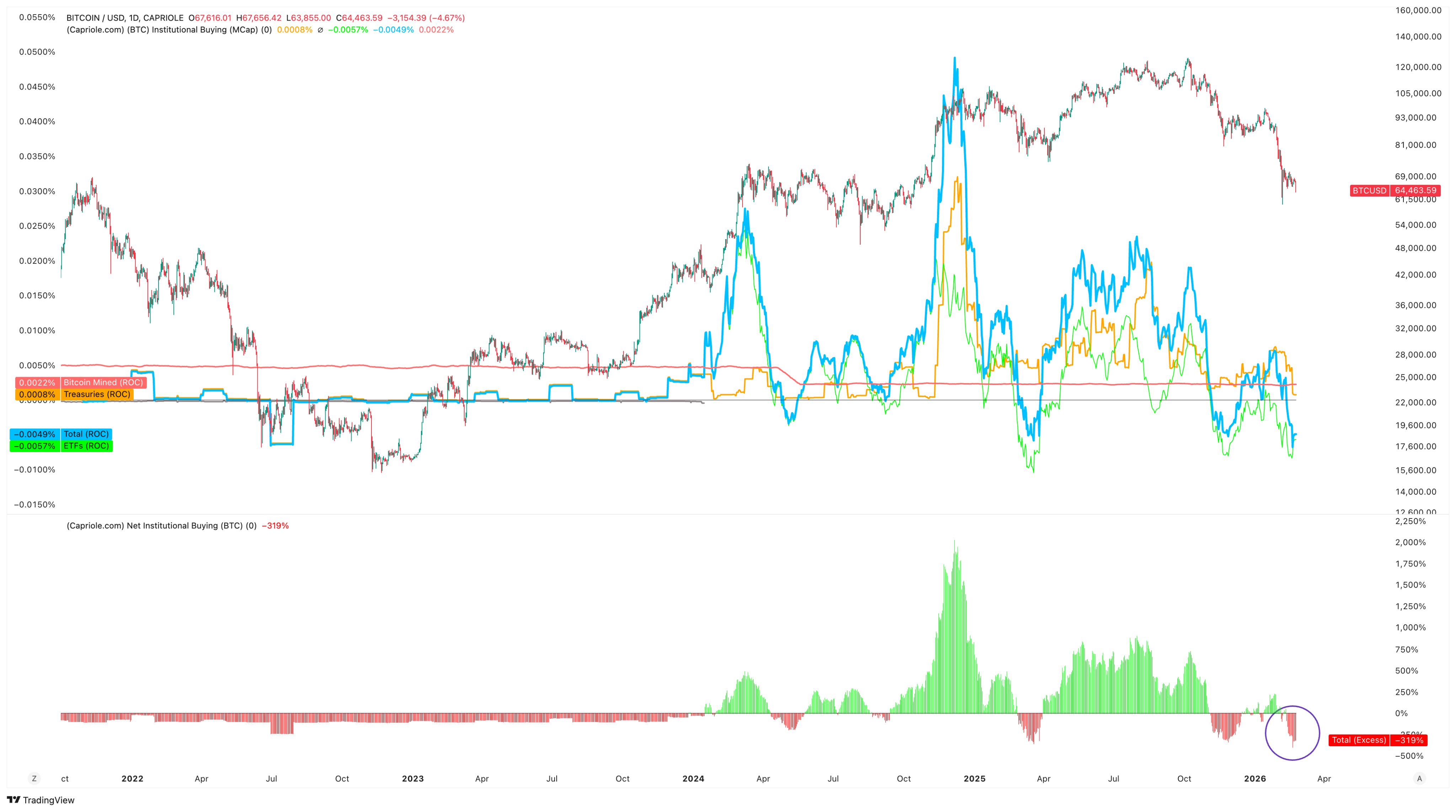
The value of the metric seems to have been negative in recent days | Source: @caprioleio on X

As displayed in the above graph, the monthly ROC for these entities has plummeted into the negative territory recently, indicating an outflow of capital has been taking place. Treasury companies alone are still just inside the positive territory, likely due to the continued accumulation from Strategy, but spot ETFs have sunk deep into the red zone.

In the same chart, Edwards has also attached the data of another indicator: Net Institutional Buying. This metric compares the combined ROC in the balance of the spot ETFs and treasury companies against the Bitcoin being mined by the blockchain’s validators.

During the January recovery, this indicator saw a brief turn to green, implying that institutional entities were accumulating faster than miners could produce new supply. With the capital exit that has occurred recently, however, the Net Institutional Buying has plummeted to a highly negative value of -319%.

Such a low level in the indicator hasn’t been witnessed before in the cryptocurrency’s history. “Most aggressive institutional net selling of Bitcoin EVER this last week,” noted the Capriole founder.

As for the reason behind this shift among institutional investors, Edwards has pointed to the Quantum threat to Bitcoin. Quantum Computing is an upcoming technology that could be used to break into old, vulnerable BTC wallets, at least in theory. The analyst published a research piece last week talking about how this risk could “discount” the value of the digital asset.

“When you consider the statistics for when Q-Day is expected to occur, the rational investor is discounting the fair value of Bitcoin by 20% today,” explained Edwards. Below is a chart that showcases how this discount will go up each year the BTC network isn’t upgraded against the Quantum threat.
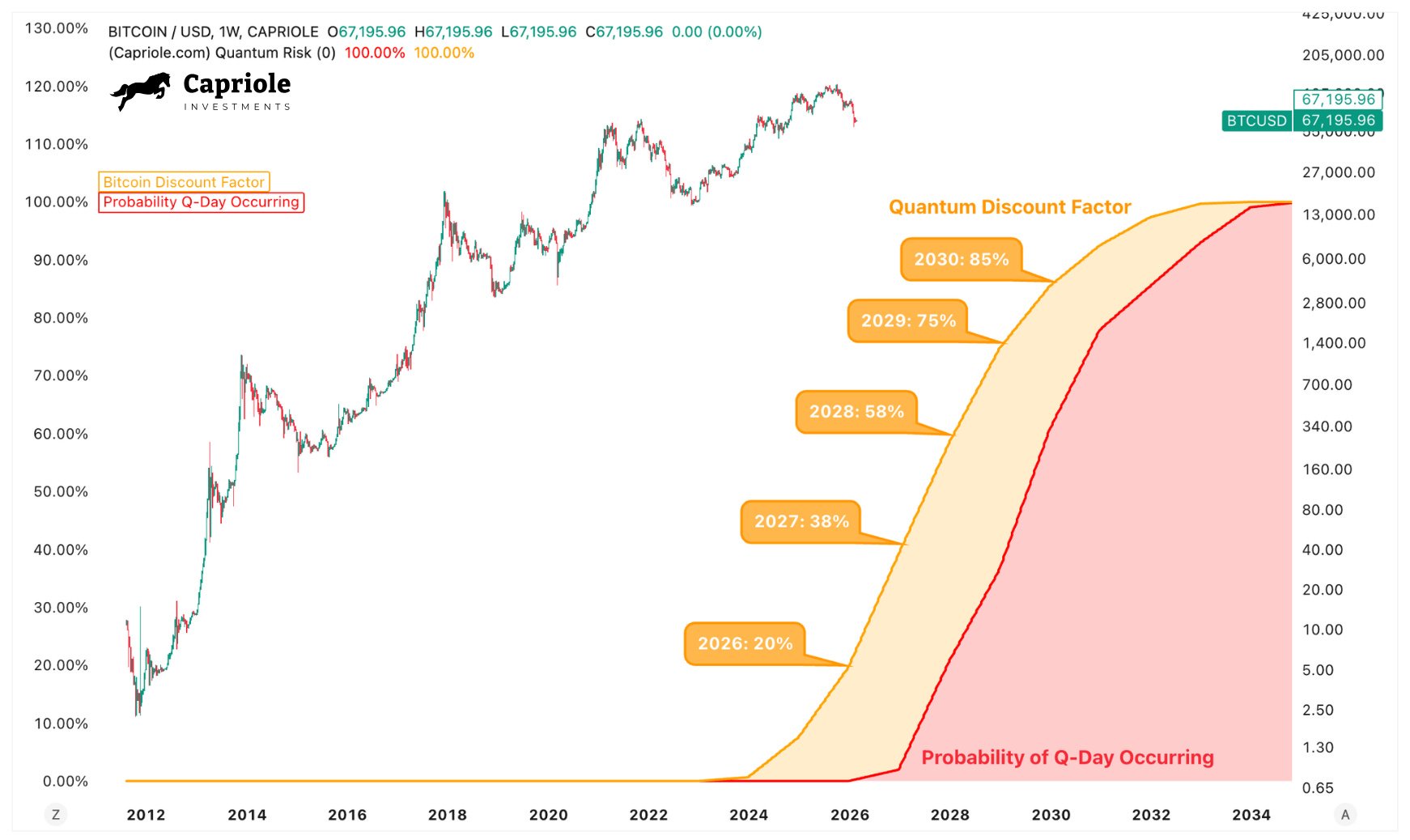
Looks like the the discount is expected to reach 85% by 2030 | Source: @caprioleio on X

BTC Price

At the time of writing, Bitcoin is floating around $62,300, down nearly 7% in the last seven days.

The cryptocurrency's price has been falling | Source: BTCUSDT on TradingView

Related Questions

QWhat is the current trend in institutional activity regarding Bitcoin, according to the analyst from Capriole Investments?

AThe analyst states that Bitcoin is currently facing the most aggressive net selling pressure from institutions in history, with the Net Institutional Buying indicator plummeting to a highly negative value of -319%.

QWhich two types of entities does the analyst use as a proxy to gauge institutional activity in the Bitcoin network?

AThe analyst uses spot exchange-traded funds (ETFs) and treasury companies as a proxy to gauge institutional activity.

QWhat specific event does the analyst cite as a potential reason for the recent shift in institutional investor behavior?

AThe analyst points to the Quantum threat to Bitcoin, an upcoming technology that could theoretically break into old, vulnerable BTC wallets, as a reason for the shift, suggesting it is causing a discount on the asset's value.

QWhat was the value of the Net Institutional Buying indicator during the January recovery, and what did it imply?

ADuring the January recovery, the Net Institutional Buying indicator briefly turned green, implying that institutional entities were accumulating Bitcoin faster than miners could produce new supply.

QWhat is the current price of Bitcoin and its recent performance mentioned in the article?

AAt the time of writing, Bitcoin is floating around $62,300, down nearly 7% in the last seven days.

Related Reads

Strive Buys Strategy Stock, Bitcoin Treasury Firms Begin Interlocking Dolls

On March 11, Strive, a Bitcoin treasury company, announced it had purchased $50 million worth of preferred shares (STRC) issued by MicroStrategy (now Strategy)—another major corporate Bitcoin holder. This represents over one-third of Strive’s treasury. Both companies use raised capital to buy Bitcoin, and both issue high-yield preferred shares (SATA from Strive, STRC from Strategy) to fund these purchases. Strive’s Chief Risk Officer justified the move by claiming STRC offers better risk-adjusted returns than U.S. Treasuries. However, this creates a circular dependency: Strategy uses proceeds from STRC to buy Bitcoin, and Strive relies on Strategy’s Bitcoin performance to earn yield on its STRC investment—which it may use to buy more Bitcoin or pay dividends on its own SATA shares. Strive, founded in 2022, has rapidly accumulated 13,311 BTC (worth ~$930 million), making it a top-ten corporate Bitcoin holder. Its stock (ASST) has fallen 97% from its peak, trading far below its Bitcoin-backed NAV. Despite this, Strive continues to aggressively accumulate Bitcoin and raise dividends on SATA shares. This reflects a broader trend: over 200 companies now emulate MicroStrategy’s “Bitcoin treasury” strategy. As these firms begin investing in each other’s debt-like instruments, the ecosystem becomes increasingly interconnected—and vulnerable—to Bitcoin's price volatility.

marsbit48m ago

Strive Buys Strategy Stock, Bitcoin Treasury Firms Begin Interlocking Dolls

marsbit48m ago

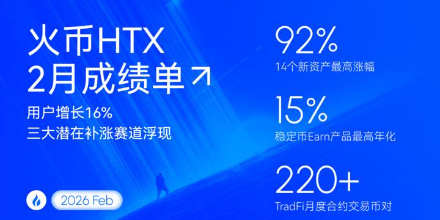
Behind the 16% User Growth: A Review of Huobi HTX's February Report and Three Potential 'Catch-up Sectors' in the Post-Holiday Crypto Market

Huobi HTX February Review: User Growth Up 16%, Identifying Three Potential "Catch-Up Sectors" in the Post-Holiday Crypto Market Following the Spring Festival, the crypto market entered a new trading cycle. Capital began rotating from single hot sectors to multiple areas, with AI, privacy computing, DeFi, and stablecoin yields remaining active. Huobi HTX saw a 16% month-on-month increase in new registrations and ranked second in the industry for net monthly capital inflows. Its "Clean Assets" reserve climbed to a historic sixth place globally. The platform highlighted three key sectors with potential for growth: 1. **AI Meme Sector:** Projects combining AI narratives with meme culture, like those in the OpenClaw ecosystem, gained traction due to strong community appeal. Huobi HTX listed 14 new assets in February, including popular Base ecosystem AI Meme tokens like CLAWD, MOLT, and CLAWDCH. 2. **Privacy Computing & Tech Infrastructure:** Technical projects like the ZK protocol ZAMA and privacy infrastructure ESP (which saw an 80% surge post-listing) were launched. Other performers included Base DeFi project UP (+60%) and automation token ROBO (+92%). 3. **Stablecoin Yields:** As a hedge against market fluctuations, stablecoin earnings products gained popularity. Huobi Earn platform offered subsidized annual yields of up to 15% on assets like USDT and USDC, with its USDe product exceeding $100 million in holdings. Product upgrades included a new TradFi section offering derivatives for gold, silver, and crude oil, and the public release of its index price composition data for greater transparency. Globally, HTX Ventures participated in major conferences, and the platform advanced its expansion into markets like Pakistan following regulatory approval there. A large-scale trading competition with a $1.5 million prize pool also boosted user engagement. Concluding, Huobi HTX continues to expand its trading ecosystem through diversified assets, product optimization, and global布局 (layout), capitalizing on the market's recovery.

marsbit53m ago

Behind the 16% User Growth: A Review of Huobi HTX's February Report and Three Potential 'Catch-up Sectors' in the Post-Holiday Crypto Market

marsbit53m ago

Trading

Spot
Futures

Hot Articles

What is $BITCOIN

DIGITAL GOLD ($BITCOIN): A Comprehensive Analysis Introduction to DIGITAL GOLD ($BITCOIN) DIGITAL GOLD ($BITCOIN) is a blockchain-based project operating on the Solana network, which aims to combine the characteristics of traditional precious metals with the innovation of decentralized technologies. While it shares a name with Bitcoin, often referred to as “digital gold” due to its perception as a store of value, DIGITAL GOLD is a separate token designed to create a unique ecosystem within the Web3 landscape. Its goal is to position itself as a viable alternative digital asset, although specifics regarding its applications and functionalities are still developing. What is DIGITAL GOLD ($BITCOIN)? DIGITAL GOLD ($BITCOIN) is a cryptocurrency token explicitly designed for use on the Solana blockchain. In contrast to Bitcoin, which provides a widely recognized value storage role, this token appears to focus on broader applications and characteristics. Notable aspects include: Blockchain Infrastructure: The token is built on the Solana blockchain, known for its capacity to handle high-speed and low-cost transactions. Supply Dynamics: DIGITAL GOLD has a maximum supply capped at 100 quadrillion tokens (100P $BITCOIN), although details regarding its circulating supply are currently undisclosed. Utility: While precise functionalities are not explicitly outlined, there are indications that the token could be utilized for various applications, potentially involving decentralized applications (dApps) or asset tokenization strategies. Who is the Creator of DIGITAL GOLD ($BITCOIN)? At present, the identity of the creators and development team behind DIGITAL GOLD ($BITCOIN) remains unknown. This situation is typical among many innovative projects within the blockchain space, particularly those aligning with decentralized finance and meme coin phenomena. While such anonymity may foster a community-driven culture, it intensifies concerns about governance and accountability. Who are the Investors of DIGITAL GOLD ($BITCOIN)? The available information indicates that DIGITAL GOLD ($BITCOIN) does not have any known institutional backers or prominent venture capital investments. The project seems to operate on a peer-to-peer model focused on community support and adoption rather than traditional funding routes. Its activity and liquidity are primarily situated on decentralized exchanges (DEXs), such as PumpSwap, rather than established centralized trading platforms, further highlighting its grassroots approach. How DIGITAL GOLD ($BITCOIN) Works The operational mechanics of DIGITAL GOLD ($BITCOIN) can be elaborated on based on its blockchain design and network attributes: Consensus Mechanism: By leveraging Solana’s unique proof-of-history (PoH) combined with a proof-of-stake (PoS) model, the project ensures efficient transaction validation contributing to the network's high performance. Tokenomics: While specific deflationary mechanisms have not been extensively detailed, the vast maximum token supply implies that it may cater to microtransactions or niche use cases that are still to be defined. Interoperability: There exists the potential for integration with Solana’s broader ecosystem, including various decentralized finance (DeFi) platforms. However, the details regarding specific integrations remain unspecified. Timeline of Key Events Here is a timeline that highlights significant milestones concerning DIGITAL GOLD ($BITCOIN): 2023: The initial deployment of the token occurs on the Solana blockchain, marked by its contract address. 2024: DIGITAL GOLD gains visibility as it becomes available for trading on decentralized exchanges like PumpSwap, allowing users to trade it against SOL. 2025: The project witnesses sporadic trading activity and potential interest in community-led engagements, although no noteworthy partnerships or technical advancements have been documented as of yet. Critical Analysis Strengths Scalability: The underlying Solana infrastructure supports high transaction volumes, which could enhance the utility of $BITCOIN in various transaction scenarios. Accessibility: The potential low trading price per token could attract retail investors, facilitating wider participation due to fractional ownership opportunities. Risks Lack of Transparency: The absence of publicly known backers, developers, or an audit process may yield skepticism regarding the project's sustainability and trustworthiness. Market Volatility: The trading activity is heavily reliant on speculative behavior, which can result in significant price volatility and uncertainty for investors. Conclusion DIGITAL GOLD ($BITCOIN) emerges as an intriguing yet ambiguous project within the rapidly evolving Solana ecosystem. While it attempts to leverage the “digital gold” narrative, its departure from Bitcoin's established role as a store of value underscores the need for a clearer differentiation of its intended utility and governance structure. Future acceptance and adoption will likely depend on addressing the current opacity and defining its operational and economic strategies more explicitly. Note: This report encompasses synthesised information available as of October 2023, and developments may have transpired beyond the research period.

363 Total ViewsPublished 2025.05.13Updated 2025.05.13

What is $BITCOIN

Discussions

Welcome to the HTX Community. Here, you can stay informed about the latest platform developments and gain access to professional market insights. Users' opinions on the price of BTC (BTC) are presented below.

活动图片