1. BTC amplitude reduction
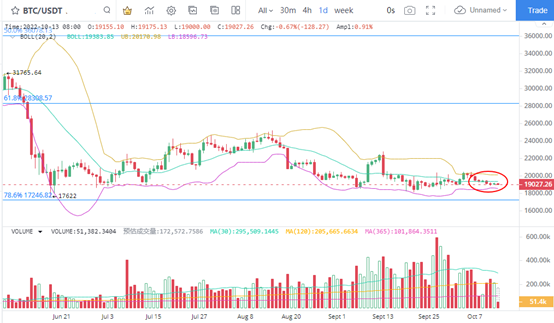
The daily K line chart of BTC shows that the price amplitude has dropped significantly, and the BTC volatility has dropped to 2.13% and 1.43% on October 11 and 12, further compressing the fluctuation space. In the same period, there was little room for the BTC daily trading volume to rebound, and the volume could be maintained at a low level. The market still needed capital to push for a clear direction signal.
2. Top 100 main positions of BTC
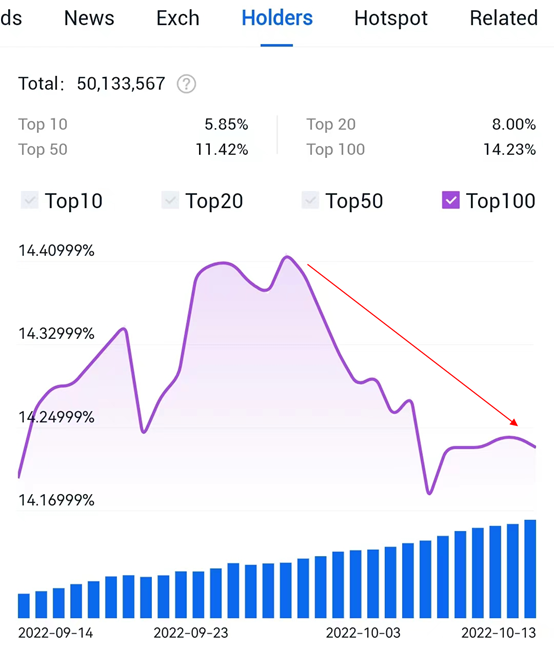
From the perspective of the main coin holding direction, there is an obvious sign that the main players in the top 100 coin holdings have reduced their positions recently. The number of coins held fell from 14.41% on September 29 to 14.23% on October 13, down 0.18 percentage points, equivalent to US $656 million. The main position reduction of BTC is in line with the pace of price decline. In particular, the BTC price trend is very weak in the near future, with limited rebound space, indicating that lower prices will appear in the short term. The main shipment further indicates the increase of selling pressure and concerns about transaction risk.
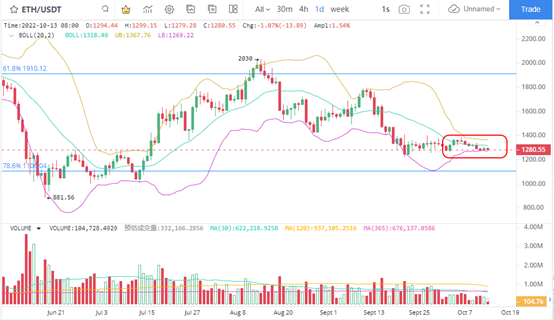
3. ETH Bollinger Line starts to expand
In terms of the Nikkei K Line, the ETH price was slightly withdrawn, and the price operated near the off track of the Bolin Line. As the ETH price retreated slightly, although the amplitude did not exceed 3%, the direction selection is being confirmed. The support for the offline of Bollinger Line is limited, which may open the space for the downward movement of prices in the short term.
4. ETH multi empty ratio is still lower than 1
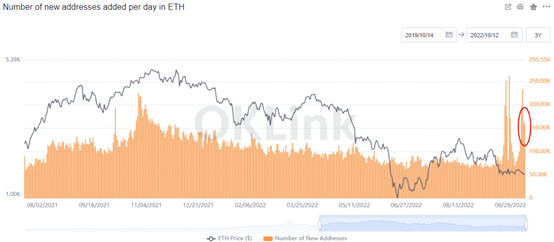
The number of active ETH addresses has changed significantly, and the number of coin holding addresses has rebounded significantly recently. The reason is that the number of receiving addresses of ETH increased more clearly, indicating that more investors started to buy ETH in the low price area. Of course, the overall number of active addresses of ETH is still in a low state, with limited support for the near future.
5. Significant growth of HT short positions
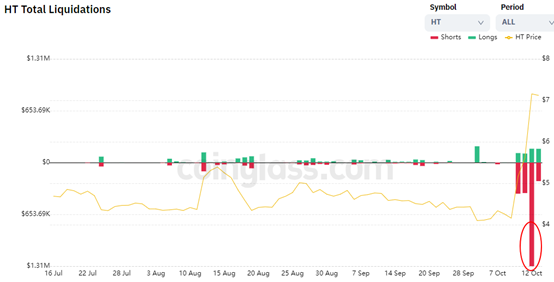
In terms of popular currencies, HT's recent band growth exceeded 70%, with short-term growth leading the market. The short position explosion data shows that the short position explosion of HT in the recent period is significantly higher than the previous average. On October 12, the short position of HT reached 1.31 million US dollars, which was more than 40 times of the previous average. On October 10 and October 11, short positions also reached 390000 dollars and 380000 dollars, respectively. The growth of data means that the market is at a key node.
For all parties, signs pay attention to the supporting effect of HT at $6.5, and pay attention to the low absorption opportunities after the breakthrough.