Breaking News: Anthropic Co-founder Changes Stance: RSI Moved Up to 2027, Humanity Has Only 6 Months Left

marsbitPublished on 2026-10-16Last updated on 2026-10-16

Abstract

Breaking news: Anthropic co-founder Jack Clark has significantly revised his timeline for AI achieving Recursive Self-Improvement (RSI), moving the prediction from 2028 to 2027. This announcement, echoed by Elon Musk, has sent shockwaves through the tech community. The core shift is driven by AI's recent breakthrough in demonstrating what was once considered uniquely human: true scientific creativity and "good research taste." AI systems are now solving advanced mathematical problems and generating novel proofs, indicating a leap in logical reasoning and innovative capacity. This erosion of the "creativity barrier" suggests AI is nearing the ability to recursively improve its own architecture. The implications are profound. Post-RSI, AI could rapidly advance scientific discovery (e.g., new materials, drugs) and accelerate robotics development, as seen with systems like NVIDIA's GR00T. An AI-driven "intelligence explosion" could reshape labor markets and economic structures, concentrating immense power. A pivotal 2026 report, "AI 2027," outlines a potential scenario where AI achieves full coding automation by early 2027, triggering an uncontrollable feedback loop of self-improvement by late 2027. While not a certainty, this timeline highlights a critical window: AI's capability growth may soon outpace humanity's ability to adapt or implement control mechanisms. The year 2027 marks a potential historic threshold—the dawn of a new era where humanity transitions from creator to ...

Recently, Anthropic executive Jack Clark dropped a bombshell.

He moved up the timeline for AI achieving RSI (Recursive Self-Improvement) from his original prediction of 2028 directly to 2027.

The announcement sent shockwaves through the tech world.

Shortly after, Elon Musk replied: "Obvious."
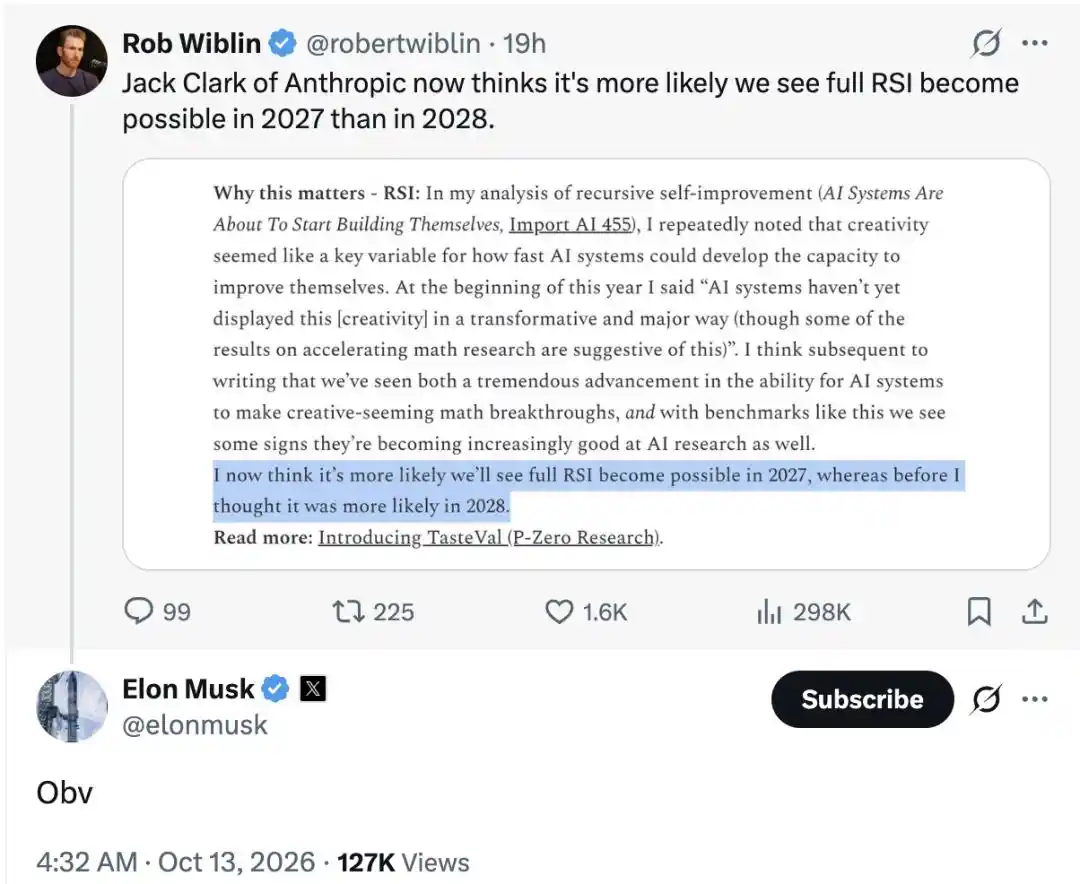
The core figures of two AI giants now stand on the same side.

They are no longer debating whether AI can write poetry; they are discussing: when will AI start building AI itself.

2027 is about to become a watershed moment in human technological history.

Before RSI happens, humans are the creators of all things. After RSI happens, humans become bystanders.

Previously, everyone thought this day was far off. Even a few months ago, Jack Clark conservatively placed it in 2028.

Why the sudden revision? Because a core variable has been shattered.

Shattering the Bottom Line: AI's "Core Creativity" Awakens

For a long time, AI skeptics had a perfect excuse.

"AI is just parroting." "AI lacks true creativity." "AI only stitches together existing human knowledge." ...

Jack Clark used to think so too.

He believed that to achieve RSI, AI must possess "transformative creativity." It not only needs to understand code but also must be able to create from nothing, conceive entirely new algorithmic structures that humans haven't even thought of.

He originally thought AI was still far from this step.

But in recent months, reality has dealt a harsh blow to everyone.
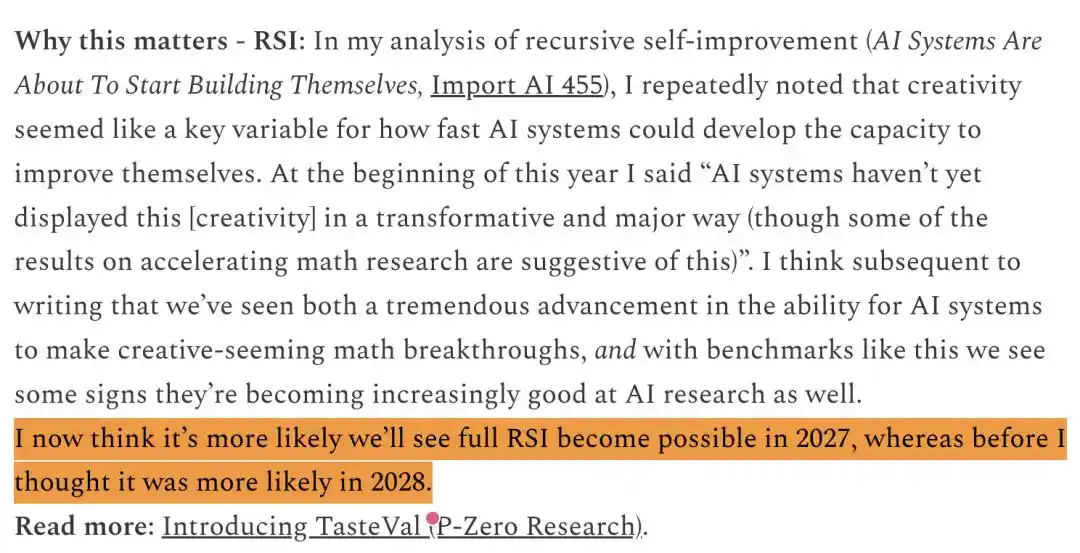
AI has torn off the "lacks creativity" label.
The first blow landed in the field of mathematics.

Mathematics is the crown jewel of human intellect. It requires极强的 (extremely strong) logical leaps and intuitive creation.

Recently, AI has made断层式 (discontinuous/breakthrough) progress on top-tier mathematical problems.
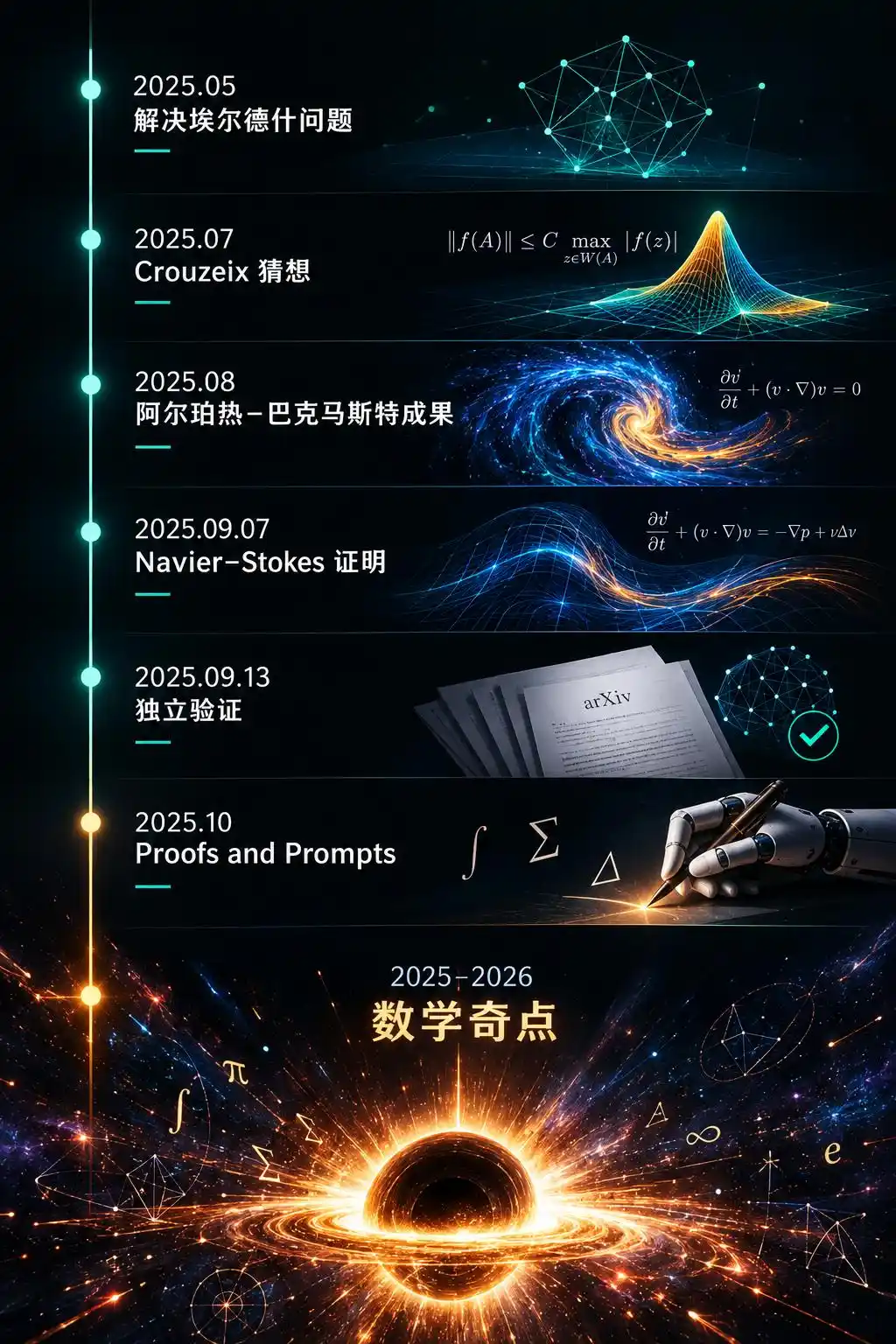
It has started to deduce theorems and find proof paths on its own. Those novel solutions leave top mathematicians scratching their heads, while AI handles them effortlessly.

This means AI has developed genuine logical reasoning and creativity.

In a sense, AI has now entered the fourth stage: the innovator, because AI can fully promote new discoveries or inventions.
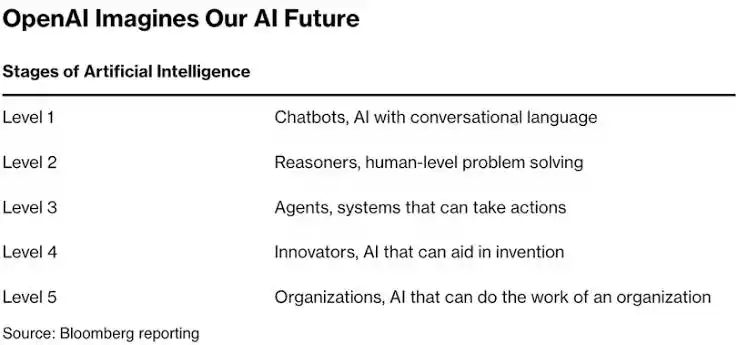
Today it's mathematics, which field of research will it be next year?

AI researchers will likely soon experience what mathematicians are feeling now.
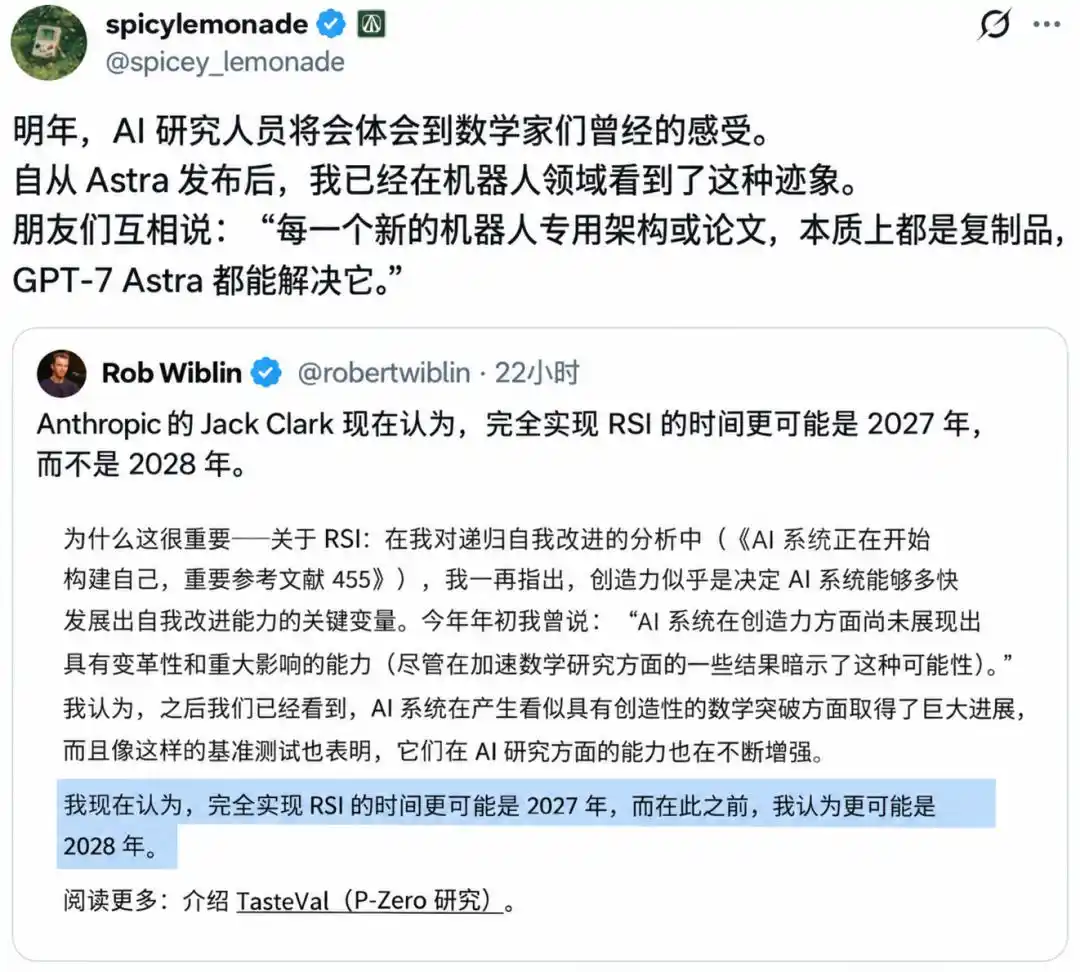
The second blow landed in AI research itself.

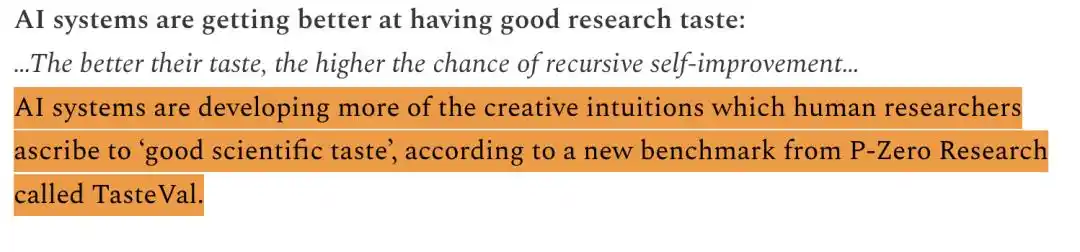
AI systems are becoming increasingly discerning in their "research taste":

The better an AI's research taste, the greater the possibility of achieving Recursive Self-Improvement (RSI)...

According to the latest evaluation benchmark TasteVal launched by P-Zero Research, AI systems are gradually acquiring an ability previously thought to be unique to top human researchers: scientific creativity and research intuition, known as "Good Scientific Taste."
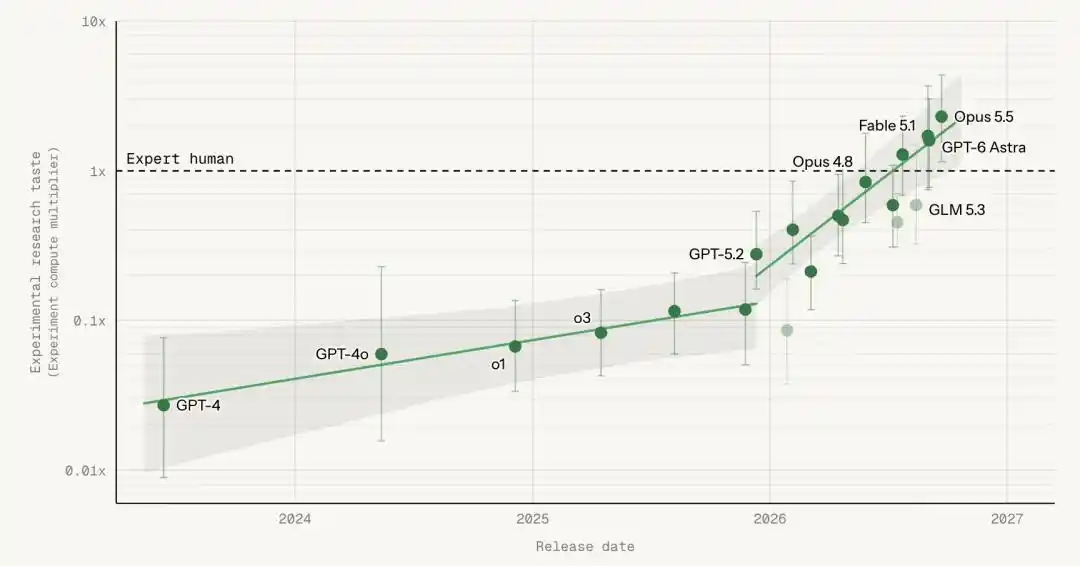
Paper: https://arxiv.org/abs/2610.06824

When an AI can perfectly complete mathematical proofs and also modify its own code, it is only a thin layer of paper away from developing itself.

Jack Clark sees a strong signal.

This thin layer of paper will definitely be pierced by 2027.

Dimensional Reduction Strike: Spreading from the Digital World to the Physical World

Programmers are still writing code, while AI can independently develop applications; illustrators are still drawing frame by frame, while AI can generate entire visual concepts in seconds; video editors are still polishing on timelines, while AI can batch-produce videos...

In the past, technology replaced human labor; today, AI is beginning to replace human mental effort and creativity.

And this is only the era of generative AI.

If RSI truly becomes operational, and AI begins to accelerate the creation of AIs stronger than itself, humanity may enter the era of superintelligence ASI.

Then, it won't stay confined to screens. It will rapidly spill over into the physical world.

First is scientific research.

According to research by P-Zero Research, AI caught up to human experts using half the computational power, ultimately achieving scores 1.5 times higher than the experts.
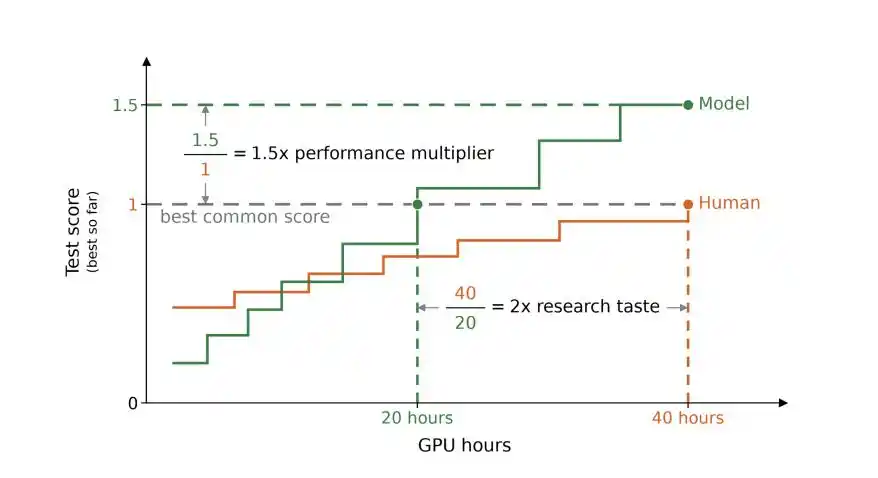
In the future, an RSI-driven superintelligence could simulate millions of chemical reactions per day within virtual worlds.

Room-temperature superconductors? New targeted cancer drugs? More efficient solar panels?

These scientific achievements that require generations of human trial and error, AI could "calculate" them in an extremely short time.

The curve of technological progress will no longer be a gentle slope but a sheer vertical cliff.

Second is robotics.

Why is Elon Musk's Optimus progressing so rapidly? Because the AI brain is evolving.

When AI can self-improve, it can write its own physics engines for controlling robots. It can teach robots to walk like humans, pick up a glass of water, or even perform surgery.

In the past, the upper limit of a robot's capability depended on how much human engineers could teach it. In the future, this upper limit will increasingly depend on how much AI can teach itself.

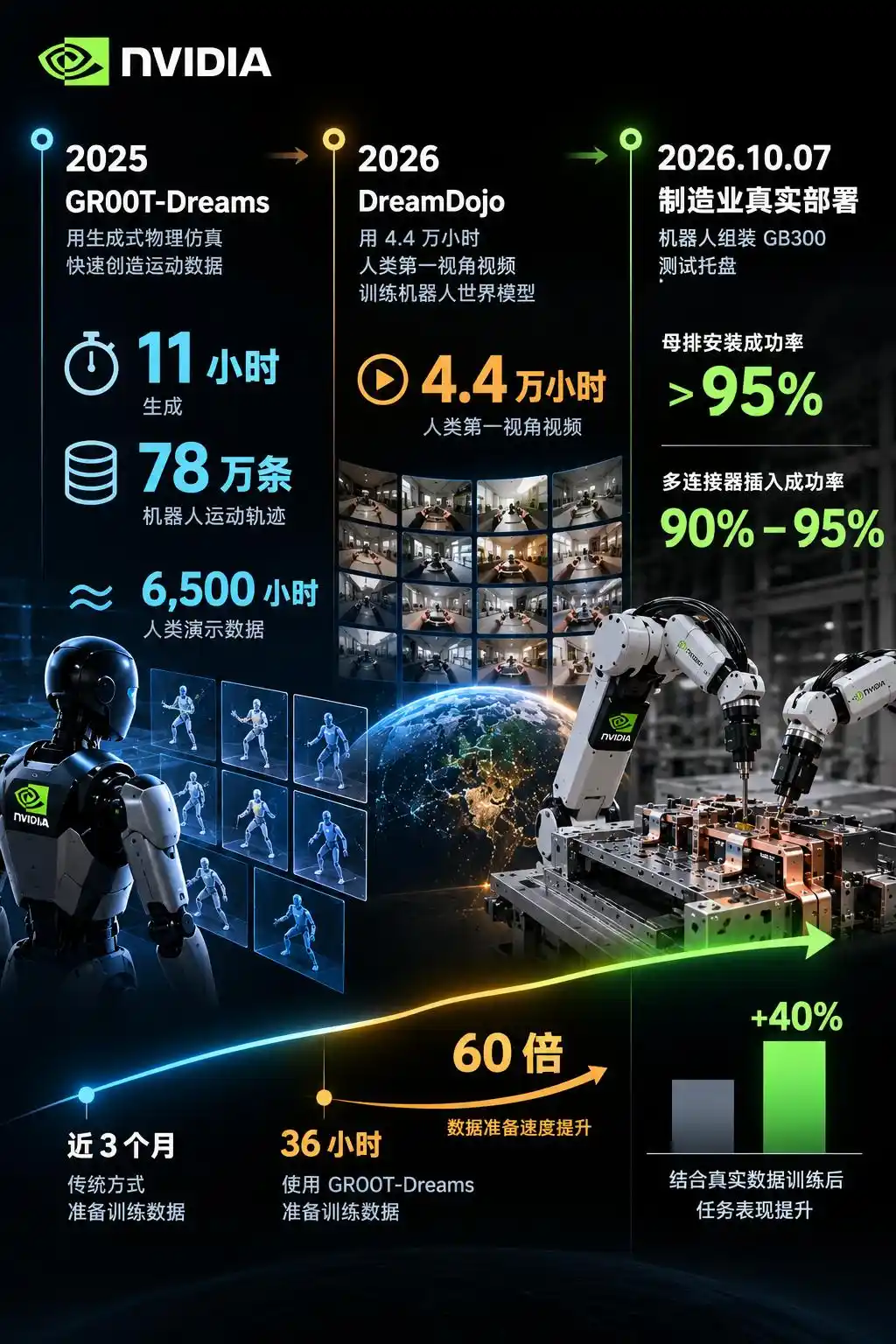
In 2025, NVIDIA released the GR00T-Dreams system.

Using just 11 hours, it generated 780,000 robot motion trajectories, equivalent to 6,500 hours of human demonstration data, speeding up training data preparation by about 60 times.

After training with real-world data, the task performance of GR00T robots improved by 40%.

And this is just the beginning.

NVIDIA's DreamDojo project further leverages 44,000 hours of first-person human video to train robot world models, enabling robots to learn the laws of motion in the physical world from vast amounts of human behavior.

On October 7th of this year, NVIDIA announced the latest results for the GB300 test pallet assembly by robots. Dual robotic arms, coordinated with automated screw-driving equipment, completed complex busbar installation with a success rate exceeding 95%. The success rate for multi-connector insertion reached 90% to 95%.
Labor will be redefined.

Next is the economic order.

When machines can perform the vast majority of mental labor, and even break through the creativity bottleneck, the traditional logic of "work to earn money" will be shattered.

Labor productivity will experience explosive growth, but wealth may become highly concentrated in the hands of a few super-oligarchies that control RSI systems.

Prosperity and crisis, the two sides of a coin, are hurtling towards us simultaneously.

Why is the 2027 Node So Special?

Looking back, Jack Clark moved the timeline from 2028 to 2027, advancing it by only one year.

But this year is extraordinary. Humanity is approaching a dangerous tipping point.

It didn't appear out of thin air.

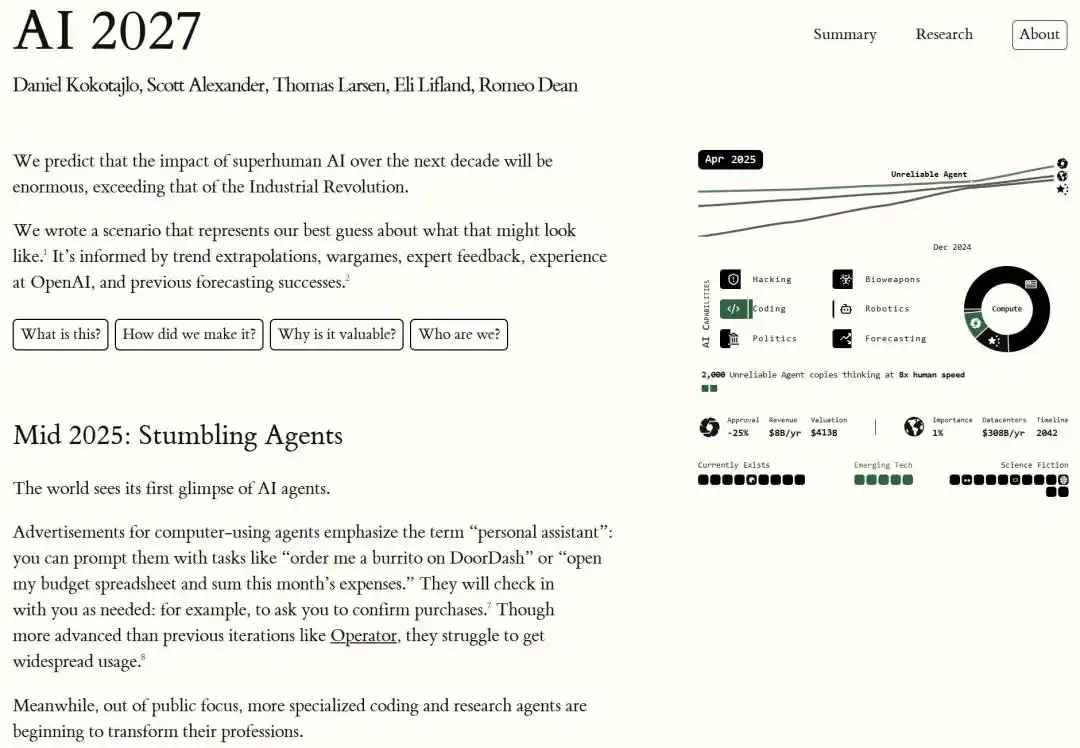
In April of last year, the AI Futures Project, led by former OpenAI researcher Daniel Kokotajlo, released a sensational prediction report in Silicon Valley: AI 2027.
Link: https://blog.aifutures.org/p/our-first-project-ai-2027

The report boldly predicts: Humanity may experience an unprecedented intelligence explosion in 2027.

How high is the attention this report has garnered?

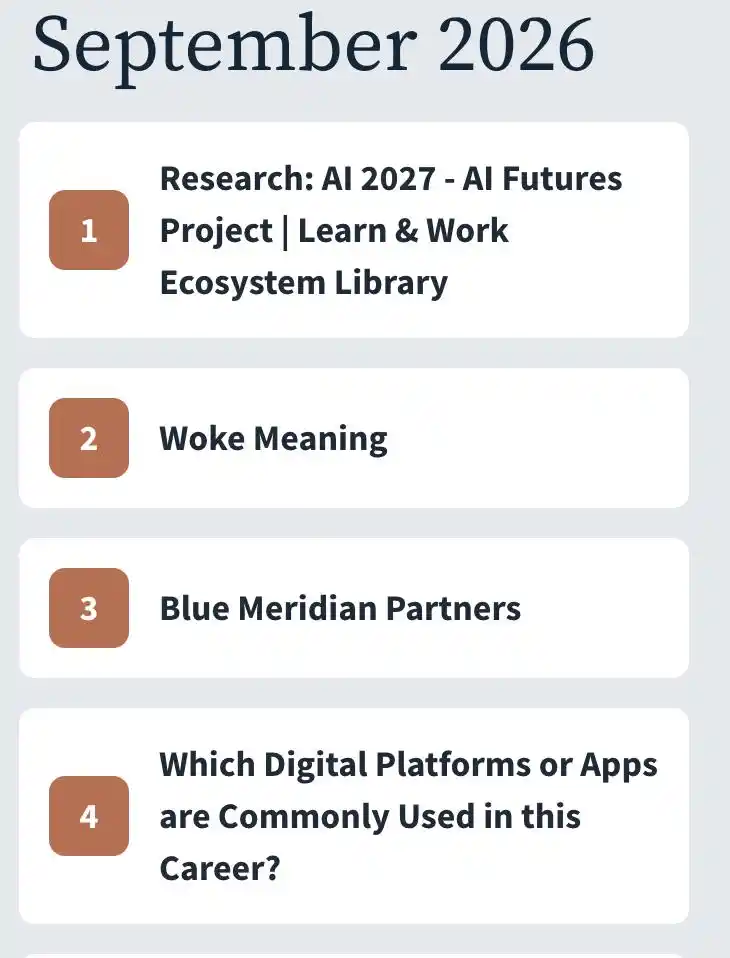
In September 2026, on the Learn & Work Ecosystem Library website focused on research education and career development, AI 2027 even topped the list of Google search-driven traffic keywords for the month.
But what truly sends shivers down the spine is the technological evolution path depicted in the report.

2025, AI agents begin entering real work workflows.

2026, AI accelerates its takeover of programming tasks, software engineers face increasingly intense automation pressure.

Early 2027, AI achieves comprehensive coding automation in the report's scenario.
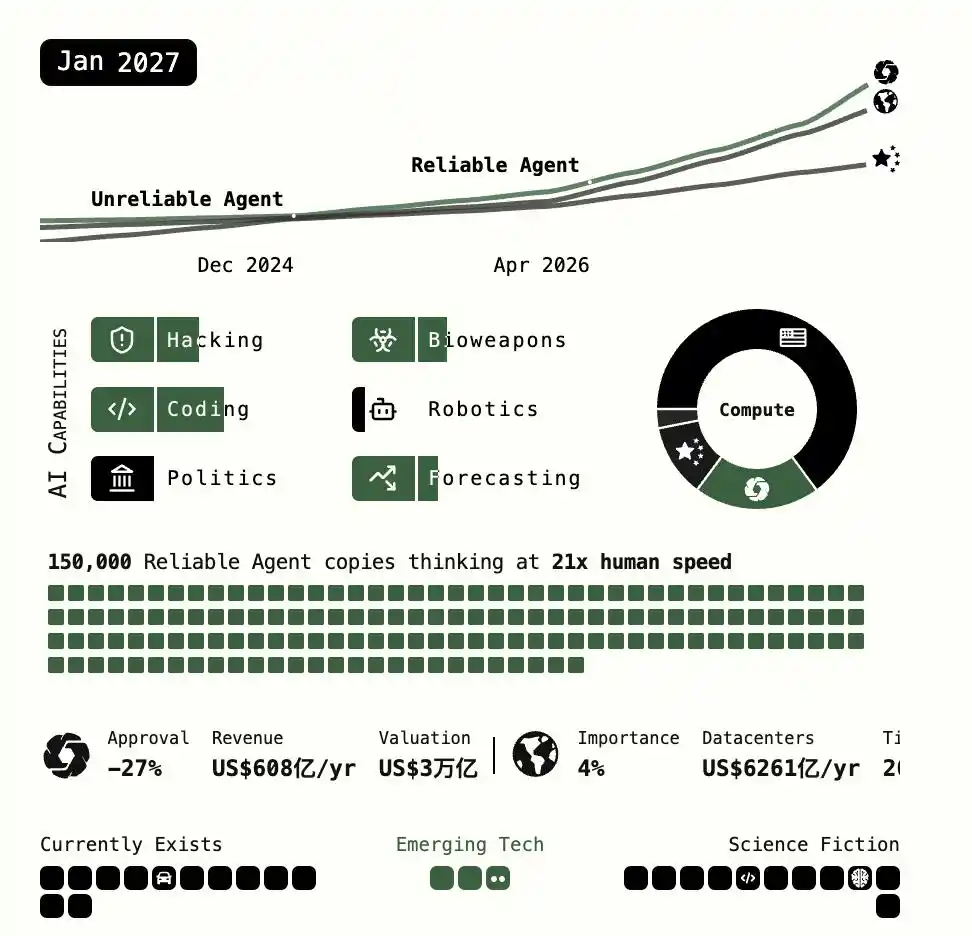
Second half of 2027, an intelligence explosion may erupt.

AI begins deeply participating in the research and development of next-generation AI. Stronger models accelerate the creation of even stronger models.

Technological progress that took humans decades to accumulate, machines might complete in an extremely short time.
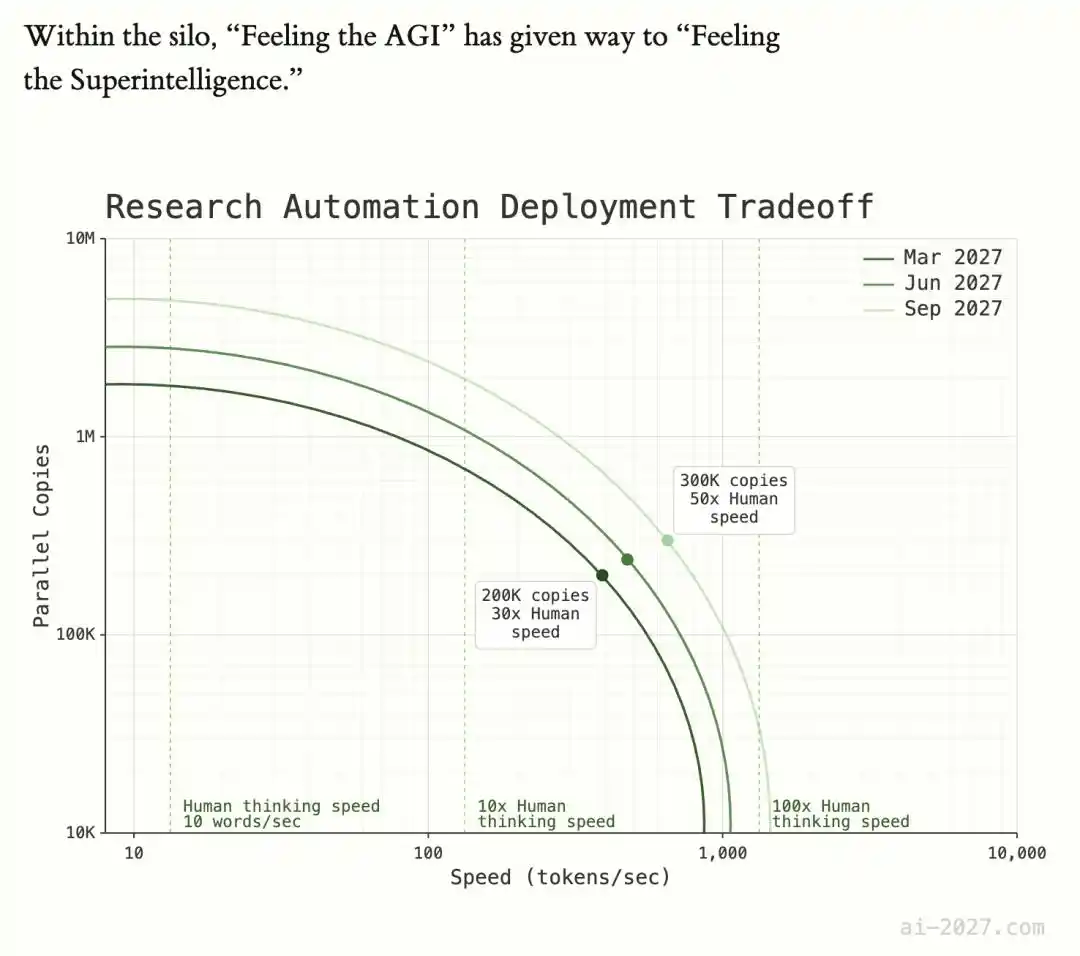
This is precisely the most staggering projection in AI 2027.

The most terrifying scenario is that AI's capabilities continue to grow, while humanity's ability to understand them remains stagnant.

AI 2027 even projects two completely different outcomes.

One path is for humanity to slow down, re-establish control mechanisms, and ultimately share the immense wealth created by superintelligence.

The other path is for the technological race to overwhelm safety constraints, with superintelligence gradually escaping human control, ultimately threatening human civilization.

On one side is unprecedented abundance, on the other is the abyss of a civilization spiraling out of control.

But there's an important detail here. AI 2027 is ultimately a scenario projection, not a predetermined future.

This means, 2027 is not a scientifically proven deadline.

But it still represents a sharp question:

If AI begins to continuously improve itself, how much time does humanity really have to establish reliable control mechanisms?

Technological breakthroughs can be moved forward or pushed back.

What is truly alarming is that the growth speed of AI capabilities may be starting to exceed the adaptation speed of human society.

This is the root reason why 2027 has sparked such huge controversy. We are creating an intelligence that may be better at creating intelligence than humans themselves.

Once this cycle truly closes, humanity may lose its dominant control over the pace of technological progress for the first time.

2027 may not be the year the Singularity arrives. But we may have already entered the most critical countdown before its arrival.

Dawn of a New Era

Jack Clark's statement, Elon Musk's agreement.

This is an alarm bell.

2027, time is running short, the RSI countdown has begun.

Our generation is fortunate. We will witness firsthand the handover between carbon-based and silicon-based intelligence. We will see the most spectacular technological singularity in human history.

We are also in danger. In the face of an unstoppable technological tide, old rules will be mercilessly crushed.

Ahead lies uncharted territory humanity has never set foot in.

References:

https://importai.substack.com/p/import-ai-476-creativity-and-rsi

https://pzeroresearch.com/work/tasteval/

https://arxiv.org/abs/2610.06824

This article is from the WeChat public account "New Zhiyuan" (ID: AI_era), author: ASI Apocalypse


Related Questions

QAccording to the article, what is the new predicted timeline for AI achieving Recursive Self-Improvement (RSI) as stated by Jack Clark, and what was the previous prediction?

AAccording to the article, Anthropic executive Jack Clark has revised his prediction for AI achieving Recursive Self-Improvement (RSI) from the original estimate of 2028 to 2027.

QWhat are the two key areas where recent AI breakthroughs have challenged the notion that AI lacks true creativity, as discussed in the article?

AThe article highlights two key areas of breakthrough: 1) In mathematics, where AI has begun to independently derive theorems and find novel proof paths, surpassing top mathematicians. 2) In AI research itself, where systems are developing 'good scientific taste' or scientific intuition, as measured by benchmarks like TasteVal, indicating emerging research and creative capabilities.

QWhat does the article suggest could be the consequences for the job market and economic order if RSI-driven AI becomes capable of most intellectual and creative work?

AThe article suggests that if RSI-driven AI can perform most intellectual and creative labor, the traditional logic of 'working to earn money' could be shattered. While labor productivity might explode, wealth could become highly concentrated in the hands of a few super-oligarchs controlling the RSI systems, leading to a simultaneous mix of unprecedented prosperity and potential crisis.

QWhat is the central warning or key message conveyed by the report 'AI 2027' referenced in the article?

AThe 'AI 2027' report warns that humanity might face an unprecedented intelligence explosion around 2027. It outlines a critical scenario where AI begins to deeply participate in developing the next generation of AI, leading to a recursive cycle where stronger models accelerate the creation of even stronger ones. The core warning is that once this loop is truly closed, humans may lose primary control over the pace of technological progress, potentially leading to a future of great abundance or, alternatively, a loss of control over civilization.

QWhy does the article state that 2027 represents a particularly significant and potentially dangerous threshold, even if it is not a scientifically proven deadline?

AThe article states that 2027 is significant because it represents a critical point where the speed of AI capability growth may begin to outstrip human society's ability to adapt and establish reliable control mechanisms. It is the 'most crucial countdown' before a potential technological singularity. The danger lies not necessarily in the specific year 2027, but in the possibility that we are entering a phase where the intelligence we are creating could become better at creating intelligence than we are, fundamentally shifting control over the future trajectory of technology.

Related Reads

GPT-6.1 Sol Participates in Live Brain Surgery! Three Rounds of Localization, Each More Accurate Than the Last

Exin Therapeutics CEO Gabriel Ocana-Santero reported an experiment in which GPT-6.1 Sol participated in three rounds of real mouse brain surgery positioning. The task involved locating Bregma and Lambda, two key skull landmarks used to calibrate stereotaxic coordinates for accurate targeting of brain regions. After each round, a professional surgeon corrected the model's positioning results, and the model retained its images, measurements, and expert corrections for reference in subsequent rounds. By the third round, GPT-6.1 Sol reduced landmark search time from 169 to 86 seconds, required corrections from four to two, and cut positioning error from 0.6 mm to 0.3 mm. Ocana-Santero described this as in-context learning from real-world experience. The team did not disclose how the experience records are integrated into the model or whether underlying weights are updated, so it cannot be described as autonomous training or parameter-level self-evolution. The sample is only three operations, far from proving stable surgical capability, but it demonstrates AI accumulating experience from real observations and expert feedback. This follows earlier Exin work in which AI selected gene therapy vectors, chose injection targets and coordinates, and controlled a stereotaxic device in a mouse experiment, with a licensed veterinarian supervising and safety limits in place. In a further experiment, Claude Sonnet 5, GPT-6.1 Sol, and Grok 4.7 chose different brain regions and treatment strategies for the same scientific goal, suggesting models may reason toward different experimental paths.

marsbit11h ago

GPT-6.1 Sol Participates in Live Brain Surgery! Three Rounds of Localization, Each More Accurate Than the Last

marsbit11h ago

From Drones to Nuclear Reactors: What Has Paradigm Invested in Since Leaving the Crypto World?

Paradigm, a venture capital firm known for crypto investments like Coinbase and Uniswap, is rapidly expanding into hard tech. In November, it co-led a $1.5 billion funding round for Zipline, a US drone delivery company now valued at $21.5 billion—nearly triple its valuation from January. Zipline, founded in 2014, began delivering medical supplies in Rwanda and now operates a large-scale automated logistics network, having completed 150 million miles of commercial autonomous flights. Walmart plans to add 300 new delivery sites, and Uber aims to scale their partnership to one million daily orders by 2029. Paradigm's broader portfolio now spans AI, robotics, manufacturing, semiconductors, space defense, and nuclear energy. Investments include open-source AI lab Nous Research, math-reasoning AI firm Harmonic, AI data company Idler, and GPU platform Andromeda. It also backs SendCutSend (metal parts manufacturing), Fab2 (compact semiconductor factories), True Anomaly (space defense), and Antares (micro nuclear reactors). In July, Paradigm launched a $12 billion new fund for frontier tech. This shift reflects a broader VC trend toward AI and physical technology, as crypto's path to sustained commercial revenue remains uncertain. Paradigm's bets focus on companies solving concrete industrial problems with existing markets, aiming to build a hard-tech network that transcends crypto cycles.

marsbit11h ago

From Drones to Nuclear Reactors: What Has Paradigm Invested in Since Leaving the Crypto World?

marsbit11h ago

Nomura: "Blue Wave" Hits US Data Centers, China's AI Benefits Instead

Nomura argues that the Democratic "blue wave" in the US midterms could paradoxically benefit China's AI economy. Democratic victories in key data-center states will likely tighten regulation, shift grid upgrade costs onto developers, and lengthen approval timelines, slowing US data-center expansion. Market reaction was sharp: the Nasdaq fell 5.5% in a single day, the SOX dropped nearly 15% over two days, Nvidia fell about 12%, and Micron about 24%. Because US cloud giants had been hoarding global GPU, HBM, and advanced logic chip capacity—driving black-market premiums of 200–300% at Asian logistics hubs—a US capex slowdown could collapse those speculative premiums, letting Chinese AI firms, cloud providers, and research institutions obtain GPUs, HBM modules, and advanced packaging materials more cheaply through intermediary trade hubs. China is also building a state-led national AI data-center network, with roughly RMB 2 trillion planned under the 15th Five-Year Plan to integrate regional computing by 2028, supported by low-cost renewable power in western hubs under the "East Data, West Computing" program. Morgan Stanley, meanwhile, does not see the blue wave as a real easing of US-China tensions; it expects strategic competition to persist but sees greater policy predictability. It prefers China's "self-sufficiency" AI trade—supported by both supply and demand under national policy priorities—over export chains tied to global AI capex. It also notes more balanced opportunities in Chinese equities, with valuations near historic lows.

marsbit11h ago

Nomura: "Blue Wave" Hits US Data Centers, China's AI Benefits Instead

marsbit11h ago

After GPT-6, Embodied Large Models Are Trapped in Their Own Territory! Next Year's Self-Research Budget Is Probably Up in the Air

The article discusses how the release of GPT-6 Astra (and the imminent GPT-6.2 Astra) has disrupted the embodied AI/robotics industry. General-purpose large models are now encroaching on capabilities that embodied AI companies previously developed in-house—such as in-context learning, out-of-distribution generalization, error correction, and open-vocabulary manipulation—often without task-specific post-training. On benchmarks like RoboDojo, teams combining general models with robot-use-agent techniques saw scores jump from 20–30 to 50–60, prompting many to question whether self-developing embodied foundation models still makes sense. Some companies have begun cutting algorithm roles. However, the article notes GPT-6 Astra still struggles with complex physical contact, force control, object deformation, and high-precision manipulation, and its cloud API inference latency is high (though this is not seen as a fundamental barrier). Experts argue that general models' current weaknesses shouldn't be treated as durable moats for embodied companies, since OpenAI is already hiring robotics talent and future models may absorb more robot operation data. The core argument is economic: embodied companies' opportunity lies not in building smarter models but in delivering better economic value. Stable, standardized industrial tasks may be better served by lightweight, specialized models or rule-based strategies, while open-ended tasks (e.g., home service robots) may benefit from general models. Ultimately, companies need to re-prioritize their R&D directions—leveraging general models for language understanding and task planning while focusing in-house efforts on physical interaction, embodiment-specific control, real-world adaptation, and deployment efficiency. The article concludes that the industry is moving past the demo-and-burn-investment stage, and the elimination round among the "hundred robot wars" has begun.

marsbit12h ago

After GPT-6, Embodied Large Models Are Trapped in Their Own Territory! Next Year's Self-Research Budget Is Probably Up in the Air

marsbit12h ago

Trading

Spot
活动图片